Coastal GasLink was declared complete, entered service, and then became the basis for another expansion cycle on unresolved Wet’suwet’en territory.
Coastal GasLink was supposed to have reached the point where politics gave way to infrastructure. TC Energy announced mechanical completion in November 2023. The pipeline entered commercial service in 2024. LNG Canada shipped its first cargo from Kitimat in June 2025. By the language of governments and industry, the fight had moved into the past because the gas was already moving.
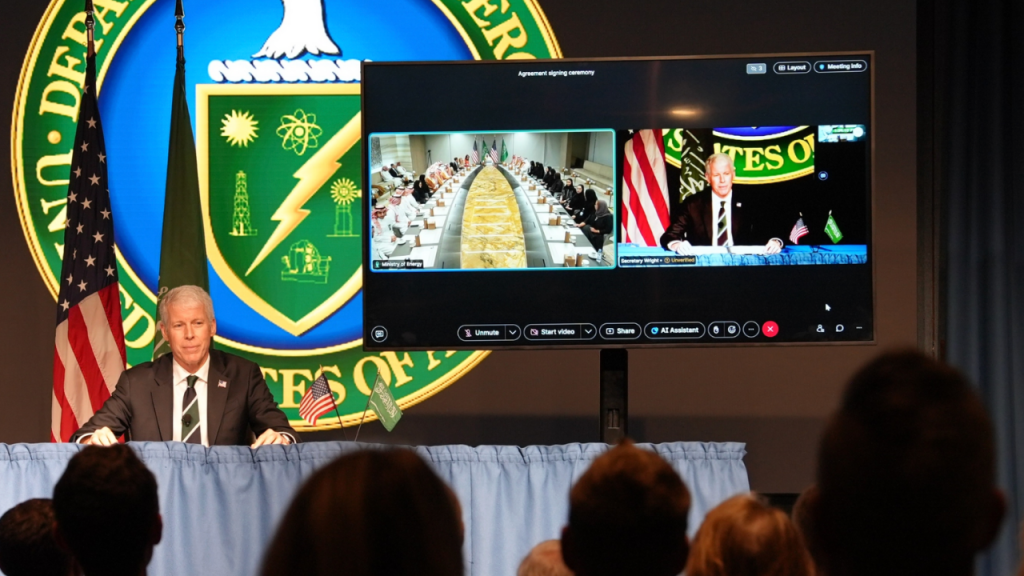
Then came Phase 2. In March 2026, LNG Canada and Coastal GasLink announced a framework to advance additional pipeline capacity tied to a possible second phase of the export terminal. The federal Major Projects Office now presents LNG Canada as a priority national project and describes expansion planning as part of Canada’s energy and trade strategy.
The sequence reveals what completion actually meant. It did not resolve the jurisdictional conflict that defined the project. It made the infrastructure harder to reverse and easier to expand. Wet’suwet’en hereditary opposition, injunctions, RCMP raids, national solidarity actions and years of complaints against specialized police enforcement did not produce a political settlement. They were absorbed into the project’s history while the pipeline became the starting point for the next decision.
That is the politics of never ending. The project keeps moving forward while the questions that were supposed to stop it are moved sideways into consultation, litigation, police review and future administrative process. By the time one dispute is examined, the material facts on the ground have already changed.
The Project Was Finished. Then Phase 2 Began.
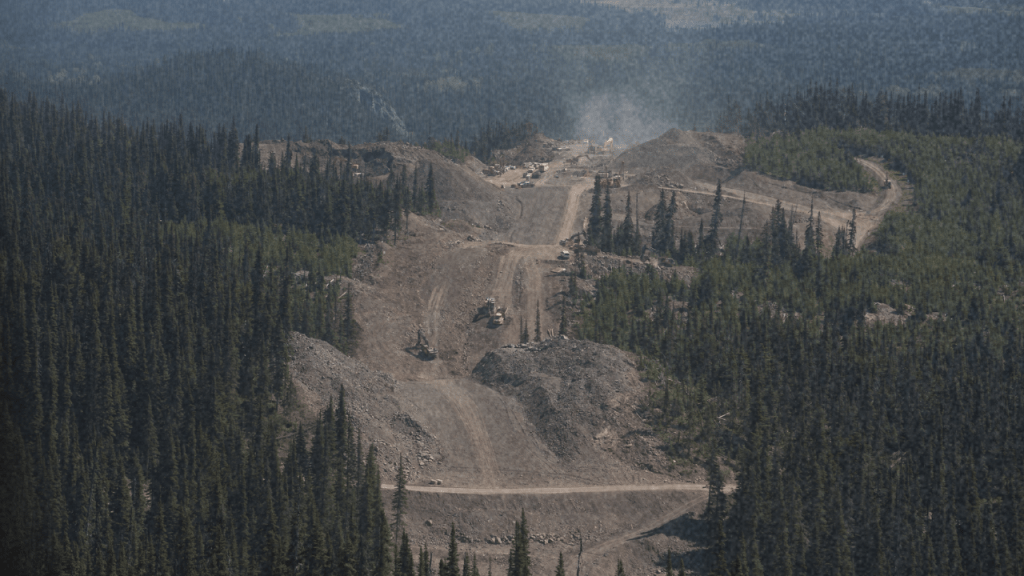
Coastal GasLink is an approximately 670-kilometre pipeline built to move fracked natural gas from northeastern British Columbia to the LNG Canada export terminal near Kitimat. Its first purpose was straightforward: connect inland gas production to a Pacific Coast export facility capable of shipping liquefied natural gas to overseas markets.
Once the pipeline entered service and LNG Canada began exporting, the political vocabulary changed. Construction conflict became operating capacity. Police access became a past enforcement issue. The pipeline itself became an existing asset around which new commercial decisions could be organized.
The March 2026 Phase 2 agreements show how quickly that transformation occurred. TC Energy said the new framework would support LNG Canada’s path toward a final investment decision for its own second phase and advance additional Coastal GasLink capacity. LNG Canada would take a more active role in development while Coastal GasLink continued as owner, operator and permit holder.
Expansion is therefore being discussed as the next stage of an operating system rather than as a return to the political conflict that made the first stage possible. The physical existence of the pipeline now does argumentative work. The infrastructure is already there, the export terminal is already operating, and more capacity can be presented as optimization instead of another decision about land and jurisdiction.
The Conflict Was Always About Jurisdiction
The Coastal GasLink dispute was often flattened into a question of whether Indigenous communities supported or opposed the project. That framing erased the governing conflict at its centre. Coastal GasLink had agreements with elected band councils along the route. Wet’suwet’en hereditary chiefs and land defenders maintained that those agreements did not extinguish hereditary authority over the broader yintah and did not provide free, prior and informed consent under Wet’suwet’en law.
The disagreement was therefore not a failure to gather enough stakeholder input. It was a conflict between different systems of authority. Indian Act band councils exercise powers within a colonial administrative framework tied primarily to reserve governance. Wet’suwet’en hereditary chiefs assert jurisdiction through a legal and political order that predates Canada and extends across house territories beyond reserve boundaries.
That is why the conflict could not be solved simply by producing more signed agreements. The state and company could point to elected councils that had negotiated benefits. Hereditary chiefs could continue to say the pipeline crossed unceded territory without their consent. Both positions could exist at the same time because the unresolved question was who had the authority to decide.
Canada did not settle that question before construction. It built through it. The longer construction continued, the more the dispute shifted away from jurisdiction and toward access, enforcement and delay. The political question became operational.
Canada Turned Jurisdiction Into an Injunction File
The legal hinge came at the end of 2019. On December 31, the B.C. Supreme Court granted an interlocutory injunction against interference with Coastal GasLink construction. On January 4, 2020, Wet’suwet’en hereditary chiefs issued an eviction notice ordering the company to leave the territory.
The two orders represented incompatible claims to authority. One came through a Canadian court enforcing a private company’s access to a permitted project. The other came from hereditary leaders asserting jurisdiction over Wet’suwet’en territory. Canada did not produce a constitutional settlement between them. It enforced one and treated the other as an obstacle to access.
RCMP enforcement followed in February 2020. Public Safety Canada’s own summary says police enforced the injunction and arrested 22 people over several days. Wider enforcement operations continued over subsequent years as Coastal GasLink construction moved deeper into Wet’suwet’en territory.
This is how an unresolved political conflict became administratively manageable. A question about who governs the land was converted into a question about compliance with an injunction. Once the dispute entered that form, police no longer had to decide whose law was legitimate. They only had to enforce the court order recognized by the Canadian state.
The transformation matters because injunction law gave the project something consultation could not: a mechanism for moving construction forward without resolving consent. Canada could continue describing the conflict as complex while the road was cleared and the pipe was laid.
The Policing Outlasted the Headlines
The February 2020 solidarity blockades made Wet’suwet’en resistance nationally visible. Rail corridors, ports, roads and government buildings became sites of solidarity. For a period, Canadians who had never heard of Coastal GasLink were forced to confront the relationship between infrastructure, Indigenous jurisdiction and police enforcement.
Visibility did not transfer control. Construction continued because the institutions behind the project could survive the news cycle. Courts continued to recognize the injunction. Police remained available to enforce access. Governments treated delay as a public-order and economic problem rather than as a reason to reopen the project’s legitimacy.
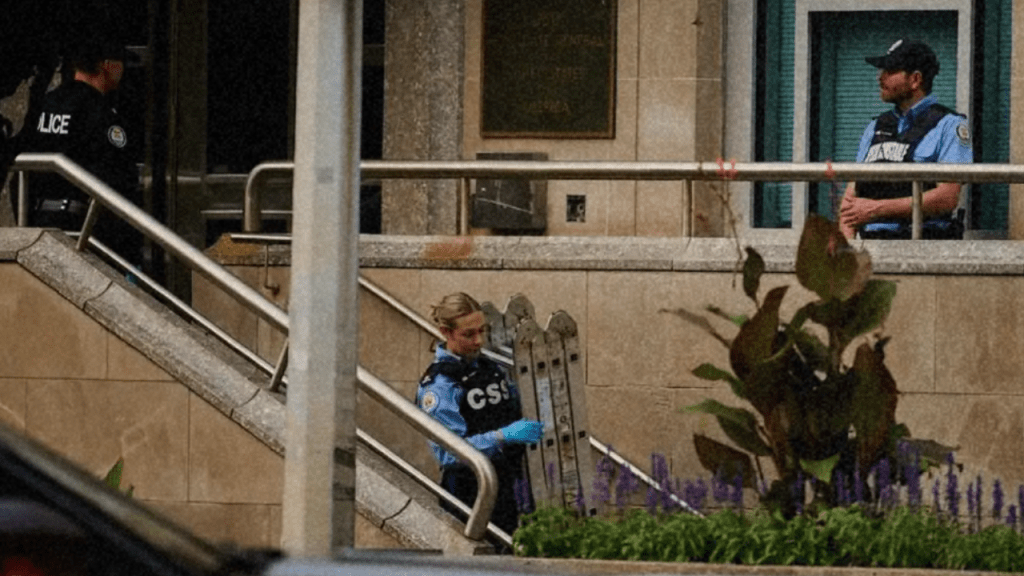
The RCMP’s Community-Industry Response Group became central to that system. Amnesty International documented repeated raids, surveillance, arrests and criminalization of Wet’suwet’en land defenders. The presence of heavily armed police, helicopters and specialized units made clear that the project’s continuity was not secured only through permits and benefit agreements.
The accountability process moved at a different speed. In March 2026, the Civilian Review and Complaints Commission reported hundreds of complaints connected to RCMP enforcement of civil injunctions in British Columbia, including C-IRG-related operations. The pipeline, meanwhile, was already complete and operating.
That timing is part of the method. Police power acts in real time. Oversight comes later. Construction benefits from the first timetable, not the second. By the time complaints are reviewed, findings are issued or institutional reforms are debated, the infrastructure may already be commercially embedded.
Completion Became the Argument for Expansion
Coastal GasLink reached mechanical completion in November 2023 and commercial in-service in 2024. LNG Canada’s first cargo followed in June 2025. Each milestone made the next political question narrower.
Before construction, opponents could argue that the project should not be built. During construction, they could argue that work should stop. After completion, stopping the project began to mean shutting down an operating asset connected to a multibillion-dollar export terminal. The material threshold changed because the project had been allowed to proceed while the legitimacy dispute remained unresolved.
This is the power of sunk infrastructure. Steel in the ground becomes a political fact. Contracts, tolls, jobs and export capacity attach themselves to it. Governments begin speaking about reliability and competitiveness. Companies begin speaking about maximizing existing assets. The original question of whether the project should have crossed the territory in the first place is pushed backward by the consequences of having already built it.
Phase 2 now benefits from that transformed terrain. Additional capacity can be framed as an expansion of infrastructure Canada already relies on rather than as a fresh confrontation with the unresolved conditions under which the first pipeline was built. Completion becomes evidence for continuity.
The state does not have to prove the original conflict was resolved. It only has to make reversal appear increasingly unrealistic.
Never Ending Means the Decision Is Never Reopened
The phrase “never ending” does not mean Canadians will debate Coastal GasLink forever. It means the foundational decision is never allowed to return as a decision with real stopping power.
Wet’suwet’en jurisdiction is moved into consultation and reconciliation processes. Police conduct is moved into complaints and reviews. Climate consequences are moved into emissions plans, methane rules and future technology. Corporate financing is moved into shareholder and banking campaigns. Expansion is moved into another environmental assessment, another commercial agreement or another national-interest file.
Each process can produce documents, meetings and findings. None automatically reopens the infrastructure decision itself. The project continues while its contradictions are distributed across institutions that move more slowly than construction and operate within narrower mandates.
This is what makes delay management so effective. The state does not need to defeat every argument. It can let each argument continue somewhere else while keeping the project moving. By the time one process reaches a conclusion, the political cost of reversal has increased.
Coastal GasLink therefore did not survive because opposition disappeared. It survived because opposition was prevented from becoming a binding veto at the moments when a veto could still change the material outcome.
The Next Project Inherits the Same Method
The wider significance of Coastal GasLink is not that every future project will repeat the same chronology. It is that the state now has a working institutional model for moving extraction through contested land.
Regulatory approval can proceed alongside unresolved Indigenous jurisdiction. Injunctions can convert land defence into an enforcement problem. Specialized police units can protect industrial access. Oversight can occur after construction has advanced. Economic arguments can intensify as more capital is committed. Once the infrastructure becomes operational, expansion can be described as continuity.
Carney’s Bill C-5 makes the federal fast-track logic more explicit by expanding cabinet power around projects designated in the national interest. Ontario’s Ring of Fire push shows the same pressure to make extraction timelines more important than unresolved Indigenous jurisdiction.
Coastal GasLink hangs over those projects because the state can point to a result. The injunctions were controversial. The raids were condemned. Solidarity actions disrupted the country. The project still entered service. From the perspective of governments and investors, the method worked.
That history changes the terrain for every new project. Governments do not have to promise that conflict will disappear. They only have to believe they can outlast it.
Canada Learned How to Make Opposition Historical
Coastal GasLink is now part of Canada’s energy export system. That fact is real. It is also the result of a process in which the project kept advancing while the political questions underneath it remained unresolved.
The pipeline did not reach completion because Wet’suwet’en hereditary opposition was answered. It reached completion because Canadian institutions were able to separate the project’s material timetable from the timetable of consent, litigation and accountability. Construction moved faster than jurisdictional resolution. Police enforcement moved faster than police review. Investment moved faster than political reconsideration.
Now the same completed pipeline is being positioned as infrastructure for another phase of LNG expansion. The conflict that once threatened to stop the project is becoming background to the argument that Canada already has an operating system worth enlarging.
That is how opposition becomes historical without ever being resolved. The state survives the moment of maximum visibility, keeps construction moving and lets time convert a contested project into an existing fact. Once that happens, the next expansion begins from the assumption that the first decision no longer belongs to the present.
Coastal GasLink did not end when the gas began moving. The pipeline entered service, the accountability processes kept trailing behind, and the expansion cycle started again. The politics never ended because the decision was never allowed to reopen.
Sources
- Coastal GasLink project overview, Coastal GasLink.
- Coastal GasLink achieves mechanical completion ahead of 2023 year-end target, TC Energy, November 8, 2023.
- Coastal GasLink announces commercial in-service, Coastal GasLink, November 19, 2024.
- Canada ships first LNG export cargo from Pacific coast, Reuters, July 1, 2025.
- LNG Canada, Government of Canada Major Projects Office.
- Coastal GasLink Phase 2 advances step forward with new commercial agreements, TC Energy, March 2026.
- Coastal GasLink protests and RCMP enforcement briefing note, Public Safety Canada.
- Removed from our land for defending it, Amnesty International, 2023.
- Wet’suwet’en land defenders and RCMP enforcement, Amnesty Canada.
- Update on C-IRG-related public complaints and reviews, Civilian Review and Complaints Commission, March 18, 2026.