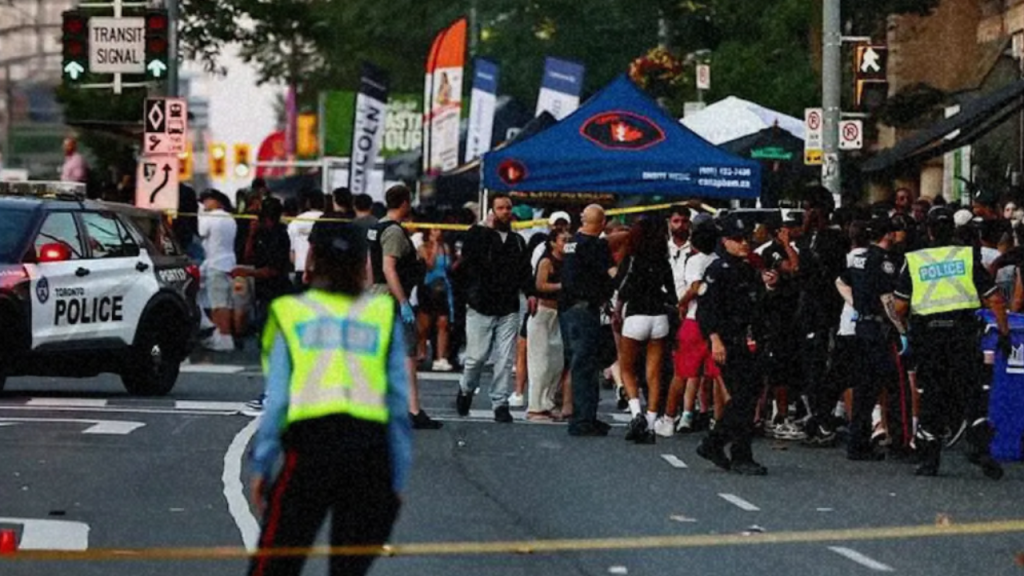
Salsa on St. Clair shooting evidence changed the police account as calls for tougher punishment and tighter security were already growing.
Two 18-year-olds have been charged in connection with the July 11 shooting at Salsa on St. Clair that killed Shaquan Quashie, 25, and Cesar Vernaza, 20, and wounded five other people. Each accused faces two counts of first-degree murder and five counts of attempted murder. Those charges are allegations, and criminal responsibility will ultimately be determined in court rather than by an arrest or police announcement.
The arrests are nevertheless a major development in an investigation that began with seven people shot in the middle of a crowded summer festival. They also arrived after a significant change in the public account of what happened that night. That change matters because the political response to the shooting began almost immediately, while some of the basic forensic questions were still unsettled.
Salsa on St. Clair Shooting: Police Changed the Gunfire Account
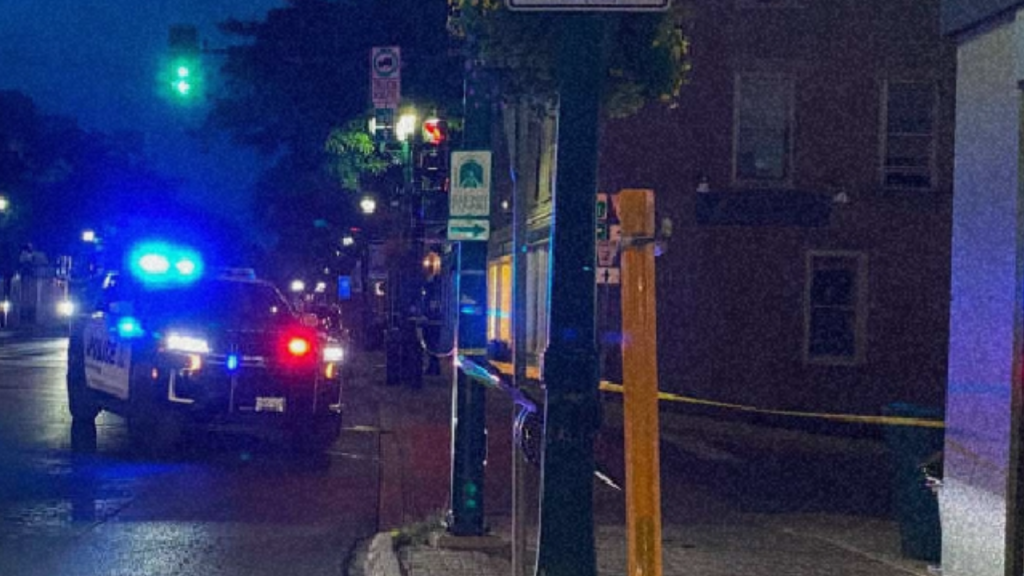
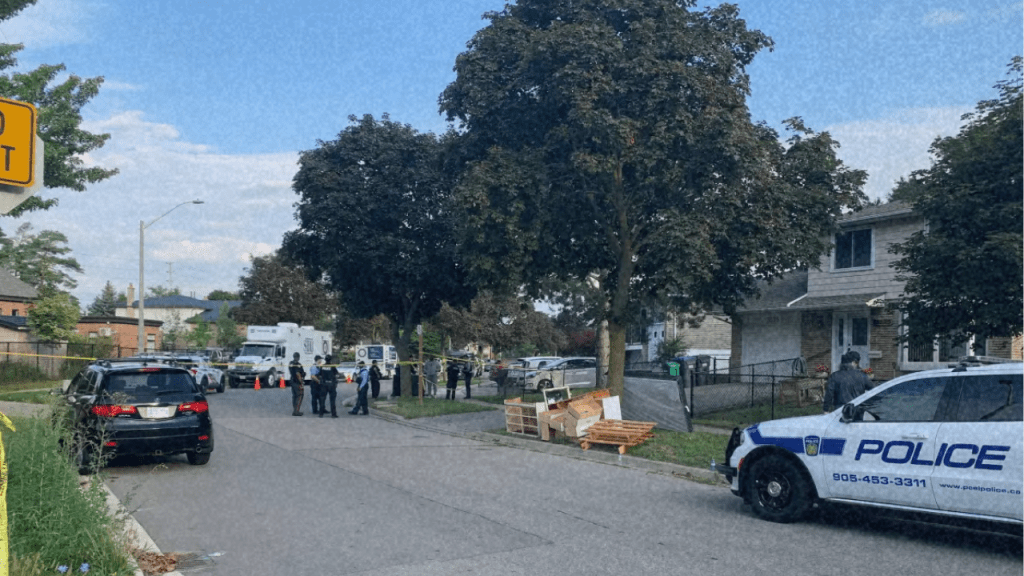
In the immediate aftermath of the shooting, police recovered two firearms at the scene and initially said investigators believed there had been an exchange of gunfire. That account suggested a chaotic confrontation involving more than one armed participant. It shaped the first public understanding of an attack that had already generated enormous fear because it happened in a crowded public space during one of Toronto’s major summer street festivals.
By August 7, the forensic picture had changed. Det. Sgt. Stacey McCabe said investigators now believed the gunfire that struck the victims came from a single firearm and that neither of the two guns recovered at the scene had been fired during the attack. Police also declined to reduce the case to a simple gang explanation while the motive remained unresolved. The point is not that the first account was necessarily dishonest. Investigations develop as evidence is tested. But that is precisely why an early police description should not automatically become the settled public explanation of an event before the forensic work is complete.
The distinction becomes more important when the early account is already helping shape a political response. By the time police revised the gunfire narrative, discussion about security, deterrence and punishment was well underway. The evidence changed more slowly than the demand for institutions to demonstrate that they could restore control.
Security Measures Did Not Wait for Forensic Certainty
That demand was understandable. Seven people had been shot in a crowded public space and two were dead. Thousands of people had attended Salsa on St. Clair, and people planning to attend other festivals had every reason to ask whether they would be safe. Police had an immediate responsibility to secure evidence, identify suspects, determine whether another attack was likely and protect the public from further violence.
But the response did not remain confined to the investigation. Officials and organizers began discussing additional police visibility, controlled entrances, screening, cameras and other security measures for public festivals. After the Salsa shooting, heightened security was also visible at subsequent Toronto events. A criminal investigation was therefore accompanied by a broader political discussion about how much surveillance, policing and physical control should surround public space.
Those measures do not become unreasonable simply because the forensic account later changed. The important point is that the security response developed before investigators had settled some of the most basic facts about the shooting itself. The event created an immediate demand for action, and the institutions already authorized to provide security were positioned to respond to that demand before the factual narrative was complete.
Toronto Shootings Were Already Down
The Salsa shooting also occurred against a citywide trend that complicates the idea that Toronto was experiencing a sudden collapse in public safety. Toronto police reported that shootings were already down by more than 26 percent compared with the same period in 2025. That does not make the deaths of Quashie and Vernaza, or the injuries suffered by the other victims, any less serious. It does mean that the political meaning assigned to one highly visible shooting can be very different from the direction of the broader statistics.
A spectacular act of violence has qualities that an aggregate crime figure does not. People can picture a crowded street festival. They can imagine themselves, their children or their friends standing in the same place. Television footage, police tape and eyewitness accounts turn an individual attack into a shared public experience. That visibility gives the event political power far beyond its statistical weight.
The result is that declining violence and expanding security demands can occur at the same time. Toronto can experience fewer shootings overall while one especially visible attack generates calls for more police, tougher penalties, greater surveillance and tighter controls around public events. The citywide trend does not automatically determine the political response because fear is shaped by where violence occurs, who sees it and how institutions explain it.
Toronto Already Treats Violence as a Social Problem
Toronto’s own public-safety policies recognize that policing is only one part of preventing violence. The City’s 2026 Summer Safety Plan includes youth employment, recreation, mentorship, mental-health supports, family services and other interventions intended to reduce the conditions in which violence develops. Those programs exist because municipal policy already accepts that public safety cannot be produced solely through arrests after someone has been shot.
That does not mean those wider social conditions can simply be projected onto the two 18-year-olds charged in the Salsa case. There is no public evidence establishing that either accused was unemployed, poor or driven toward violence because a particular social program failed. Structural conditions describe the environment in which people live; they do not establish the biography or motive of an individual defendant.
Toronto’s youth employment figures nevertheless show why the city funds preventive programs in the first place. In April 2026, unemployment among Toronto residents aged 15 to 24 was 16.8 percent, compared with 9.8 percent in April 2019. The City has itself identified youth employment as a serious problem, particularly for young people facing systemic barriers. Employment does not mechanically determine whether someone commits violence, but access to stable income, institutions, recreation, education, housing and social support affects the range of choices and pressures people encounter.
The relevant question is therefore not whether youth unemployment “caused” the Salsa shooting. The evidence does not support that claim. The question is whether a city interested in reducing violence should invest only in its capacity to identify and punish perpetrators after an attack, or also in the institutions that can reduce the conditions in which violent networks, conflicts and firearm use become more likely to reproduce themselves.
Prevention Is Funded Differently From Policing
That question becomes clearer when the comparison shifts from raw spending to institutional durability. Toronto Police Service’s approved 2026 net operating budget is $1.4329 billion, an increase of $93.8 million, or seven percent, over the previous year. That money supports a large permanent institution responsible for emergency response, investigations, enforcement and other citywide functions. It would be misleading to compare that figure directly with one violence-prevention program as though the two budgets purchase equivalent services.
The more revealing difference is how securely the institutions are funded. Police are part of the permanent machinery of municipal government. Their budget is debated every year, but the continued existence of the police service is not dependent on whether a temporary federal program is renewed. Parts of Toronto’s violence-prevention infrastructure operate under a very different model.
City budget documents identified a $6.2-million funding exposure when federal violence-prevention programs were scheduled to expire. Toronto Council authorized contingent funding from the Tax Stabilization Reserve while seeking continued federal support, and Ottawa subsequently extended the Building Safer Communities Fund. The city therefore did not ultimately lose $6.2 million in the way an earlier snapshot might have suggested.
What the episode demonstrates is the underlying vulnerability. Programs designed to intervene before violence occurs can depend on grants, intergovernmental agreements, targeted funding streams and periodic renewal decisions. Toronto Police Service, by contrast, operates from an ongoing municipal budget measured in billions of dollars. The important comparison is not that every dollar spent on police should instead be spent on a youth program. It is that one part of the public-safety system is institutionally permanent while significant parts of the preventive side remain conditional.
That difference shapes political power. An institution with permanent staff, legal authority, facilities, communications operations and recurring funding can respond immediately when a crisis occurs. Programs whose funding must repeatedly be justified or renewed do not enter the political debate from the same position. When violence becomes highly visible, the permanent institution is therefore better equipped to demonstrate action and make the case for additional resources.
What Police Can Do After a Shooting
There is a strong case for immediate police involvement after an attack like Salsa. Investigators can preserve a crime scene, collect forensic evidence, trace weapons, identify suspects, seek warrants and place allegations before a court. Those functions matter to the victims and their families, and they matter to a public that has a legitimate interest in knowing whether someone responsible for lethal violence remains at large.
Those powers should not be confused with a complete explanation of violence. An investigation may establish who fired a particular weapon and a trial may establish individual criminal responsibility. Neither process, on its own, explains why illegal firearms circulate, why particular conflicts become lethal, why some young people become involved in violent networks or why the same communities repeatedly experience injury, incarceration and surveillance.
Toronto’s own policies acknowledge that limitation. There would be little reason for the city to fund employment programs, mental-health supports, recreation, mentorship and violence-interruption initiatives if criminal investigation were sufficient to prevent future violence. Those programs exist because solving an individual case and reducing the reproduction of violence are related but different public tasks.
This is also why an arrest should not be treated as retrospective proof that every part of the original police narrative was correct. The arrests in the Salsa case may eventually contribute to a successful prosecution, but the investigation itself has already shown that important elements of the early account can change as evidence develops. Police are both investigators and major public narrators of violent events, which makes separating evidence from interpretation especially important.
Violence Expands the State’s Case for More Power
A shooting like Salsa creates an immediate and understandable demand for safety. People want to know who fired the weapon, whether anyone else is at risk and what will prevent another attack. The institutions already empowered to respond to violence are also the institutions most capable of converting that demand into visible action because they already possess personnel, budgets, legal authority and coercive power.
Police can investigate and arrest. Courts can order confinement after due process. Governments can expand surveillance, increase security requirements and create harsher criminal penalties. These powers occupy a different legal position from private violence because the state claims the authority to use coercion legitimately. That legal distinction becomes a political advantage during moments of fear because the state already has institutions authorized to answer the demand for control.
A spectacular act of private violence can therefore strengthen the case for expanding public coercive power even when the broader trend is moving in the opposite direction. More police at festivals, additional cameras, controlled entrances and stronger penalties can all be presented as responses to an event whose visibility creates pressure to show that something is being done. The argument for expansion does not require shootings to be increasing citywide. It requires a sufficiently powerful event to make existing security capacity appear inadequate.
That produces an institutional feedback loop. Violence creates fear. Fear creates demand for protection. The institutions already responsible for protection receive pressure and political opportunity to demonstrate that they need greater capacity. Additional resources then strengthen those institutions relative to programs whose work is less visible because their success often consists of events that never happen: conflicts that do not escalate, young people who do not enter violent networks and shootings that never take place.
The problem is not that police investigate murder. They should. The problem is that the political system is much better equipped to see and reward action after violence than prevention before it. A police arrest produces a press conference, charges and a visible demonstration of institutional activity. The effects of stable employment, recreation, housing, mental-health care or community intervention are dispersed across years and thousands of individual lives, making them much harder to convert into a single dramatic claim of success.
The Toronto Consulate investigation shows the problem from another direction. Arrests can identify alleged participants at the visible end of a violent act while leaving the people who allegedly commissioned or organized it unresolved. Salsa raises a parallel structural question: even when police succeed in identifying an individual shooter, what institutions are responsible for changing the conditions that repeatedly produce people who can be recruited into violent activity in the first place?
Solving a Shooting Is Not Preventing the Next One
Investigators may ultimately determine who they believe fired the weapon at Salsa and why. A court may eventually determine whether the accused are criminally responsible. Those outcomes would matter enormously to the victims, their families and everyone endangered on St. Clair that night. Individual accountability is not meaningless simply because it does not answer every wider political question.
But solving one shooting is not the same thing as solving violence. A criminal case looks backward toward a specific act and asks who can legally be held responsible for it. Prevention looks forward and asks what would have to change so that fewer people are placed in circumstances where carrying, recruiting, shooting or retaliating becomes possible.
Toronto already spends money on both approaches, which means the city implicitly recognizes that both are necessary. The imbalance lies in their institutional position. The machinery that investigates, arrests, prosecutes and imprisons is permanent and deeply embedded in government. Significant parts of the machinery intended to prevent violence before police are required remain dependent on programs, grants and political renewal.
The Salsa on St. Clair shooting makes that imbalance visible. The state possesses enormous durable capacity once violence has already happened. The harder measure of public safety is whether governments build equally durable capacity to reduce the number of people who ever reach the point where that coercive machinery becomes necessary.
Sources
- Toronto Police Service – Aug. 7 arrests in the Salsa on St. Clair investigation
- CityNews – Aug. 7 arrests, corrected ballistics account and deterrence response
- Toronto Police Service – July homicide update and year-over-year shooting decline
- CityNews – initial Salsa on St. Clair shooting account
- CityNews – post-Salsa discussion of controlled access and event-security measures
- CityNews – post-Salsa security measures at Big on Bloor
- City of Toronto – 2026 Summer Safety Plan
- City of Toronto – youth employment report
- City of Toronto – Toronto Police Service 2026 budget
- City of Toronto – Building Safer Communities Fund / Crime Prevention Action Fund budget exposure
- Public Safety Canada – Building Safer Communities Fund extension
- Cambridge University Press – Weber and the monopoly of legitimate force