Toronto Consulate arrests leave the gun-for-hire client unanswered. TPS still controls key evidence behind its wider account of the shootings.
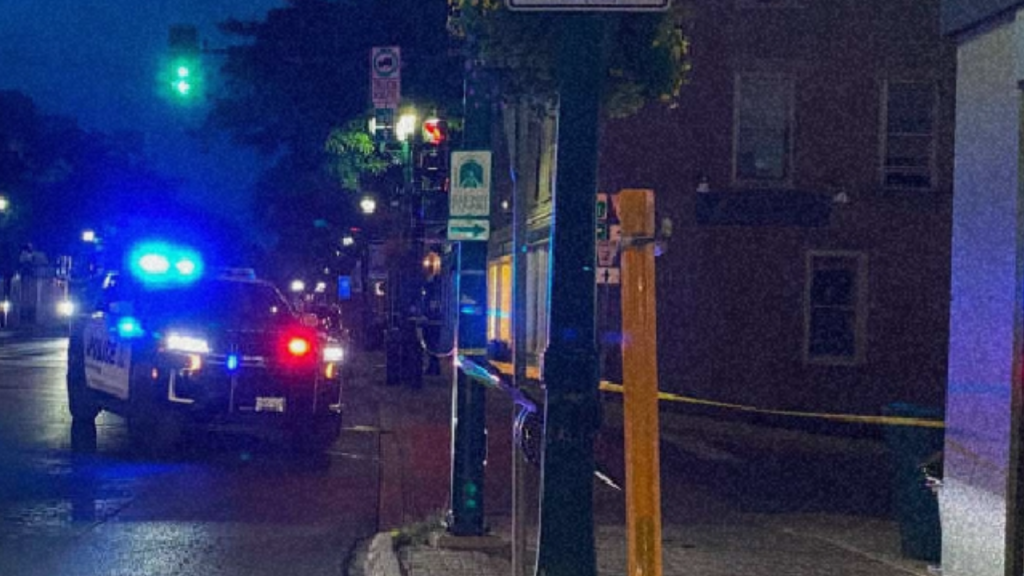
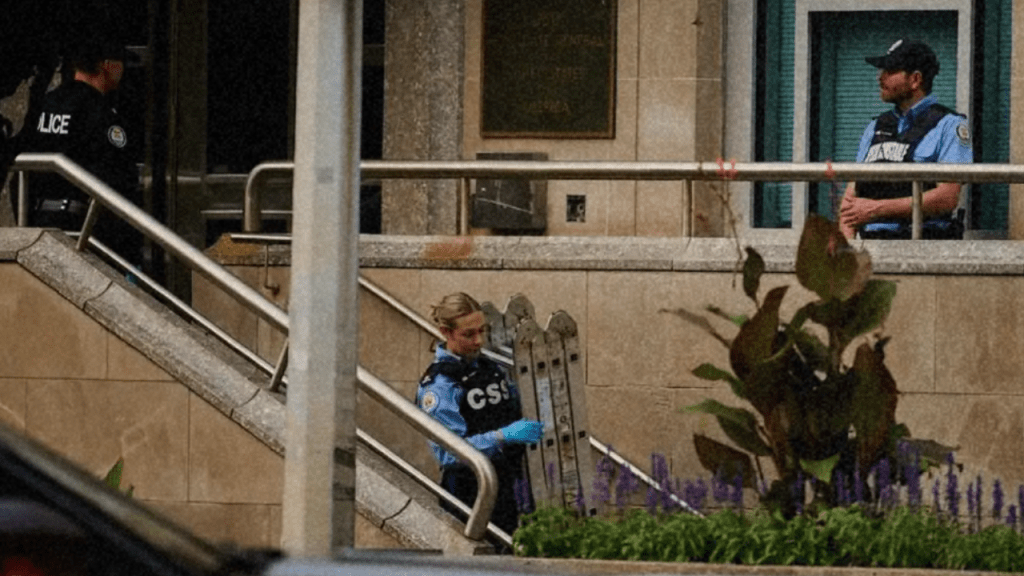
The Aug. 6 arrests have added two alleged participants to the July 27 shooting investigation, the second attack on the downtown diplomatic building in five months.
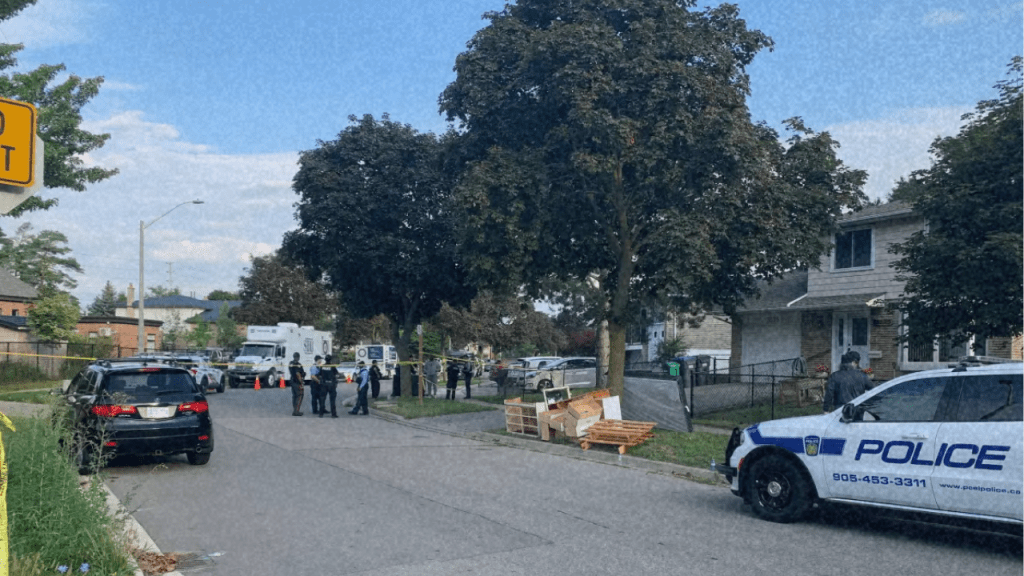
Police have identified a 19-year-old man and a 15-year-old boy, who now face multiple charges. Police allege they were recruited through encrypted messaging applications and offered money to attack the consulate. Chief Myron Demkiw has said determining who ultimately stands behind the crimes remains a major focus of the investigation.
That is movement inside the police investigation. It is not the same as independent validation of the wider account police have attached to the shootings. The public still has not been shown who selected the target, who supplied the money, whether either accused was actually paid, or who controlled the alleged recruitment chain.
Toronto Consulate Arrests Do Not Validate the Police Story
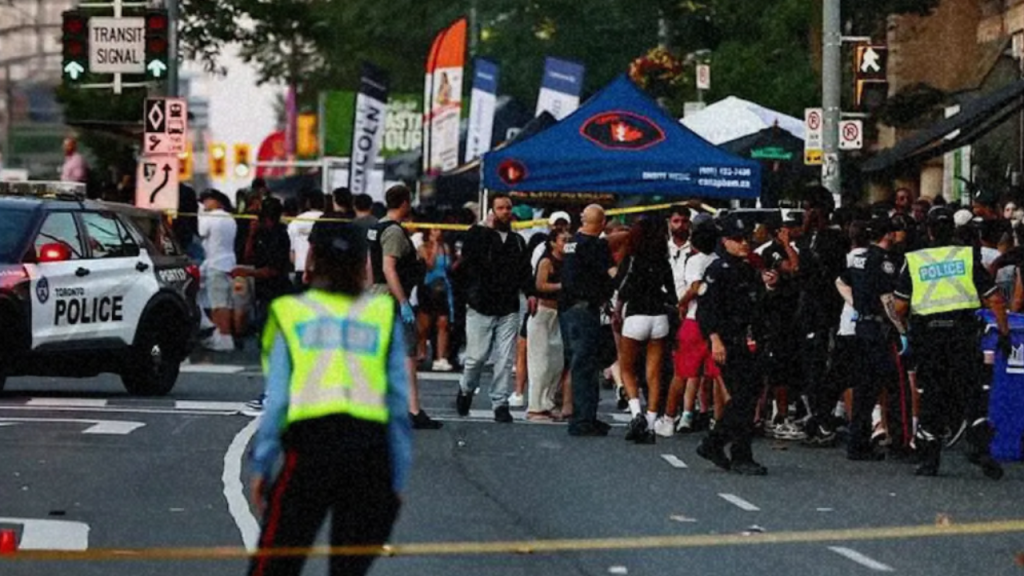
Toronto police have described a broader “criminals for hire” market in which young people are recruited through encrypted applications, supplied with assignments and offered money to attack predetermined targets. Police say the allegations against the July suspects fit that model.
The arrests do not independently prove the architecture police describe. Charges establish what prosecutors allege, not what has been tested in court. Police have not publicly released the communications behind the alleged recruitment, the payment records behind the promised money or evidence identifying the person who commissioned the attack.
Police also say recruits in these networks may be promised money and sometimes never receive it. That makes the payment seam especially important. “Offered money” cannot quietly become “paid shooter,” and an alleged recruit cannot be treated as the author of a political motive that may belong to somebody further up the chain.
The alleged operator layer is more visible. The commissioning layer remains concealed.
Police Control the Evidence and Its Interpretation
That problem was already central to Spark Solidarity’s gun-for-hire investigation. Toronto police presented firearms, ballistic links, arrests and a detailed description of an alleged market. The public was not given the communications, payment records or other evidence required to test the complete structure being described.
Some of the evidence is concrete. Ballistic testing can connect a firearm to multiple crime scenes. A recovered gun exists independently of a press conference. An arrest is a real state action with real consequences for the accused.
But the meaning attached to that evidence still comes largely from the institution controlling it. TPS decides which records become public, which relationships are named, which remain sealed inside an investigation and how the alleged market is described to journalists before any trial has tested the larger account.
Police are therefore not merely investigators in this story. They are also its principal public narrator. That matters because the June announcement produced an institutional argument of its own: Demkiw used the alleged recruitment model to call for stronger laws against recruiting minors and broader lawful-access powers for investigations involving encrypted communications. Violence was presented as evidence that existing police authority was inadequate, while the hidden clients remained unidentified.
None of that proves the police account is false. It means police evidence and police interpretation cannot be treated as the same thing.
Project South Removes the Neutral-Outsider Presumption
The largest omission in a police-centered account of Toronto’s violence market is Toronto police themselves.
In February, seven serving Toronto officers and one retired officer were charged in Project South, an organized-crime investigation involving allegations of bribery, drug trafficking, unlawful access to confidential police information and a conspiracy to murder a corrections manager.
York Regional Police alleged that protected information obtained through police systems was supplied to organized-crime figures. Investigators said addresses returned through unauthorized searches became locations connected to shootings, extortions and robberies. Demkiw acknowledged that organized crime had penetrated the force and damaged public trust.
Those allegations have not been proven in court, and Project South does not establish that any Toronto officer participated in the Consulate shootings. It does, however, make a narrower question directly relevant: arrangements involving target information, intermediaries and organized violence cannot automatically be presumed to exist entirely outside TPS.
When the same police service describes buyers, brokers, target selection and disposable shooters, the possible position of police-linked actors inside that wider market becomes a legitimate investigative question. The force cannot simply grant itself neutral-outsider status after Project South made that assumption itself a matter requiring evidence.
Ballistics Show Infrastructure, Not Command
Toronto police say firearms recovered in the wider investigation were connected through ballistics to multiple shootings, including the March attack on the U.S. Consulate. That is meaningful forensic evidence that weapons circulated across different incidents.
It does not establish a single buyer, a single hierarchy or a single political command structure. The same gun can move between intermediaries and shooters working for different clients. The same encrypted platform can carry assignments connected to unrelated motives. Reusable infrastructure is not the same thing as common command.
The March and July shootings struck the same diplomatic building, but police have not publicly established that the same ultimate commissioner ordered both attacks. Similar targets and recurring methods do not answer who selected the Consulate, who supplied instructions, who offered the money or whether an intermediary was acting for somebody else.
Ballistics can help establish how violence moved through a system. They cannot identify who authored its political purpose.
National Security Still Produces Institutional Benefits
The Consulate series began because the state supplied political meaning before it supplied a motive.
After the March Consulate shooting, the incident was placed inside a national-security framework. The RCMP became involved and security around U.S. and Israeli consulates in Toronto and Ottawa increased. Ontario Premier Doug Ford publicly raised the possibility of “sleeper cells” even though the RCMP said it had no information confirming that claim.
Later evidence complicated that picture. Toronto police produced arrests, ballistic links and an account of alleged recruitment. Separately, a U.S. federal complaint alleged that Mohammad Baqer Saad Dawood Al-Saadi, described by prosecutors as a Kata’ib Hizballah and IRGC operative, said on a recorded March 20 call that “our people” were behind two attacks in Canada, including what an FBI agent identified as the March 10 shooting at the U.S. Consulate in Toronto. That is a serious public allegation of foreign-linked direction. It remains an allegation in a U.S. criminal case, not a finding of guilt, and it does not establish who commissioned the July 27 attack.
Yet the violence was already politically productive. The unresolved synagogue shootings were invoked when Ontario sought an emergency injunction against Toronto’s Al-Quds Day demonstration. As Spark Solidarity documented at the time, the province produced no evidence connecting the rally, its organizers or the broader Palestinian solidarity movement to those shootings. A Superior Court judge rejected the application.
The state therefore did not need to identify the commissioning layer before the attacks could justify expanded security activity, surveillance demands and political pressure against Palestinian organizing. The factual explanation could remain unsettled while the institutional consequences accumulated.
The July arrests do not erase that sequence. They add alleged operators to the July attack while leaving its commissioning layer unresolved. The separate U.S. allegation concerning March does not establish that the two Consulate attacks shared the same sponsor.
What the Arrests Still Do Not Answer
The public still does not know who commissioned the July attack or whether either July accused received payment. Police have not publicly established that March and July shared the same commissioner. The communications, payment records and relationships needed to test the July recruitment chain remain largely inside the investigation.
The Aug. 6 arrests may establish part of how the July attack was carried out if the allegations are proven. They do not establish who wanted it carried out or why the Consulate was selected.
Until those questions are answered, TPS can investigate the July shooting, but it has not earned the right to define its final meaning by press conference.
Sources
- Associated Press — Aug. 6 arrests, alleged encrypted recruitment, offered payment and unresolved client
- Toronto Police Service — “Criminals for Hire Linked to 27 Firearm Discharges”
- Toronto Police Service — July 27 U.S. Consulate firearm-discharge investigation
- U.S. Department of Justice — Al-Saadi criminal complaint, including March 20 recorded-call allegation
- RCMP — March 10 national-security statement on Toronto U.S. Consulate shooting
- Associated Press — Toronto officers charged in Project South
- CityNews — Project South allegations involving Toronto police systems and organized crime
- Toronto Police Service — Chief’s remarks on Project South
- CityNews — Ford raises “sleeper cells” without RCMP confirmation
- Global News — court rejects Ontario’s Al-Quds injunction