
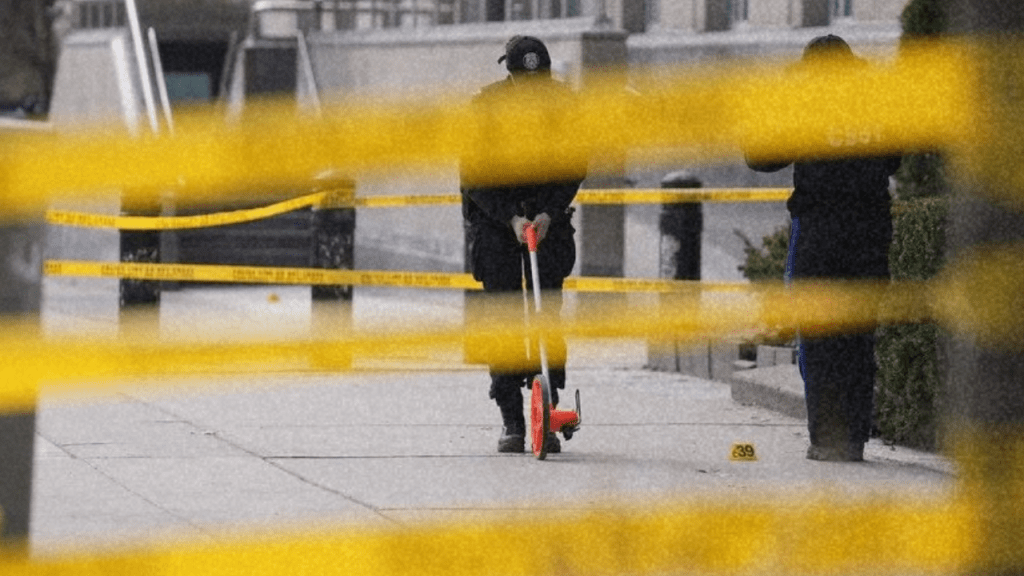
Toronto gun-for-hire story presents police as outsiders after Project South charged officers in a corruption case involving an alleged murder plot.
On June 16, Toronto police announced three arrests and the seizure of two handguns connected to firearm discharges across the Greater Toronto Area. Investigators linked the weapons through ballistic testing to 27 incidents, including the March shooting at the U.S. Consulate, and said similar methods had been used in attacks on synagogues, Jewish schools, homes and businesses.
Police alleged that teenagers and young adults were recruited through encrypted applications, supplied with guns and paid after recording the attacks. The video served as proof that an assignment had been completed. Police called the model “criminals for hire,” describing a market in which young recruits performed the visible violence while intermediaries and clients remained physically removed.
The announcement materially changes what was publicly known after the March consulate shooting. Police now claim to have recovered weapons, identified alleged shooters and established forensic connections between incidents. That evidence deserves examination, but it does not identify who selected the targets, supplied the money or directed the people closest to the guns.
Toronto Police Chief Myron Demkiw said investigators were still trying to determine who was orchestrating and financing the attacks. The police account therefore describes part of the delivery system without establishing the commissioning layer behind it. Police have moved closer to the alleged shooters while the clients remain unnamed.
Police Put Themselves Outside the Market
In the police account, a client selects a target, an intermediary transmits the assignment and a young person carries out the shooting. The recruit records the result, submits the footage and receives payment. The people performing the violence absorb the physical and legal risks while those purchasing it remain several steps away.
Police described this process in considerable detail. They identified alleged recruits, seized weapons, released images and named encrypted applications used to communicate. They did not publicly release the alleged messages, payment records or evidence identifying the people who financed the attacks.
That imbalance gives police control over both the evidence and its interpretation. The public sees the material selected for a press conference, while investigators retain the records needed to test the larger account. Allegations about the market can therefore become accepted facts before the evidence has been examined in court.
The police narrative also places the institution in the most favourable position. Young recruits become the visible offenders, unnamed clients become distant suspects and police appear as neutral investigators uncovering a criminal market located entirely outside the force. Toronto’s own recent corruption investigation makes that separation impossible to assume.
A Similar Plot Reached Into Toronto Police
Four months before the gun-for-hire announcement, seven serving Toronto officers and one retired officer were charged in Project South. The organized-crime investigation involved allegations of bribery, drug trafficking, unlawful access to confidential police information and a conspiracy to murder a corrections manager.
Project South began after suspects repeatedly attended the corrections manager’s home in what investigators described as an attempted killing. York Regional Police alleged that a Toronto officer had unlawfully accessed information about the intended victim. Investigators later identified other cases in which addresses returned through unauthorized police searches became locations for shootings, extortions and commercial robberies.
The allegations have not been proven in court. They nevertheless establish that a similar alleged plot involving target information, intermediaries and organized violence had already led investigators into the Toronto Police Service. Police Chief Myron Demkiw acknowledged that organized crime had penetrated the force and damaged public trust.
Project South does not establish that police participated in the consulate or synagogue shootings. It does eliminate the presumption that Toronto officers automatically stand outside the market they are describing. Members of the same force have been accused of supplying criminal networks with protected information that could help locate targets and facilitate violent offences.
When police describe a system built from buyers, brokers, confidential information and disposable shooters, the possible position of police officers inside that system becomes a necessary question. The force cannot define organized violence as an entirely external threat while its own officers face charges arising from an alleged relationship with organized crime.
Ballistics Show Infrastructure, Not Command
Toronto police said one recovered handgun was connected to six additional shootings and another to at least 21 incidents, including the attack on the U.S. Consulate. That is substantial forensic evidence that weapons circulated across multiple crimes. It does not establish that one buyer, one hierarchy or one political organization ordered every attack.
A reusable gun can pass among intermediaries and shooters working for different clients. The same encrypted platform can carry assignments connected to commercial disputes, personal retaliation and politically sensitive targets. Recurring methods may demonstrate that criminal infrastructure is being reused without revealing who controls it.
Police themselves referred to both connected incidents and other unrelated shootings that used a similar model. That language points toward a market or several overlapping networks rather than a single proven command structure. The same service can be available to buyers with unrelated interests.
Ballistics can show where a weapon was used. They cannot show why a target was selected, who paid for the shooting or what political meaning the client intended. Those questions require evidence about communications, payments, relationships and command.
The June announcement answers part of the mechanical question surrounding the March attacks. It offers an account of how alleged shooters obtained weapons and assignments. It does not establish who authored the violence.
National Security Came Before a Motive
The March 10 shooting at the U.S. Consulate was classified as a national-security incident before investigators had publicly established a motive. The RCMP’s Integrated National Security Enforcement Team joined the investigation, the FBI became involved and security was increased around diplomatic buildings.
Ontario Premier Doug Ford then suggested that “sleeper cells” might be responsible for the consulate and synagogue shootings. Ford admitted that police had not provided evidence connecting the incidents, and the RCMP said it had no information confirming his claim.
As Spark Solidarity reported after the consulate shooting, an unexplained act of violence was immediately converted into a geopolitical threat. The identity of the target supplied the national-security meaning before the shooter or motive had been established.
The June police announcement does not validate the sleeper-cell claim. Police now describe paid recruits, circulating guns and unnamed clients, while continuing to investigate whether foreign actors or criminal groups financed particular attacks. The official explanation has changed, but the institutions controlling the evidence remain the same.
The national-security system did not wait for the commissioning layer to be identified. Police, intelligence agencies and politicians expanded their activity around an event whose political authorship remained unknown.
Palestinian Organizing Became the Target
The synagogue shootings were used politically before police identified the alleged shooters or clients. Ford’s government sought an emergency injunction against Toronto’s Al-Quds Day rally, presenting a Palestinian solidarity demonstration as a public-safety threat after attacks on Jewish institutions.
As Spark Solidarity documented, the province produced no evidence connecting the rally, its organizers or the broader Palestinian solidarity movement to the shootings. A Superior Court judge rejected the application, and the demonstration proceeded.
The identity of the targets was used to imply an identity for the perpetrators. Jewish institutions had been attacked, so a Palestinian demonstration was framed as the danger. The political association was constructed before investigators knew who fired the guns or whose interests the attacks served.
The gun-for-hire announcement provides no public evidence connecting Al-Quds Day to the shootings. Police instead describe a transactional system used against diplomatic, religious, residential and commercial targets. Even within that account, the political meaning of each attack depends on the unidentified client rather than the person holding the weapon.
The government did not wait for those clients to be identified. Unresolved violence had already supplied a justification for expanding police activity and attempting to suppress Palestinian political organizing.
The Announcement Already Demands More Power
The June press conference did more than announce arrests. Demkiw used the shootings to demand legislative changes, including a new offence for recruiting minors and expanded lawful-access powers for police investigating communications conducted through encrypted applications.
He specifically pointed to Bill C-22, legislation that would expand the state’s ability to compel telecommunications providers to preserve data, assist police and alter their systems under secret orders. Spark Solidarity examined those powers in Bill C-22 Legalizes Existing Surveillance.
The police argument follows a familiar sequence. Violence is organized through encrypted platforms, existing powers are declared inadequate and the solution becomes greater state access to private communications. The public is asked to accept that expanding surveillance will reveal the hidden clients, even though police have not shown that a lack of legal authority caused those clients to remain unidentified.
Project South makes that demand more dangerous. The same police service seeking broader access to communications and personal information recently saw officers charged with unlawfully accessing confidential databases and supplying information to organized crime. Expanding the volume of information available to police also expands the material that compromised officers can misuse.
The June announcement therefore produces an immediate institutional benefit. Police present themselves as constrained investigators facing technologically sophisticated criminals, then use the resulting fear to demand greater access and authority. Their own corruption case is treated as separate from the surveillance powers they want enlarged.
Police Claims Are Not Public Proof
The recovered weapons, ballistic results and arrests are significant evidence. They weaken any claim that police had made no investigative progress and provide a plausible account of how some attacks were carried out. They do not require the public to accept every conclusion police attached to that evidence.
The announcement did not establish who selected the U.S. Consulate, synagogues or Jewish schools. It did not identify who supplied the money, how the payments moved or whether the clients behind different incidents were connected. Police described alleged mechanisms without publicly establishing the complete structure around them.
The account also left police corruption outside its frame. Project South had already produced allegations that officers supplied organized crime with confidential information in a case involving shootings and an attempted killing. Any credible examination of Toronto’s market for paid violence must include that institutional record.
The public should not assume that Toronto officers participated in the consulate or synagogue shootings without evidence. It should also reject the opposite assumption that police necessarily stood outside the networks under investigation. Both conclusions require proof that the police service has not publicly supplied.
Toronto police have offered a story in which organized violence comes from outside the institution and police arrive to contain it. Project South shows that a similar alleged plot can lead back into the force itself. Until the clients are identified and the evidence is tested, police remain one actor inside the story rather than the authority entitled to define its final meaning.
Sources
- Toronto Police: Criminals for Hire Linked to 27 Firearm Discharges
- Toronto Police: Arrests Made in Firearm Discharge Investigations
- Associated Press: Toronto Police Link Gun-for-Hire Networks to Shootings
- Associated Press: Toronto Officers Charged in Project South
- CityNews: Seven Toronto Officers Charged in Project South
- Toronto Police: Chief’s Remarks on Project South
- CityNews: March Shooting Treated as a National-Security Incident
- CityNews: Ford Raises Sleeper Cells Without Evidence
- Global News: Court Rejects Ontario’s Al-Quds Injunction
- Spark Solidarity: Toronto Consulate Shooting and Security-State Logic
- Spark Solidarity: Ford Used Synagogue Shootings to Target Al-Quds Day
- Spark Solidarity: Bill C-22 Legalizes Existing Surveillance



 Spark Solidarity