
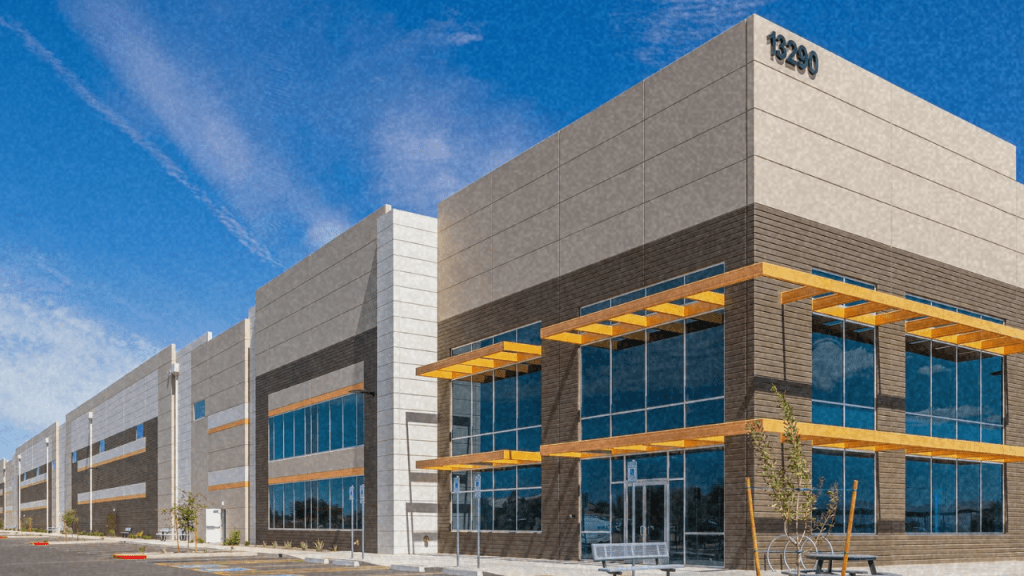
GardaWorld’s US$313.4 million Arizona detention project is paused, but the cross-border security system behind it remains intact.
GardaWorld’s Surprise detention project is on hold.
On June 30, Arizona reached an agreement with the U.S. Department of Homeland Security and Immigration and Customs Enforcement pausing the conversion of an ICE-owned warehouse in Surprise into a processing and detention facility until a required environmental review is complete. Arizona Attorney General Kris Mayes announced the agreement on July 1. Under the stipulation, ICE agreed not to detain anyone at the site or proceed with construction, demolition or retrofitting while the review is underway.
Federal records still show US$313.4 million obligated under the GardaWorld Federal Services order. With extension options, its potential value can rise to approximately US$704.1 million by 2029.
The pause is the latest turn in a relationship that became visible in Montreal months earlier. On February 13, hundreds marched on GardaWorld’s headquarters over Quebec’s financial support for the company and its role in U.S. immigration detention. Three weeks later, ICE placed the US$313.4 million Surprise order with GardaWorld Federal Services.
Arizona has now interrupted one major project. It has not dismantled the system around it.
What Arizona Stopped
Arizona sued DHS and ICE on April 24, arguing that the federal government was moving toward converting the Surprise warehouse without completing the environmental review required under federal law.
The June 30 agreement paused both the physical conversion and the litigation while that review proceeds. ICE cannot use the site for detention or carry out construction, demolition or retrofitting during the pause.
That matters. Detention expansion is not automatic. A state challenge has imposed a real constraint on a federal project and, for now, prevented the warehouse from becoming an operational ICE detention facility.
But the contract itself has not disappeared from the federal record. USAspending still lists US$313,357,612.46 in obligations under the GardaWorld Federal Services order, while the combined potential award value remains approximately US$704.1 million.
What Arizona Did Not Stop
GardaWorld’s place inside immigration enforcement extends beyond Surprise.
In Florida, GardaWorld Federal Services remains tied to the Everglades detention site known as “Alligator Alcatraz” through a “TNT Ancillary Support Services Staffing” contract valued at US$40,469,728.80. The company had also already been selected for an ICE Emergency Detention and Related Services vehicle with a ceiling of approximately US$138 million.
At home, the wider GardaWorld corporate system remains deeply embedded in public-security work. Quebec invested C$300 million in GardaWorld preferred shares in 2022 to support the company’s global growth. The Canadian Air Transport Security Authority later awarded GardaWorld five-year airport-screening agreements worth approximately C$2.7 billion across 45 airports.
None of those contracts is identical to the Surprise project. Together they show why stopping one facility does not dissolve the larger structure. GardaWorld continues to sell security capacity to governments on both sides of the border, while public institutions continue to finance and purchase that capacity.
The Border Launders Responsibility
Canada’s political relationship to Trump’s immigration regime is often narrated as a question of national difference.
ICE belongs to the United States. Its detention system is American policy. Canadian politicians can condemn its excesses from the other side of an international border.
GardaWorld exposes what that national framing leaves out.
Quebec can say it made a market-rate investment. Ottawa can say airport screening is ordinary procurement. GardaWorld can say its American detention work belongs to a U.S. federal business. ICE can say Arizona is simply another federal contract.
None of those statements is necessarily false.
Put them together and a different picture appears. Public money helped build the scale of a Montreal security multinational that now sells coercive capacity to governments on both sides of the border.
The Arizona pause is a real constraint, not a footnote. It shows that detention expansion can be challenged and interrupted. It also leaves the underlying corporate relationships intact: Quebec’s investment, GardaWorld’s Canadian public-security contracts, its Florida detention staffing and its place inside U.S. federal procurement.
Privatization lets coercive capacity circulate between states while political responsibility remains fragmented. Each institution can describe its own contract, investment or legal authority accurately while the larger circuit disappears.
The February protest made that circuit visible from Montreal. The March ICE order expanded it. Arizona’s challenge interrupted one project without dissolving the system around it.
The border makes responsibility easier to divide. The business crosses it without difficulty.
The border may divide governments. It does not divide the business of coercion.
Sources
- Arizona Attorney General, “Attorney General Mayes Secures Stipulation Halting Conversion of Surprise Facility Into ICE Detention Center,” July 1, 2026 — June 30 agreement pausing conversion and detention at the Surprise facility pending environmental review.
- Arizona Attorney General, “Attorney General Mayes Sues to Block Proposed ICE Detention Facility in Surprise,” April 24, 2026 — Arizona’s challenge to the project and the environmental-review dispute.
- USAspending, federal award record showing the GardaWorld Federal Services order 70CDCR26FR0000043, US$313,357,612.46 in obligations and combined potential award value of approximately US$704.1 million.
- Florida Department of Financial Services, contract E6051 — GardaWorld Federal Services “TNT Ancillary Support Services Staffing” contract valued at US$40,469,728.80.
- Federal contract record 70CDCR25D00000020 — GardaWorld Federal Services Emergency Detention and Related Services contract vehicle, awarded May 2025 with an approximately US$138 million ceiling.
- GardaWorld, August 24, 2022 — Quebec’s C$300 million preferred-share investment, market conditions and stated global-growth purpose.
- GardaWorld, November 24, 2023 — C$2.7 billion CATSA agreements covering 45 airports.





 Spark Solidarity