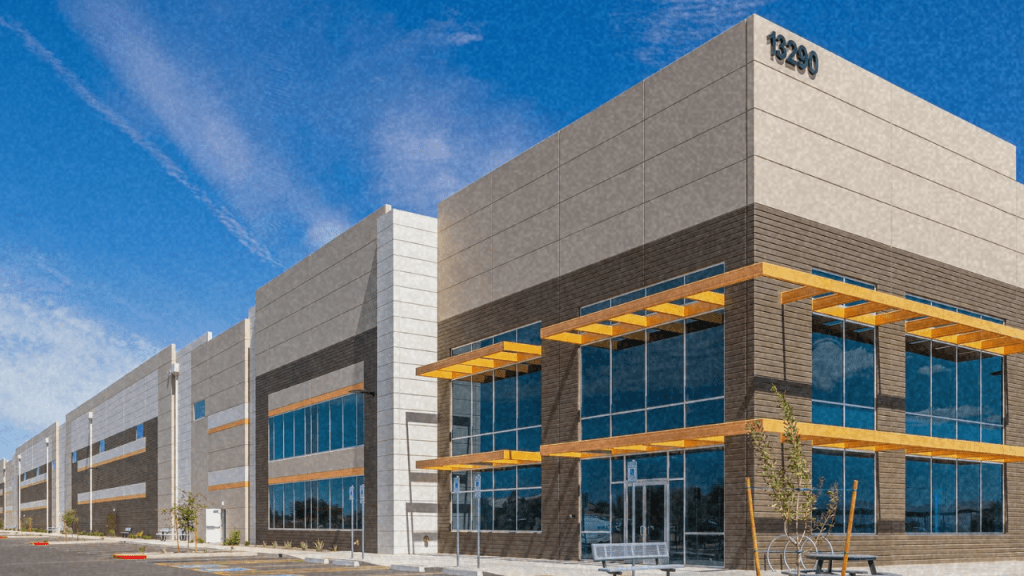

GardaWorld’s ICE detention ties brought hundreds of protesters to its Montreal headquarters, where SPVM dispersed the crowd.
Hundreds of people marched through Saint-Laurent on February 13 under the slogan “ICE tue, le Québec paie.” Their destination was the Montreal headquarters of GardaWorld, one of the world’s largest private-security companies.
The demonstration connected two facts that are usually kept apart. Quebec put C$300 million of public capital into GardaWorld in 2022 to support the company’s international expansion. GardaWorld Federal Services, the company’s U.S. government contracting arm, has since entered the infrastructure surrounding American immigration detention.
The protesters wanted Quebec to end its financial support for GardaWorld because of that relationship.
At the company’s headquarters on Émile-Bélanger, SPVM officers had established a perimeter. Police said demonstrators broke through the line and threw pyrotechnics, rocks and snowballs. Eight minutes after the crowd arrived, officers charged protesters and used irritant gas to disperse them. One person was arrested for an alleged armed assault on police.
Amnesty International Canada francophone had observers at the demonstration. On February 14, the organization said preliminary photographs, video and testimony raised serious concerns about police force that may have been unjustified and disproportionate. It said it would assess whether the intervention violated the right to protest.
The collision was unusually direct. Montrealers protesting a private company’s role in the American immigration apparatus encountered public police force outside the headquarters of that company at home.
Quebec invested in GardaWorld’s global growth
Quebec did not give GardaWorld a C$300 million grant. Through Investissement Québec, the government made a C$300 million investment in GardaWorld preferred shares at market conditions.
GardaWorld described the purpose of the transaction clearly when it announced the deal in August 2022. The investment was meant to support the company’s global growth strategy. CEO Stephan Crétier said Quebec’s backing would help GardaWorld pursue its “global growth ambitions.”
The shares were redeemable by GardaWorld and carried a dividend capitalized annually until redemption. The arrangement was an investment, not a subsidy disguised as a cheque.
But the form of the transaction does not make its political consequences disappear. Quebec deliberately put public capital behind the expansion of a multinational whose business is selling security services, risk management and operational capacity across jurisdictions.
The February protesters were asking what responsibility follows when the company supported by that public investment enters a coercive system abroad that many Quebecers and Canadians claim to oppose.
GardaWorld was already inside U.S. immigration detention
GardaWorld’s American detention work runs through GardaWorld Federal Services, a U.S.-based business inside the larger corporate system that specializes in government mission support.
In May 2025, Immigration and Customs Enforcement selected GardaWorld Federal Services for an Emergency Detention and Related Services contract vehicle. Federal contracting records list a ceiling of approximately US$138 million. The initial obligation was only nominal, but the award placed GardaWorld inside a procurement system designed to let ICE order detention-related services as needed.
Its role in Florida was more concrete. GardaWorld Federal Services provided staffing support at the Everglades detention site known as “Alligator Alcatraz.” Florida’s contract database identifies the company under a “TNT Ancillary Support Services Staffing” contract valued at US$40,469,728.80.
The Tyee traced the same corporate relationship back into Canada, noting that GardaWorld also held federal contracts connected to Canadian immigration detention. The point is not that every GardaWorld contract performs the same function. It is that the company operates across a security market in which governments increasingly purchase personnel and coercive capacity from private firms.
That is what made the Saint-Laurent demonstration more than symbolic anti-Trump politics. Protesters were not standing outside an American consulate objecting to a foreign government in the abstract. They were standing outside a Montreal corporation that had become materially involved in the detention infrastructure they were condemning.
Who pays, who polices the perimeter
Quebec invested C$300 million in GardaWorld to support its global expansion. GardaWorld Federal Services secured a place inside ICE’s emergency-detention contracting system. GardaWorld personnel were involved in staffing the Everglades detention site. Canadian public agencies continued to purchase security services from the broader GardaWorld corporate system.
When people in Montreal protested those relationships, SPVM officers enforced a perimeter around the company’s headquarters and then forcibly dispersed the crowd. Amnesty’s observers said the police response raised serious concerns about potentially unjustified and disproportionate force, and the organization began assessing whether the intervention violated the right to protest.
No conspiracy is necessary to understand the structure. Public money supports corporate expansion. Governments outsource security work to the resulting private capacity. Protesters challenge the arrangement. Public police decide where the physical boundary around the corporation will be enforced.
The border makes it easy to describe GardaWorld’s immigration work as an American issue. The company’s headquarters, public financing and Canadian contracts make that separation harder to sustain.
The protesters came to GardaWorld because the relationship already crossed the border. On February 13, so did the political conflict around it.
Sources
Conseil central du Montréal métropolitain–CSN, “ICE tue, le Québec paie: manifestation contre GardaWorld et contre ICE,” February 13, 2026 — demonstration date, meeting point, slogan and organizers’ demands.
Amnistie internationale Canada francophone, “Manifestation du 13 février devant GardaWorld,” February 14, 2026 — observer concerns over potentially unjustified and disproportionate police force.
TVA Nouvelles, February 16, 2026 — chronology of the march and SPVM account of the perimeter breach, projectiles, dispersal and arrest.
GardaWorld, August 24, 2022 — Quebec’s C$300 million preferred-share investment, market conditions and stated global-growth purpose.
Federal contract record 70CDCR25D00000020 — GardaWorld Federal Services Emergency Detention and Related Services vehicle, awarded May 2025 with an approximately US$138 million ceiling and nominal initial obligation.
Florida Department of Financial Services, contract E6051 — GardaWorld Federal Services “TNT Ancillary Support Services Staffing” contract valued at US$40,469,728.80.
Miami Herald, July 2, 2025 — GardaWorld’s correctional-staffing role at the Everglades detention site.
The Tyee, August 8, 2025 — GardaWorld’s Florida detention staffing and Canadian immigration-security contracting context.