
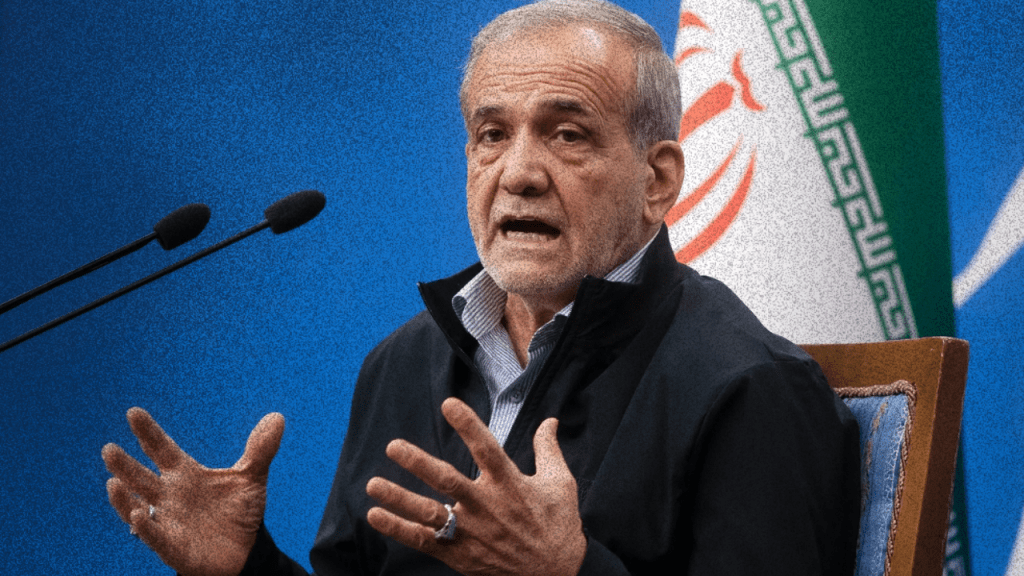
Pezeshkian letter to Americans bypassed diplomacy to ask one question: whose interests does this war actually serve?
The Form Is the Argument
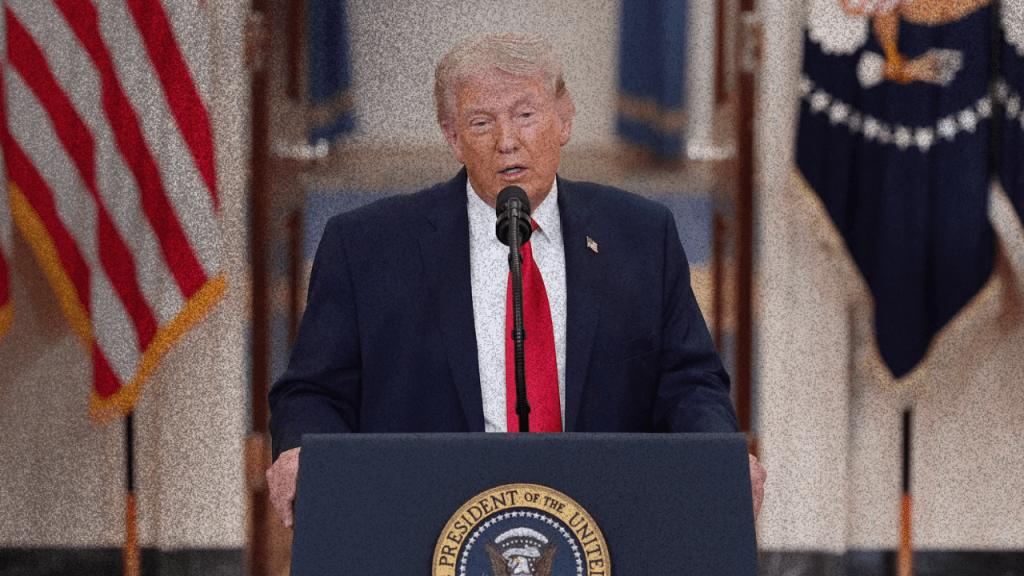
On April 1, 2026, Iranian President Masoud Pezeshkian published an open letter addressed to “the people of the United States of America” — not to the State Department, not to Congress, not to Trump. To the people. Hours before Trump’s own prime-time address to the nation on the same war. The form of the letter is already an argument: that the conflict isn’t between the American and Iranian states, but between a population and the apparatus claiming to represent it. Everything that follows is built on that premise.
The Opening Move: Separating People from Policy
Pezeshkian opens with a claim about Iranian identity and history before he makes a single political argument: “Iran has never, in its modern history, chosen the path of aggression, expansion, colonialism, or domination. Even after enduring occupation, invasion, and sustained pressure from global powers — and despite possessing military superiority over many of its neighbors — Iran has never initiated a war.” He is establishing the baseline before the American counternarrative can reassert itself.
He then draws the distinction that structures the entire letter: “The Iranian people harbor no enmity toward other nations, including the people of America, Europe, or neighboring countries. Even in the face of repeated foreign interventions and pressures throughout their proud history, Iranians have consistently drawn a clear distinction between governments and the peoples they govern.” This isn’t rhetorical softening. It is the letter’s core mechanism — separating the American public from the American state, creating an audience that can receive the argument without being asked to identify as an enemy. The same separation that weaponized diaspora strategies work to collapse is what Pezeshkian is trying to open back up.
The 1953 Line and Why It Opens the Letter
The letter places 1953 early and names it plainly: “The turning point was the intervention aimed at preventing the nationalization of Iran’s own resources. That coup disrupted Iran’s democratic process, reinstated dictatorship, and sowed deep distrust among Iranians toward U.S. policies.” The CIA’s role in the 1953 coup against Prime Minister Mossadegh is confirmed history — it is not a contested claim. Pezeshkian deploys it not to relitigate it but to establish causation: the hostility between the two countries was created by a specific act, not by Iranian nature or ideology. That matters because it makes the hostility reversible in principle, and it makes the American government responsible for its origin.
He then builds the sequence forward: “This distrust deepened further with America’s support for the Shah’s regime, its backing of Saddam Hussein during the imposed war of the 1980s, the imposition of the longest and most comprehensive sanctions in modern history, and ultimately, unprovoked military aggression — twice, in the midst of negotiations — against Iran.” The Iraq war connection is the same logic applied regionally: the U.S. backed Saddam’s invasion of Iran, including providing intelligence for chemical weapons attacks, then later destroyed Saddam, then used the instability that followed as justification for further intervention. The throughline isn’t chaos — it’s the consistent punishment of states that refuse subordination.
The Inversion: Who Is Actually Surrounding Whom
This is where the letter makes its sharpest structural move: “Within this same framework, the United States has concentrated the largest number of its forces, bases, and military capabilities around Iran — a country that, at least since the founding of the United States, has never initiated a war. Recent American aggressions launched from these very bases have demonstrated how threatening such a military presence truly is. Naturally, no country confronted with such conditions would forgo strengthening its defensive capabilities.”
American military forces operate from bases in Iraq, Kuwait, Bahrain, Qatar, UAE, Saudi Arabia, Turkey, and Diego Garcia — a physical encirclement of Iranian territory. The standard American framing presents Iran’s missile programs and regional proxy networks as unprovoked aggression. Pezeshkian simply asks Americans to look at the geography: Iranian military capabilities can reach American forces only because those forces are positioned on Iran’s borders. Iran’s deterrence strategy is a rational response to that encirclement, not evidence of expansionist intent. The letter doesn’t ask Americans to agree — it asks them to look at the map.
The Nuclear Double Standard Named Directly
Pezeshkian doesn’t sidestep the nuclear question. He frames it through the diplomatic record: “Iran pursued negotiations, reached an agreement, and fulfilled all its commitments. The decision to withdraw from that agreement, escalate toward confrontation, and launch two acts of aggression in the midst of negotiations were destructive choices made by the U.S. government — choices that served the delusions of a foreign aggressor.” U.S. intelligence assessments have not concluded Iran has produced nuclear weapons, yet Iran’s research program justifies ongoing military threats while Israel’s actual undeclared nuclear arsenal draws no equivalent pressure. The letter names this asymmetry without spelling it out in full — the “foreign aggressor” whose delusions the U.S. is serving is identified clearly in the next section.
The Proxy Question: Fighting to the Last American
This is the letter’s sharpest passage, and the one most likely to be dismissed rather than engaged: “Is it not also the case that America has entered this aggression as a proxy for Israel, influenced and manipulated by that regime? Is it not true that Israel, by manufacturing an Iranian threat, seeks to divert global attention away from its crimes toward the Palestinians? Is it not evident that Israel now aims to fight Iran to the last American soldier and the last American taxpayer dollar — shifting the burden of its delusions onto Iran, the region, and the United States itself in pursuit of illegitimate interests? Is ‘America First’ truly among the priorities of the U.S. government today?”
The rhetorical structure here is deliberate. Each question is framed so that a straight answer implicates the American government. To say no to “Is America fighting as a proxy for Israel” requires defending a position that even significant parts of the American right — Tucker Carlson, Joe Kent, elements of the America First coalition — have publicly abandoned. The inversion that defines the Iran war narrative depends on the proxy relationship remaining invisible. Pezeshkian names it directly, in public, to an American audience, the night before Trump addresses the nation. The timing ensures that Trump’s address has to implicitly answer it.
He also makes the cost-benefit argument explicit: Americans gain nothing material from this war. Four decades of sanctions failed to produce regime change or policy reversal. Gas prices are up. Soldiers are dying. The enriched uranium the war was supposedly launched to destroy is still there. The pattern of building institutional apparatus around stated security objectives that are never achieved is the same one that defined the post-9/11 era. Pezeshkian is asking Americans to recognize it before the next phase of escalation makes the question harder to ask.
The Closing Stakes: Crossroads or Permanent War
The letter closes with a temporal argument rather than a moral one: “Today, the world stands at a crossroads. Continuing along the path of confrontation is more costly and futile than ever before. The choice between confrontation and engagement is both real and consequential; its outcome will shape the future for generations to come.” And then, finally: “Throughout its millennia of proud history, Iran has outlasted many aggressors. All that remains of them are tarnished names in history, while Iran endures — resilient, dignified, and proud.”
That last line is a warning, not a plea. It is not asking for American sympathy. It is stating a historical pattern and inviting Americans to consider which side of it they want to be on. The letter works by making the gap visible — the space between what Americans are told justifies Iran policy and what that policy actually accomplishes for them. The weaponized diaspora apparatus and the messenger-discrediting machinery that follows every inconvenient truth will work to close that gap again. But for the hours between when Pezeshkian posted and when Trump began speaking, the question was in the air: who actually benefits from this, and who is being asked to pay for it?
Sources
- Iran President Letter to Americans: Full Text — Insider Paper
- Iran War Narrative Inverts Who Struck First — Spark Solidarity
- Netanyahu Iraq Testimony Guaranteed a War That Killed Millions — Spark Solidarity
- Iran Deterrence Strategy and the Limits of Moral Appeals — Spark Solidarity
- Weaponized Diaspora and the Witnesses Empire Needs — Spark Solidarity
- Guantanamo 9/11 Plea Deal — Spark Solidarity
- CIA Admits Role in 1953 Iranian Coup — The Guardian
- U.S. Military Bases in the Middle East — Al Jazeera
- Annual Threat Assessment 2023 — Office of the Director of National Intelligence
- Iran Sanctions Impact and Policy Continuation — Foreign Policy


 Spark Solidarity