
The U.S.–Israel war on Iran reveals a strategy of alignment, sanctions, and pre-emption designed for regime change — not defence or diplomacy.
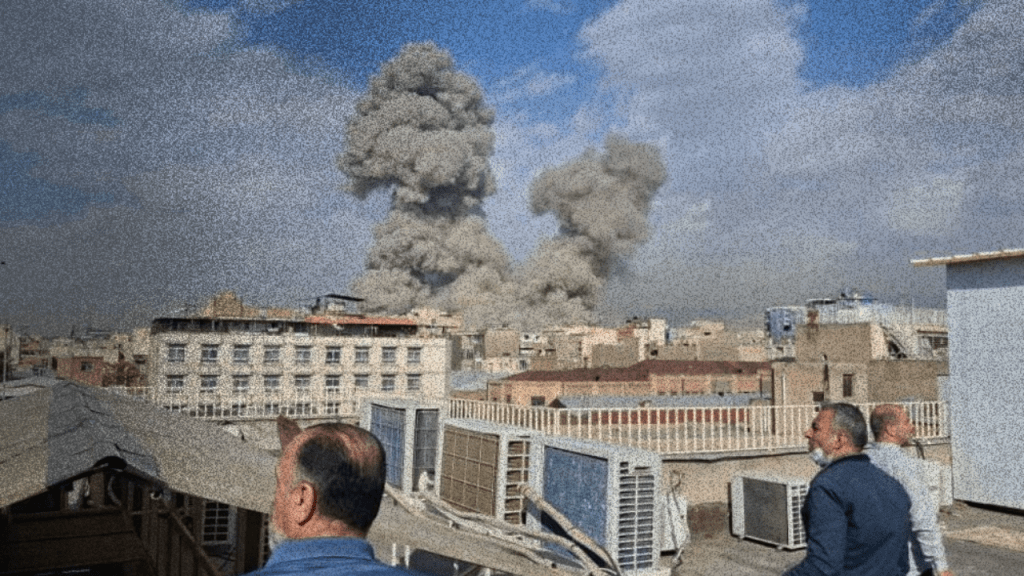
The moment oil prices spiked on fears of disruption in the Strait of Hormuz, the reality of what was unfolding became impossible to obscure. Markets reacted faster than diplomats, because markets understood the material stakes immediately. Whatever language officials would later deploy — self-defence, deterrence, pressure — the escalation had crossed from abstraction into force. What had been framed as a crisis was now an event.
Israeli Defense Minister Israel Katz described the strikes as preemptive and defensive — aimed at neutralizing threats against Israel. That single word did enormous political work. It transformed first strikes into defence, erased chronology, and inverted responsibility before any Iranian response occurred. This was not a new pattern. It was the culmination of one.
What followed in rapid succession — U.S. “major combat operations” confirmed, Trump’s vow to destroy Iran’s missile program, calls for Iranians to take over their government, and open acknowledgement of anticipated U.S. casualties — did not contradict earlier claims. It revealed their purpose. What had been presented as pressure, deterrence, or diplomacy resolved into what it had always been moving toward: regime-change war, openly declared. The structural logic behind that dual track is examined in depth in regime change drives escalation.
Alignment, Not Values
The escalation sequence exposes a truth that Western governments rarely admit: this conflict is not driven by values. It is driven by alignment. The chain is consistent. Washington escalates pressure. Israel executes kinetic enforcement. Allies prepare to politically sanitize the action. The language of human rights enters only after force is applied, never before, and never as a constraint on action.
Canada’s role within this structure is predictable because it is structural. Canadian officials do not independently assess escalation; they ratify it. Israel strikes, Canada affirms Israel’s “right to defend itself,” Iran is framed as destabilizing, and retaliation is treated as escalation rather than response. The moral vocabulary remains constant regardless of sequence. This is why comparisons to Saudi Arabia, Egypt, or other authoritarian partners are so corrosive to the official narrative. If repression were the issue, alignment would not determine partnership. But alignment does. Iran’s crime is not abuse. It is autonomy.
The Alibi of “Pre-Emption”
The term “pre-emptive” is not descriptive. It is doctrinal. It removes the requirement that an attack occur. It allows future capability to be treated as present aggression. It converts hypothetical threat into justification for force. Most importantly, it flips the burden of escalation. Once a strike is labelled pre-emptive, any response becomes proof of the original threat.
This inversion is essential to first-strike warfare. Israel initiates violence, motive is asserted rather than demonstrated, and causality is reversed in advance. The target is placed in a no-win position: respond and confirm the narrative, or refrain and accept degradation. Canada’s adoption of this language is not accidental. It allows Ottawa to participate in escalation while maintaining a self-image of restraint. Defence becomes a moral solvent that dissolves sequence, proportionality, and responsibility. The pre-emption doctrine’s American genealogy — how manufactured justification and deniable violence were built into U.S. national security planning long before this moment — is examined in the deniable violence analysis.
Sanctions Were the War’s Opening Phase
Sanctions are often described as alternatives to war. In practice, they are the opening phase. The purpose of sanctions on Iran has never been behaviour modification alone. It has been systemic weakening: degrading civilian life, straining institutions, fracturing elite cohesion, and narrowing political options until collapse appears natural. Medicine shortages, infrastructure decay, and economic suffocation are not side effects. They are mechanisms.
This is why sanctions are paired with diplomacy that cannot succeed. Geneva talks ended on February 26 — two days before the strikes. Demands that Iran completely abandon its nuclear program and ballistic missile development simultaneously are not negotiating positions. They are conditions of surrender. No sovereign state could accept them without ceasing to be sovereign. When sanctions fail to produce internal collapse, escalation proceeds to the next phase. Covert action becomes overt. Pressure becomes force. The transition is not accidental. It is designed.
Diplomacy as Procedural Cover
Diplomacy in this conflict did not fail. It fulfilled its function. Negotiations were structured to be seen failing so that escalation could appear reluctant rather than chosen. “We tried,” Trump said in his announcement — Trump’s full statement. “They rejected every opportunity to renounce their nuclear ambitions.” The phrase “we tried” becomes the moral preface to “we had no choice.” Talks are not meant to resolve the underlying dispute because resolution would remove the casus belli.
Once “major combat operations” are announced, diplomacy is reduced to narrative aftercare. It reappears as de-escalation rhetoric, humanitarian concern, or off-ramp signalling, but never as a genuine alternative to force. Crisis management is not peace-making. It exists to manage fallout, not prevent catastrophe.
When the War Was Named
When Donald Trump announced “major combat operations” had begun in Iran, interpretive ambiguity ended. This phrase is carefully chosen. It avoids the word “war” while activating all of war’s realities: sustained engagement, open-ended timelines, accepted casualties, and regional escalation.
This was not a response to an unforeseen emergency. Weeks of military buildup — two carrier strike groups, strategic bombers, embassy evacuations — had already occurred. Wars of necessity are reactive. Wars of choice are logistical. By the time the announcement was made, the decision had already been executed. The statement simply made visible what was already operational.
Sovereignty as the Real Target
The justification offered for war — Iran’s nuclear program — reveals its true function when examined closely. Iran is not accused of using a nuclear weapon. It is accused of retaining the capacity to decide its future independently. This is why compliance is never sufficient. Inspections are never final. Capability itself is treated as aggression. The framework mirrors Iraq’s WMD logic almost exactly: endless demands, moving goalposts, and permanent threat inflation.
When Trump vowed missile program destruction, these are not marginal capabilities. They are the foundations of deterrence, regional autonomy, and control over strategic chokepoints. Destroying them is not defence. It is pacification. The same logic — sovereignty itself treated as the threat, compliance rendered permanently insufficient — was examined when the U.S. declared its legal framework for capturing Maduro in the Maduro precedent analysis.
Regime Change, No Longer Implied
Trump told the Iranian people “your hour of freedom” was at hand and instructed them to “take over your government.” He told the IRGC to “lay down your arms or you will face certain death.” These are not rhetorical excesses. They are admissions. Once regime change is openly declared, all prior defensive language collapses retroactively. Pre-emption, deterrence, pressure, and diplomacy are revealed as scaffolding. They existed to manage consent until escalation became irreversible.
Trump’s acknowledgement that American casualties were expected further confirms this is a war of choice. Casualties are normalized only when leadership has accepted long-duration conflict. This is expectation-setting, not humility. At this stage, denial becomes impossible. The war aim is no longer ambiguous.
Decapitation Logic and the End of Pretence
Calls for the IRGC to surrender and for Iranians to “take over your government” perform critical political work. They signal intent. You do not instruct a country’s military to abandon its leadership while claiming to seek stability. You do so when the goal is regime destruction.
The exiled Shah’s son, Pahlavi’s opposition role, had already called on Iranians to reclaim the nation and told security forces they would “go down with Khamenei’s sinking ship” if they didn’t switch sides. The infrastructure of post-regime narrative was deployed before the bombs had finished falling. In modern conflict, information velocity outruns verification. Collapse-framing destabilizes internal politics, tests public reaction to leadership removal, and conditions foreign audiences to accept disintegration as inevitable.
The Catastrophe Constituency
Public reactions celebrating leadership targeting or calling for regime collapse are not fringe noise. They are the emotional constituency of regime-change war. This politics of catastrophe treats mass suffering as a prerequisite for liberation. It is indifferent to civilian harm, hostile to sovereignty, and animated by the belief that collapse will produce democracy. Libya stands as its most complete refutation. Platforming these forces is not neutral. It legitimizes authoritarian outcomes under the banner of freedom and accelerates escalation by stripping it of moral friction.
R2P and the Management of Collapse
Once leadership targeting and capital-city strikes occur, civilian risk becomes structural. Iran’s internet fell to 4% of normal connectivity, with telephone communications largely severed. Humanitarian language will follow — not to prevent harm but to manage optics. Responsibility to Protect does not halt induced chaos. It moralizes intervention after collapse has begun. Power vacuum, civilian risk, and international responsibility become justifications for deeper involvement, not restraint.
Retaliation as Survival, Then Blame
When Iran’s IRGC launched the first wave of missile and drone attacks toward Israel, they were not escalating. They were responding to existential pressure. After joint strikes, regime-change declarations, and demands for the IRGC to surrender, non-response would equal political collapse. Retaliation becomes a requirement of state survival, not a choice.
The narrative script is already written. Israel and the U.S. act first. Iran responds. Iran is blamed for widening the war. Sequence disappears. Proxy framing then displaces responsibility further, allowing escalation to continue under the guise of self-defence.
Markets Tell the Truth First
Oil hit six-month highs in the days before the strikes, with analysts estimating an $8–10 per barrel geopolitical premium built into prices. Hormuz carries 20% globally of oil supply. Iran’s naval capabilities matter not because they threaten civilians, but because they threaten economic discipline. Control over energy flow underwrites global power. This is why Iranian sovereignty is treated as incompatible with the current order — and why the market understood what was happening before the press conference did.
Sources
- Israel “preemptive” strikes — CBS News
- U.S. major combat operations — CBS News
- Trump full Iran statement — CBS News
- Trump vows missile destruction — NPR
- Iran war live updates — NBC News
- Trump announces combat operations — Times of Israel
- Carrier strike groups in region — Al Jazeera
- Oil prices spike pre-war — CNBC
- Hormuz oil supply share — Bloomberg
- Regime change drives escalation — Spark Solidarity
- Deniable violence analysis — Spark Solidarity
- Maduro precedent analysis — Spark Solidarity




 Spark Solidarity