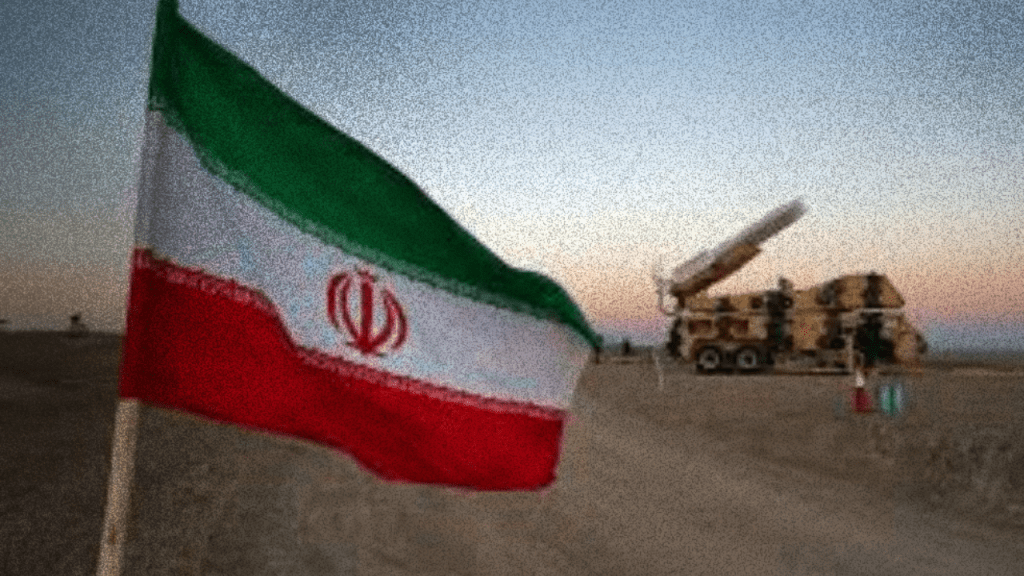
Iran’s control of Hormuz showed how a state under imperial attack can turn geography, energy and shipping into material deterrence.
The War Began With an Imperial Attack
The closure of the Strait of Hormuz did not begin as an arbitrary Iranian attack on global commerce.
On February 28, the United States and Israel opened a direct war against Iran. Iran answered through the military and economic terrain available to it, including the narrow waterway through which a substantial share of the world’s oil and gas had been moving every day. A senior adviser to the commander of Iran’s Islamic Revolutionary Guard Corps declared on March 2 that the strait was closed and warned that vessels attempting passage could be attacked. The statement followed the U.S.-Israeli assault and was explicitly presented as part of Iran’s retaliation. The sequence determines the politics.
Iran did not disrupt a peaceful energy system for its own sake. It used control over a strategic waterway against the states attacking it and against an international economic structure that expected Iranian territory to absorb unlimited violence while energy exports continued moving as though nothing had happened. The United States and Israel wanted to separate the battlefield from the economy supporting it. Iran refused that separation.
Hormuz Is Material Power
Around 20 million barrels of crude oil and petroleum products moved through Hormuz each day during 2024. That was approximately 27 percent of global maritime oil trade and around 20 percent of worldwide petroleum-liquids consumption. Large volumes of liquefied natural gas also travelled through the same corridor. These figures explain why Hormuz occupies such an important place in Iranian strategy.
Iran cannot match the United States aircraft for aircraft, ship for ship or dollar for dollar. It can, however, influence a passage on which the energy system of the imperial core and several major Asian economies depend, giving Iran leverage unavailable through conventional symmetry. Closing or severely restricting the strait does not require Iran to destroy the United States military. It requires Iran to make the war affect fuel prices, shipping schedules, insurance costs, production decisions, inflation expectations and political calculations far beyond the battlefield. The power lies in the transmission.
One disrupted passage creates pressure across refineries, ports, governments, commodity markets and household budgets. Geography becomes a mechanism for converting an attack on Iran into costs for the system enabling the attack. That is deterrence under conditions of extreme inequality.
Shipping Stopped Because the Threat Was Real
The early disruption was not an abstract market reaction.
By March 1, at least 150 crude and liquefied-natural-gas tankers had anchored in Gulf waters beyond Hormuz. At least another 100 tankers were stationary outside the strait near the UAE and Oman. Tanker owners, oil companies and trading houses suspended shipments as military danger, Iranian warnings, congestion and insurance uncertainty transformed the passage into an active war zone. Those vessels did not stop because Iran won an argument about international law. They stopped because operators calculated that the cost of proceeding could exceed the value of the voyage.
This is how material leverage works. It does not require universal recognition or ideological agreement. It changes behaviour by changing the consequences attached to a decision. A shipping company may oppose Iran politically, an insurer may accept every Western description of the war and a government may insist that Iran has no right to control passage. None of that moves a tanker through a corridor its owners believe could expose the vessel, cargo and crew to unacceptable danger. The physical relationship of forces overrides the diplomatic statement.
The Energy System Registered Iran’s Resistance
The disruption quickly reached beyond the Gulf.
The International Energy Agency described the war as producing the largest supply disruption in the history of the global oil market and identified the near halt in regular shipping through Hormuz as the central cause. On March 11, the IEA’s 32 member states approved the release of 400 million barrels from emergency reserves, the largest coordinated stock release in the agency’s history. The size of the release revealed the limits of the response.
Normal Hormuz traffic was roughly 20 million barrels per day. Dividing 400 million barrels by that normal flow produces the equivalent of approximately 20 days of passage through the strait. That comparison does not mean the reserves would replace every missing barrel for exactly 20 days, since the release would be distributed across countries and markets over time. It does demonstrate the scale of the leverage. The largest emergency intervention the IEA had ever organized was measured against a waterway Iran could continue disrupting after the reserves entered the market.
Emergency stocks could soften the immediate shock. They could not reopen Hormuz.
Iran Was Targeting the Cost Structure of War
The United States wanted to wage war through an asymmetrical arrangement.
American and Israeli forces could strike Iranian territory, destroy infrastructure and attempt to break Iran’s military capacity while the global energy system remained insulated from Iranian retaliation. Oil would continue moving, Gulf commercial hubs would remain open, shipping insurers would continue treating the passage as manageable and consumers in the attacking states would experience little connection between the war and the cost of ordinary life.
Iran’s strategy rejected that arrangement. The restriction of Hormuz connected military aggression to economic consequence and forced states supporting or benefiting from the war to confront a cost they could not confine to Iran. This was not cynical coercion appearing in a peaceful marketplace. It was the strategic response of a state under U.S.-Israeli attack, directed against the material system that made the war possible and affordable.
The same relationship appeared in the shutdown of Gulf airspace described in When the Sky Closes: What the Emirates Shutdown Means. Civilian and commercial systems became vulnerable because American military infrastructure had already been embedded throughout the region. Hormuz exposed the economic side of the same imperial geography.
Deterrence Does Not Require Conventional Victory
Iran did not need to defeat the United States in a conventional engagement. Its objective was to survive, preserve retaliatory capacity and make continued aggression increasingly expensive.
A materially weaker state cannot usually destroy every platform or stop every sortie. It can force the stronger state to spend more, deploy more, protect more infrastructure and accept greater political risk for each additional phase of the war. Hormuz magnifies that strategy because a missile destroys one target, while a disruption at the strait can alter the price of millions of barrels, delay hundreds of ships and force governments to draw down emergency reserves.
The leverage operates even before every threatened attack occurs. Owners delay voyages, insurers raise premiums, producers reduce output when storage fills, governments prepare emergency measures and markets price the possibility that the disruption will continue. Iran’s strength at Hormuz therefore does not come only from the weapons it can fire. It comes from the credible possibility that it can prevent the passage from functioning normally. The threat changes behaviour because the capability behind it cannot be dismissed.
Moral Clarity Is Necessary but Not Sufficient
Moral testimony names the crime.
It records the dead, identifies the aggressor and denies imperial war the legitimacy it requires. It can transform public consciousness, sustain movements and isolate governments that depend on consent, but it does not automatically change the interests served by war. The United States supports Israel because Israel performs military, political and intelligence functions inside a regional order organized around American power. Canada supports that order because the Canadian state and Canadian capital are deeply integrated with the United States.
Those relationships do not disappear when the moral case against them becomes overwhelming. The genocide in Gaza demonstrated the limit. Palestinian suffering was documented in real time and seen around the world, mass demonstrations filled streets and campuses, and the evidence destroyed any credible claim that Western governments did not understand what they were supporting. Weapons continued moving because the political and material relationships driving policy remained intact.
The lesson is not that testimony or protest is useless. It is that moral clarity becomes politically decisive when organized forces convert it into consequences.
Moral Outrage Must Become Material Pressure
A movement can expose a crime without possessing the power to stop it. Closing that gap requires organization capable of interrupting the institutions through which imperial policy operates.
Workers can stop weapons and cargo. Students can disrupt the reproduction of compliant institutions. Communities can impose electoral costs. Movements can obstruct recruitment, financing and logistical support. Soldiers can refuse orders. States under attack can resist militarily and target the economic structures sustaining aggression. These forms of pressure do not replace political education. They give it force.
The argument of Weaponized Diaspora and the Witnesses Empire Needs is relevant here. Imperial states invest heavily in controlling which testimony becomes legitimate because public understanding affects their ability to govern. Perception management becomes especially urgent when dissent begins threatening institutional consent, economic circulation or military operations. Iran’s strategy operates at that point of conversion.
It does not ask Washington to develop a conscience. It changes the calculations through which Washington and its allies decide what they can afford. The moral argument says the war is criminal. Material deterrence says the war will not remain cheap.
Historical Resistance Combined Political and Material Power
The United States did not leave Vietnam because one mechanism acted alone. Vietnamese armed resistance imposed enormous military costs, the antiwar movement weakened domestic consent, conscription spread the consequences of war through American society, international solidarity damaged Washington’s legitimacy, and economic pressure and political crisis reinforced battlefield failure.
The same interaction appeared in Iraq and Afghanistan. Resistance made occupation dangerous and expensive, public opposition reduced the political space for escalation, and military exhaustion, financial cost and the failure to construct durable client orders undermined the strategic case for remaining. Moral opposition helped make those wars illegitimate, while organized resistance made them difficult to continue.
Iran’s deterrence strategy operates within this history. Its purpose is not to persuade the imperial state that Iran deserves sovereignty. It is to defend that sovereignty by forcing the attacker to confront costs its officials hoped to externalize. The closure of Hormuz translated Iranian resistance into a form legible to governments, corporations and markets that had ignored every moral warning.
The United States Entered the War Already Overextended
The Hormuz shock reached a United States already carrying enormous fiscal and strategic commitments.
As of March 4, total gross federal debt stood at $38.86 trillion. Debt held by the public accounted for $31.27 trillion, while intragovernmental debt accounted for $7.59 trillion. Gross debt had risen by $2.64 trillion over the preceding year, an average increase of $7.23 billion per day. The federal government also paid $1.2 trillion in gross interest on the debt during fiscal year 2025. That figure is not the same as net interest spending in the federal budget, but both measures show the growing cost of sustaining the state’s accumulated obligations.
Iran did not create these contradictions. It recognized them. The United States was already financing global military deployments, weapons production, debt service and domestic political commitments, while a prolonged energy disruption added inflation, shipping pressure and potential recession risk to that structure. Trump claimed domestic oil production insulated the United States from the closure, but it did not insulate American consumers from global prices. By the week ending March 9, the average U.S. price for regular gasoline had risen by approximately 56 cents per gallon from its prewar level.
Iran’s strategy targeted an empire with extraordinary resources but expanding obligations. The purpose was to make those obligations collide.
The Imperial Core Has Its Own Responsibilities
People living inside Canada and the United States should not treat Iranian resistance as a substitute for organizing at home. Iran can impose costs through geography, missiles, maritime control and regional alliances, while movements in the imperial core operate through different terrain.
Their responsibility is to weaken the institutions making the war possible. That means confronting weapons manufacturers, military logistics, compliant universities, media institutions, political parties and labour organizations that refuse to use their power. It means converting opposition from personal belief into organized non-cooperation.
Iran’s control of Hormuz offers a strategic lesson, not a template to copy mechanically. Power must be applied where the system is vulnerable. For Iran, that vulnerability includes the waterway beside its coast. For workers in Canada and the United States, it may be a port, rail line, factory, pension fund, union, campus or election.
A moral appeal asks power to change. An organized movement alters what power is able to do.
What Hormuz Demonstrated
Iran’s use of Hormuz showed what deterrence means under extreme asymmetry. Iran could not match the United States weapon for weapon, but it could impose costs on the energy, shipping and financial systems supporting the attack. The closure forced vessels to stop, markets to reprice risk and governments to organize the largest emergency oil-stock release in IEA history. It transformed an assault Washington and Tel Aviv expected to confine inside Iran into a crisis extending through the global economy.
That was not a failure of restraint by the attacked state. It was the consequence of imperial powers believing they could bomb Iran while preserving every material benefit of peace for themselves. Moral outrage names that injustice, while Iranian resistance denied the aggressors immunity from its consequences.
The combination points toward a larger political lesson. Consciousness, solidarity and testimony matter because people must understand what they are fighting, but an imperial system does not retreat simply because its crimes have been exposed. It retreats when resistance changes the balance between what aggression promises and what aggression costs. Hormuz changed that balance.
That is why the strait became one of Iran’s most important weapons without needing to become a conventional battlefield in every moment. Iran did not ask the empire to recognize its sovereignty. It made violating that sovereignty materially expensive.
Sources
- Congressional Research Service, Iran Conflict and the Strait of Hormuz: Oil and Gas Market Impacts
- Al Jazeera, “Iran Says It Will Attack Any Ship Trying to Pass Through Strait of Hormuz,” March 2, 2026
- Reuters, “Hundreds of Ships Drop Anchor in Middle East Gulf,” March 1, 2026
- Reuters, “Three Tankers Damaged in Gulf as U.S.-Iran Conflict Escalates,” March 1, 2026
- International Energy Agency, March 2026 Oil Market Report and emergency-stock announcements
- Joint Economic Committee, March 2026 Monthly Debt Update
- U.S. Government Accountability Office, fiscal year 2025 Schedules of Federal Debt audit
- FactCheck.org, “How Iran Blocking the Strait of Hormuz Affects the U.S.,” March 13, 2026