Second Toronto Consulate Shooting deepens security fears and gives police a pretext to expand their powers before clear evidence is available.
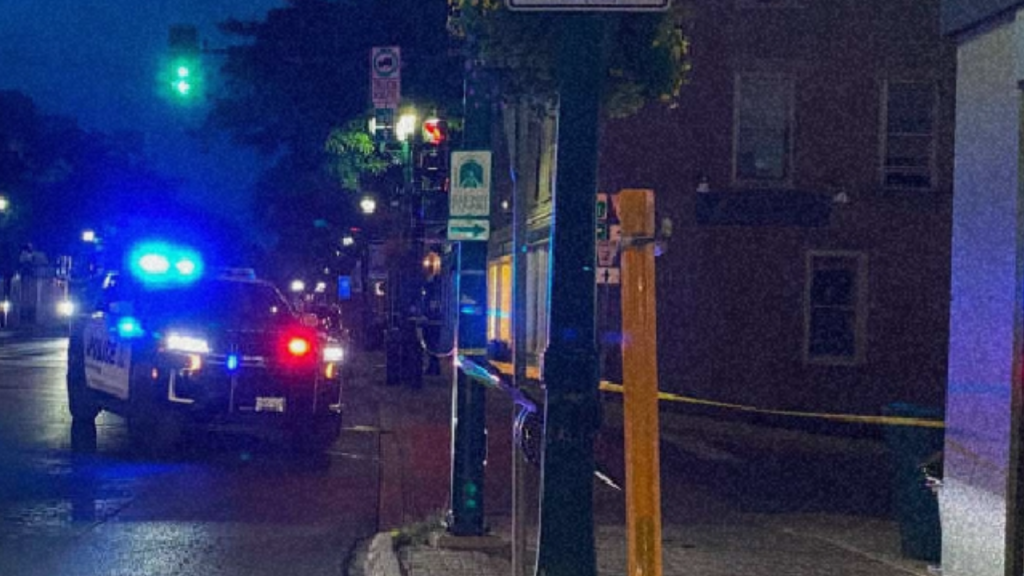
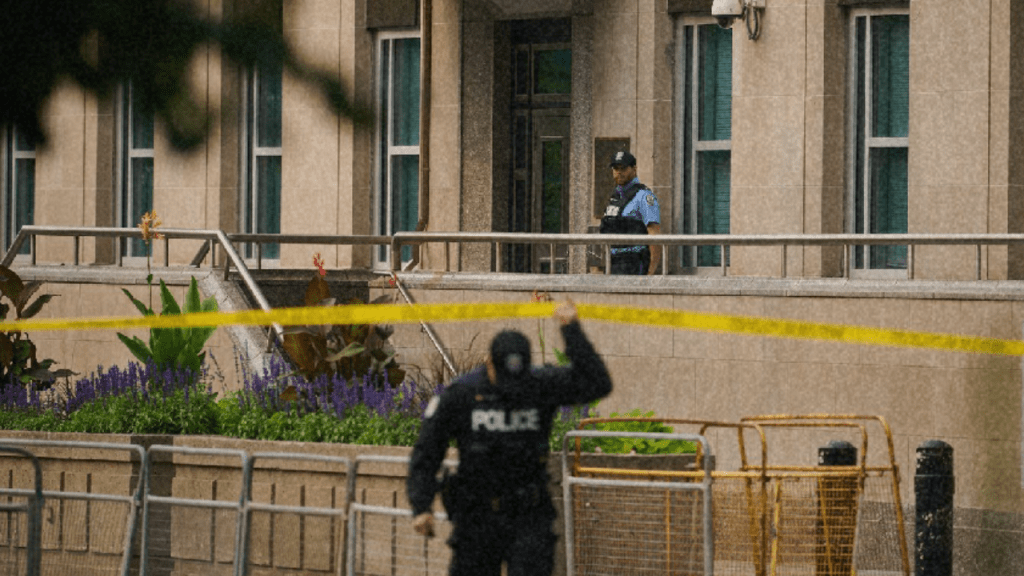
Gunfire hit the U.S. Consulate in downtown Toronto again early Monday morning. According to police, an officer heard a shot at about 4:46 a.m., investigators recovered a shell casing and the building’s facade was damaged. A white Honda Accord without licence plates fled the area, and officers ended their pursuit after the vehicle reportedly exceeded 140 kilometres per hour. Nobody was injured.
Toronto police now control almost everything the public currently knows about the shooting. They supplied the time, the vehicle description, the casing and the account of the pursuit, but they have not identified who fired, why the consulate was targeted or whether the July shooting is connected to the March attack. The available information therefore comes almost entirely from the institution investigating the incident and benefiting from the security response built around it.
That absence of evidence has not prevented the shooting from becoming another national-security event. The consulate receives additional protection, police collect more surveillance footage, intelligence agencies gain another reason to coordinate and politicians receive another unexplained act of violence that can be used to produce fear. Before the public has been shown enough evidence to understand what happened, the shooting has already strengthened the institutions claiming the authority to explain it.
When the Police Control the Story
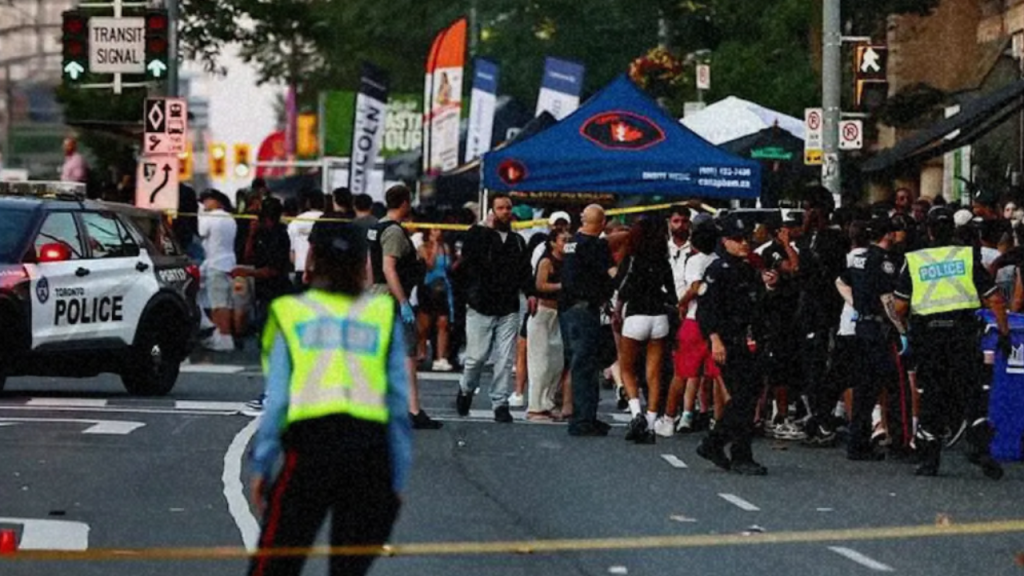
Toronto police used a June press conference to offer an explanation for the March consulate shooting and 26 other firearm incidents. Police said teenagers and young adults were recruited through encrypted applications, supplied with circulating guns and paid after recording attacks ordered by unnamed clients. That account became the foundation of what police called a “criminals for hire” investigation.
That June announcement described how alleged recruits received assignments, carried out shootings and submitted video before payment was released. Police displayed firearms, announced ballistic connections and named people facing criminal charges, but the public was not given access to the communications, payment records or other evidence required to verify the wider structure they described. The charges against the accused have also not been tested in court.
Police acted as investigator, narrator and political beneficiary. They decided which evidence became public, defined the threat and presented their own institution as the solution, after which news organizations repeated the account as the accepted explanation for the violence. The public was expected to accept the existence and structure of the alleged gun-for-hire market largely because police said it existed.
Even on its own terms, the police account remained incomplete. Police described people receiving assignments and payments without identifying who created those assignments, supplied the money or selected the politically sensitive targets. The unnamed buyer became a blank space that police alone claimed to be investigating, leaving the public dependent on the same institution for both the evidence and its interpretation.
TPS Operate Inside Similar Market of Violence
Toronto police are describing the consulate shootings as the work of an outside gun-for-hire market. Ironically enough, a similar alleged murder-for-hire plot can be traced back into the Toronto police force itself. Months earlier, seven serving officers and one retired officer were charged in Project South, an organized-crime investigation alleging that police access and confidential information were used to support shootings, drug trafficking and a conspiracy to murder.
Project South began after an alleged plot to kill a corrections manager. York Regional Police alleged that Toronto officers unlawfully searched confidential police databases and passed personal information to organized-crime figures. Investigators said that information was used to locate targets and support shootings, extortions, robberies and other violent offences. The broader allegations against the accused officers remain before the courts.
Police identified Const. Timothy Barnhardt as an alleged source of confidential information for a figure accused of operating a criminal network. Prosecutors have since narrowed some charges as the case proceeds through Superior Court, but Barnhardt still faces allegations connected to bribery, drug trafficking and the murder plot.
While the details surrounding Project South do not establish that Toronto police were in some way involved in the consulate shootings. It does eliminate any basis for treating Toronto police as automatically neutral outsiders to the market of violence they claim to be investigating. Members of the same police service have been accused of supplying criminal networks with protected information used to locate targets and facilitate violent crimes, while at least one former officer has now admitted abusing police property for criminal purposes.
When Toronto police tell the public that young recruits, intermediaries and hidden clients form a paid-violence network, the location of police officers inside that network becomes an unavoidable question. The institution demanding public belief was recently forced to investigate allegations that its own members supplied organized crime with information, access and protection. Its account of an external criminal market cannot be accepted as though police stand entirely outside it.
National Security Arrived Before Evidence
The March consulate shooting was classified as a national-security incident before investigators publicly established a motive. As was reported after the first shooting, the RCMP became involved, the Integrated National Security Enforcement Team joined Toronto police and the FBI participated in the investigation. Ontario Premier Doug Ford then warned about “sleeper cells” while acknowledging that police had not supplied evidence supporting his claim.
A shell casing and damage to a diplomatic building do not establish terrorism, foreign direction or the existence of a sleeper cell. Those meanings were imposed by police, intelligence agencies and politicians before the public knew who fired the shots or why the building had been selected. Because the target belonged to the United States, an unexplained shooting was immediately converted into a geopolitical threat.
The June gun-for-hire account did not end that process. It replaced one unproven national-security story with another police-controlled explanation. The sleeper cell became an encrypted criminal market, foreign direction became unnamed clients and the public was still expected to trust security institutions while seeing only the evidence those institutions chose to release.
The July shooting allows the same process to begin again. A second unexplained attack strengthens the appearance of an ongoing threat while giving police and intelligence agencies another reason to preserve the national-security framework created after the first incident. The explanation can change, but the institutional result remains the same.
The Shooting Expands Police Power
The March attack brought Toronto police, the RCMP, a national-security enforcement team and the FBI into a coordinated investigation. It expanded protection around diplomatic and Jewish institutions, increased intelligence cooperation and created an atmosphere in which political activity could be discussed through the language of terrorism and foreign interference. The second shooting supplies those institutions with another reason to continue and deepen that expansion.
Police can request more private surveillance footage, increase armed patrols, expand intelligence sharing and treat a wider range of political activity as a security concern. Failure does not weaken their authority because every unresolved event becomes evidence that police require more resources and wider powers. The institution that failed to prevent or explain the violence is then presented as the only institution capable of protecting the public from it.
Examination of the 2010 Toronto G20 security operation documented the same institutional pattern on a much larger scale. Police constructed an atmosphere of extraordinary threat, received enormous resources and expanded their authority, while more than a thousand people were arrested and hundreds were released without charge. The security response became politically valuable even when the criminal cases used to justify it collapsed.
The institutions involved in the consulate investigation are similarly rewarded whether the case is solved or not. An arrest demonstrates police effectiveness, while an unresolved case demonstrates the alleged need for more surveillance, intelligence coordination and armed protection. Either result directs public attention toward the fleeing car, the casing and the alleged shooter while treating the growth of police power as an automatic response rather than a political choice.
Palestinian Organizing Pays the Price
The shootings at the consulate and Toronto-area synagogues were quickly placed inside a political story about antisemitism, terrorism and foreign threats. Police did not need to establish who organized the attacks before politicians used them to define which movements and communities should be treated as dangerous. The identity of the targets supplied enough political material to manufacture the association.
Ford used the unresolved synagogue shootings while seeking an emergency injunction against Toronto’s Al-Quds Day demonstration. As reported at the time, the province produced no evidence connecting the shootings to the rally, its organizers or the broader Palestinian solidarity movement. A Superior Court judge rejected the application, and the demonstration proceeded.
The lack of a documented connection did not prevent Palestinian organizers from being placed under suspicion. Jewish institutions had been attacked, so a Palestinian rally was framed as the danger, even though the government could not connect the two. The political association was built from the target and the surrounding atmosphere rather than evidence identifying the perpetrators.
The same mechanism remains available after the second consulate shooting. An unexplained act near a U.S. diplomatic building can be attached to foreign interference, terrorism or political extremism before anyone has identified the person responsible. That manufactured threat environment strengthens the institutions policing demonstrations, monitoring organizers and deciding which political movements belong inside the national-security system.
People organizing against genocide and Canadian support for Israel therefore face increased surveillance while police claims about the shootings remain largely unavailable for public examination. The state demands transparency and obedience from political movements while allowing police and intelligence agencies to construct their own account through secrecy.
Police Claims Are Not Public Proof
The public does not know who fired at the consulate on July 27, why the building was targeted or whether the shooting is connected to the March attack. It has not been shown evidence connecting the incident to an encrypted network, a foreign government, a political movement or the clients police claim sit behind Toronto’s paid-violence market. Police statements cannot fill those gaps simply because they were delivered at a press conference.
The June arrests do not require the public to accept the entire gun-for-hire account. A ballistic connection can show that a firearm appeared at more than one crime scene, but it cannot establish who controlled the weapon at every stage, who ordered each attack or whether police have accurately described the larger structure. Those conclusions require evidence beyond the fact that police announced them.
Another arrest would still leave police controlling the evidence and defining the meaning of the event. The person closest to the gun can be prosecuted while the broader political use of the shooting escapes scrutiny. Toronto police, the RCMP and national-security agencies that operate through secrecy, informants and undercover operations have not earned automatic belief.
The second consulate shooting should not become another blank cheque for surveillance and police power. The public should demand evidence for every official claim, disclosure of the agencies and powers involved and an end to using unexplained violence as a pretext for treating political dissent as a national-security threat.
The state has not established who created the danger, but it has already begun collecting the benefits.
Sources
- CityNews: Toronto police confirm second shooting at U.S. Consulate
- Reuters: Shot fired outside U.S. Consulate for second time
- Toronto Police: Criminals for Hire Linked to 27 Firearm Discharges
- Toronto Police: Arrests in U.S. Consulate investigation
- Associated Press: Toronto officers charged in Project South
- CityNews: Former Toronto officer pleads guilty in Project South
- Canadian Press: Project South charges narrowed as case proceeds
- Reuters: March consulate shooting and security response
- CityNews: Ford raises sleeper cells without police evidence
- Spark Solidarity: Toronto Consulate Shooting Serves Canada’s Security State
- Spark Solidarity: Toronto’s Gun-for-Hire Network Changes the Consulate Shooting Story
- Spark Solidarity: Ford Used Synagogue Shootings to Try to Ban Al-Quds Day
- Spark Solidarity: Toronto G20 Protests, Policing, Spectacle and Power