Before Steven Luu was publicly identified, a synagogue arson entered a security story that already had a suspect population: Muslims, migrants and Palestine solidarity.
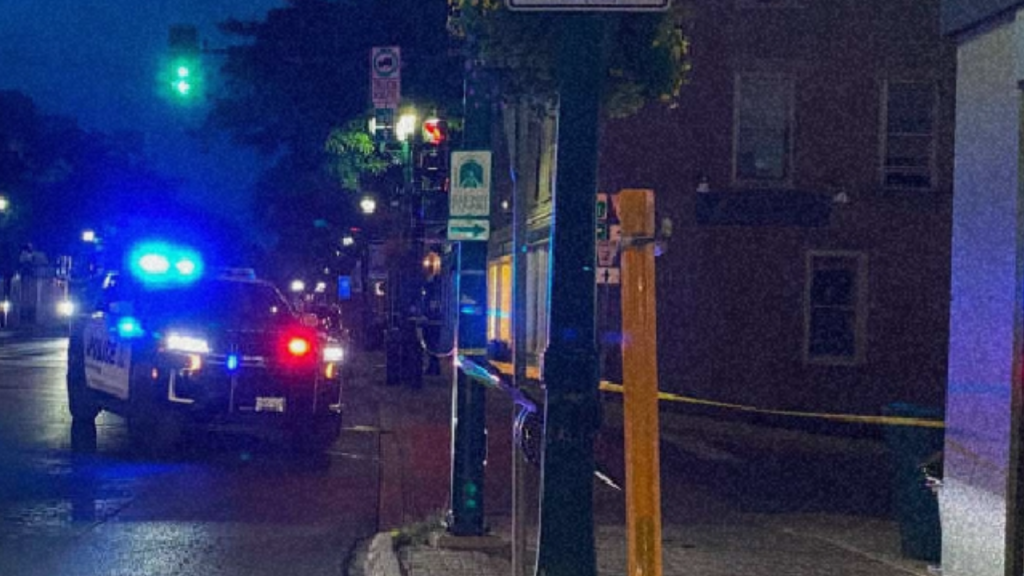
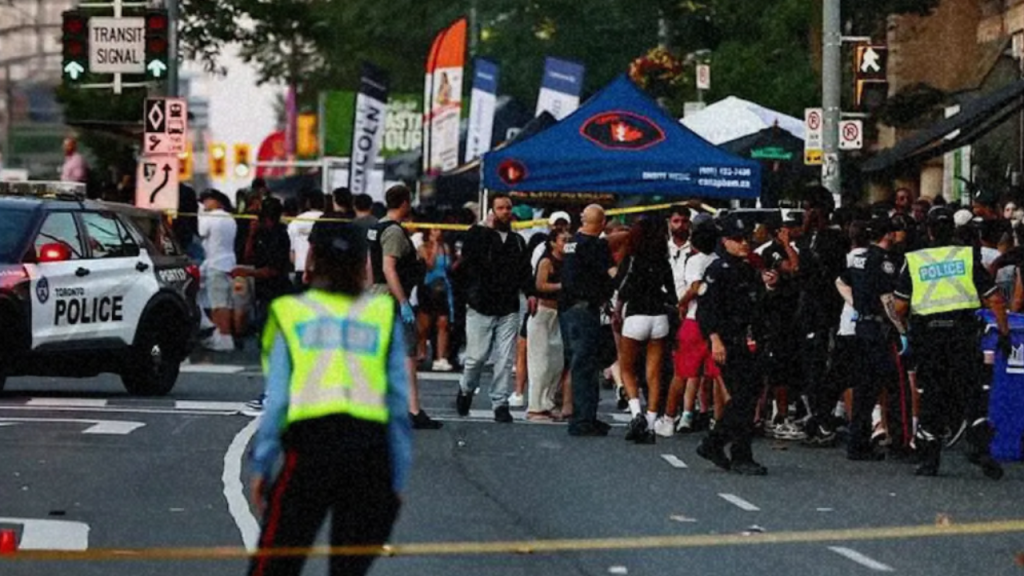
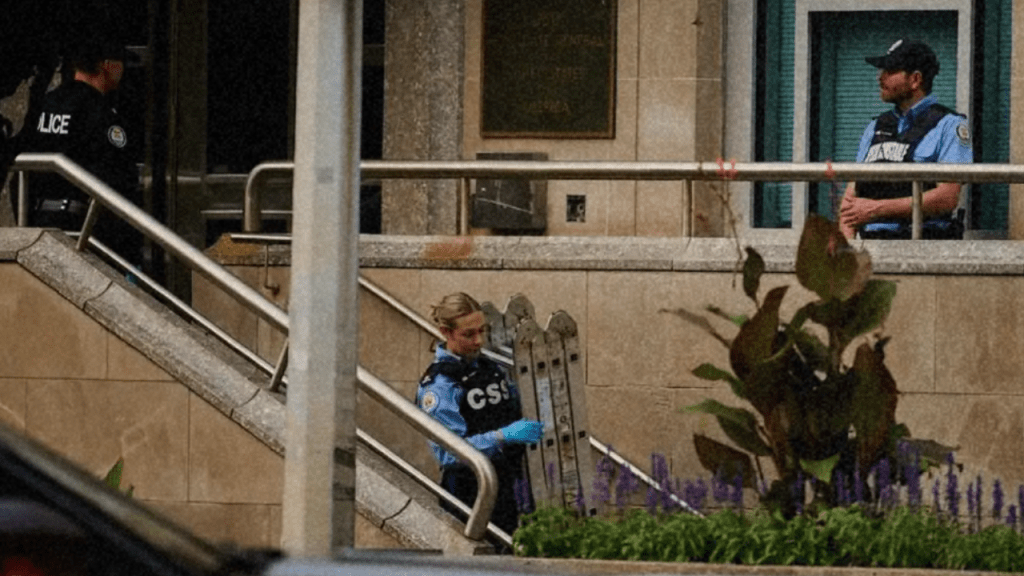
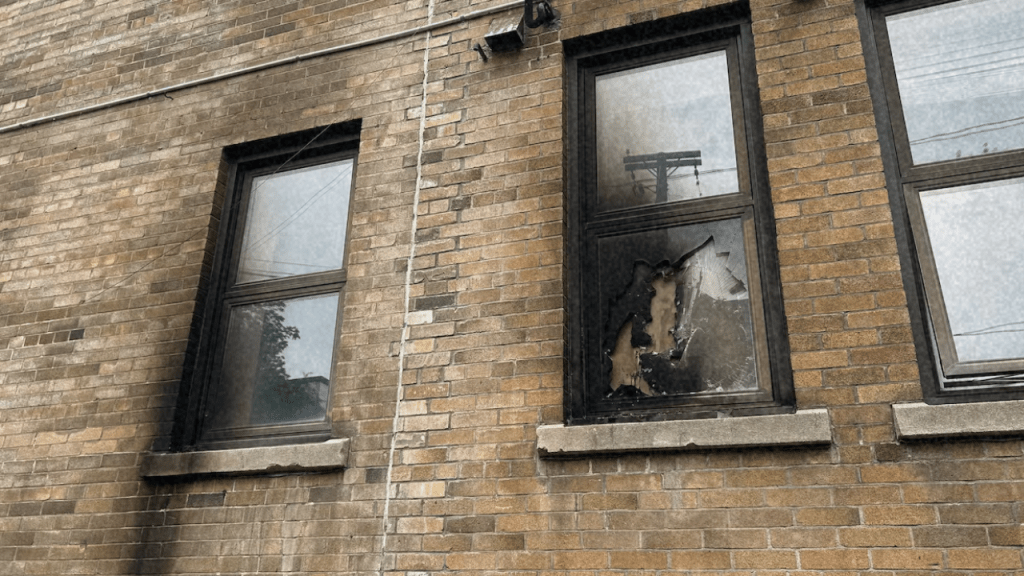
Shortly after midnight on June 5, someone allegedly broke a window at Temple Emanu-El-Beth Sholom in Westmount and tried to start a fire inside the synagogue. Firefighters contained the blaze, no one was injured and Montreal police arrested 38-year-old Steven Luu nearby. Investigators said they were considering whether hatred was a motive because a synagogue had been targeted, but the motive had not yet been established.
Before Luu’s name became public, Canadaland publisher Jesse Brown filled the absence with a different suspect. In a post later deleted, he asked: “Do police not want us to know if he’s Muslim? Or part of a political group?” He then suggested police were protecting “other groups” at the expense of Jews’ ability to protect themselves.
The post was unsupported by the available facts, but treating it as a moment of personal prejudice misses what made the speculation intelligible. Brown did not invent the category of the Muslim political suspect on June 5. Canadian political institutions had spent the period after October 7 building a public-security framework in which Jewish safety was increasingly discussed through the alleged threat posed by Muslims, migrants, anti-Zionists and Palestine solidarity. The information gap did not create that architecture. It gave the architecture somewhere to speak.
The result is the companion to the NDG warning about Shawn Beauvais-MacDonald. In that case, a visible neo-Nazi supplied the face of an externalized fascist threat and helped police and Zionist institutions appear as protectors. Here, before police supplied a name, the same security politics reached for the opposite available enemy: the imagined Muslim whose presumed political affiliations could turn a synagogue attack into another argument for surveillance, disclosure and institutional vigilance.
The Attack Entered an Existing Security Story
Early reporting on the Westmount attack established only a limited record. Police responded around 12:15 a.m., a fire was contained and a suspect was arrested nearby. Because the target was a synagogue, investigators were examining a possible hate motive. The City of Westmount condemned the attack and emphasized the safety of Jewish residents and places of worship.
Those facts were enough to justify concern. They were not enough to identify a Muslim suspect, a political organization or a connection to Palestine solidarity. Yet the absence of those facts did not leave the political field empty. The attack arrived inside a national environment where antisemitism had already become a central organizing category for new security funding, legislation, police attention and institutional definitions of acceptable protest.
Two days earlier, Spark Solidarity had examined how Canada’s anti-hate consensus was being built around Zionist priorities. Prime Minister Mark Carney’s Canadian Covenant had reaffirmed the IHRA definition of antisemitism, tied Jewish institutional security to new federal architecture and advanced a framework in which anti-Zionist politics could be treated as a recurring hate-risk category. Muslims and Palestinians appeared inside that system primarily as communities to be acknowledged or monitored, not as groups whose own exposure to state violence reorganized federal power.
The Westmount attack therefore did not enter a neutral information environment. It entered a political structure already trained to ask which external threat endangered Jewish institutions and which additional powers were needed in response. Before investigators had established a motive, the public story already had a set of available answers.
Jesse Brown Supplied the Suspect
Brown’s deleted post made that structure unusually visible. The question was not simply why police had not released a name. It was whether police were withholding the name because the suspect was Muslim or belonged to a political group. The absence of information became evidence of possible institutional protection, and the protected category was imagined before the person was known.
The sequence carried its own politics. A synagogue had been attacked. Police had not yet released the suspect’s identity. The delay was interpreted as concealment. Concealment implied that the accused belonged to a group authorities were reluctant to expose. The group became Muslim. Political affiliation entered immediately behind it.
After Luu was publicly identified, Brown deleted the post and called it “needlessly speculative.” That description reduced the problem to excess uncertainty. But the politically revealing part was not that Brown speculated. It was the direction of the speculation. The missing suspect did not become a Christian nationalist, a white supremacist, an apolitical local man or someone acting from a personal crisis. He became Muslim because Muslim identity had already been made available as an explanatory bridge between violence against Jews and a wider political threat.
Brown’s broader media politics help explain why the episode matters beyond one deleted post. Canadaland has repeatedly positioned itself as a critic of reactionary media while Brown has also used the language of antisemitism and journalistic legitimacy to narrow the boundaries around Palestine solidarity. The function is not to occupy the far right. It is to help determine which dissent remains respectable inside liberal institutions and which political movements can be pulled toward the category of threat.
The Police Delay Became Evidence of Protection
Brown’s questions also transformed ordinary police control over information into a theory of unequal protection. If the suspect was Muslim, the suggestion went, perhaps police were withholding his identity to protect “other groups” while leaving Jews unable to protect themselves.
This framing places the police in a productive contradiction. The institution is criticized for insufficiently protecting Jews, but the proposed answer is not less police power. It is more disclosure, faster identification and stronger alignment between policing and the community demanding protection. Apparent institutional failure becomes an argument for deeper security responsiveness.
The same pattern appears across Canada’s post-October-7 anti-hate politics. Police are accused of failing to control antisemitism, governments are accused of tolerating dangerous protest and universities are accused of permitting hostile political speech. Each alleged failure becomes pressure for more surveillance, more enforcement and broader definitions of prohibited conduct. The institution does not lose authority through the accusation. It is told to exercise more.
That is why the imagined Muslim suspect was politically useful before he existed. His presumed identity could support a story in which police restraint protected the wrong people, Jewish safety required more aggressive state action and political groups associated with Muslim or Palestinian communities were already adjacent to the crime before any evidence placed them there.
Jewish Safety Was Turned Against Muslims
The attack on the synagogue did not require a Muslim suspect to be serious. Jewish residents did not need Muslims to be blamed for the broken window and attempted fire to warrant safety, investigation or public concern. Yet Canadian anti-hate politics increasingly makes Jewish institutional safety politically legible through a framework that positions Muslim and Palestinian political activity as a competing danger.
The same-day reporting included condemnation from Canadian Muslim Forum president Samer Majzoub, who called the attack unacceptable and urged solidarity. His response did not settle the motive of the individual case. It demonstrated how artificial the security binary was. Muslim political organizations could condemn an attack on a synagogue while a prominent media figure was already wondering whether an unnamed Muslim had committed it.
The asymmetry is institutional, not simply interpersonal. Canada’s federal anti-hate architecture has increasingly built legislation, security funding, advisory structures and official definitions around antisemitism while Islamophobia and anti-Palestinian racism remain politically subordinate. Muslim communities can be named as victims of hate while still occupying a different structural position: they remain among the populations historically surveilled through counterterrorism, border enforcement and national-security policing.
That arrangement allows Jewish fear to be redirected downward rather than upward. The institutions that govern surveillance, policing and foreign policy remain the protectors. Muslims and Palestine solidarity become the populations whose speech, organization and possible violence must be watched. The security state stands between them and gains authority from managing the separation.
The Same Apparatus Needed a Neo-Nazi Too
The McQueen alert from the same day shows why the imagined Muslim and the visible neo-Nazi are not contradictory figures inside this system. They perform different functions for the same security architecture.
Shawn Beauvais-MacDonald gave the public an external image of fascism that politicians, police and Zionist organizations could visibly oppose. His racial politics made him an easy object of condemnation, and his presence allowed institutions with far greater coercive capacity to appear as defenders of pluralism. The unsupported association with the Westmount arson helped turn him into a neighbourhood security object around which residents could be encouraged to watch and report.
The imagined Muslim served the inverse role. He was not the obvious fascist enemy. He was the hidden political threat supposedly being protected by institutions unwilling to name him. That story demanded not less security power but more: faster disclosure, greater suspicion of political groups and stronger willingness to connect Muslim identity to violence against Jews.
One figure allows the state to display its opposition to extremism. The other allows the state to be accused of insufficiently suppressing it. Both routes strengthen the centrality of police and security institutions. The visible neo-Nazi proves why the apparatus is necessary. The imagined Muslim proves why the apparatus is not yet strong enough.
The Suspect Changed, the Security Story Survived
Steven Luu’s identification disrupted the specific speculation. The person arrested was not the Muslim suspect Brown had imagined, and Brown deleted the post. But the broader political structure did not have to retract itself because it had never depended on one correct prediction.
The anti-hate/security framework survives individual mistakes because it organizes categories rather than cases. Muslims remain a population associated with terrorism through decades of War on Terror policing. Palestine solidarity remains vulnerable to antisemitism classifications. Zionist institutions continue to demand expanded state protection. Police remain the institution expected to mediate the resulting conflict.
A wrong suspect does not weaken that architecture if the error is treated as a regrettable excess of concern rather than evidence about how the concern itself has been politically organized. Brown’s correction removed the claim from his feed. It did not remove the assumption that made a Muslim suspect feel plausible before any evidence existed.
The Westmount attack therefore reveals more than a media personality making a bad guess. It shows the political work done before facts arrive. An attack on a Jewish institution enters an existing emergency frame. The unknown suspect is racialized. A political group is imagined behind him. Police discretion becomes suspicious protection. Greater security power appears as the remedy.
Before Steven Luu’s name entered the story, the imagined Muslim had already served his function. He helped reproduce a political order in which Zionist institutions define danger, liberal media circulates the categories and police remain the institution expected to decide who must be watched. The individual suspect changed. The machinery that produced him did not.
Sources
- Jesse Brown, deleted X post and follow-up deletion notice, June 5, 2026; screenshots preserved by Spark Solidarity.
- Westmount synagogue targeted by arson attempt, suspect arrested, CityNews Montreal, June 5, 2026.
- Attempted Arson Targeting a Synagogue: Westmount firmly condemns the actions, City of Westmount, June 5, 2026.