New research on South African inequality asks who owns a nation after liberation—and what the FLQ and Quebec Inc. reveal about class power in Quebec today.
More than three decades after apartheid formally ended, research published in 2026 on inequality and redistribution in South Africa offered a stark account of the country’s economic transformation. The richest 10 percent still received roughly 70 percent of all pre-tax income, while much of the narrowing racial income gap reflected the rise of a relatively small Black economic elite.
The findings did not negate the historic victory won in 1994. Apartheid’s legal order was dismantled, universal political rights were established and public redistribution improved millions of lives. But the research exposed the limits of a transition that transferred political authority without fundamentally reorganizing ownership, investment or productive power.
South Africa therefore raised a question that reaches well beyond South Africa: who owns the nation after liberation? If a movement wins control of the state while leaving the economy’s commanding structures intact, political freedom can coexist with an old ruling class, foreign capital and a newly elevated national bourgeoisie.
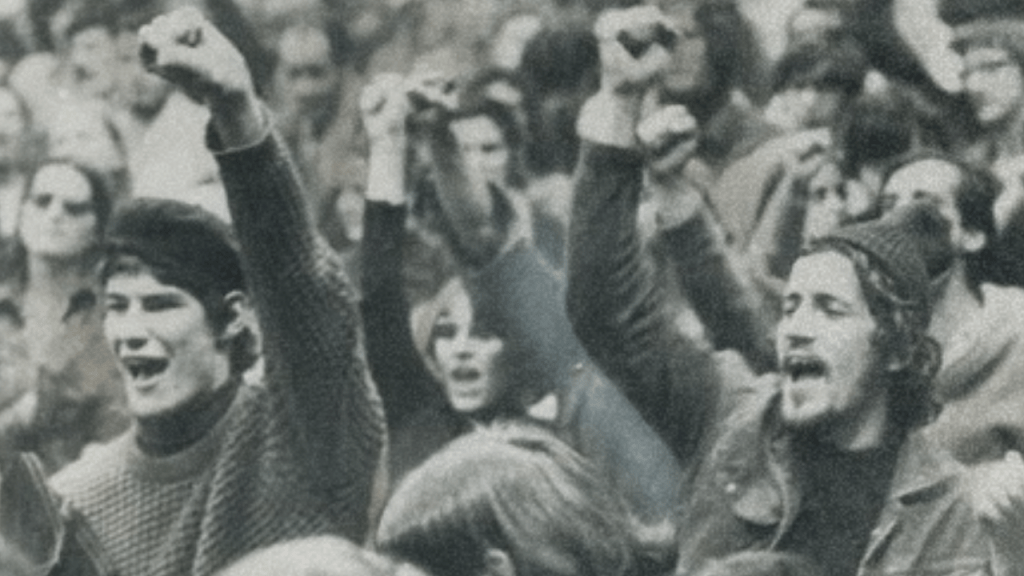
That question matters to Quebec because its national movement also produced competing ideas of liberation. The Front de libération du Québec looked to anti-colonial victories abroad and attempted to carry their revolutionary form into a struggle unfolding inside the imperial core. The electoral nationalism that followed increasingly identified liberation with francophone control of institutions that remained embedded in Canadian and North American capitalism.
These were different strategic failures, but both obscured the same material question. The FLQ mistook international solidarity for equivalent conditions; Quebec’s national bourgeoisie mistook national representation for popular power. To understand how those errors converged, the article must begin not with abstract loyalty to or rejection of nationalism, but with the class forces that gained control of the political opening.
Solidarity Does Not Mean Equivalence
The FLQ emerged from conditions that demanded resistance. The Quiet Revolution had exposed the contradiction between Quebec’s francophone majority and an economy disproportionately commanded by anglophone and foreign capital. Workers were told they were masters in their own house while many of the institutions governing that house remained beyond their control.
FLQ militants looked to Algeria, Cuba, Vietnam and Black liberation movements in the United States because those movements were confronting imperialism directly and winning victories that Western parliamentary politics appeared incapable of delivering. Their internationalism was not the problem. Some militants later went abroad and materially supported resistance movements. That solidarity deserves respect.
The category error came when the political form of those struggles was separated from the conditions that produced it. Algeria had endured more than a century of French settler rule, mass land seizure, racial exclusion and colonial warfare. The FLN confronted a state that did not permit Algeria’s Indigenous majority an electoral route to sovereignty. Armed struggle arose from that closure.
Quebec in the 1960s was not politically free, socially equal or economically sovereign. But its francophone majority had not been expelled from the political community in the same manner, and it possessed legal unions, mass organizations, provincial institutions and an electoral route through which governments could be won. The people facing racialized dispossession on the territory were—and remain—the Cree, Innu, Mohawk, Anishinaabe and other Indigenous nations on whose lands both French and British colonial projects were built.
Pierre Vallières’ attempt to equate francophone Quebecers with Black Americans captured the depth of class humiliation but collapsed linguistic and economic subordination into racialized dispossession. It named something real about exploitation and something false about Quebec’s location within the colonial order.
The problem was not that the FLQ recognized real forms of oppression across North America. It was that different positions within the imperial system were collapsed into a single revolutionary category. Black Americans could be subjected to racial terror, dispossession and economic exclusion while still living within the dominant imperial state. Francophone Quebecers could experience national and economic subordination while remaining part of a settler society inside the imperial core. Neither condition was equivalent to that of a country whose sovereignty, productive development and political choices were constrained from outside by colonial or imperial power.
This distinction does not rank one population’s suffering against another. It identifies the scale at which power operates. Domestic racial oppression, national subordination within a federal state and structural subordination within the world-system can overlap, but they are not interchangeable. The FLQ’s error was to treat those different relations as though they necessarily produced the same revolutionary conditions.
As Spark Solidarity’s fuller history of Quebec sovereignty argues, the FLQ borrowed the form of Third World armed liberation without the material conditions that made that form appropriate. When revolutionary form is transplanted without its conditions, it does not reproduce the original liberation struggle. Inside the imperial core, spectacular violence is more easily isolated, criminalized and absorbed into the state’s account of why repression is necessary.
The October Crisis demonstrated the consequence. The kidnappings of James Cross and Pierre Laporte did not create an organization capable of transforming state power. They allowed the federal government to declare an apprehended insurrection, deploy soldiers, suspend civil liberties and arrest hundreds of organizers, artists, trade unionists and leftists. The state’s repression was its own political choice and responsibility. But the FLQ’s strategy made it easier for that repression to be presented as public defence rather than an attack on a wider movement.
The Imperial Core Requires a Different Strategy
Inside the imperial core, capitalist rule is maintained not only through force but through institutions that organize consent: elections, media, schools, unions, professional associations, cultural institutions and the promise that grievances can be managed without altering property relations. The state retains overwhelming coercive power, but it does not ordinarily govern the majority as a foreign army governs an occupied population.
That is why Antonio Gramsci distinguished a war of position from a direct war of manoeuvre. Where civil society is dense and ruling-class power is distributed through institutions, revolutionary politics must build counter-power across those institutions, organize a durable mass constituency and make an alternative social order materially credible. The lesson is not that people inside the imperial core must confine themselves to elections. It is that isolated armed action cannot substitute for the organized social force required to govern.
Quebec possessed unusually strong terrain for such a struggle: militant unions, cooperative finance, a nationalized electrical system, a provincial state with meaningful economic powers and a working class conscious of its national subordination. The strategic task was to turn those institutions toward democratic control of investment, production, housing, land and work while building a political relationship with the Indigenous nations whose sovereignty preceded both Canada and Quebec.
The FLQ bypassed that work in favour of rupture without sufficient organization. But the failure of armed struggle did not automatically produce a socialist war of position. The organizations most prepared to occupy the institutional terrain were those of the emerging national bourgeoisie.
The National Bourgeoisie Inherited the Opening
Frantz Fanon’s “The Pitfalls of National Consciousness” warned that national liberation could transfer political office without transforming economic command. A national middle class could inherit administrative positions, mediate between foreign capital and the domestic economy, distribute state contracts and present its own rise as the rise of the people.
Fanon was writing about formally colonized countries approaching independence, not Quebec. His method nevertheless illuminates what followed the Quiet Revolution when applied carefully rather than mechanically.
Hydro-Québec was nationalized, education and health care were secularized, and a provincial civil service expanded. Francophone workers gained access to positions and services from which they had long been excluded. These were material victories. They transformed Quebec society and created productive forces that remain capable of serving a more democratic project.
The same transformation produced “Quebec Inc.”: a francophone business, professional and state-administrative class able to direct public institutions while remaining integrated into North American capitalism. The Caisse de dépôt helped create national corporate champions. Public administration increasingly operated in French. A francophone elite gained entry to the commanding heights without abolishing the capitalist relations governing them.
This class could therefore speak for the nation while narrowing liberation to cultural recognition, constitutional authority and its own access to management. The language spoken in the executive suite changed. The deeper question—who controls investment, land and production, and for whose benefit—remained unsettled.
The FLQ and Quebec Inc. appear to represent opposite answers: armed rupture and institutional modernization. Yet each displaced the material question in a different way. The FLQ imported a revolutionary form that did not correspond to Quebec’s position. The national bourgeoisie accepted Quebec’s position inside imperial capitalism and sought better terms for managing it.
The International Cases Show Why Conditions Matter
South Africa, Algeria, Zimbabwe and Palestine remain useful here, but not as interchangeable examples or tactical templates. They show why every national struggle must be understood through its own configuration of state power, class ownership, settler colonialism and imperial domination.
South Africa dismantled the legal order of apartheid and won universal political rights, but the negotiated transition left much economic ownership concentrated. The ANC government’s 1996 Growth, Employment and Redistribution strategy prioritized fiscal restraint, trade liberalization and investor confidence. Black Economic Empowerment changed access to corporate ownership and management without placing production under democratic control. Political liberation was real; its class limits were also real.
Algeria’s FLN confronted an actual French settler colony and recovered national sovereignty through armed struggle. Independence expanded education and health care and brought strategic resources under public control. The post-independence state nevertheless concentrated power in a party, military and administrative apparatus, while hydrocarbon dependence narrowed the economy. The armed strategy appropriate to defeating settler rule did not by itself settle who would control development afterward.
Zimbabwe demonstrates that colonial ownership cannot be treated as a secondary question. Land reform attacked a structure created through organized theft, even as coercion, elite allocation, weak producer support, sanctions and external pressure shaped its results. Changing ownership is necessary; institutions of popular control determine whom that change ultimately serves.
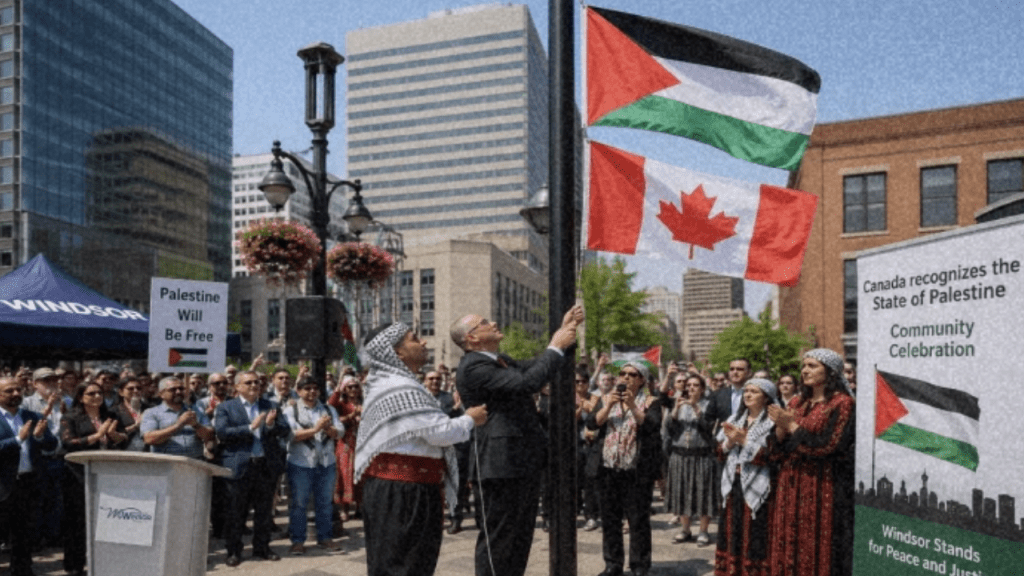
Palestine exposes another structure again. The Palestinian Authority was created through Oslo as an administrative body under continuing Israeli occupation. Responsibility for policing and public administration was transferred downward while decisive sovereignty over borders, settlements, movement and territory remained with Israel. That is not the same contradiction as Quebec’s, and treating it as equivalent would obscure both struggles.
The lesson is not that national liberation inevitably produces a national bourgeoisie or that armed struggle is universally mistaken. It is that tactics, organizations and class alliances acquire meaning from the conditions in which they operate. Algeria cannot be copied into Quebec. Quebec cannot be projected onto Palestine. Fanon provides a method of concrete analysis, not a script.
Quebec’s Liberation Must Confront Its Actual Position
Quebec remains a subordinated nation inside Canada. It is also part of an imperial-core economy and a settler-colonial state. Any serious liberation project must hold those facts together rather than selecting whichever one makes its preferred strategy appear inevitable.
That means rejecting the federalist claim that Quebec’s national oppression is imaginary. It also means rejecting the nationalist claim that Quebec occupies the same position as peoples subjected to foreign occupation or racialized removal. Most importantly, it means refusing a sovereignty project that subordinates Indigenous nations while calling itself decolonial.
A liberatory strategy must build power through the institutions and contradictions that actually exist: democratizing the Caisse, extending public ownership beyond energy, strengthening working-class and tenant organization, confronting landlord and corporate power, and establishing Indigenous co-governance as a constitutional foundation rather than a concession after independence. Spark Solidarity’s analysis of Quebec politics in 2026 develops that institutional war of position, while its proposal for a sovereign Quebec oriented toward the multipolar world examines how independence could break with imperial dependency rather than simply reorganize it.
With the deepest respect to the FLQ members who gave support to liberation struggles abroad, Quebec needed their internationalism without their assumption of equivalence. The tragedy was not that they learned from the Third World. It was that they converted lessons rooted in specific material conditions into a universal form of struggle.
The project was doomed when it treated Quebec as though it occupied the same historical ground. The political alternative is not passivity, loyalty to Canada or faith in parliamentary procedure. It is a strategy adequate to Quebec’s contradictory position: national self-determination inside the imperial core, socialist transformation against its own national bourgeoisie, and a decolonial relationship with the Indigenous nations whose sovereignty no Quebec state has the right to inherit.
National liberation is not the act of changing the flag above an unchanged economy. Nor is it the performance of a revolutionary form borrowed from somewhere else. It begins with a concrete analysis of who holds power, how that power is reproduced and which organized forces can replace it.
Sources
- VoxDev, “Thirty years of inequality and redistribution in post-apartheid South Africa,” 2026
- Frantz Fanon, “The Pitfalls of National Consciousness”
- Marxists Internet Archive, “Le Front de Libération du Québec”
- Pierre Vallières and Charles Gagnon, “For a Multinational Common Liberation Front,” 1970
- South African History Online, “Growth, Employment and Redistribution”
- World Bank, Macro Poverty Outlook: Middle East, North Africa, Afghanistan and Pakistan, April 2026
- United Nations, Israeli-Palestinian Interim Agreement on the West Bank and Gaza Strip, 1995