Radicalism matters—but inside the imperial core, tactics must be judged by whether they build mass power rather than strengthen the state they mean to confront.
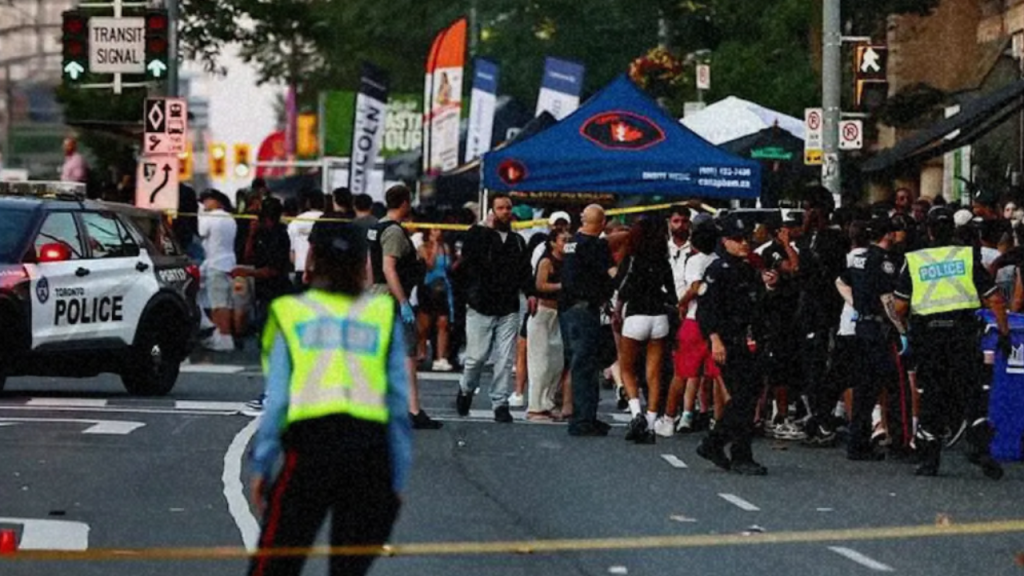
Across North America, the streets are filling again. Organizers estimated that the March 2026 No Kings demonstrations brought more than eight million people into over 3,300 actions across the United States. Three months before Quebec’s provincial election, a housing coalition of more than 120 organizations mobilized in Montreal, Quebec City and Rouyn-Noranda for rent control, social housing and recognition of housing as a right.
These mobilizations demonstrate real opposition, but they also pose a harder question. Can movements convert disruption into durable power, or will parties, governments and established institutions absorb their energy once the demonstration ends? The problem is not a shortage of radical feeling. It is whether radical strategy fits the terrain on which it operates.
Inside the imperial core, the state possesses overwhelming coercive, technological and institutional capacity. Militancy detached from a mass base cannot compete with that power; it can isolate movements, legitimize repression and strengthen the state’s monopoly on violence. That is not an argument for electoral absolutism, because elections alone cannot overcome the power of capital, bureaucracy, courts, police and corporate media. Nor is armed struggle a shortcut around those constraints. Vincent Bevins’s account of the mass protest decade shows how movements can create openings they are unable to control. Antonio Gramsci explains why the institutions built before a rupture determine who controls its aftermath.
Bevins Found the Missing Organization
Vincent Bevins’s If We Burn reconstructs the decade through hundreds of interviews with participants in Brazil, Egypt, Turkey, Ukraine, Hong Kong, Chile and other centres of revolt. The movements differed enormously, but several shared a preference for horizontal organization, leaderlessness and demands broad enough to hold an unstable coalition together.
Those forms helped people mobilize quickly and made movements harder to decapitate. They also made it difficult to decide who could negotiate, what concessions were acceptable or which institutions should replace the authorities being challenged.
A movement could refuse representation, but the political system could not remain unrepresented. Journalists selected spokespeople. Non-governmental organizations translated demands for funders. Established parties converted street energy into votes. Business groups and foreign states backed the factions most compatible with their interests.
Bevins follows the people who discovered that a vacuum does not remain empty. The movement that can say no to the old order is not necessarily the organization capable of constructing the next one.
Gramsci Had Already Named the Terrain
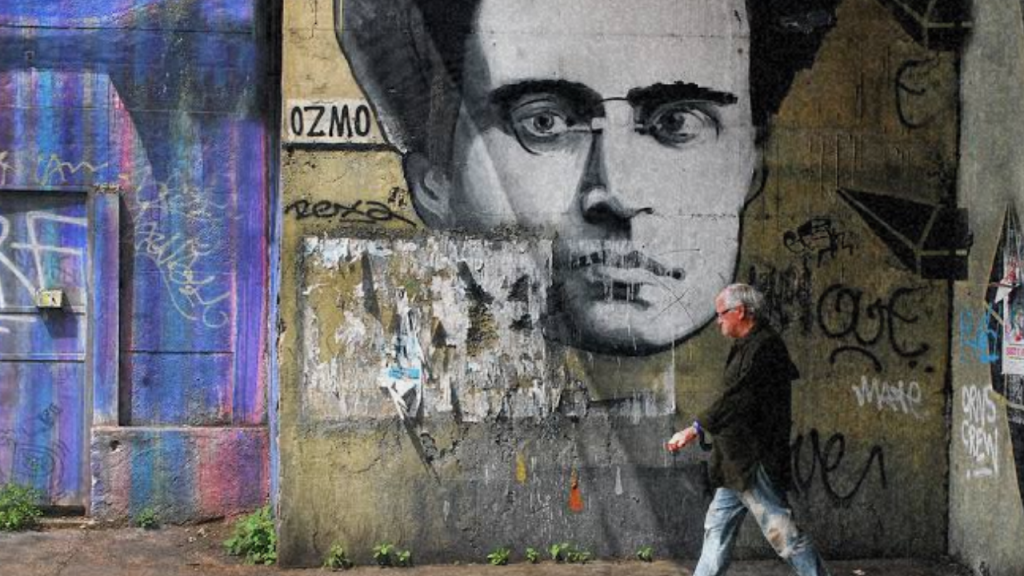
Antonio Gramsci wrote from a fascist prison after the revolutionary wave following the First World War had failed to reproduce the Bolshevik victory in Western Europe. He rejected the idea that the same political method could simply be carried from one social structure into another.
In Russia, the coercive state appeared more exposed. In the capitalist West, it stood behind what Gramsci described as a dense system of fortifications: parties, churches, newspapers, schools, unions, professional bodies and voluntary associations. Ruling classes maintained power through force, but also through institutions that organized consent and made their leadership appear natural.
A direct assault on the state was a war of manoeuvre. A war of position was the longer struggle inside civil society through which an organized class developed its own leadership, institutions and capacity to govern.
This was not a call to abandon confrontation for respectable gradualism. Gramsci was describing what had to exist before a rupture could be held. Elections can register and extend organized power, but they cannot substitute for it; a small militant minority cannot substitute for it either. Without an organized counter-power rooted in workplaces, housing, media, political education and community institutions, a crisis will be resolved by the forces already embedded in society.
Participation Is Not a Magic Number
Research on civil resistance has shown that broad nonviolent campaigns have historically succeeded more often than violent ones. A finding associated with Erica Chenoweth—that every campaign reaching active participation by 3.5 percent of the population had succeeded—became a popular organizing rule.
By July 2025, Chenoweth and other researchers were publicly stressing the caveats. The threshold described a specific historical dataset of maximalist campaigns. It measured peak participation, not cumulative attendance, and never meant that numbers alone guaranteed victory.
Success rates have also declined. Chenoweth found that fewer than 34 percent of nonviolent revolutionary campaigns since 2010 had succeeded, compared with rates above 40 percent for much of the previous half-century. States learned to manage protest through surveillance, selective repression, disinformation and concessions that divide coalitions without surrendering institutional control.
Large demonstrations remain capable of changing political conditions. Their size tells us little, on its own, about whether participants possess durable organizations, a shared program or the capacity to survive the state’s response.
The Street Produces an Opening, Not Its Owner
Egypt’s 2011 uprising forced Hosni Mubarak from office. It did not dismantle the military’s economic and political power. The Muslim Brotherhood possessed a national organization able to contest elections, while the military retained the coercive and administrative core of the state. The dispersed forces in Tahrir Square had neither.
Brazil’s 2013 protests began over transit fares and expanded into a national rejection of corruption, public-service failures and political authority. An ideologically open street did not remain politically neutral. Conservative organizations, media institutions and prosecutors were better positioned to impose an interpretation of the crisis. The right eventually converted popular anger into a campaign that helped destroy the Workers’ Party government and clear space for Jair Bolsonaro.
Neither outcome was mechanically predetermined. Different organizations, decisions and state responses could have produced different paths. But the balance of organized forces constrained what became possible once disruption began.
Quebec’s October Crisis Closed One Road and Strengthened Another
The Front de libération du Québec tried to accelerate a national and social revolution through clandestine action. Its cells could carry out bombings, robberies and kidnappings. They could not coordinate a mass movement, sustain democratic decision-making or replace the institutions they attacked.
The Canadian state responded to the October Crisis of 1970 by invoking the War Measures Act. Police arrested 497 trade unionists, artists, lawyers and left activists. Most were later released without charges, while most of those charged were acquitted or had proceedings stayed.
Repression reached far beyond the FLQ. It weakened the broader independent left at a moment when unions and community organizations were developing their own political capacity. Montreal’s Front d’action politique had brought labour and popular organizations into municipal politics. The 1972 Common Front would soon demonstrate the social power of organized public-sector workers.
The Parti Québécois was positioned to absorb the national question into an electoral project administered from above. Its organization could contest state power in a form the FLQ could not. The PQ’s victory was not evidence that parliamentary politics naturally defeated militancy. Federal repression and the left’s institutional weakness helped determine which sovereigntist current survived.
With full respect to the FLQ members who supported liberation movements abroad, the project’s error was not its international solidarity. It was treating solidarity as equivalence. Quebec’s national oppression was real, but its struggle unfolded inside the imperial core and within a settler-colonial state. The FLQ imported a form of Third World armed struggle developed under materially different conditions, separating a small clandestine apparatus from the working-class institutions capable of making liberation more than a sequence of shocks.
Spark Solidarity’s history of Quebec sovereignty develops that category error in full, while its analysis of the national bourgeoisie shows how the institutional opening the FLQ could not occupy was later captured without transforming ownership.
Institutions Are Where a Movement Stores Power
A war of position is built in tenant unions that can stop an eviction, labour organizations that can halt production, media capable of establishing facts outside the corporate frame, and political organizations able to make collective decisions under pressure.
These institutions are not substitutes for mass participation. They preserve its lessons, train organizers and create obligations that last after attention moves elsewhere. They also give people a place to fight over strategy before a crisis makes every disagreement urgent.
Institutional work carries its own danger. Organizations can become bureaucratic, cautious and more invested in their survival than their purpose. A party can turn members into an audience. A union can defend its machinery while abandoning workers outside its jurisdiction. The answer is not to refuse organization, but to build forms whose leadership can be recalled and whose strategy remains answerable to an active base.
The Morning After Is Built Before the Square Fills
The protest decade did not prove that demonstrations are obsolete or that radicalism should retreat into parliamentary routine. It showed what demonstrations and elections cannot do by themselves. They can reveal that consent has broken down, interrupt ordinary rule, win reforms and bring people into political life. They cannot automatically produce a program, a governing coalition or institutions capable of carrying that program through conflict.
The strategic task is neither electoral absolutism nor armed struggle detached from present conditions. It is to combine workplace and tenant organization, political education, independent media, mutual aid, electoral intervention, civil disobedience and mass mobilization into institutions capable of surviving beyond any single protest or campaign. Radicalism should be judged not by the confrontational appearance of a tactic, but by whether it expands ordinary people’s organized capacity to act collectively, withstand repression and govern. When a crisis opens, the left will possess whatever power it built while the streets were quiet.
Sources
- PublicAffairs, Vincent Bevins, If We Burn: The Mass Protest Decade and the Missing Revolution
- Antonio Gramsci, Selections from the Prison Notebooks
- Erica Chenoweth, “The Future of Nonviolent Resistance,” Journal of Democracy
- Rachel Leingang, “What is the 3.5% protest rule and what does it mean for the US?” The Guardian, July 17, 2025
- Bryan D. Palmer, “Remembering Québec’s October Crisis,” Canadian Dimension
- The Canadian Encyclopedia, “The FLQ and the October Crisis”
- Socialist Alternative, “Québec and the October Crisis of 1970”