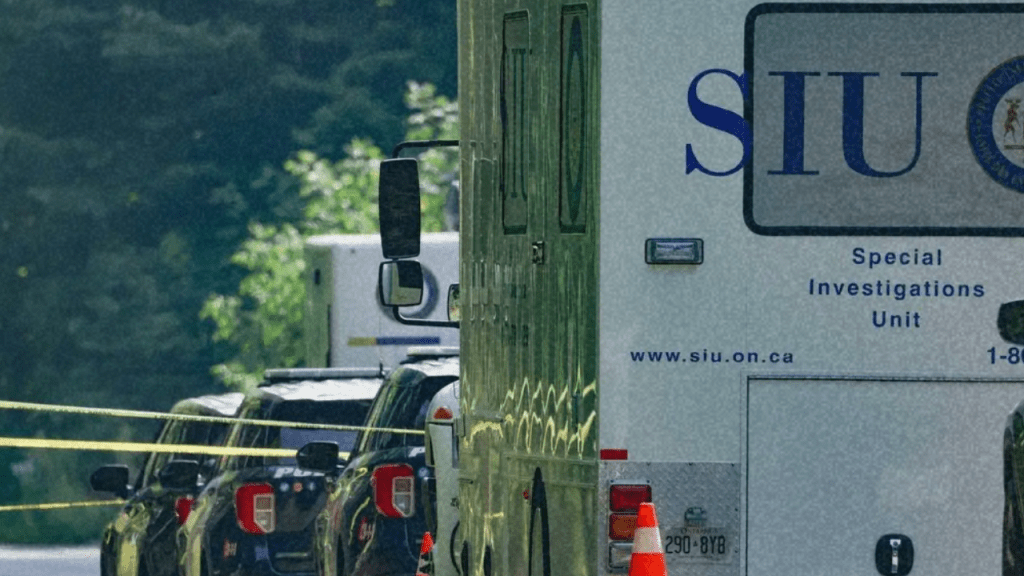
A 35-year-old man died after falling from a Mississauga high-rise while Peel police were inside his unit. The SIU is investigating the response.
Killer Cops Canada reported that a 35-year-old man died after falling from a high-rise condominium during a Peel Regional Police response in Mississauga on July 29.1
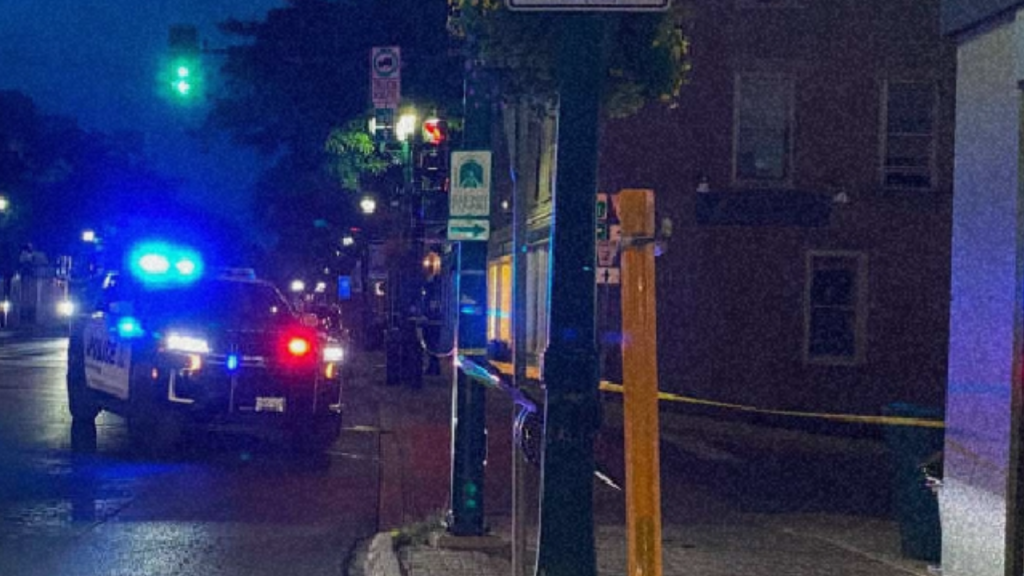
According to the preliminary account, police were called at approximately 10 a.m. about a man in distress at a condominium building on Kingsbridge Garden Circle, near Hurontario Street and Eglinton Avenue West. Officers entered the man’s unit and attempted to communicate or negotiate with him. At some point during the police presence, the man fell from a high floor to the ground below. He was transported to hospital and pronounced dead.1
Ontario’s Special Investigations Unit assigned three investigators and one forensic investigator to examine the death. The man has not been publicly identified.
Police entered the home of a man in distress. During that police response, he fell from the building and later died in hospital. The public account does not disclose what happened immediately before the fall.
The Public Account Does Not Explain the Fall
The preliminary record leaves nearly every consequential detail unresolved.
It does not identify who called police, what information the caller provided or the nature of the man’s distress. It does not say whether he was threatening himself or anyone else, how many officers entered the condominium, or whether a crisis worker, negotiator or healthcare professional was present.
The public does not know how long officers communicated with him, whether they attempted to detain or apprehend him, or where the man and officers were positioned immediately before the fall. No public account establishes whether there was physical contact.
It is also unknown whether officers were wearing body cameras, whether condominium surveillance captured the response, whether relatives or witnesses were present, or whether the man fell from a balcony or window. The available account does not establish whether he died from injuries caused by the fall alone.
Those are not secondary details. They are necessary to reconstruct how the police operation unfolded, how officers’ decisions shaped the encounter and what happened immediately before the fall.
The System Offers Abandonment or Police Coercion
Killer Cops Canada closed its initial report with a direct conclusion: policing is not healthcare, and police are not the appropriate response for someone in mental-health distress.1
The police-centred crisis system presents a false choice. Either responders leave a person without care, or armed officers enter with the power to detain and apprehend them. The possibility of sustained civilian support—workers who can build trust, return when necessary and provide voluntary care without police control—is excluded before the response begins.
That is not an unavoidable feature of crisis care. It is the result of governments building emergency systems around police authority while leaving independent civilian services without the resources, dispatch capacity or continuity required to respond.
Peel Region directs people experiencing mental-health concerns toward healthcare and crisis resources such as 811 and the 988 Suicide Crisis Helpline, while directing life-threatening emergencies to 911.5 Once a call enters the 911 system, distress can be converted into a police deployment even when the central problem is psychological or medical rather than criminal.
The available alternatives are then narrowed further. Withdrawal is treated as leaving the person without help. Continued intervention means police remain in command. Civilian crisis workers, where they exist, may accompany officers or advise them, but that does not create an independent care response.
Police presence changes crisis encounters. Armed authority inside a person’s home creates coercion where care is needed and can provoke fear, panic, retreat or resistance. Police then recast those predictable responses as dangerous “behaviour” requiring still greater control. The institution manufactures the disorder it invokes to justify escalation.
That cycle is especially dangerous in a high-rise. A person at risk of falling needs paramedics, fire services, crisis specialists and building personnel organized around safety and care. Armed officers empowered to force compliance are not crisis care.
The investigation should determine why police became the primary responders, what risk assessment justified entry, which civilian resources were available, whether officers attempted to detain or apprehend the man, and whether their presence increased the immediate danger.
“Officers attempted to negotiate” is not a sufficient public account of a police operation that ended in death.
Spark Solidarity raised the same structural issue after a Waterloo crisis call ended in death. Emergency systems repeatedly place armed officers at the point of contact with people whose most immediate need is care.
Recent Police Responses Have Ended in Fatal Falls
The Mississauga death belongs to a recent pattern in which police responses to people in distress have ended with fatal falls. The cases differ in crucial ways, but together they show why the moments before a fall—and the decisions that placed officers near the person—must be reconstructed rather than treated as background.
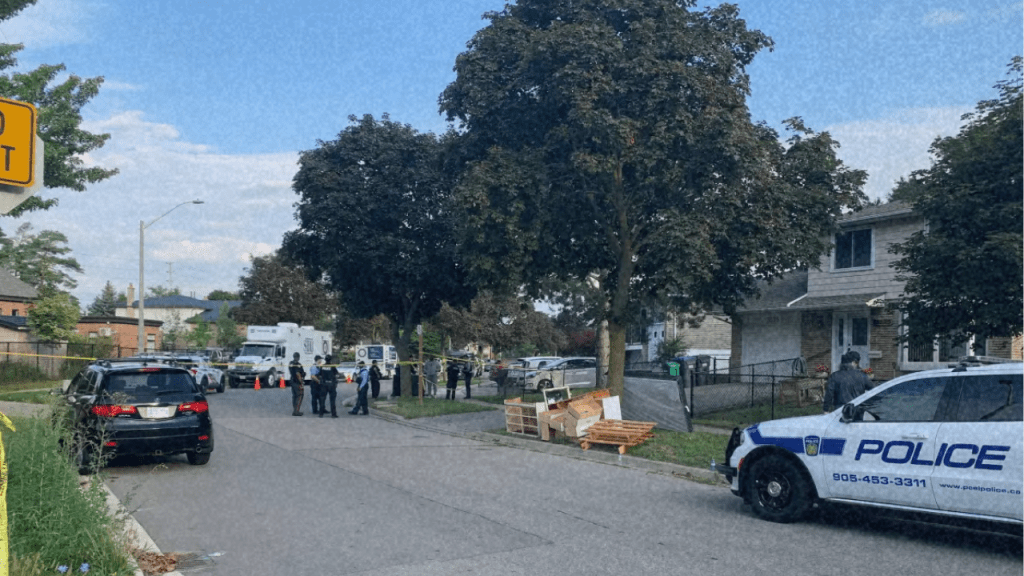
In September 2025, a 41-year-old man died after falling from an apartment balcony while Peel officers attempted to communicate with him. Officers on the ground observed him on the balcony, while another officer moved to a nearby apartment to speak with him. The SIU later found no reasonable grounds to believe an officer committed a criminal offence.2 3
In November 2025, an 18-year-old man died after falling from a Square One parking structure during another mental-health crisis call. The SIU terminated that investigation after determining that the first officer was approximately 80 metres away and had no reasonable opportunity to intervene.4
The June 7 death of a 58-year-old man in Guelph presents a closer comparison. As Spark Solidarity reported, police responded to calls about the man’s unspecified “behaviour,” breached his apartment door and entered his home. The SIU said an “interaction” followed, that the man “retreated from the police” and that he fell to the ground below a short time later.
A neighbour said police had attended two days earlier during an apparent mental-health crisis but left without connecting the man to care. When police returned, they breached his door. The sequence exposes the same false choice: withdrawal without sustained support, followed by coercive entry when the crisis continued.
The public account did not explain the legal basis for the forced entry, what occurred during the “interaction,” how close officers were to the man or whether there was physical contact. But the institutional problem is already visible. Police treated the man’s unspecified “behaviour” as the object of control, entered his home and then described his movement away from them as “retreat.” Their own account turns his attempt to get away from armed officers into a feature of his behaviour while obscuring the coercive police entry that shaped the encounter.
None of the earlier SIU conclusions determines what happened on July 29. The Square One investigation involved an officer 80 metres away; the current account places Peel officers inside the man’s unit. The Guelph case involved a documented door breach; no such detail has been disclosed in Mississauga. These distinctions make the undisclosed chronology more important, not less.
The pattern is institutional. Emergency systems repeatedly place armed police at the point of contact with people in acute distress near balconies, windows and other heights. Oversight begins after death and narrows public attention to possible criminal liability, while entry decisions, crisis-response policy and tactical escalation are left to separate—and often weaker—forms of accountability.
The same structural problem appeared in Spark Solidarity’s coverage of the Winnipeg police shooting during a mental-health crisis: what resources were considered, which were rejected and why police tactics became the decisive intervention.
The SIU Must Reconstruct What Happened Inside
The SIU investigation should produce a minute-by-minute chronology beginning with the original call and ending with the man’s arrival at hospital.
That chronology should identify the information received by dispatchers, the officers and specialized personnel assigned, the reason officers entered the condominium, and the words exchanged with the man.
It should document all attempts at negotiation or de-escalation, the man’s location and movements, the officers’ location and movements, and any physical engagement. All available police, civilian and building video should be preserved and reviewed.
The medical findings must also establish whether the fatal injuries were caused by the fall alone or whether any preceding injuries or physical contact were relevant.
Care Cannot Be Built Around Police Authority
A man in distress died after Peel police entered his home and attempted to communicate with him. The information currently available to the public does not disclose whether officers made physical contact immediately before the fall. It does establish that another crisis was governed through police authority and ended in death.
The SIU must establish why officers entered, how close they were, what they said, whether there was physical contact, which crisis resources were available and whether the chosen approach increased the immediate risk.
But replacing police cannot mean leaving people alone until their distress becomes an emergency. That is the false choice built into the current system: abandonment or coercion, withdrawal or forced compliance.
Peel and Ontario need a genuinely civilian crisis-response system with its own dispatch capacity, trained healthcare and crisis workers, and authority independent of police command. It must be able to remain involved, return when necessary, build trust and provide practical voluntary support without making care conditional on the threat of detention.
A civilian team that merely accompanies police, screens calls before police take over or withdraws when a person refuses immediate cooperation leaves the same structure intact. Care must become the governing response, not an accessory to armed authority.
The public is entitled to know what happened inside the unit. It is also entitled to a system that does not manufacture police necessity by refusing to build any durable alternative between abandonment and force.
Sources
- Killer Cops Canada, “Man (35) in Distress Killed in Fall During Peel Police Deployment in Mississauga (July 29, 2026),” July 30, 2026.
- Special Investigations Unit, “SIU Investigating Man’s Fatal Fall from Apartment Balcony in Mississauga,” September 2, 2025.
- Special Investigations Unit, “SIU Concludes Investigation into Man’s Fatal Fall in Mississauga,” December 30, 2025.
- Special Investigations Unit, “SIU Discontinues Investigation into Man’s Death at Square One Mall in Mississauga,” January 2, 2026.
- Peel Region, “Call 911 for Police, Fire or Medical Emergencies”.