A Guelph man died after police breached his door during a mental-health crisis. A neighbour says police had attended the same home two days earlier.
Editor’s note, July 31, 2026: This article has been substantially updated to include information provided by a neighbour about an earlier Guelph police attendance at the man’s home.
A 58-year-old Guelph man died on June 7 after police breached his apartment door and entered his home. Ontario’s police watchdog says an “interaction” followed before the man moved away from officers and fell from the building.
The official account begins shortly after 9 a.m., when Guelph Police Service received multiple calls concerning the man’s unspecified “behaviour.” It does not explain what callers reported, why armed officers were sent into his home or what happened after they crossed the doorway.
New information provided to Spark Solidarity places the fatal encounter within a longer mental-health crisis. A neighbour who contacted the publication after reading its initial coverage said people close to the man believed he was in crisis. They said Guelph police attended his condo on Friday, June 5, but left without connecting him with mental-health support or taking him to hospital. His distress continued the following day.
This earlier attendance changes the meaning of Sunday’s encounter. The man’s death did not emerge from a single unexplained moment of “behaviour.” It followed several days of distress and repeated police involvement in a situation that required care.
What the Official Account Leaves Out
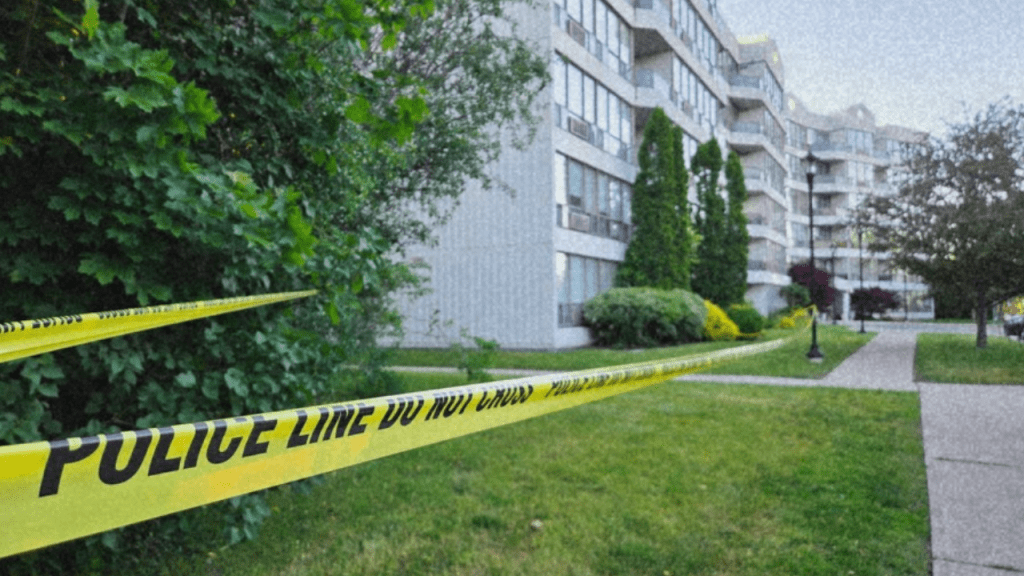
The Special Investigations Unit said Guelph police received multiple calls shortly after 9 a.m. on June 7 about an individual’s behaviour at an apartment building near London Street West and Bagot Street.
Officers attended the man’s unit and breached the door. The SIU said an interaction followed after police entered. According to its preliminary account, the man then “retreated from the police” and fell to the ground below a short time later.
He was taken to hospital and pronounced dead.
The SIU assigned three investigators and two forensic investigators to case 26-OCD-267 and appealed for witnesses, photographs and video. Guelph Police issued a brief statement saying it had notified the watchdog and could not provide further information while the investigation was underway.
That chronology reduces the encounter to institutional language. “Behaviour” replaces the circumstances that brought police to the building. “Interaction” conceals what officers did after entering. “Retreated” describes the man’s movement from the perspective of the officers pursuing him, without explaining what made him move or how he came to fall.
The account also begins too late. It says nothing about the police attendance reported two days earlier, what officers encountered or what information followed the man into Sunday’s response.
A Crisis Was Routed Through Police
The neighbour’s account adds the missing context. People close to the man believed he was experiencing a mental-health crisis. Police attended his home on Friday and left without connecting him to care. His distress continued on Saturday. On Sunday, police returned, forced their way inside and he died following the encounter.
The central failure is not that police may have declined to apprehend him on Friday. Framing the issue that way accepts the false choice built into police responses to mental-health crises: either officers leave or they use coercive powers to force a person into treatment.
That choice excludes the response the man needed. Mental-health crises should be met by independent civilian professionals trained to establish trust, provide care and help people accept voluntary support. Armed officers whose authority rests on command, detention and force should not serve as the gateway to that care.
A clinician can approach a distressed person as someone who needs help. Police arrive with the power to define the same person as non-compliant, dangerous or subject to apprehension. Their presence changes the encounter before a word is spoken, particularly for someone who is frightened, confused or distrustful of state authority.
This death was preventable because the response was not limited to the two options police institutions present. A society capable of sending officers to the same home twice was capable of building and sending an independent care team instead.
The Police-Created Dialectic
Police institutions create a closed logic around crises like this one. A person’s distress is stripped of its social and medical context and described as “behaviour.” That behaviour is treated as a potential threat. The perceived threat is then used to justify armed intervention, forced entry and demands for compliance.
When police presence escalates fear or confusion, the person’s reaction is folded back into the original threat assessment. Moving away becomes “retreating.” Refusing commands becomes non-compliance. Panic becomes evidence that control was necessary. The intervention helps produce the behaviour later cited to justify the intervention.
This logic makes police appear indispensable because it removes every non-police possibility from view. Debate is confined to whether officers should have intervened earlier, brought a clinician with them, used different tactics or exercised their apprehension powers. The premise that police should control the encounter remains protected from scrutiny.
The premise is the problem. A mental-health crisis is a health and care issue. Routing it through armed state authority turns a person in distress into an object of surveillance, risk management and control.
Police-Embedded Care Is Still Police-Led
Guelph Police operates the Integrated Mobile Police and Crisis Team, known as IMPACT, in partnership with the Canadian Mental Health Association Waterloo Wellington. The program places mental-health clinicians at police headquarters and allows them to attend calls with officers when requested and available.
A clinician’s presence may change an individual encounter, but a police-embedded team is not an independent civilian alternative. Police still control dispatch, access, scene authority and the conditions under which care is offered. The person in crisis still encounters armed officers with powers of detention and force.
That structure leaves the coercive foundation intact. Care becomes an attachment to policing rather than a public service people can reach without inviting police into their homes.
The question is not simply whether IMPACT attended on Friday or Sunday. It is why Guelph’s crisis system remains organized around police at all, and why people in distress cannot reliably receive an independent civilian response that is separated from police command.
Involuntary Apprehension Is Not the Answer
Ontario’s Mental Health Act permits police to apprehend a person without a warrant for psychiatric examination when statutory conditions are met. Those powers are often presented as the practical answer when someone in crisis does not immediately accept help.
That framing turns Friday’s unanswered questions into an argument for earlier coercion. It asks whether officers should have taken the man away sooner rather than why armed officers were responsible for deciding whether, when and how he received care.
Police apprehension is not a substitute for an accessible civilian crisis system. Nor should the absence of an apprehension be treated as proof that nothing else could have been done. Independent professionals can build rapport, return when necessary, coordinate with trusted people and connect someone to voluntary services without beginning from the threat of detention.
The man needed support from people equipped to provide care. The system offered police contact, followed by more police contact under increasingly dangerous conditions.
“Behaviour” Recasts Distress as Threat
The SIU’s use of “behaviour” is not neutral. It removes the man’s crisis from the sentence and replaces it with a description that invites readers to imagine danger without being told what occurred.
Once distress becomes behaviour, the person experiencing it becomes the problem. Attention shifts away from unmet needs and toward whether officers managed the person correctly. Police tactics become the centre of the story, while the political decision to make police the default crisis responders disappears.
The neighbour’s account restores the context erased by that language. The man was in distress across several days. People close to him understood that distress as a mental-health crisis. Police had already attended his home before officers returned and breached his door.
The public record must explain what callers reported and what police knew. But accountability cannot stop at improving the labels inside police files. The larger question is why a call concerning distress led back to armed officers rather than to an independent care response.
Forced Entry Turned Care Into Confrontation
On Sunday, officers did not remain outside the unit. They breached the door and entered the man’s private home.
The SIU has not publicly explained the grounds for that decision, what efforts preceded it or what officers believed was happening inside. It has not disclosed what officers said or did after entering, whether weapons were displayed, whether commands were issued or whether physical contact occurred.
Forced entry transforms the conditions of an encounter. For a person already in crisis, armed officers breaking into a private space can intensify fear, disorientation and the impulse to escape. Police then interpret the person’s response inside the threat framework that justified entry.
The official phrase “retreated from the police” reveals that sequence from the institutional point of view. It places police at the centre and describes the man only in relation to them. It does not tell the public what he perceived, what officers did or how their entry shaped his movement.
A complete account must explain why police entered, what happened inside and how the man came to fall. It must also confront why the system placed armed officers in the decisive role before the breach ever occurred.
The SIU’s Mandate Cannot Answer the Whole Question
The SIU investigates whether there are reasonable grounds to believe a police official committed a criminal offence. That legal question matters, but it is narrower than the institutional failure exposed by this death.
A criminal investigation focuses on whether individual conduct crossed the threshold for charges. It does not determine whether police should be the default response to mental-health crises, whether police-embedded care can replace an independent service or whether the structure of the response made escalation more likely.
A system can produce a preventable death without assigning criminal liability to an individual officer. Dispatch rules, police authority, forced compliance and the absence of civilian alternatives shape the encounter before investigators examine its final seconds.
The SIU must establish what occurred. The public must also refuse a framework in which the only possible outcomes are better policing, earlier apprehension or a clinician attached to an armed response.
Both Police Attendances Require Answers
The reported June 5 attendance requires a public account. Records should establish why police were called, what officers encountered, what they offered, how they documented the visit and whether that information was available when police returned.
The June 7 response requires the same scrutiny. The SIU should establish what callers reported, what dispatchers told officers, who authorized entry, what happened inside the unit and how the man came to fall.
Published statements from Guelph Police and the SIU do not address the reported earlier attendance. Secondary coverage reviewed by Spark Solidarity contains no account of how it was handled. The SIU investigation remains ongoing.
These unanswered questions matter, but the political conclusion does not depend on waiting for police to assess their own role. A person experiencing a health crisis was repeatedly routed through an institution organized around authority and force. The final response ended with police inside his home and the man falling to his death.
This Death Was Not Inevitable
The official chronology says police received calls about a man’s unspecified behaviour. Officers breached his door. An interaction followed. He moved away from them, fell and died.
The neighbour’s account restores what that chronology excludes. The man was in crisis. Police attended his home once and left without connecting him to care. His distress continued. Two days later, officers returned, forced entry and he died following the encounter.
That is not evidence that mental-health crises inevitably become dangerous. It is evidence of what can happen when a society treats armed intervention as care and police control as the unavoidable answer to distress.
The solution is not to give police an earlier opportunity to detain people. It is to build independent, well-funded civilian crisis services that people can call without summoning armed officers, and that can provide sustained voluntary support rather than a single coercive encounter.
The public should not accept “behaviour,” “interaction” and “retreated” as an explanation. Those words conceal both the final encounter and the system that made it possible.
The man needed care. What reached him was police. This death was preventable, and any serious accounting must begin there.