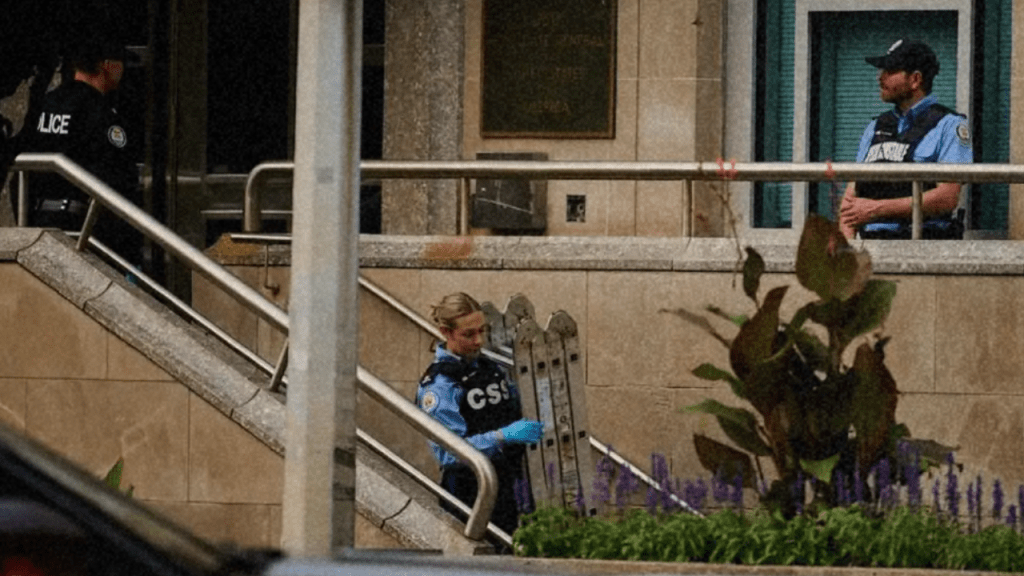
Police are not crisis care when a Waterloo man in suicidal distress died after police entered his apartment and SIU opened a file.
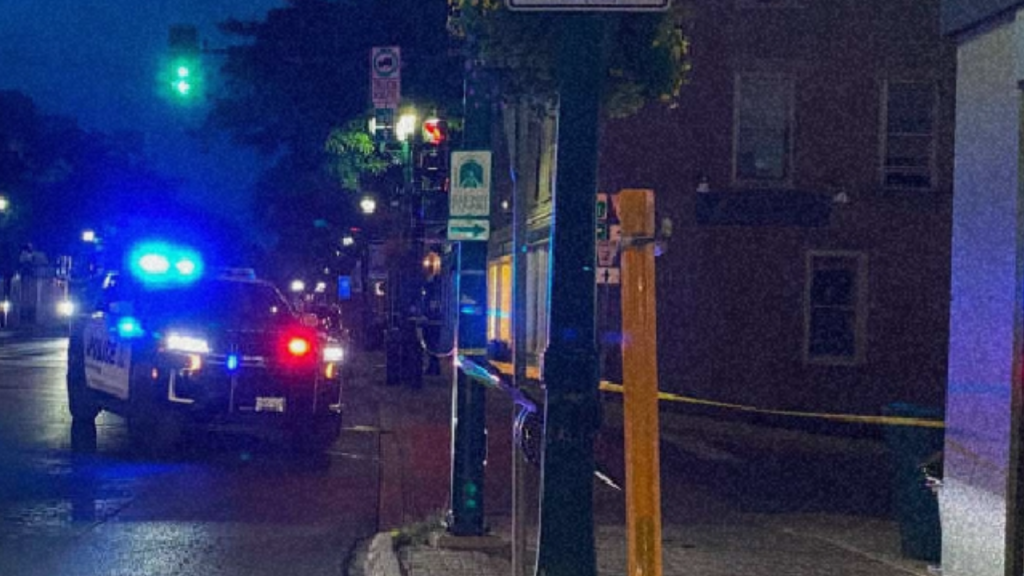
A 62-year-old man in Waterloo was reportedly in crisis on the evening of May 24, 2026. He was threatening to harm himself. Waterloo Regional Police Service officers went to an apartment building near University Avenue East and Weber Street North. They began negotiations. At some point, officers entered the unit. The man was found dead with a gunshot wound.
The SIU release is short, bureaucratic, and familiar. A person in crisis. A police response. An attempted negotiation. Entry into a private home. A death. Three SIU investigators and two forensic investigators were assigned to the case.
The SIU investigation may eventually answer narrow questions about timing, procedure, officer conduct, and legal responsibility. The larger failure is already visible. A man in suicidal crisis needed care. The response he received was policing.
Police are not health care. A person threatening self-harm is not a public-order problem first. They are a person in danger. They need time, trust, calm, clinical support, peer support, and a response designed around survival. Sending armed officers into that situation changes the emotional and physical terrain. It turns a health emergency into a security operation.
The official timeline is narrow
The public record has to be handled carefully. The SIU release does not establish that police shot the man. It does not establish every decision made before officers entered the unit. It does not say whether there were other people at risk, what information dispatchers had, or what alternatives were considered.
It does establish the basic political fact: the state response to a person in suicidal crisis was organized through police.
Police presence is not simply help with uniforms. Police carry weapons. They carry the authority to detain, command, restrain, enter, and use force. Even when officers intend to prevent harm, their presence can produce fear, shame, panic, and escalation for someone already at the edge of survival.
A suicidal person does not necessarily experience police as rescue. They may experience police as pressure. They may experience negotiation as containment. They may experience entry into their home as the final loss of control.
No claim about individual intent is needed for that to matter. The issue is what policing is built to do.
Policing turns crisis into control
Mental-health crisis response should begin with the person’s needs. Policing begins with control of a scene. Those are not the same thing.
Police are trained and equipped to secure spaces, assess threats, issue commands, and enforce compliance. That institutional logic does not disappear because a call is labelled a wellness check, a person in crisis, or a suicide threat. The weapons are still there. The legal authority is still there. The possibility of force is still there.
In many crisis calls, the person at the centre of the event is not asking for police. Someone else calls because they are scared, overwhelmed, or out of options. The call is framed as help. Once police arrive, the person in crisis may be confronted by armed authority, strangers at the door, demands to comply, and the threat of forced intervention.
That is why police are not crisis care is not a slogan. It is a description of institutional reality.
Care requires consent wherever possible. Care requires reducing fear. Care requires relationships, patience, and the ability to stay with distress without immediately translating it into risk management. Police-led response does the opposite. It takes vulnerability and processes it through the machinery of threat.
Waterloo has crisis teams already
Waterloo Region is not starting from zero. Local systems already acknowledge that mental-health crisis response requires specialized support. CMHA Waterloo Wellington describes IMPACT, the Integrated Mobile Police and Crisis Team, as a joint response involving CMHA members and police officers for mental-health, addiction, and crisis-related calls.
CMHA says the goal of IMPACT is to provide a more appropriate community-based crisis response at the time of need. The team connects with people, assesses needs, coordinates services, provides mobile crisis support, consults with police, and offers resources and training.
Those details matter because they show the region already recognizes that ordinary police response is not enough. The question is whether crisis care remains attached to police as the front door.
A co-response model can reduce harm in some situations. It can also preserve the central problem. The person in crisis may still first encounter the state through an armed officer. Crucial decisions may still sit inside a public-safety framework rather than a care framework.
The demand cannot stop at adding a mental-health worker to a police deployment. Crisis response should remove police from the centre of mental-health emergencies unless there is an immediate and specific threat to someone else that cannot be addressed any other way.
There is a non-police front door
Waterloo Region also has a crisis line that connects callers with mobile crisis support. The Kane Centre lists the local crisis line at 1-844-437-3247 and says it links callers with a Mobile Crisis Team operating 24 hours a day, 365 days a year throughout Waterloo Region.
The Mobile Crisis Team is described as offering prevention, assessment, intervention, and resolution for urgent mental-health and psychosocial crisis situations. Staff work from a least intrusive to most intrusive approach, with a focus on stabilizing crisis and helping the person regain control in their own environment.
Here 24/7 describes itself as the front door to addictions, mental-health, and crisis services provided by 11 agencies across Waterloo Wellington. Its stated goal is to understand what people need, connect them to support, and help them feel less alone while finding a way forward.
The existence of those services makes the Waterloo death more politically urgent, not less. The region already has language, infrastructure, and agencies organized around crisis support. A person still ended up inside a police-led sequence that ended with death and SIU investigation.
Wellness checks can escalate
The language around these calls hides the violence of the structure.
A wellness check sounds gentle. A person in crisis sounds medical. Negotiation sounds careful. For the person inside the apartment, the experience may be very different. Police outside the door can feel like a siege. Negotiation can feel like coercion. Entry can feel like invasion.
This is especially true when the crisis is happening inside someone’s home. A home should be the last place where a person loses control over their body, space, and future. Police-led crisis response can make that happen quickly. The person is no longer only someone who needs support. They become someone whose movements, choices, and emotions are being managed by armed authority.
Ontario has already seen how care language can become police procedure. In Cramahe, an OPP welfare check became an arrest, a hospital clearance, a night in custody, and a death in a detachment cell. The original label was welfare. The institution that arrived was police.
The Waterloo case is different in its facts, but the structural warning is the same. Once police are the default answer to crisis, care can become command, support can become containment, and survival can depend on navigating the response itself.
The SIU cannot be the answer
The SIU investigation is necessary. It is not enough.
Ontario’s Public Appointments Secretariat describes the SIU as a civilian law-enforcement agency with jurisdiction over police officers and certain other officials when incidents may have resulted from criminal conduct involving death, serious injury, firearm discharge at a person, or sexual assault allegations.
The SIU’s own release says the director must consider whether an official committed a criminal offence connected to the incident, lay a charge where grounds exist, or close the file without charges. That is a narrow form of accountability. It asks whether officer conduct crossed a criminal threshold. It does not answer whether police should have been the institution responding in the first place.
A finding of no criminal wrongdoing would not mean the response was appropriate. It would not mean the system worked. It would not mean the man received care. It would only mean the SIU did not find grounds for charges within its mandate.
Police oversight often narrows public debate this way. After a death, institutions tell the public to wait for the investigation. Waiting can suspend the political question. Communities do not need to wait months or years to say that armed police should not be the default response to suicidal crisis.
Ontario already knows the pattern
The Waterloo death belongs to a wider pattern without needing to relitigate every case. In Montreal, a person in distress encountered SPVM officers on May 22, 2026, was subdued and handcuffed, and died five days later. That person in crisis was processed through watchdog language that made the death sound medical before the public knew what officers had done.
The same problem keeps returning because governments fund police as the universal emergency service for social collapse. Mental distress, addiction, homelessness, poverty, family fear, suicide risk, and untreated trauma all get routed through armed response when care systems are underbuilt or unavailable.
Waterloo’s local crisis infrastructure shows another system is imaginable. The question is whether governments will build that system with enough authority, staff, funding, dispatch power, and public confidence to replace police as the default.
The prevention questions are public
The prevention questions do not have to wait for the final SIU report.
What alternatives were available before Waterloo police entered the unit? Were crisis workers dispatched? Was a non-police mobile crisis team considered? Who decided that police were the appropriate lead agency? What policies govern entry into a unit during a self-harm crisis? How often do Waterloo police respond to mental-health calls? How many end in apprehension, injury, hospitalization, or death?
Those are public-safety questions. They are more importantly public-health questions.
A crisis system should be judged by whether people survive contact with it. It should be judged by how many calls are resolved without police. It should be judged by how often people are stabilized without force, connected to care without custody, and supported before the emergency becomes catastrophic.
The state will ask whether officers acted lawfully after they arrived. The public has to ask why armed officers were the ones arriving.
A different system is possible
The alternative to police-led crisis response is not abandonment. It is care.
Waterloo Region needs a crisis system that does not begin with armed police. That means 24/7 non-police mobile crisis teams with the authority, staffing, and funding to respond directly. It means peer workers who understand crisis from lived experience. It means clinicians trained in suicide intervention. It means crisis respite spaces that are not jails, emergency rooms, or police-managed scenes.
It also means dispatch systems that can route mental-health calls away from police by default. A crisis line helps only if callers, families, neighbours, dispatchers, and institutions know it is available and trust it enough to use it. A mobile team helps only if it has capacity to respond when the crisis is happening, not after police have already taken control.
Governments cannot claim police are the only available option after funding police as the permanent emergency response to every social problem. If the only fully resourced tool is policing, every crisis will be forced through policing.
That is a political choice.
Care before force
A man in Waterloo was in crisis. He was reportedly threatening to harm himself. Police arrived. Negotiations happened. Officers entered his unit. He was found dead.
The SIU will investigate the immediate circumstances. The larger indictment does not require waiting for the final report. A crisis response system that sends armed police to people in suicidal distress is already failing.
Policing is not therapy. It is not suicide prevention. It is not community care with a badge attached.
If Waterloo wants fewer deaths, it needs crisis response built around care before force, support before control, and survival before procedure. A person in crisis should not have to survive the response too.
Sources
- Special Investigations Unit news release on the death of a 62-year-old man in Waterloo after Waterloo Regional Police responded to a crisis call, May 25, 2026.
- CMHA Waterloo Wellington description of IMPACT, the Integrated Mobile Police and Crisis Team.
- The Kane Centre crisis-lines page describing Waterloo Region’s crisis line and Mobile Crisis Team.
- Here 24/7 page describing Waterloo Wellington addictions, mental-health, and crisis-service access.
- Ontario Public Appointments Secretariat page describing the Special Investigations Unit’s function and jurisdiction.