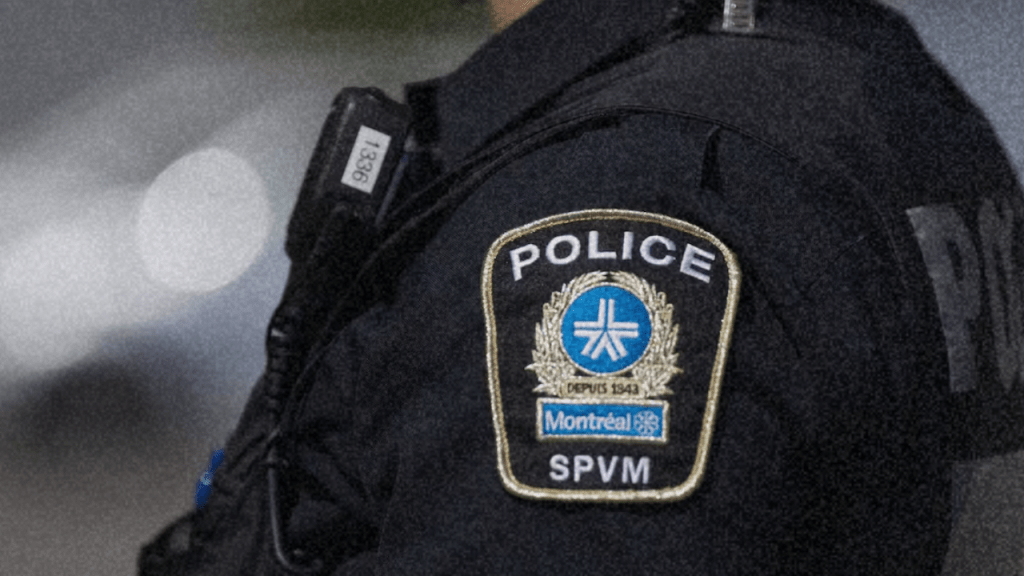
SPVM officers restrained and handcuffed a person in crisis. The person later died, while the state still withholds the force and cause.
The Released Record Ends Where Accountability Begins
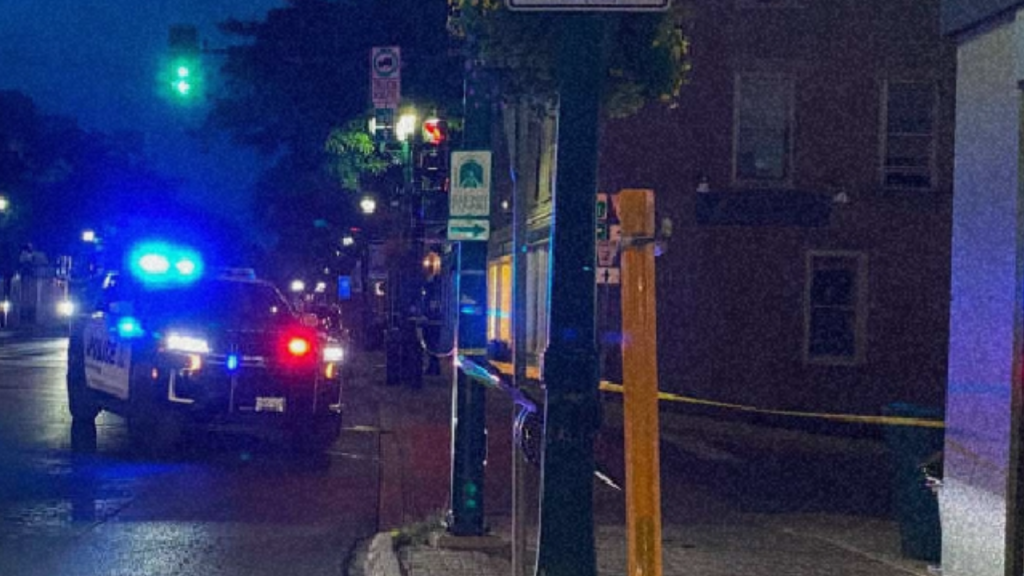
Around noon on May 22, 2026, SPVM officers on patrol encountered a person whom the state described as being in crisis in a public place. According to preliminary information supplied to the Bureau des enquêtes indépendantes, officers attempted to subdue the person and placed them in handcuffs. The person then suffered what the BEI called a malaise. First aid was administered before paramedics transported them to hospital in serious condition.
On May 27, the BEI announced that the person had died. As of July 30, its public case page still lists the investigation as ongoing. The agency has not released the person’s name, the exact location, the number of officers involved, the type or duration of force used, the position in which the person was restrained, the medical cause of the collapse or the manner of death.
The available record does not yet establish medical causation. It establishes the sequence that the public is entitled to examine: SPVM officers took physical control of a living person, subdued and handcuffed them, a medical emergency followed, and the person later died. The state cannot turn its refusal to release the missing evidence into a presumption that the intervention played no part.
The Parallel Investigation Does Not Say What the First Article Claimed
The Sûreté du Québec is conducting a criminal investigation parallel to the BEI inquiry. The original version of this article said that the parallel track opened because the BEI had flagged possible criminal conduct by the officers. The public record does not support that claim.
The BEI defines a parallel investigation more broadly. Another police force may investigate the event that generated the police intervention or an element outside the BEI’s mandate. The announcement does not identify an officer, the deceased person or anyone else as a criminal suspect. It does not establish that the BEI found evidence of a police offence.
That correction does not make the process reassuring. Two state-controlled investigations are operating while the public remains unable to learn the most basic facts about a death following police restraint. The BEI’s report will normally remain privileged, while the parallel police investigation may reveal even less unless charges are filed. The system promises investigation while controlling nearly every piece of evidence through which the public could evaluate it.
A “Malaise” Is an Outcome, Not an Explanation
The BEI’s preliminary chronology says officers attempted to maîtriser the person, handcuffed them and then reported a malaise. The first term describes the exercise of physical control. The second identifies a bodily crisis without explaining what produced it.
A malaise could have many causes. It could involve an underlying medical condition, intoxicants, the physiological effects of restraint, positional restriction, stress, force or some combination of factors. None has been established publicly in this case. The responsible position is not to choose one explanation before the evidence exists, but neither is it responsible to separate the bodily collapse from the intervention that immediately preceded it.
Official language performs that separation quietly. Police act through verbs such as intervene, control and handcuff. The person’s body then appears to act on its own. The grammar does not formally deny a connection, but it directs attention away from one before the investigation has answered the question.
Abisay Cruz Shows How the Process Closes
Abisay Cruz died after another SPVM crisis intervention on March 30, 2025. Videos released by his family showed officers restraining him face-down on a Saint-Michel balcony. One angle showed an officer kneeling on his back, while Cruz could be heard saying, “I’m going to die.” His family demanded a public coroner’s inquiry and challenged the force used against him.
The state’s final account arrived almost a year later. The DPCP said five officers were required to control Cruz, that he was handcuffed and moved toward an ambulance, and that his condition deteriorated into cardiorespiratory arrest. Prosecutors said officers and paramedics attempted resuscitation, including four doses of naloxone, before Cruz was pronounced dead in hospital.
The DPCP concluded that the officers had used reasonable and minimal force and that the evidence did not disclose a criminal offence. That conclusion closed the BEI file. It did not settle every question raised by the videos or the family, because the DPCP expressly limited itself to whether criminal charges could be proved. It did not decide possible civil or disciplinary fault, and it did not evaluate whether the intervention method should continue.
Cruz’s case therefore demonstrates the narrowness of the process. A death can follow police restraint, the public can see force applied to the person’s back and hear them predict their death, and the final institutional answer can still be limited to whether a prosecutor believes guilt could be proved beyond a reasonable doubt. No criminal charge is not the same finding as no institutional responsibility.
The Watchdog’s Numbers Describe the Institution
The BEI’s own statistics provide the scale. As of July 30, its public database listed 492 independent investigations. Of those, 421 were categorized as completed without charges from the DPCP, while three were listed as having reached judicial proceedings. Another 36 had been closed by the BEI director, and 19 had been submitted to prosecutors.
Those totals cover deaths, serious injuries, police shootings, vehicle incidents and detention cases across Quebec. They do not prove that every officer investigated committed an offence. They show that the oversight system overwhelmingly converts deadly and injurious police encounters into investigations that end without criminal proceedings.
The database listed 96 investigations involving the SPVM. Each case has its own facts, but the institutional pattern is documented. Montreal repeatedly sends an armed control agency into crises, confrontations and distress calls, then sends the resulting deaths and serious injuries through an oversight process that rarely produces a public courtroom.
The Press Repeats the State’s Grammar
La Presse placed the May 22 event under the headline Une personne fait un malaise lors d’une intervention du SPVM. A person experiences a malaise during an SPVM intervention. QMI and TVA followed the same preliminary sequence: a person in crisis, officers attempting to subdue and handcuff them, then a medical emergency.
The reporting did not need to fabricate anything to reproduce the institution’s frame. Newsrooms received a short official chronology before witnesses, medical evidence or the person’s family were publicly available. The resulting articles made the malaise the central event and the restraint its surrounding context.
That arrangement gives the state the first and often most durable account. The official version reaches the public immediately, while pathology, video and witness evidence may remain inaccessible for months. By the time a fuller record appears, the death has already been filed as an unfortunate medical event occurring near police rather than a death requiring scrutiny of what police did.
Institutional Responsibility Is Larger Than Criminal Liability
The unknown medical cause prevents a responsible publication from declaring that a particular officer’s force caused this death. It does not require pretending that the SPVM was merely present. Officers chose physical control as their intervention, placed the person in handcuffs and held authority over the scene when the medical crisis followed.
Institutional responsibility begins with that undisputed control. It includes why officers intervened, what threat they perceived, what alternatives they considered, how they restrained the person, what signs of medical distress appeared and how quickly they changed from control to care. None of those questions depends on proving murder, manslaughter or criminal negligence beyond a reasonable doubt.
The state has not publicly alleged that the person possessed a weapon, committed an offence or threatened another person. That does not prove none of those circumstances existed. It means the government has released enough information to justify police restraint while withholding nearly everything required to evaluate it.
What Safety Would Actually Require
A person in crisis requires a response organized around survival. That means trained crisis workers, medical personnel, peer responders, de-escalation and people capable of meeting distress without making coercive control the first institutional objective. Police should not remain the default service simply because governments have refused to build that capacity at the necessary scale.
Abolishing police power from crisis care does not mean abandoning people in distress. It means replacing a system that arrives prepared to command, seize and restrain with one designed to stabilize, communicate and preserve life. Armed intervention cannot be treated as neutral when the recurring endpoint includes people dead after being subdued, shot or held in police custody.
The person restrained on May 22 remains unnamed. The cause of death remains undisclosed, and the investigation remains open. The strongest defensible account is already damning: a person in crisis was alive when SPVM officers took physical control, a medical emergency followed the restraint and handcuffing, and the person later died.
The state now carries the burden of explaining that chain. Silence cannot break it.
Sources
- Bureau des enquêtes indépendantes, initial release concerning the May 22, 2026 SPVM intervention and investigation BEI-260522-001
- Bureau des enquêtes indépendantes, May 27 death update and current investigation page
- Bureau des enquêtes indépendantes, FAQ explaining parallel investigations, disclosure rules and the limits of its mandate
- Bureau des enquêtes indépendantes, independent-investigation statistics, accessed July 30, 2026
- Directeur des poursuites criminelles et pénales, decision not to charge SPVM officers in the March 30, 2025 death of Abisay Cruz
- Bureau des enquêtes indépendantes, closure report for BEI-250330-001
- CBC News, reporting on the family-released videos and demand for a public coroner’s inquiry in the death of Abisay Cruz
- CityNews Montreal, Cruz family calls for a public coroner’s inquiry
- La Presse, “Une personne fait un malaise lors d’une intervention du SPVM,” May 22, 2026
- TVA Nouvelles, reporting on the May 22 intervention and BEI investigation