
Cuba Market Reforms: Days after July 26, Havana expanded private medicine and energy access as U.S. oil pressure deepened shortages.
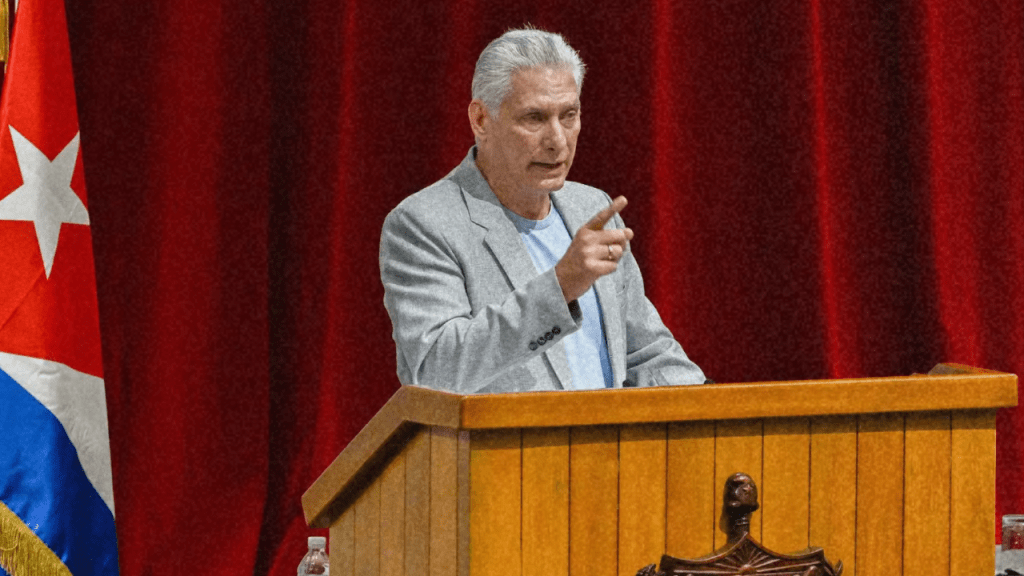
On July 26, Cuba marked the 73rd anniversary of the assault on the Moncada and Carlos Manuel de Céspedes barracks—the failed 1953 uprising that gave its name to the revolutionary movement. President Miguel Díaz-Canel used the anniversary to call Washington’s intensified sanctions and oil pressure “political genocide.”1
Three days later, Cuba put a new round of economic reforms into effect. The measures expand private imports and pharmacies, permit private elder-care facilities, ease electric-vehicle sales and widen foreign and non-state participation in oil extraction and fuel commerce.3
Western coverage presents that sequence as an economic opening. The more accurate reading begins with July 26: a besieged state commemorated the revolutionary break with foreign domination, denounced a new phase of economic warfare and then reorganized parts of its economy to survive it.
July 26 Was a Warning About the Present
The July 26 anniversary is not ceremonial background. The Moncada attack established the political program that later joined national sovereignty to land reform, public health, education and economic independence.
Díaz-Canel’s 2026 speech placed the current crisis inside that history. He accused Washington of manufacturing new justifications for pressure on Cuba and asked that the island be allowed to live in peace. He described the blockade as a campaign affecting every area of life rather than a limited dispute between governments.12
That framing clarifies what happened next. Cuba did not celebrate July 26 and then discover capitalism three days later. It marked a revolutionary anniversary under conditions of fuel scarcity, power failures, medicine shortages and financial isolation, then introduced measures intended to keep goods, care and energy moving.
The Blockade Is the Cause, Not a Complication
On January 29, the White House created a tariff mechanism targeting goods from countries that directly or indirectly provide oil to Cuba. The order authorizes additional duties after the U.S. government determines that a country supplied the island.4
The legal mechanism is a secondary-tariff system rather than a declared naval blockade. Its purpose is still coercive: raise the cost of supplying Cuba by threatening access to the U.S. market. Cuba reported in June that only one oil tanker had reached the island during the previous five months.5
The resulting blackouts and transport failures are not spontaneous evidence of socialist collapse. As Spark Solidarity documented in Cuba’s energy crisis as siege, Washington constricts fuel access and then detaches visible scarcity from the policy that produced it.
Cuba has internal planning failures, aging infrastructure and bureaucratic problems. Those contradictions should be investigated. They cannot be assessed honestly as though the island trades, borrows, insures shipments and purchases fuel under ordinary conditions.
The history of the Russia–Cuba oil relationship shows that access expands or contracts according to political decisions made far beyond Havana. The shortage is organized internationally.
The AP Frame Turns Coercion Into Liberalization
The Associated Press report deserves some small credit for explicitly connecting the reforms to U.S. oil sanctions and Cuba’s humanitarian crisis. That is more context than coverage that treats shortages as self-created facts.3
Its deeper frame still follows a familiar pattern. Public ownership appears through the vocabulary of control, prohibition and restriction. Private commerce arrives through opening, participation and facilitation. Markets are assigned movement and freedom; state provision is assigned immobility.
This vocabulary makes the reforms the story and the siege their setting. It reproduces the same separation examined in coverage of Cuban protests under six decades of economic warfare: deprivation is made visible while the external power manufacturing it is moved to the margins.
The result is ideological laundering. Washington creates conditions in which public systems cannot reliably obtain fuel, medicine, equipment or foreign exchange. Cuba permits private actors to fill some of the gaps. The concessions are then presented as proof that markets were the solution all along.
The Market Is Entering the Spaces the Blockade Emptied
Francisco Carbajal, a 71-year-old retiree interviewed by AP, could not obtain carbamazepine through his state pharmacy. Without the medication, he experienced seizures. The drug circulated instead through informal WhatsApp and Telegram markets.3
His case establishes the human stakes. A universal public-health system cannot deliver universal access when suppliers, banks, shipping companies and fuel networks are constrained. The immediate question is not whether a private pharmacy violates an abstract model. It is how essential medicine reaches Carbajal now.
Legal private pharmacies may move medicine from informal networks onto regulated shelves. Private elder-care facilities may expand capacity for an aging population. Electric vehicles may reduce dependence on scarce gasoline. Foreign participation in oil extraction may bring capital and equipment into a strategic sector that urgently needs both.
Cuba’s official transformation package contains 176 proposals across 23 policy areas. It includes private and foreign participation in fuel imports and sales, direct foreign trade by more economic actors and fewer restrictions on electric vehicles.6
These measures address real needs. They also create real risks. Medicine can be available without being affordable. A retiree paid in pesos may face a stocked private pharmacy priced for people receiving remittances or holding foreign currency. Electric transport can reduce fuel demand while remaining inaccessible to poorer households.
Foreign oil investment can ease an energy emergency while increasing private leverage over a strategic resource. Private elder care can add beds while dividing care according to purchasing power. Those are class contradictions, not reasons to pretend the blockade is secondary.
The market is not rescuing Cuba from socialism. It is entering the spaces that American economic warfare helped empty.
Defensive Adaptation Is Not Ideological Surrender
Cuba expanded self-employment and small private businesses before this emergency, including major changes in 2021. Socialist states have always made tactical adjustments to concrete conditions. The existence of markets does not by itself determine which class holds political power or what objectives organize the economy.
Prime Minister Manuel Marrero described the current program as a development of the socialist project rather than a departure from it. The official plan continues to identify the state enterprise as the economy’s central pillar while expanding non-state activity and foreign participation.7
That claim should be tested materially. The relevant question is whether private capital remains subordinate to national development and universal provision, or whether scarcity allows accumulation and dollar access to reorganize society around unequal purchasing power.
Purity politics offers no answer to Carbajal’s seizures, the transport collapse or the energy deficit. Cuba cannot be required to preserve an economically immaculate model while the most powerful state in the hemisphere punishes every route through which the island might obtain fuel and foreign exchange.
End the Siege and Let Cuba Choose
Washington cannot constrict Cuba’s oil supply, banking access and international trade and then claim the resulting market concessions as a victory for capitalism. Coercion is not consent. Adaptation under siege is not a democratic endorsement of the conditions that made adaptation necessary.
The principal demand inside the imperial core is not that Cubans preserve a pure model for foreign observers. It is that the United States end the blockade and restore Cuba’s sovereign room to decide how public ownership, private activity and foreign investment should relate.
As argued in Cuba Sanctions Are Economic War, siege warfare works by producing civilian deprivation without dropping bombs. The July 26 speech named that coercion. The July 29 reforms reveal its material consequences.
Cuba’s contradictions remain Cuba’s to resolve. The United States has no right to manufacture scarcity and call the survival response liberation.
Sources
- Reuters, “Cuban President Accuses US of ‘Political Genocide’ on Anniversary of Revolution,” July 26, 2026.
- Granma, “Cada día de lucha por la Patria es también otro Moncada,” July 27, 2026.
- Associated Press, “Cuba Loosens Control of Its Private Sector in a Struggle With a Mounting Humanitarian Crisis,” July 30, 2026.
- White House, “Addressing Threats to the United States by the Government of Cuba,” Executive Order 14380, January 29, 2026.
- Granma, “Díaz-Canel Explains Priorities Designed to Overcome Current Difficulties,” June 12, 2026.
- Granma, “Economic and Social Transformations Presented to Cuban Parliament,” June 19, 2026.
- Granma, “Marrero Cruz: These Transformations Do Not Constitute a Deviation From the Socialist Project,” June 22, 2026.
- Granma, “Aprueba Consejo de Estado Nuevos Decretos Leyes Como Parte de la Implementación de las Transformaciones Económicas y Sociales,” July 16, 2026.

 Spark Solidarity