Cuba’s energy crisis is driven by oil blockades, tanker seizures, and sanctions escalation, not internal collapse or ideological failure.
The Energy Numbers
Cuba requires approximately 100,000 barrels of oil per day to function. Domestic production covers roughly 40,000 barrels — all heavy, high-sulfur crude used almost exclusively for electricity generation. That leaves a 60,000-barrel-per-day shortfall that must be met through imports.
For more than a decade after 2005, Venezuela filled most of that gap. Between 2007 and 2015, PDVSA supplied Cuba with 90,000–95,000 barrels per day — a lifeline that financed social programs and kept the grid running. The decline from that peak has been relentless: to approximately 55,000 bpd, then 32,000 bpd in 2024 — a 42% single-year drop — and approximately 27,000 bpd in the first eleven months of 2025. Mexico partially filled the gap in 2023, providing a stable stream of light crude. By 2025, that supply had collapsed 73%, from 18,800 bpd to approximately 5,000 bpd. Russia has sent only two shipments in all of 2025. Total Cuban oil imports between January and October 2025 fell to approximately 45,400 bpd — a 35% decline from the same period in 2024.
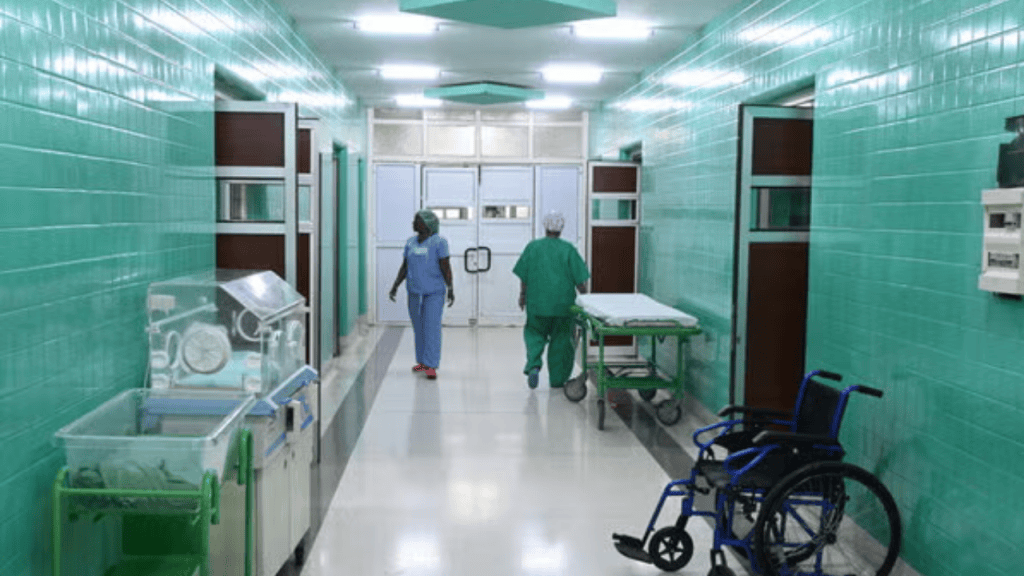
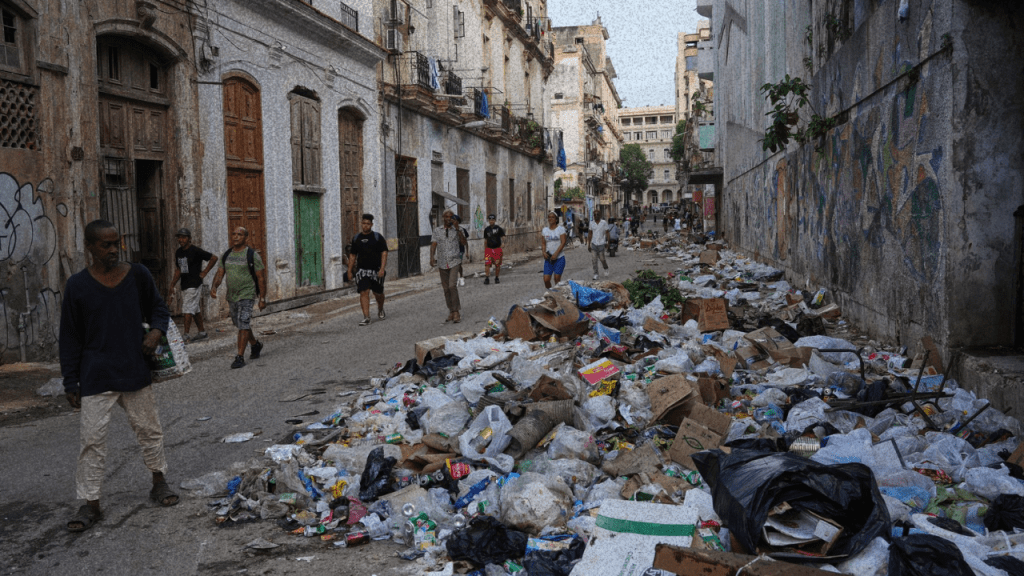
The result is visible in real time. Cuba’s electrical grid is generating approximately 1,375 megawatts during peak hours against demand exceeding 3,000 megawatts — a deficit of more than half the population’s power needs. Schools open late or not at all. Fuel sales are restricted to dollars and capped at 20 liters per transaction. The work week has been shortened to four days not for quality of life but to conserve fuel. These are not internal policy failures. They are the documented material effects of a supply chain being systematically dismantled from outside.
The Escalation: Trump’s Energy Blockade
This crisis did not arrive gradually. It was accelerated by deliberate policy on a specific timeline.
In late January 2026, President Trump signed an executive order threatening tariffs on any country that supplies oil to Cuba. Mexico — which had been maintaining shipments as humanitarian assistance while managing its relationship with Washington — suspended oil to Cuba immediately to avoid triggering those tariffs. The US simultaneously tightened sanctions on Venezuelan oil tankers, seizing a vessel carrying Venezuelan crude in December 2025 and sanctioning six additional tankers and their operators.
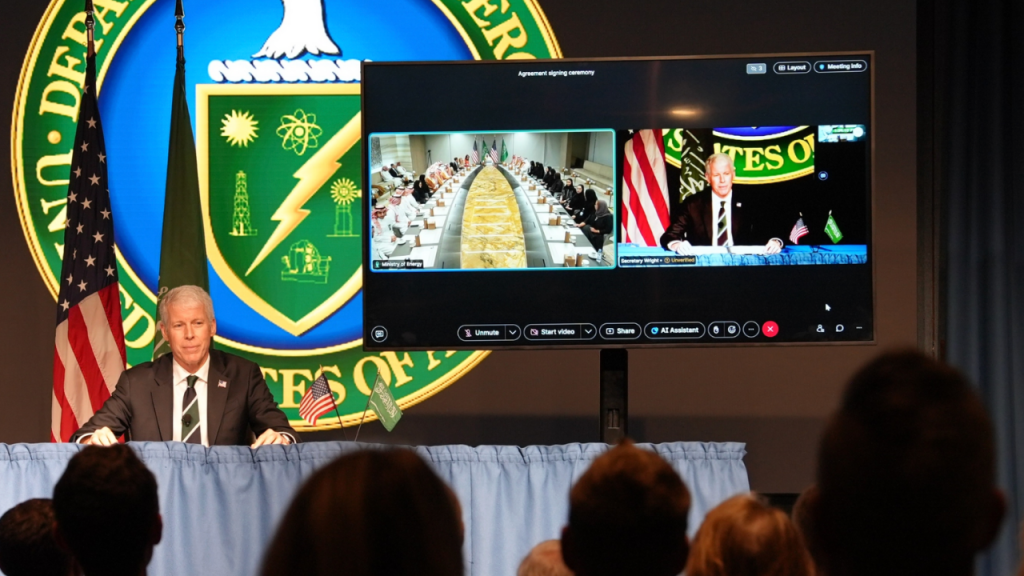
By February 9, 2026, the situation had reached operational emergency. Cuban aviation authorities announced that jet fuel would not be available at any of Cuba’s nine international airports, including Havana’s José Martí, for at least one month. Air Canada suspended all flights immediately. WestJet and Air Transat followed. Canada’s three major carriers announced emergency repatriation flights for approximately 3,000 stranded Canadian tourists.
Tourism generated roughly $3 billion annually in hard currency at its peak and Canadian visitor numbers stand 62% below the 2018 peak of 4.7 million travelers. The flight suspensions accelerate that collapse. Cuba’s emergency response has included a four-day state work week, shortened school days, and suspension of major public events including the Havana International Book Fair. The UN Secretary-General issued a warning of possible humanitarian “collapse” if oil needs go unmet. Cuba’s president estimated that US sanctions cost the country over $7.5 billion between March 2024 and February 2025 alone.
The tanker seizures and tariff threats targeting Cuba’s Venezuelan supply line are not anomalies — as documented in the analysis of how Venezuela intervention proves oil scarcity is political, control over energy access functions as a primary mechanism of geopolitical discipline, with scarcity engineered to produce the political outcomes that direct military force cannot.
Siege, Not Collapse: How the Crisis Is Read Internally
From inside Cuba, the current emergency is not understood as internal systemic failure. It is understood as a continuation of a long war by other means — and the February 2026 escalation confirms that reading in unusually direct form.
The embargo is not background. It is the central structuring force of the economy. Fuel shortages, credit constraints, import bottlenecks, and currency instability are the predictable outcomes of external economic warfare designed to erode state capacity, generate popular frustration, and force political concession. Trump’s explicit statement that Cuba will receive “no more Venezuelan oil or money” removes even the pretense of neutral economic pressure. The objective — compelling integration into a US-dominated order on externally set terms — is being stated in public.
This is why official discourse emphasizes unity, sovereignty, and resistance. It is why Díaz-Canel framed the energy blockade as “psychological war.” Internal debates over policy exist and are substantive — but public-facing narratives treat externally driven “solutions” with structural suspicion, because the external actors offering solutions are the same ones engineering the conditions being solved. That is not ideological rigidity. It is siege logic applied to a siege.
The current energy blockade is the latest expression of a logic that has structured Cuba’s material conditions for over six decades — as examined in the analysis of Cuba’s incarceration rate and the siege state, the sanctions architecture is designed not merely to punish but to erode state capacity, generate popular frustration, and force political concession on externally set terms.
Reform Under Duress Is Not Reform
From outside, the appeal of regulated developmental capitalism under socialist oversight is coherent — foreign investment without surrendering sovereignty, market mechanisms directed toward social ends. In abstract form, this is not irrational. Developmental states have used foreign capital selectively while preserving strong public institutions.
But theory assumes conditions. Reform in Cuba is not occurring in a laboratory — it is occurring under active energy blockade, financial isolation, and targeted sanctions that threaten any country that tries to help. Cuba cannot freely choose a development path while its oil supply chains are being seized, its creditors threatened, and its trade channels systematically strangled. What looks like reform from a distance is managed adaptation forced by survival imperatives. The shape that adaptation is being allowed to take happens to coincide precisely with what imperial pressure has been pushing toward all along. That is not coincidence. It is how siege capitalism works.
A genuine post-siege development horizon would require specific preconditions: an end to the embargo, guaranteed energy supply, access to international credit, and stable trade channels insulated from US extraterritorial enforcement. Without those preconditions, “controlled capitalism” is not a Cuban development project. It is the endpoint of a siege.
The Canada Problem
Canada exemplifies a pattern that deserves specific analysis. Ottawa positions itself as constructive, humanitarian, and dialogue-oriented — the antithesis of US belligerence. It sends aid, speaks the language of partnership, and avoids overt hostility. In contrast to Washington’s coercion, Canada appears reasonable.
But reasonableness is not neutrality. Canada’s airlines suspended all flights to Cuba because of a fuel crisis directly produced by US pressure on Cuba’s oil suppliers. Canadian humanitarian responses to Cuba’s crisis do not include challenging the embargo, building energy supply alternatives, or providing state-to-state economic support that would address structural constraints. They include food aid and medical cooperation routed through NGOs and multilateral institutions rather than directly through Cuban state channels — which is presented as neutrality but is not. Bypassing state institutions weakens them. Framing assistance as “helping the people, not the government” reinforces the idea that the state is illegitimate or incapable.
754,000 Canadian tourists visited Cuba in 2024 — still the top foreign market — and that tourism revenue was structurally dependent on fuel supply chains Canada took no steps to secure or protect against US disruption. The flight suspensions followed. Canada repatriated its tourists, offered refunds, and adjusted its travel advisories. The embargo remained untouched. The good cop role has a function: it keeps the system from collapsing outright while maintaining the conditions that prevent autonomous recovery.
Canada’s posture — humanitarian in appearance, structurally complicit in effect — follows a pattern traced in the analysis of how Cuba exposes the limits of liberal democracy, which documents how states operating within the liberal democratic framework deploy NGO channels, procedural legitimacy, and selective aid precisely to preserve the conditions that prevent autonomous recovery.
What the Blockade Is Designed to Produce
Cuba is not a morality play. It is a material case study in how external pressure shapes internal possibility — and in what a state under 63 years of economic warfare is actually capable of maintaining under those conditions.
The social guarantees persist: education, healthcare, rationing systems, public employment. These are not rhetorical commitments. They are institutional infrastructure that has survived US embargo, Soviet dissolution, the Special Period, and now the most aggressive energy blockade in decades. Experts describe the current situation as “as serious as it has been since the 1990s” — and the difference from the Special Period is that then, the external pressure eventually stabilized as Venezuela emerged as a partner. Now Venezuela is itself under US pressure, Mexico has been threatened out of supplying Cuba, and Russian contributions remain minimal. Washington is closing every supply line simultaneously and announcing that it is doing so.
The blockade’s design is not punitive in the conventional sense. It is constructive — it is building toward a specific outcome. Erode the state’s capacity to deliver. Generate popular frustration at living conditions. Create the material pressure that makes “reform” appear as relief rather than capitulation. The Cuban government has named this mechanism publicly for decades. The February 2026 escalation — tanker seizures, tariff threats, airline shutdowns, a UN warning of humanitarian collapse — is not a new strategy. It is the same strategy made more visible by the speed of its execution.
Once that mechanism is named, the question of what Cuba’s options are stops being a debate about ideology and becomes a question about what sovereign development is possible under active economic warfare — and about what the states that claim to support Cuba’s people are actually doing to end the war being waged against them.
Sources
- CEDA. “Special Edition: Maduro’s Fall and Cuba’s Reckoning.” weareceda.org
- Reuters/WHBL. “Cuba Struggles to Ease Power Cuts Amid Reduced Fuel Supplies from Venezuela, Mexico.” November 2025. whbl.com
- NBC News. “Cuba Says Airlines Can No Longer Refuel on the Island as U.S. Blockade Deepens Energy Crisis.” February 2026. nbcnews.com
- Aviation Week. “Airlines Cut Cuba Services Due to Fuel Crisis.” aviationweek.com
- Mexico Business News. “WestJet, Transat Halt Cuba Flights Over Fuel Shortage.” mexicobusiness.news
- CNBC. “Cuba Halts Flights as Jet Fuel Shortage Deepens Under Trump Sanctions.” February 14, 2026. cnbc.com
- Global News. “Cuba Is Reaching ‘Breaking Point’ as Fuel Shortage Worsens.” globalnews.ca
- Evrimagaci/Reuters. “US Tanker Seizure Sparks Energy Crisis in Cuba.” evrimagaci.org
- Spark Solidarity. “Venezuela Intervention Proves Oil Scarcity Is Political.” sparksolidarity.ca
- Spark Solidarity. “Cuba Incarceration Rate and the Siege State.” sparksolidarity.ca
- Spark Solidarity. “How Cuba Exposes the Limits of Liberal Democracy.” sparksolidarity.ca