Cuba sanctions are not a passive embargo. They are a siege designed to starve a society into submission — and Washington calls it diplomacy.
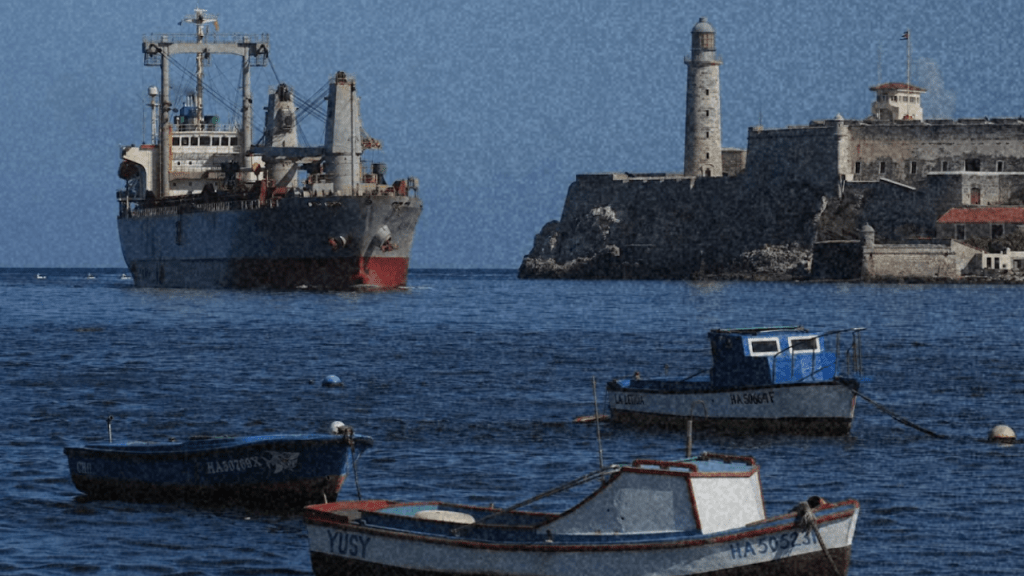
On Sunday, a ship docked at the port of Havana carrying fifteen thousand tonnes of rice from China — the first instalment of a sixty-thousand-tonne emergency donation, part of a larger package Beijing approved in January that also includes money to buy electrical equipment. Cuba’s president, Miguel Díaz-Canel, thanked the Chinese government publicly, writing that the gesture would reach millions of consumers.
The detail that a shipment of a dietary staple now counts as front-page relief tells you most of what you need to know about conditions on the island — and the fact that the relief is arriving from Beijing, while Washington tightens the screws and floats military intervention, tells you the rest.
The power goes out again somewhere in Havana, and these days it can stay out for twenty hours or more. Across the island through the spring of 2026, blackouts have run as long as twenty-two hours a day; in May, Cuba’s energy minister, Vicente de la O Levy, said on state television that the country had no fuel to spare and described the grid as critical.
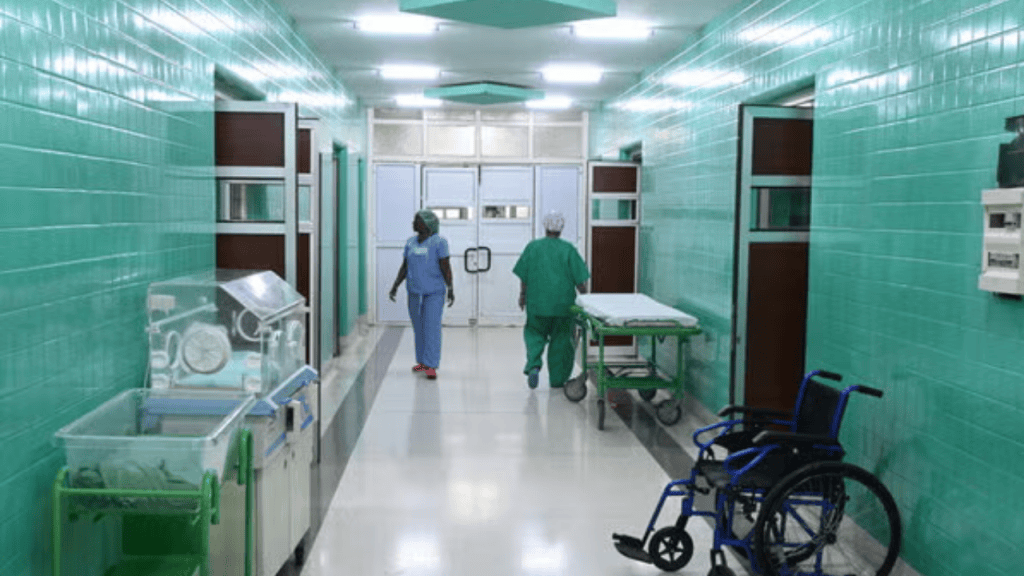
An apartment building falls silent except for the sputter of distant generators. Refrigerators stop, elevators freeze between floors, and food spoils in kitchens already stretched thin by shortages. In Havana this month, people have cooked over firewood. Hospitals switch to backup power; transit grinds to a halt. And then American officials appear on television to insist there is no blockade. That contradiction sits at the centre of modern Cuba.
For decades, U.S. officials have framed the Cuban crisis as the isolated failure of socialism while expanding policies designed to cut the island off from fuel, banking, shipping, tourism, remittances, and trade. The United States does not merely refuse to trade with Cuba. It punishes other countries, companies, banks, and shipping firms for doing so.
Ships that dock in Cuba face restrictions entering U.S. ports. Foreign banks risk penalties for processing Cuban transactions. Insurers hesitate, investors withdraw, payment systems freeze, and supply chains destabilise. This is not passive disengagement. It is active economic warfare, and ordinary Cubans understand it because they live inside its consequences every day.
That is why it surprises Americans to hear Cuban civilians criticise U.S. sanctions at all. The island is imagined as a place of either brainwashed loyalists or desperate anti-communists awaiting liberation, and the reality is more complicated. Many Cubans criticise their own government openly — its bureaucracy, its shortages, its censorship, its stagnation — and those same people can recognise that the United States has spent more than sixty years trying to economically suffocate their country.
The two positions are not in contradiction, and the people living through the current blackouts hold both at once: frustration at a government that cannot keep the lights on, and clear sight of the foreign policy that drained the fuel. That frustration is not abstract ideology. It is lived experience, narrated by people sitting in the dark.
For Americans, sanctions exist as headlines and talking points. For Cubans, they shape the availability of medicine, electricity, transport, food, and basic infrastructure. That difference produces two entirely different levels of political consciousness. Inside the imperial core, foreign policy is consumed as spectacle — cable panels reducing international crises to partisan branding, moral performance detached from material consequence. People insulated from the effects of sanctions experience them as theory. People whose electrical grid collapses because fuel shipments were blocked learn very quickly how global power actually works.
The American discourse around Cuba depends on historical amnesia. Most discussions begin after 1959, as though history materialised with the revolution, erasing the conditions that produced it. Without that context, Cuba looks like an inexplicable authoritarian anomaly rather than a society shaped by colonialism, dependency, and Cold War siege. What is happening to Cuba is not a bilateral dispute between neighbours. It is a case study in how empire disciplines states that try to escape its control.
Cuba before the revolution
Before the revolution, the island functioned in many respects as an extension of American economic power in the Caribbean. By the mid-twentieth century, U.S. corporations controlled enormous sections of the Cuban economy — sugar, utilities, telecommunications, mining, railroads, and large portions of agriculture — while much of the rural population remained trapped in poverty.
Havana was internationally famous not because Cuba was broadly flourishing, but because parts of the capital operated as a playground for wealthy foreigners, American businessmen, and organised crime. Tourists filled the casinos and hotels; mafia-linked operations ran openly; gambling and tourism enriched a narrow elite while the countryside went without housing, healthcare, and schools.
The dictatorship of Fulgencio Batista maintained this order through repression and violence, and it remained acceptable to Washington because it aligned with American economic and geopolitical interests. This is the contradiction at the heart of the anti-imperialist critique: American leaders framed their hostility in the language of democracy and human rights, yet supported authoritarian governments across Latin America whenever those governments protected U.S. interests. The issue was never dictatorship. The issue was control.
By the 1950s, inequality had become severe. Seasonal unemployment devastated workers tied to the sugar harvest, rural poverty was widespread, and large parts of the population lacked housing, healthcare, and education even as wealth circulated through the sectors connected to foreign capital. The revolution emerged from those contradictions. When Castro’s movement overthrew Batista in 1959, it was not initially presented as a communist project but as nationalist, anti-corruption, and anti-imperialist — and it moved rapidly toward structural transformation. Land reforms redistributed large estates, foreign-owned industries were nationalised, and American corporate assets were seized.
This is where Washington’s hostility escalated. It had tolerated Batista’s repression because Batista protected American influence; a government reclaiming economic independence was a fundamentally different threat. Cuba’s revolution challenged more than a dictator. It challenged the assumption that the Caribbean existed permanently within the American economic sphere. If a small nation could nationalise foreign industries, survive outside American control, and pursue independent development, the example might spread across Latin America and the wider Global South. From an anti-imperialist perspective, that is the key to everything that followed. The conflict was never simply ideological. It was geopolitical and economic.
The revolution and Washington’s response
Economic pressure came first. Trade restrictions expanded as Cuba nationalised American assets, sugar imports were cut, and diplomatic relations deteriorated into what would become one of the longest sanctions regimes in modern history. But economic warfare was only one component.
The CIA launched covert operations aimed at sabotage and assassination; industrial facilities were struck, agricultural systems disrupted, and the plots against Castro became infamous for both their scale and their absurdity. Then, in 1961, came the Bay of Pigs, when CIA-backed Cuban exiles attempted to invade and overthrow the government. The invasion failed catastrophically, and rather than weakening the revolution it strengthened Cuban nationalism and accelerated alignment with the Soviet Union.
After the invasion failed, Washington escalated through Operation Mongoose — a covert campaign of sabotage, economic destabilisation, propaganda, and assassination attempts designed to make Cuba ungovernable. That logic would define American policy for decades. During the Cold War, Washington framed Cuba primarily as a Soviet proxy, but that framing obscures the deeper issue: the United States opposed Cuba not merely because it aligned with Moscow, but because it represented successful defiance within America’s own sphere. The fear was contagion.
Throughout the 1960s and 1970s, revolutionary movements across Latin America challenged oligarchies, foreign ownership, and U.S.-backed regimes, and Cuba became both inspiration and symbol. Washington’s response across the region was consistent: support anti-communist governments regardless of their brutality. Military dictatorships in Chile, Brazil, Argentina, and Guatemala received backing because they protected an order favourable to American capital. The United States condemned Cuba as authoritarian while underwriting torture regimes across the hemisphere. Human-rights rhetoric operated selectively, and what mattered was alignment. Countries integrated into American structures were tolerated even when deeply repressive; countries attempting independent paths faced sanctions, coups, or invasion.
By the time the Soviet Union collapsed in 1991, many American policymakers expected Cuba to fall soon after. Instead the island endured catastrophic economic crisis while continuing to resist reintegration on American terms. The survival itself became intolerable. The sanctions remained, and in many ways they intensified.
The blockade as economic warfare
Most Americans hear “embargo” and imagine a passive refusal to trade, which dramatically understates what the sanctions system actually is. It functions as a global coercive apparatus enforced through finance, shipping, banking, insurance, and diplomatic pressure, and it aims not merely to limit U.S.-Cuba commerce but to isolate Cuba from the international economic system itself.
This is why the regime is better described as siege warfare without bombs. The United States leverages its dominance over global finance to punish anyone interacting with the island, and because access to the American market matters more than access to Cuba, companies simply decline the risk.
The effects cascade. Medical equipment becomes harder to buy; replacement parts for infrastructure arrive late or not at all; fuel imports turn unstable; financial transactions slow to a crawl. Even where humanitarian exemptions technically exist, the practical barriers often make trade prohibitively expensive. Fuel restrictions have been especially devastating, because Cuba depends on imported fuel for electricity and transport. When shipments are disrupted, the consequences spread through the whole society: blackouts intensify, transit weakens, food distribution suffers, hospitals run short, industrial production falls. The suffering becomes general.
Critics of the Cuban government correctly point to its inefficiencies, bureaucracy, and structural weaknesses — but those internal problems cannot be cleanly separated from external pressure imposed continuously for over six decades. No society develops normally under permanent siege. And the sanctions are routinely described in American discourse as “targeted” measures aimed at elites, when in reality economic pressure spreads unevenly and falls hardest on civilians. That outcome is not an accident of the policy. It is the policy.
This is not speculation about hidden intent, because the intent was written down at the beginning.
In April 1960, months before the embargo was formally imposed, Deputy Assistant Secretary of State Lester Mallory drafted a now-declassified memo titled “The Decline and Fall of Castro.” The revolution was too popular to topple directly, Mallory reasoned, so the only available means of alienating support, he wrote, was through “economic dissatisfaction and hardship.” The goal he set out in his own words was to deny Cuba money and supplies in order “to bring about hunger, desperation and the overthrow of government.” Civilian suffering was not a side effect of the strategy. It was the strategy.
The reasoning has not changed in sixty-six years; only the language has grown more careful. Economic pain is meant to generate political instability — accumulate enough hardship and social unrest may rise, deteriorate conditions enough and legitimacy may weaken. This is why the sanctions are most accurately understood as collective punishment, and why modern empire increasingly operates through financial coercion rather than colonial occupation.
Formal colonialism largely vanished in the twentieth century, but economic dominance remained, and states that resist integration can be isolated through debt, sanctions, capital flight, and financial exclusion. The destruction is less visible internationally because it arrives gradually, through shortages and inflation and decay rather than open invasion. But the blackout is still real. The empty pharmacy is still real. The delayed surgery is still real. Economic warfare does not become humane because it runs through banks instead of bombs.
Rubio and the politics of regime change
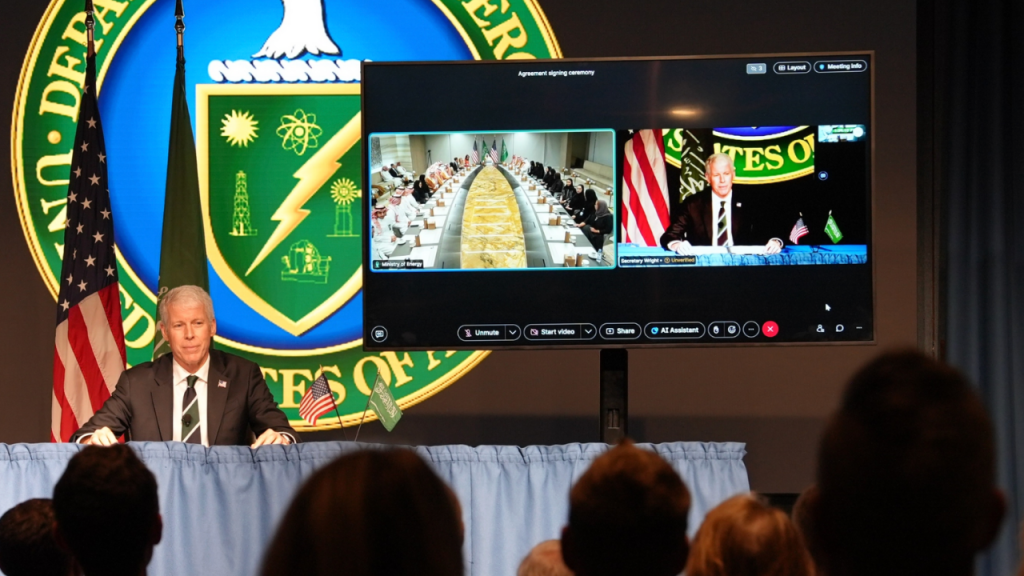
No American official embodies the hardline approach more completely than Marco Rubio — and he no longer does so from the back benches. Rubio is now Secretary of State, the first Cuban-American to hold the office, which means the regime-change posture is no longer a Florida senator’s talking point but the operating policy of the entire U.S. foreign-policy apparatus. The shift matters, because the man who built his career on maximalist hostility to Havana now signs the orders.
And he has been signing them rapidly. On May 1, 2026, President Trump issued Executive Order 14404, “Imposing Sanctions on Those Responsible for Repression in Cuba.” Within a week, Rubio moved against GAESA — the military-controlled conglomerate he called the heart of Cuba’s “kleptocratic communist system” and which controls vast portions of the formal economy, including its hotels — along with the nickel producer Moa Nickel. On May 18 he designated eleven more regime figures and three organisations, and promised further action “in the following days and weeks.”
The framing around these moves is not coy. Reporting describes the sanctions as the administration pushing openly for regime change, and notes that Trump and Rubio have not ruled out military action, with the State Department reportedly detailing personnel to U.S. Southern Command in Miami in anticipation of possible hostilities.
The cascade arrived immediately: after the GAESA designation, the shipping giants Hapag-Lloyd and CMA CGM halted cargo bookings to and from Cuba, and the Canadian miner Sherritt International suspended its operations on the island. This is the siege mechanism working in real time — a designation in Washington, and within days the ships stop coming.
The fuel collapse driving the current blackouts runs through the same circuitry: the crisis sharpened after the United States seized Venezuelan president Nicolás Maduro in January 2026, cutting off the roughly one-fifth of Cuba’s energy imports that Venezuela had supplied, with Russian shipments too thin to close the gap. The lights went out in Havana because of a chain of pressure that began in Washington and Caracas.
And the pressure is no longer confined to economics. In late May 2026, days after the new designations, the administration escalated again: federal prosecutors indicted Raúl Castro, Cuba’s former leader, over the 1996 shootdown of two civilian planes, and Trump and Rubio openly raised the prospect of military intervention. Trump told reporters that previous presidents had considered acting against Cuba for decades, but “it looks like I’ll be the one that does it,” adding that he would be “happy to do it.”
Rubio called diplomacy the stated preference while putting its odds as “not high,” insisting the president “always has the option to do whatever it takes” and warning that Cuba would not be able to wait the United States out.
He framed the campaign as national security rather than nation-building. Read in sequence, the moves form an escalation ladder: tighten the sanctions, choke the fuel, indict the old leadership, then float the use of force — each rung justified by the instability the previous rung produced. The siege was always aimed at regime change. What is new is how openly the threat of bombs now sits behind the siege without them.
The logic is circular by design. Sanctions worsen conditions; worsened conditions are presented as instability; instability becomes the justification for more sanctions. Rubio’s political base in Florida, shaped by decades of anti-communist exile politics, rewards maximalism, but the deeper pattern is the familiar selectivity of American foreign policy. Washington condemns Cuba relentlessly over repression while maintaining historic alliances with governments responsible for torture and disappearance.
A state integrated into American strategic interests can be authoritarian without becoming a permanent target; a state resisting American influence is treated very differently. Cuba is punished less for repression than for refusing subordination, and the hostility persists across generations because the island keeps symbolising independent resistance inside what Washington considers its sphere.
Why Cubans understand empire better than Americans
One reason many Cubans appear more politically conscious about U.S. foreign policy than the average American is simple: they experience empire materially, and Americans largely do not. Inside the imperial core, the consequences are externalised — sanctions affect distant populations, wars happen overseas, economic coercion runs invisibly through financial systems most Americans never think about. Politics becomes abstract, geopolitics gets reduced to personality conflict and partisan theatre, and structural analysis disappears beneath the spectacle.
In sanctioned countries, politics enters daily survival directly. When the electricity fails because fuel imports collapsed, geopolitics becomes tangible; when medicine runs short because banking restrictions interrupted the supply chain, international power structures stop feeling theoretical. Cubans discuss sanctions, oil shipments, tourism, and remittances with real sophistication because these dynamics shape ordinary life continuously. Americans, meanwhile, are encouraged to imagine their country primarily as a benevolent defender of democracy rather than a hegemonic power enforcing economic dominance. Empire obscures itself at home.
This is one of the central insights of anti-imperialist thought: people living closer to the consequences of empire often understand it more clearly than those benefiting from it indirectly. The American public is insulated from the violence embedded in sanctions because that violence looks bureaucratic rather than military. There are no invasion images on the screen, no occupation, no televised bombings — only shortages, collapsed infrastructure, inflation, and migration unfolding gradually. The violence becomes administrative, and because it lacks the spectacle of war, many Americans never recognise it as violence at all. Cubans do not have that luxury.
Cuba as symbolic threat
Cuba’s significance to the United States has never been proportional to its military or economic power. The island matters symbolically. A small country ninety miles from Florida overthrew a U.S.-backed dictatorship, nationalised foreign industries, survived an invasion, and held its political independence through six decades of sanctions. That example carries global implications, and from an anti-imperialist perspective Washington fears not Cuba itself so much as what Cuba represents: the possibility that smaller nations can reject dependency and survive outside American control.
This is why sanctions function as disciplinary tools beyond their immediate target. The message extends outward to every state weighing an independent path — that it, too, could face isolation, destabilisation, and punishment. Cuba is one example within a broader pattern that runs through Venezuela, Nicaragua, Iran, and others; the mechanisms differ, but the underlying logic is the same. Economic coercion enforces the acceptable boundaries of the global order. That is why the sanctions regime is, internationally, fundamentally anti-democratic: it denies nations the ability to choose their own political and economic systems without external punishment.
Whether one supports the Cuban government is ultimately secondary to the underlying principle. The real question is whether powerful states should possess the right to economically strangle weaker societies into political compliance — because once that principle is accepted, sovereignty itself becomes conditional on obedience to hegemonic power. And there is a final irony in the record: a CIA case study written twenty years into the embargo concluded that the sanctions had not met any of their objectives. They did not topple the government. They only ever reached the people.
Siege without bombs
The blackout returns again somewhere in Cuba tonight. An elderly woman sits in the dark listening to politicians in another country discuss freedom while backing the policies that darken her apartment. A hospital conserves fuel. A family waits in a line for food. A bus route vanishes because the diesel never arrived. And somewhere in Washington, officials describe all of it as diplomacy.
Modern empire increasingly avoids the optics of conquest; sanctions, financial coercion, and banking restrictions achieve many of the same ends more quietly. The devastation unfolds gradually, the suffering becomes statistical, the violence becomes bureaucratic — but the consequences remain real. Cuba’s crisis cannot be understood honestly without holding both things at once: the government bears responsibility for genuine failures of bureaucracy and repression, and none of that justifies economic warfare against an entire society.
The central argument is finally a simple one. No superpower should possess the right to deliberately impoverish another nation to force its submission. Because when civilian suffering becomes a strategic tool, humanitarian language stops meaning anything — and when sanctions become permanent siege, the line between war and peace disappears altogether.
Sources
- National Security Archive — State Department memo, “The Decline and Fall of Castro” (Lester Mallory, April 6, 1960)
- U.S. State Department, Foreign Relations of the United States — the Mallory memorandum, primary text
- National Security Archive — Cuba Embargoed: U.S. Trade Sanctions Turn Sixty; CIA review found sanctions “have not met any of their objectives”
- U.S. Department of State — Rubio designates GAESA and Moa Nickel under Executive Order 14404 (May 7, 2026)
- U.S. Department of State — further sanctions on 11 Cuban regime elites and three organizations (May 18, 2026)
- Axios — new Cuba sanctions show the administration pushing for regime change; military action not ruled out; SOUTHCOM personnel
- The Washington Post — Rubio defends new sanctions targeting the military-run conglomerate GAESA (May 8, 2026)
- Cuba Headlines — Rubio announces sanctions on 11 elites and three organizations; shippers and Sherritt halt operations
- CBS Miami — Cuban-American community reacts to new sanctions; islanders “living in the dark”
- ABC News — Cuba’s grid collapse grows more dire; energy minister says no fuel to spare; Venezuela cutoff after the U.S. seized Maduro (May 2026)
- Al Jazeera / AP — Trump and Rubio raise the threat of military action against Cuba; Raúl Castro indicted over the 1996 shootdown (May 21–22, 2026)
- Local 10 / AP — Díaz-Canel thanks China for 15,000 tons of rice, first batch of a 60,000-ton emergency donation (May 24, 2026)