
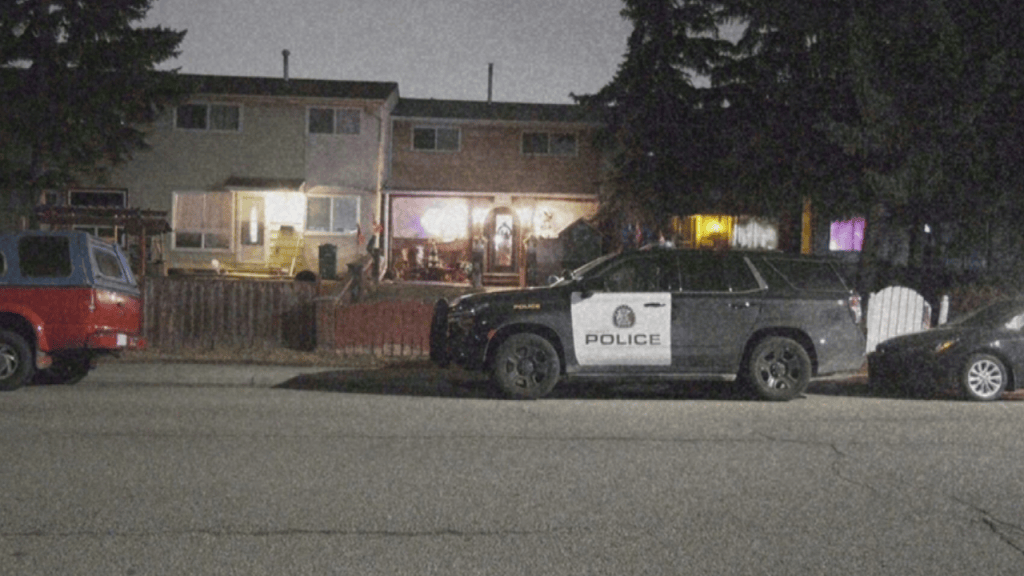
Calgary police used conducted-energy weapons during an arrest. The man was conscious and speaking before becoming unresponsive and dying in hospital.
As reported first by Killer Cops Canada, a man died in hospital after Calgary Police Service officers used conducted-energy weapons while arresting him in the Abbeydale neighbourhood on July 11. Alberta’s police watchdog is investigating both the force used and the circumstances surrounding his death.1
The most important fact in the available chronology is not the allegation police placed at the beginning of their release. It is what happened after officers found the man. Police used electrical weapons, restrained him, moved him to another yard and observed him conscious and speaking. A short time later, he became unresponsive. Officers performed CPR before paramedics transported him to hospital, where he was pronounced dead.2
That sequence does not establish that the conducted-energy weapons or the restraint caused his death. It does establish why the arrest cannot be reduced to police descriptions such as “combative” and “non-compliant.” Those terms describe the man through the institution whose officers used force against him. They do not explain how many weapons were deployed, how many electrical cycles were delivered, what other force was used or what happened between handcuffing and medical collapse.
The Official Accounts Begin Differently
Calgary police opened their July 12 release with a report of a residential break and enter involving a weapon. The service said officers responded to the 0 to 100 block of Abbercove Road S.E. at approximately 9:23 p.m., located a suspect who had left the residence and attempted to take him into custody.3
The police release said the man became combative and did not comply with directions. It then said at least one officer deployed a conducted-energy weapon and that the man was found in medical distress shortly afterward. The wording moves quickly from an alleged violent crime to disobedience, force and collapse. It gives the police action an immediate justification before independent investigators have established what occurred.
ASIRT’s July 16 account begins earlier and presents a broader preliminary chronology. Officers first responded at approximately 9 p.m. to a domestic-related call at an Abbeydale home. Police then received reports of a man entering yards and behaving unusually. Shortly before 9:30 p.m., another caller reported that a man had entered a home and attempted to stab someone inside.2
Those allegations remain part of an institutional account, not completed findings. ASIRT has not publicly established what happened inside either home, whether the same person was responsible for every reported event or what evidence connected the man officers arrested to each call.
The difference between the releases is significant. Calgary police foregrounded a weapons-related break-in and the man’s alleged resistance. ASIRT foregrounded a domestic call, unusual behaviour, several reports and a sequence in which officers used force before the man collapsed. The second account does not exonerate the man from any alleged conduct. It shows how much the first release omitted while presenting police conclusions as the natural starting point.
Police Used Electrical Weapons During the Arrest
ASIRT said officers found a man they believed was connected to the calls elsewhere in Abbeydale. During the attempted arrest, officers used conducted-energy weapons. The plural matters. Calgary police had said only that at least one officer deployed a device. ASIRT’s account indicates that more than one weapon may have been involved, although it does not identify the number of officers or deployments.2
The man fell into a narrow side yard between a garage and a fence. Officers took him into custody and moved him into a nearby backyard so they could assess him. ASIRT said he remained conscious and able to speak. He briefly resisted while officers placed him in handcuffs, and police called emergency medical services.
A short time later, he became unresponsive.
Officers began CPR before paramedics arrived. The man was transported to hospital and pronounced dead. Neither Calgary police nor ASIRT has identified him publicly.
Police emphasized that no officer or member of the public was injured. That information may be relevant to the broader incident, but it does not answer the central accountability question. A man entered police custody alive, remained conscious after force and restraint, and then died. The absence of injuries to police cannot substitute for an explanation of his death.
The Cause of Death Remains Unknown
The public record does not establish the cause or manner of death. It does not show whether the electrical weapons, the fall, physical restraint, a medical condition, drugs, injuries or some combination contributed to the fatal outcome.
The unresolved details are extensive. Neither agency has disclosed how many officers deployed conducted-energy weapons, how many times the devices were fired or activated, whether officers used additional strikes or restraint, how long the man remained in the confined side yard, how he was positioned after handcuffing, or the interval between the first use of force and his loss of consciousness.
The agencies have also not said whether body-worn cameras recorded the arrest, whether device logs have been preserved, what injuries were documented, or whether an autopsy and toxicology testing have produced preliminary findings. Those are not peripheral details. They are the evidence required to determine whether police force and custody contributed to his death.
Spark Solidarity has documented the same information gap after other police-involved deaths, including the High Prairie RCMP custody death, where an initial chronology could not answer what happened during the period when police controlled the person’s body and access to medical care.
Calgary Has Seen This Sequence Before
The Abbeydale death is not the first recent Calgary case in which conducted-energy weapons were followed by restraint and fatal medical collapse.
In September 2024, Calgary police confronted 42-year-old Jon Wells, a member of the Blood Tribe, inside the Carriage House Hotel. ASIRT’s preliminary account said Wells stood with his hands visible and no weapon while appearing confused. An officer pointed a conducted-energy weapon at him, and Wells raised his hands, said he would leave and repeatedly said he did not want to die.4
Officers later grabbed, tackled, punched and used conducted-energy weapons against Wells. Police placed him in handcuffs and leg restraints, applied a spit mask while he was face down and left him prone after paramedics administered a sedative. He was recognized as unresponsive several minutes later and died at the scene.4
In November 2025, Calgary officers responded to a mental-health call involving a man in his forties whose mother wanted him taken to hospital. ASIRT said three officers moved to control him, used conducted-energy weapons multiple times and handcuffed him behind his back while he was on his stomach. He was moved into a seated position and found not to be breathing one minute after being handcuffed. He later died in hospital.5
The July 2026 death is therefore at least the third publicly reported Calgary police arrest death since September 2024 involving conducted-energy weapons. That does not establish that the devices caused any of the deaths. It establishes a recurring institutional pattern that requires more than isolated criminal investigations: electrical force, physical restraint, rapid medical collapse and police language that initially defines the dead person through alleged resistance.
The pattern belongs beside the wider failures examined in Spark Solidarity’s coverage of Vancouver police custody deaths. Institutions classify each death as a separate incident while the repeated sequence remains structurally unexamined.
ASIRT’s Investigation Is Necessary but Narrow
The Police Review Commission directed ASIRT to investigate the Abbeydale case as a Level 1 matter. That classification covers incidents involving death, serious injury, or serious and sensitive concerns about police conduct. ASIRT says it will examine both the police use of force and the circumstances surrounding the man’s death.2
Opening the investigation does not establish that an officer committed an offence. It also does not transform the initial Calgary police release into an independent finding.
ASIRT’s criminal mandate asks whether available evidence supports charges against individual officers. Public accountability requires a broader inquiry. It must ask whether Calgary police policy permits repeated electrical cycles, how officers are trained to recognize medical distress after force, whether prone or compressed restraint was used, how quickly paramedics were called and whether the service has changed its practices after the Wells and November 2025 deaths.
A finding that criminal charges are not warranted would answer only one legal question. It would not establish that the tactics were necessary, proportionate or safe. As Spark Solidarity has shown in its analysis of the fragmented police-accountability system, institutions can close criminal files while leaving policy, discipline and public truth unresolved.
Police Framing Cannot Be the Final Account
Calgary police described the man as a suspect, combative and non-compliant before the public knew how many officers used force, how many electrical cycles were delivered or what happened to his body after he was handcuffed.
That language does institutional work. It places the alleged offence and resistance before the death, encouraging the public to interpret every later action as a consequence of the man’s behaviour. The force becomes a response. The collapse becomes a medical event. Police custody disappears as a causal environment.
The established chronology prevents that disappearance. Officers used conducted-energy weapons. The man fell in a confined space. Police restrained and moved him. He remained conscious and speaking. He then became unresponsive and died.
Until the device records, body-camera footage, restraint details and medical findings are disclosed, police claims must remain claims. The institution that used force cannot be permitted to define the dead man through resistance while withholding the evidence needed to judge its own conduct.
Sources
- Killer Cops Canada, “Man Dies in Calgary Police Custody After Being Tased (July 11, 2026),” July 15, 2026.
- Alberta Police Review Commission and ASIRT, “ASIRT Investigating Death After Calgary Police Arrest,” July 16, 2026.
- Calgary Police Service, “ASIRT Investigating In-Custody Death in Abbeydale,” July 12, 2026.
- Lauryn Heintz, “More Details Released on Death of Man in Calgary Police Custody,” CityNews Calgary, September 25, 2024.
- Alberta Serious Incident Response Team, “Three ASIRT Investigations Continue,” November 28, 2025.



 Spark Solidarity