
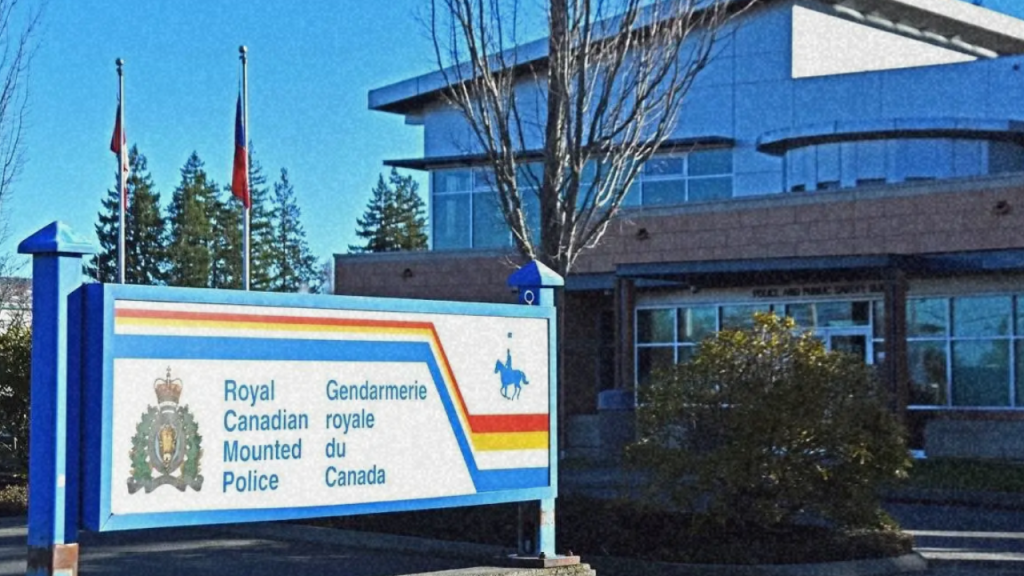
A man from the High Prairie area walked into the local RCMP detachment on June 14 to address an outstanding warrant. Police arrested him without incident. About 30 hours later, a civilian guard found him unresponsive in a holding cell. He died despite emergency care from RCMP officers and paramedics.
The public record does not identify the man, explain the warrant or establish how he died. It does establish the sequence. He entered the detachment voluntarily, remained confined while awaiting transfer to a correctional facility and never left police custody alive.
The Alberta Serious Incident Response Team released its first account on June 19. The agency said the man was from the High Prairie area and turned himself in on Sunday, June 14, in relation to an outstanding warrant. RCMP officers arrested him without incident.
The terms of the warrant required his transfer to a correctional facility. Until that transfer occurred, police kept him inside the High Prairie detachment. The release does not say why the transfer had not happened after roughly 30 hours or describe the conditions inside the holding cell.
On Tuesday, June 16, a civilian guard found him unresponsive. RCMP officers and paramedics attempted emergency medical care, but the man died. An autopsy was conducted June 18. Its findings were not made public by the June 19 source cutoff.
The Police Review Commission directed ASIRT to investigate the death as a Level 1 matter. That classification covers incidents involving death, serious injury or serious and sensitive concerns about an officer’s conduct. The designation initiates an investigation. It does not itself determine responsibility.
Thirty hours inside an information void
The official account records the moment of arrest and the moment the man was found. Almost everything between them remains outside public view. There is no disclosed custody log, observation schedule, medical history, camera record, request for assistance or account of his condition during detention.
Those missing hours contain the central questions. When was he last seen responsive? How often was he checked? Did he report pain, illness, withdrawal or distress? Was medical care requested or offered? What did officers and civilian guards observe? Why was he still at the detachment awaiting transfer?
Asking those questions does not assign a cause of death before the evidence exists. It recognizes that custody creates an affirmative responsibility. Once police confine a person, they control access to movement, medication, medical attention, communication and help. The detained person cannot simply leave when conditions become dangerous.
The state therefore cannot treat discovery of an unresponsive prisoner as the beginning of its responsibility. Custodial responsibility began at arrest and continued through every one of the approximately 30 hours that followed.
Detention was not a passive wait
The phrase “awaiting transfer” makes confinement sound administrative, like a delay between two destinations. For the person locked in the cell, it was the exercise of state power in its most physical form. Police controlled the room, the door, the schedule and every avenue through which assistance could arrive.
The presence of a civilian guard does not privatize that responsibility away. The guard was working inside an RCMP detention system. If civilian employees performed cell checks or monitored prisoners, their instructions, training, staffing levels and communications with officers belong inside the investigation.
A complete account must establish who had custody duties during each shift and how those duties were documented. It must also explain whether the detachment had the staffing and medical protocols required to hold someone for that length of time.
RCMP custody in Treaty 8 territory
High Prairie sits within Treaty 8 territory in northern Alberta, near several First Nations and Métis communities. The RCMP provides the dominant police presence across much of this geography through provincial, municipal and First Nations policing arrangements.
The deceased man had not been publicly identified as Indigenous by June 19. His identity cannot be inferred from where he lived or where he died. The geography still shapes the institution responsible for his custody and the communities required to depend on it.
Canada’s national police force did not enter Indigenous territory as a neutral public service. Its predecessor enforced Canadian expansion across the Prairies. The RCMP later enforced the Indian Act and participated in the machinery surrounding residential schools, reserve confinement and state control over Indigenous life.
That history does not establish what happened to this man. It explains why another unexplained death inside an RCMP detachment cannot be separated from the force’s continuing institutional power in Treaty territory.
For many northern communities, the RCMP remains both the agency called during emergencies and the institution empowered to arrest, detain and remove people from the community. That concentration of authority makes transparent custody records and independent scrutiny essential, not optional.
ASIRT reviews the system after death
ASIRT investigates serious incidents involving police in Alberta, including deaths and potential criminal offences. Its investigation can reconstruct the detention, review video and records, obtain medical evidence and determine whether officer conduct warrants referral for prosecution.
That work is necessary. It also begins after the custodial system has already failed to return someone alive. An oversight body can review evidence and recommend consequences. It cannot substitute for adequate observation, medical access, safe staffing and accountable detention practices before a crisis becomes fatal.
The initial release demonstrates the limits of early oversight disclosure. It provides a basic chronology but withholds the evidence needed to evaluate the detention. The public is told an investigation is underway while the institution under investigation retains most of the relevant record.
Families and communities can wait months or years for a final report. During that interval, the same cells, policies and staffing arrangements may continue operating. Review without timely disclosure allows risk to remain hidden behind an active file.
The unanswered questions belong to the public
The man’s name may first emerge through family or community rather than police. Until it does, he should not be reduced to an anonymous object in an institutional timeline. He was a person who took the deliberate step of presenting himself at the detachment and submitting to a legal process.
That act placed him entirely inside state control. Whatever the outstanding warrant involved, it did not erase his right to medical care, observation and safe custody. A warrant authorized detention and transfer. It did not make death an acceptable administrative outcome.
The investigation must establish the medical cause of death, but accountability cannot stop at the autopsy. A cause describes what happened to the body. It does not by itself explain whether warning signs were missed, whether policy was followed, whether the policy was adequate or whether the transfer delay increased the danger.
Those questions concern more than individual misconduct. They concern the design of short-term detention across rural and northern detachments, where prisoners may remain in police cells while waiting for transport, court or admission to a correctional facility.
He entered alive and did not leave
The official chronology is already enough to reject the language of an isolated incident. Arrest, detention, monitoring and transfer are institutional processes. The man passed through each stage until the process ended with a civilian guard finding him unresponsive.
No conclusion about criminal liability can be reached from the June 19 record. A political conclusion is unavoidable: when the state takes physical control of a person, it assumes responsibility for the conditions under which that person lives or dies.
The High Prairie RCMP had custody for approximately 30 hours. The public is entitled to a complete account of those hours, not only the final emergency response. Until that account exists, the most important fact remains the simplest one. The man turned himself in alive. Police custody did not return him.
Sources
- ASIRT investigating in-custody death at RCMP detachment in High Prairie — Government of Alberta
- ASIRT investigating death of High Prairie man in RCMP custody — EverythingGP
- Man Dies in RCMP Holding Cell in High Prairie, Alberta — Killer Cops Canada
- Reclaiming Power and Place: Final Report — National Inquiry into Missing and Murdered Indigenous Women and Girls
- Indigenous Policing Services — Royal Canadian Mounted Police



 Spark Solidarity