A man entered Vancouver police custody on June 14. Staff found him unresponsive in a Cordova Street cell the next morning.
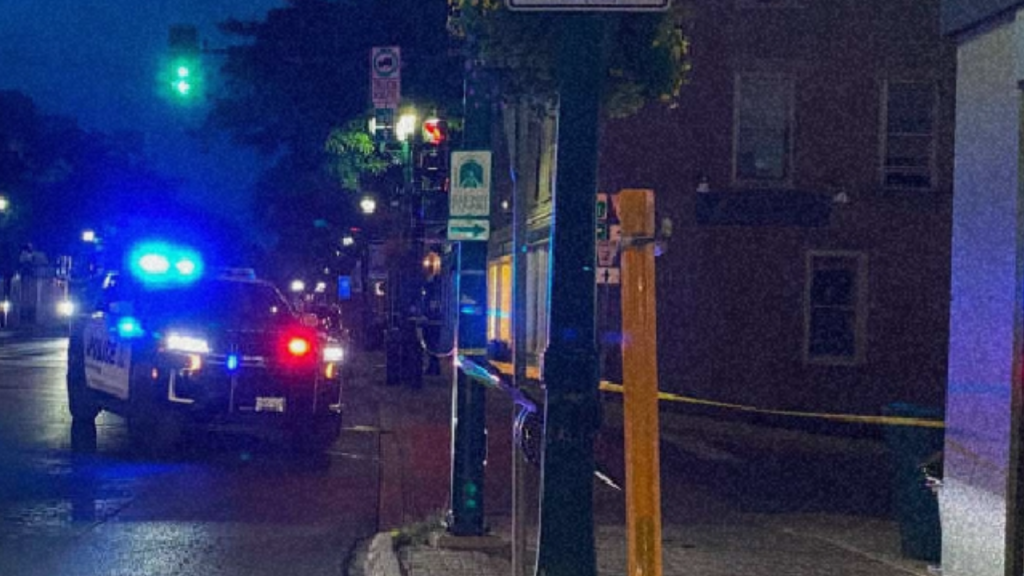
Police arrested the man near Main and East Hastings at approximately 3 p.m. on June 14, 2026. They transported him to the Vancouver Police Department jail on Cordova Street. Staff found him unresponsive at approximately 8 a.m. on June 15. He was pronounced dead at the scene.
The Independent Investigations Office of British Columbia opened an investigation. As of June 16, the agency had not publicly identified the man or announced a cause of death. The available record does not establish that an officer caused his death or that police knew he required hospital care when they arrested him.
It establishes that a person taken from the geographic centre of Vancouver’s housing and toxic-drug crises spent the final night of his life inside a police cell.
The Distance From Hastings to the Cell Is Only a Few Blocks
Main and East Hastings sits inside the Downtown Eastside, on the unceded territories of the Musqueam, Squamish and Tsleil-Waututh nations. The neighbourhood contains dense networks of community care alongside the concentrated effects of dispossession, low welfare rates, disappearing low-income housing and an unregulated drug supply.
The Cordova Street jail is close enough to turn that concentration into a short administrative route. Police arrest someone on Hastings, transport them west and place them in a cell designed for detention rather than long-term medical care.
That does not mean everyone arrested in the neighbourhood is ill, unhoused or using drugs. It means the local custody population is produced inside conditions where medical distress, withdrawal, disability, poverty and criminalization frequently overlap. A jail receiving that population cannot treat health risk as exceptional.
The June Death Was Not the First Recent Case
On July 16, 2025, Vancouver police arrested a 49-year-old man at approximately 4 a.m. and brought him to the jail. Staff found him unresponsive at approximately 10 a.m. Paramedics transported him to hospital, where he died.
On August 2, 2024, officers detained a man after being flagged down near East Hastings between Columbia and Carrall. He went into medical distress shortly after the arrest and died.
On June 30, 2023, a man arrested near Davie and Burrard went into medical distress while being booked into the Vancouver jail. Emergency services transported him to hospital, where he was pronounced dead.
Another man arrested on April 30, 2023, was found in medical distress in his cell the next morning and later died in hospital. Vancouver police suspended a jail guard with pay while the IIO and Office of the Police Complaint Commissioner conducted investigations.
These cases document recurrence. They do not provide a custody-death rate because neither the number of people detained nor consistent case-level medical data is supplied alongside them. Four previous cases cannot prove that the rate remained stable. They are enough to demand a public accounting of who enters the jail, how health risks are assessed and what happens after the cell door closes.
A Police Cell Is Being Asked to Contain a Health Emergency
British Columbia recorded 1,826 deaths from the unregulated drug supply in 2025. That was a substantial decrease from 2024, but the provincial government’s May 2026 report said death rates remained high and paramedic-attended opioid poisoning events had risen sharply between June 2025 and January 2026.
Vancouver Centre-North, which includes the Downtown Eastside, has repeatedly carried one of the province’s heaviest concentrations of toxic-drug deaths. The drug supply interacts with unstable housing, chronic illness and the physical effects of surviving outdoors or in inadequate rooms.
Police encounter people inside that system because Vancouver assigns police to manage public drug use, street disorder, welfare checks and complaints arising from homelessness. Arrest converts a public condition into an individual custody file.
The legal reason for an arrest may have nothing to do with health. Once detained, however, the person can no longer seek help independently, use community services or rely on people nearby. The jail assumes control over access to observation and emergency care.
That transfer of control is why every death in custody raises a structural question even when no officer committed a crime.
The Missing Numbers Protect the Institution
Public releases describe each case separately. A person was arrested, experienced medical distress, received aid and died. The IIO then determines whether an officer may have committed an offence.
What the public does not receive in one accessible dataset is equally important: annual admissions to VPD cells, medical screening outcomes, emergency transfers, overdoses, withdrawal complications, use of observation cells, staffing levels and deaths during or shortly after detention.
Without denominators and standardized reporting, families and journalists can assemble cases but cannot calculate risk. Police can answer a pattern question by discussing only the facts of the latest incident.
The absence of data does not prove that deaths are increasing. It prevents the public from determining whether custody practices are improving.
The IIO Can Investigate Conduct, Not Replace the Custody Model
The IIO’s mandate is narrow by design. It investigates incidents involving police that result in death or serious harm and determines whether an officer may have committed an offence. It can gather evidence independently of the police agency involved and refer potential offences to Crown counsel.
It cannot build supportive housing, regulate the drug supply, fund withdrawal management or redesign the Vancouver jail. It is not a public-health authority and does not set the economic conditions producing police contact in the Downtown Eastside.
That limitation does not make independent investigation useless. It means a finding of no criminal wrongdoing cannot answer whether the system made a preventable death more likely. Criminal liability asks whether an identifiable person broke the law. Prevention asks why the same institutional sequence keeps recurring.
Accountability Begins Before the Cause of Death Is Known
The active investigation must determine what officers and jail staff knew, how often the man was observed, whether a medical assessment occurred and what evidence establishes his cause of death. Those facts cannot be supplied by political analysis.
The city and province do not need to wait for those findings to disclose custody-health data. They can publish standardized records for every jail admission and medical emergency, allow independent inspection of health protocols and report implementation of recommendations from previous deaths.
They can also reduce the number of health and poverty crises that end in custody by funding housing, voluntary treatment, culturally safe Indigenous services and civilian crisis response at the scale the neighbourhood requires.
The man who died on June 15 remains unnamed in the public record. The institutions that held him are known. They should not be allowed to make the case disappear into another isolated file.
Sources
- “Man Dies in Vancouver Police Department Custody” — Killer Cops Canada, June 16, 2026
- “Vancouver Case Index” — Killer Cops Canada
- “Independent Investigations Office of British Columbia” — IIOBC
- “Decriminalization Data Report to Health Canada” — Government of British Columbia, May 2026
- “Statistical Reports on Deaths in British Columbia” — BC Coroners Service
- “Toxic-drug supply claims nearly 2,300 lives in 2022” — Government of British Columbia