West Nipissing made its zoning deadline visible, but residents still face a backwards consultation timeline that demands written comments before the town’s public presentation.
West Nipissing corrected its website after residents questioned how the municipality was handling consultation on its proposed zoning by-law. The main project page now states that written comments on Draft Version 3 must be submitted by June 17, 2026, if they are to be provided to Council for consideration.
That correction was not a gift from the municipality. Residents paid attention, identified a serious omission and forced the town to respond. Public pressure worked.
But the correction only makes the deadline easier to find. It does not repair a process that asks residents to submit formal comments before the municipality publicly explains the latest draft.
The Deadline Comes Before the Explanation
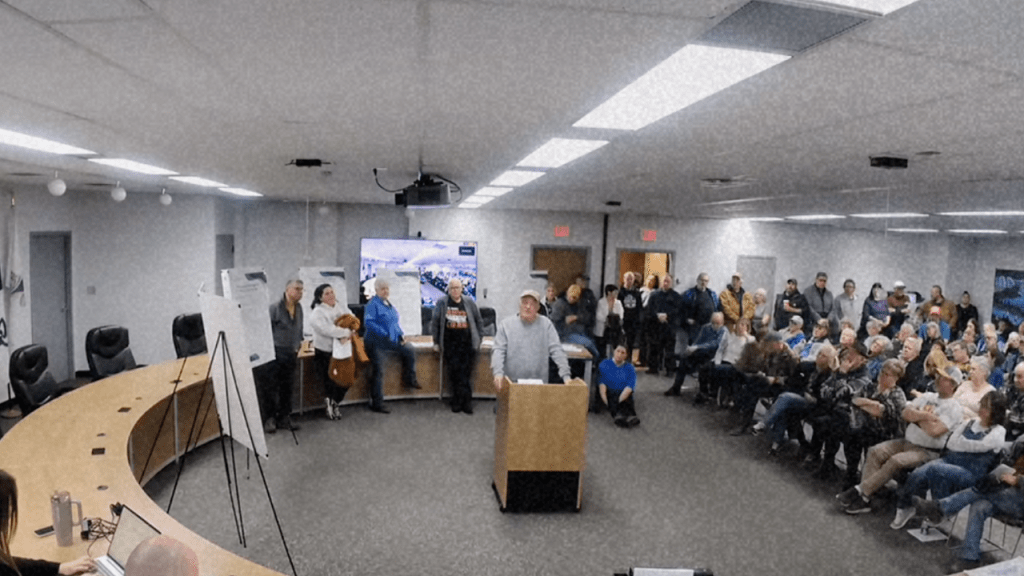
The municipality’s June notice sets out the sequence. Written comments must arrive by June 17 to be provided to Council. An information session is scheduled for June 23 from 5 p.m. to 6 p.m. The formal public meeting begins immediately afterward and includes a presentation from the project team.
Residents are therefore expected to study Draft Version 3, work through its maps and definitions, determine how it may affect their property, compare it with earlier drafts and submit their written objections before hearing the town’s own presentation.
This is not meaningful consultation. It is consultation arranged backwards.
The municipality can say residents may attend on June 23, ask questions and speak at the public meeting. But an opportunity to ask questions after the written deadline cannot replace the opportunity to understand the proposal before making a written submission.
A fair sequence is simple: explain the proposal, hold a workshop, answer questions and then close written submissions. West Nipissing has placed the deadline first and the explanation last.
One Hour Is Not a Public Workshop
The June 23 information session is scheduled for one hour immediately before the formal Council meeting. That is not enough time for a comprehensive zoning rewrite.
A zoning by-law governs what people may build, where structures may sit, how land may be used, which uses are permitted, what setbacks apply and how rules affect parking, trailers, secondary units, home businesses, shoreline properties, rural lots and commercial areas.
These rules can alter what residents may do with their land and what costs they may face. Treating the explanation as a sixty-minute prelude to a Council meeting shifts the burden from the municipality onto residents.
The earlier Version 2 process provided more room. In April, the municipality held a longer open house and accepted written comments until April 30. Draft Version 3 is closer to the final by-law. It should receive more scrutiny, not less.
A PDF Is Not an Explanation
Municipal officials may point out that the proposed by-law and maps are online. Posting technical material, however, is not the same as explaining it.
Residents should not have to become planning specialists to determine whether a new rule affects their home, farm, business or shoreline property. They need a plain-language account of what changed between Versions 2 and 3, a redline showing additions and deletions, and clear explanations organized by property type and issue.
They also need usable maps and direct explanations of the practical effects of changes involving trailers, additional residential units, home businesses, accessory structures, rural lots, waterfront lots, parking, setbacks and enforcement.
The town has made the clock visible. It still has not given residents the tools they need before the clock runs out.
Public Notice Must Reach the Public
The June 23 session appears on the project page, and the municipality promoted it through an official Facebook post. That is better than leaving residents to discover it through a single buried notice.
Yet a comprehensive zoning rewrite affects the entire municipality. Its meeting and deadline should be impossible to miss. They should appear across the project page, municipal calendar, Council pages, social media, email alerts, local media and every direct-notice channel reasonably available.
Public notice is not a scavenger hunt. It is a democratic obligation.
A website-first process privileges people with spare time, reliable internet access, technical confidence and familiarity with municipal procedure. It disadvantages workers, seniors, rural residents, bilingual households and anyone who does not routinely monitor planning pages.
That imbalance is political. It shapes who enters the record and whose silence can later be presented as consent.
Council Owns the Process
Staff and consultants may prepare documents and recommend timelines, but Council owns the political decision. Councillors can accept a thin exercise in minimum compliance, or they can insist on a process that lets residents understand the proposal before responding to it.
No councillor should hide behind the claim that the municipality followed the required steps. A process can satisfy formal rules while still denying the public a genuine opportunity to participate.
Consultation becomes a ritual when institutions control the information, compress the timeline and count attendance as participation. Public accountability requires enough time, usable information and a visible record of how officials answered what residents raised.
The Written Record Still Matters
Residents should still submit written comments by June 17. A written submission places a concern in the official record and makes it harder for Council to later dismiss objections as vague, isolated or resolved.
A useful submission should identify the section, map, definition or property issue at stake; explain the likely effect; demand a specific change; and request that the submission be included in the public record.
But residents should not accept the deadline as proof that the process is legitimate. The municipality has already shown that pressure can force a correction. The next demand must move from the webpage to the consultation itself.
What Council Must Do Now
First, Council should extend the written-comment deadline until after the June 23 presentation. Residents should not be forced to make formal submissions before hearing the municipality explain Draft Version 3.
Second, Council should hold a standalone workshop rather than treating a one-hour drop-in as sufficient. The municipality should publish a redline comparison, a plain-language change summary and property-specific explainers before that workshop.
Finally, Council should publish a response table showing what residents raised, how the municipality answered, what changed and what did not.
The companion article, West Nipissing Residents Are Being Consulted After the Clock Runs Out, documents the broader failures in the original timeline and notice process.
They Fixed the Webpage. Now Fix the Process.
West Nipissing residents were right to scrutinize the zoning process. Their pressure forced the municipality to make the June 17 deadline easier to find.
But disclosure is not consultation. Residents are still being asked to submit written comments before the public presentation. The information session is still compressed into one hour. The material remains too technical for the timeline the municipality imposed.
Council must decide whether it will use the corrected webpage to close the issue or acknowledge that the process itself remains broken.
Residents forced the town to reveal the clock. Now they must force Council to create a process worthy of the decisions being made.
Sources
- Municipality of West Nipissing, “Proposed Zoning By-law: Notice of Open House and Public Council Meeting in June,” June 3, 2026 — official deadlines and meeting schedule.
- Municipality of West Nipissing, “Official Plan and Zoning By-law Update,” accessed June 10, 2026 — Draft Version 3 project materials and consultation information.
- Municipality of West Nipissing, Facebook notice, June 5, 2026 — promotion of the June 23 information session.
- BayToday, “West Nipissing to host open house on proposed zoning by-law changes,” April 23, 2026 — details of the earlier Version 2 consultation.
- Municipality of West Nipissing, “Zoning and Land Use” — municipal explanation of the scope of zoning rules.