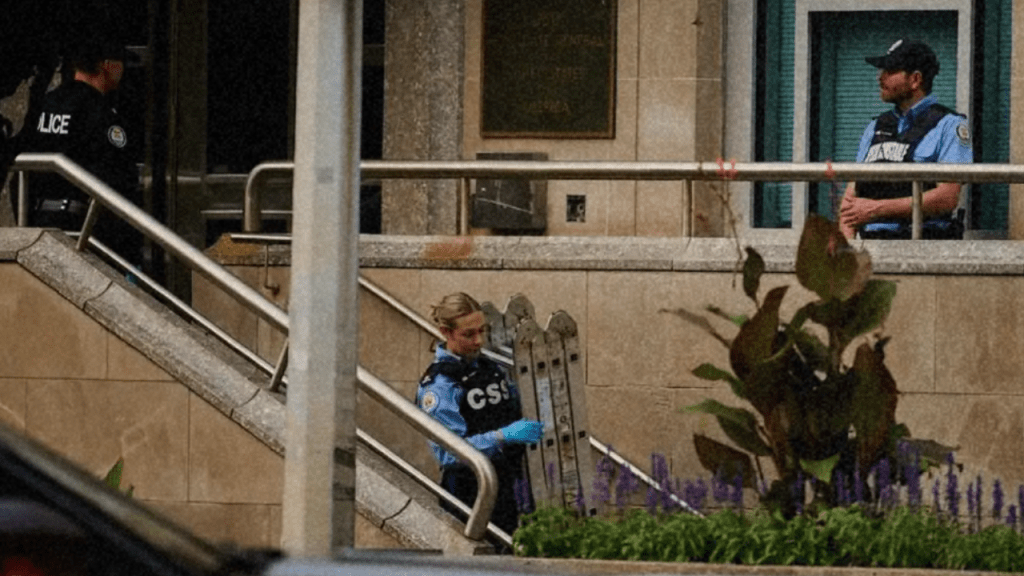
Vancouver police said officers were forced to kill a man. The public had not seen the evidence needed to verify that conclusion.
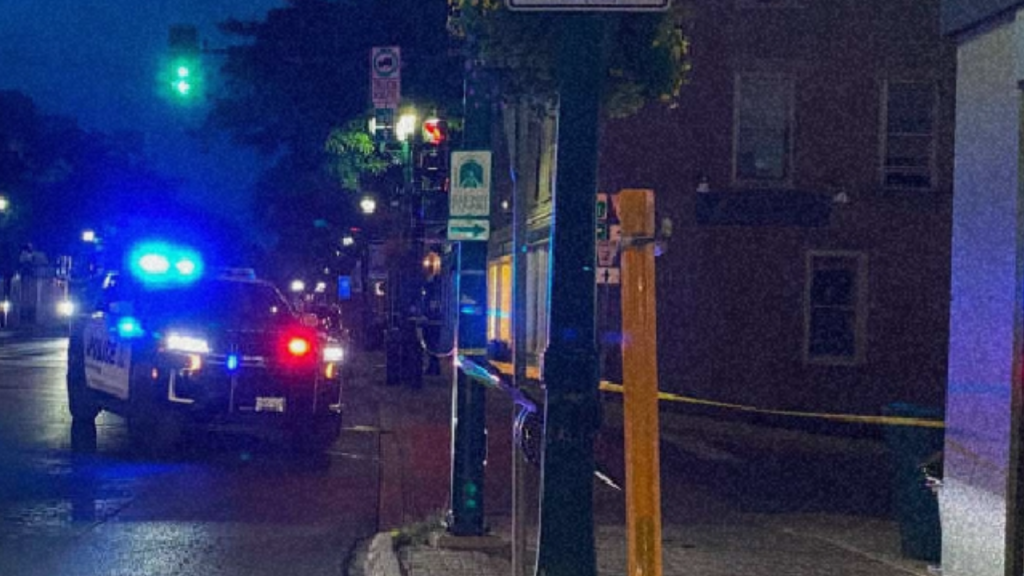
Vancouver police killed a man on the evening of June 8 near Commercial Street and East 20th Avenue. By the next morning, the department had already supplied the meaning of the killing. Police described a “violent home invasion,” a hostage held with a weapon, an attempt at de-escalation and officers who were “ultimately forced” to shoot.
The Independent Investigations Office of BC had only begun investigating. Its initial bulletin said the information available to it came from Vancouver police. The public had not seen body-camera footage, heard the 911 call, reviewed dispatch records, examined ballistics or been given a timeline from first police contact to gunfire.
That does not prove the police account false. It exposes the institutional order in which police violence becomes public knowledge. The state acts first. The institution responsible for the violence supplies the first explanation. Media reproduce that explanation because it is immediately available. Independent scrutiny begins after the basic story has already been established.
In this case, the conclusion arrived before the evidence. Vancouver police said officers had no choice. The public was asked to understand the shooting through that claim before receiving the facts necessary to test it.
Police Killed a Man, Then Defined What Happened
The IIO’s June 9 bulletin began with a narrower account than the VPD release. According to initial information supplied by Vancouver police, officers responded around 9 p.m. to reports of a man running through people’s backyards in the 3600-block of Commercial Street. Police later located him inside a residence and said he had taken another man hostage using a weapon.
Then came the phrase that compressed the decisive moment: “There was then an interaction, and the AP was shot by police.” The man died at the scene. The other man, described by the IIO as an uninvolved hostage, was taken to hospital with injuries and later released.
VPD filled that gap with a much stronger interpretation. Its release said officers encountered a violent incident underway, attempted to de-escalate and were ultimately forced to shoot. Those words did not merely describe what happened. They established a moral and legal sequence in which police restraint came first and lethal force appeared only after every alternative had disappeared.
That sequence may eventually be supported by evidence. As of June 9, the evidence supporting it was not public. The institution that fired the shots had already declared its own action necessary while the civilian investigation was still beginning.
The Police Narrative Arrived Before the Evidence
The first account after a police killing has unusual political power because one of the central witnesses is dead and the other side of the encounter controls much of the information. Police have access to the officers, dispatch records, internal communications and much of the physical evidence before the public has access to any of it.
The language of the first release therefore matters. “Violent home invasion” defines the dead man through the alleged offence. “Hostage” establishes the most powerful imaginable justification for immediate intervention. “Weapon” signals lethal danger without identifying the object or describing how it was being used. “De-escalation” tells the public police tried restraint. “Forced” transfers agency from the officers who fired to the circumstances they say required them to fire.
Each claim may prove accurate. None should become evidence merely because police announced it first. The VPD release was the defence of an institution explaining its own lethal action. It should be treated as a party’s account, not as the conclusion of the investigation that had barely started.
The IIO uses more neutral language for a reason. Its own guidance explains that early releases avoid definitive descriptions that could prejudice an investigation or contaminate witness memories. Yet even the IIO’s first account in this case was explicitly based on information supplied by VPD. The neutral wording changed, but the underlying source of the initial narrative did not.
This is how the state gets a head start in explaining state violence. The police version arrives in hours. The independent evidence arrives later, if it becomes public at all. By then, words such as hostage, weapon and forced have already organized the event for everyone reading the first headlines.
“Forced to Shoot” Is a Conclusion
No one literally forced Vancouver police officers to pull their triggers. VPD was making a more consequential claim: that the circumstances eliminated every realistic alternative to lethal force. That is not a neutral description. It is the central conclusion the evidence is supposed to establish.
If the man was actively threatening another person with a weapon at the exact moment officers fired and no safer option remained, that would materially strengthen the police justification. But the public record available June 9 did not answer the questions necessary to know that.
The type of weapon had not been publicly identified. The public did not know whether officers could see it when they fired, whether it was being held against the other man, how the two men were positioned, how far officers were from them or what happened in the seconds before the shots. The number of officers who fired and the total number of rounds discharged were also not public.
The same problem applies to time. The IIO said officers responded, located the man, there was an interaction and police shot him. That leaves the decisive interval almost completely blank. The public did not know whether the encounter lasted seconds or much longer, whether containment was attempted, whether specialized resources were called or how long police communicated before lethal force was used.
Those missing facts are not peripheral details. They are the facts that determine whether “forced” describes necessity or functions as institutional self-defence.
“De-Escalation” Has to Describe Something
VPD also said officers attempted to de-escalate. The word immediately reassures the public that police tried something less violent first. But de-escalation is not self-proving. If it happened, it can be described.
As of June 9, the public did not know what officers said, how long they communicated, whether they created distance, whether they attempted containment or whether the encounter accelerated immediately after police contact. The word supplied an outcome without supplying the conduct behind it.
That matters because police are not passive witnesses to dangerous situations. They enter them with weapons, commands, tactics and institutional authority. Their decisions can slow an encounter down or compress it. They can create distance or close it. They can contain a scene or move directly toward confrontation.
When police say de-escalation failed, the public is being asked to accept not only that officers tried another approach but that the approach was meaningful enough to establish lethal force as the remaining option. That burden cannot be met by repeating the word after someone is dead.
The Missing Evidence Is the Story
The evidence needed to evaluate the shooting is not mysterious. A basic timeline would show when the first call came in, when officers arrived, when they located the man and how much time passed before gunfire. Dispatch records and radio traffic would show what officers knew as the incident developed and what resources were requested.
Ballistics would establish how many rounds were fired, from which weapons and where they travelled. That became especially important after CityNews and 1130 NewsRadio reported that neighbours heard several shots and that an apparent stray bullet shattered the glass door of a neighbouring unit. The outlet emphasized that police had not confirmed the circumstances of that damage.
If the damage came from police gunfire, then the public-safety claim becomes more complicated. Officers may have believed they were stopping an immediate threat inside one residence while their own rounds travelled into the surrounding neighbourhood. That possibility does not prove the shooting unjustified. It makes the trajectory of every shot part of the accountability question.
The injured man’s condition also requires a clearer timeline. Public reporting said he was injured and later released from hospital, but it did not establish when those injuries occurred or whether police gunfire contributed to them. The public also had not been told whether the two men knew each other or what officers understood about their relationship before shooting.
None of these questions require the public to invent an alternative story. They require the institution that used lethal force to stop asking its own conclusion to stand in for the evidence.
Body-Camera Footage Has to Be Accounted For
Vancouver police had a body-worn camera policy in force by the time of the Commercial Street shooting. The department says interactions will be recorded when an officer reasonably believes force may be used or anticipates violent or aggressive behaviour. Once activated, cameras generally remain on until the incident concludes, subject to specific exceptions.
That does not establish that every officer at the scene had a camera. VPD was still expanding deployment, and nothing publicly available by June 9 confirmed whether the officers who fired were equipped with cameras, whether cameras were activated or whether footage captured the shooting.
But a technology sold to the public as a tool of transparency and accountability becomes relevant precisely when police kill someone. If footage exists, the public needs to know that it exists and that it has been secured for the independent investigation. If cameras were available and did not record, that failure also requires explanation.
The same applies to other video. A residential neighbourhood may contain doorbell cameras, building surveillance and other privately recorded evidence. The IIO may obtain that material during its investigation. As of the historical cutoff, the public had not seen any of it.
The issue is not that all investigative evidence must be dumped online immediately. It is that police were able to announce necessity immediately while the evidence that could verify necessity remained inaccessible.
The Watchdog Starts After Police Set the Frame
The IIO exists because police cannot be left to investigate police-caused deaths entirely on their own. Its investigation into the Commercial Street shooting is necessary. It is still not the same thing as immediate public accountability.
The IIO investigates deaths and serious injuries involving police to a criminal standard. If its chief civilian director has reasonable grounds to believe an officer may have committed an offence, the matter may be referred to Crown counsel. If not, the agency may publish a public report, issue a concluding release or in some circumstances conclude without further public reporting when privacy and other considerations outweigh disclosure.
That mandate answers an important but narrow question about possible criminal liability. It does not automatically answer every political question raised by a police killing. A shooting can fall below the criminal threshold while still exposing reckless tactics, failed policy, poor command decisions or a public narrative that overstated what the evidence showed.
The timing also matters. Police receive their narrative advantage immediately. Their release enters headlines within hours. The IIO investigation may take far longer because evidence has to be gathered and tested. By the time a detailed finding arrives, the first version may already have become the remembered version.
This is a familiar structure in police violence more broadly: state force first, institutional explanation second, independent evidence later. Police deployments described as standard procedure and pre-emptive public-order deployments rely on the same assumption that police assessments of danger deserve deference before the public can examine how that danger was defined.
Police Control the First Meaning of Police Violence
The deepest problem is not simply a lack of transparency. It is an imbalance of narrative power built into the event itself. Police use lethal force and immediately possess the institutional capacity to explain why that force was necessary. The person killed cannot answer. Witnesses may have only fragments. Families often know less than the agency responsible for the death.
Media outlets then face a structural dependency on official information. Police have communications departments, prepared statements and spokespersons. Their version arrives in publishable form while independent evidence remains scattered, confidential or under investigation. The first public record therefore begins from the perspective of the armed institution.
That advantage shapes what skepticism looks like. Once the public has heard that a man held a hostage with a weapon and police were forced to shoot, asking for the evidence can be made to sound like denying an obvious emergency. But the emergency is precisely what the police account is asserting. The evidence is what determines whether the assertion describes the final seconds accurately.
The public does not need to choose an alternative verdict before the investigation is complete. It does not need to declare that officers committed a crime or that the hostage account was fabricated. It only needs to refuse the institutional demand that police necessity be accepted before it is demonstrated.
The State Acted. The State Explained Itself.
By June 9, one fact was established beyond dispute: Vancouver police shot and killed a man. The department said the killing was necessary. The civilian investigation had begun. The evidence required to test the department’s conclusion was not public.
That is enough to reject the idea that “ultimately forced” should function as the settled description of what happened. Necessity is the question under investigation. It cannot also be the premise from which the investigation begins in public.
Police may eventually produce evidence showing that officers faced an immediate threat to another person’s life and had no safer option. If so, that conclusion should rest on the timeline, footage, physical evidence and witness accounts. It should not rest on the authority of the institution that fired first and explained itself afterward.
The accountability problem is larger than one shooting. An armed state agency can use lethal force, immediately define that force as necessary, retain control over much of the evidence and leave the public waiting for a later process to decide whether the initial story was justified. The asymmetry exists before anyone determines whether an individual officer broke the law.
Until the evidence establishes otherwise, the public record should remain exactly as limited as the facts allow: a man is dead, Vancouver police killed him, police say they had no other choice, and the public has not yet been shown why.
Sources
- VPD notifies IIO for police-involved shooting, Vancouver Police Department, June 9, 2026.
- IIO is Investigating an Officer-Involved Shooting in Vancouver (2026-127), Independent Investigations Office of BC, June 9, 2026.
- VPD fatally shoots suspect after violent home invasion, hostage-taking, CityNews Vancouver, June 9, 2026.
- Body-Worn Cameras, Vancouver Police Department.
- What We Do, Independent Investigations Office of BC.
- Public Reports, Independent Investigations Office of BC.