Toronto proved it can turn one missing child into everybody’s concern. Esther deserved that urgency. The political question is why the machinery of police, media and public power does not make every missing child equally impossible to ignore.
Esther was found safe, and that should remain the first fact. She was 14 years old, had been missing for nearly two weeks, and her family was terrified. Police searched around the clock. Volunteers organized across the city. Thousands of people shared her photograph, checked cameras and followed every update. When she was located alive, the right response was relief. The scandal is not that Toronto cared too much about a missing Jewish child. The scandal is that Toronto demonstrated how much care it is capable of mobilizing, then returned to a system where that level of public urgency remains exceptional.
Esther’s disappearance became more than a police file. It became a citywide emergency. Police escalated the case to Level 1, the highest search level available, created a dedicated tip line and an evidence-upload portal, and made specialized units available. Community networks organized searches. A $25,000 reward was raised. Major news outlets returned to the story repeatedly. Then another layer formed around the search as reports that missing-person posters had been torn down were folded into a broader story about antisemitism. A family spokesperson said antisemitism might be influencing the removals, Conservative Leader Pierre Poilievre later rose in the House of Commons and described the alleged poster remover as an antisemite, and international outlets increasingly framed Esther first and foremost as a missing Jewish child.
Police did not publicly establish an antisemitic motive for the poster removals, and after Esther was found, Toronto police completed their investigation into her disappearance without laying criminal charges. But by then the case had already entered a political system that knows how to make Jewish fear legible to the state, newsworthy to the media and actionable for politicians. It knows how to convert vulnerability into public architecture. That is the larger issue this case exposes: not that Esther received too much care, but that some forms of fear arrive at institutions with pathways already built for them while other families are left trying to create urgency from scratch.
The search showed the machinery
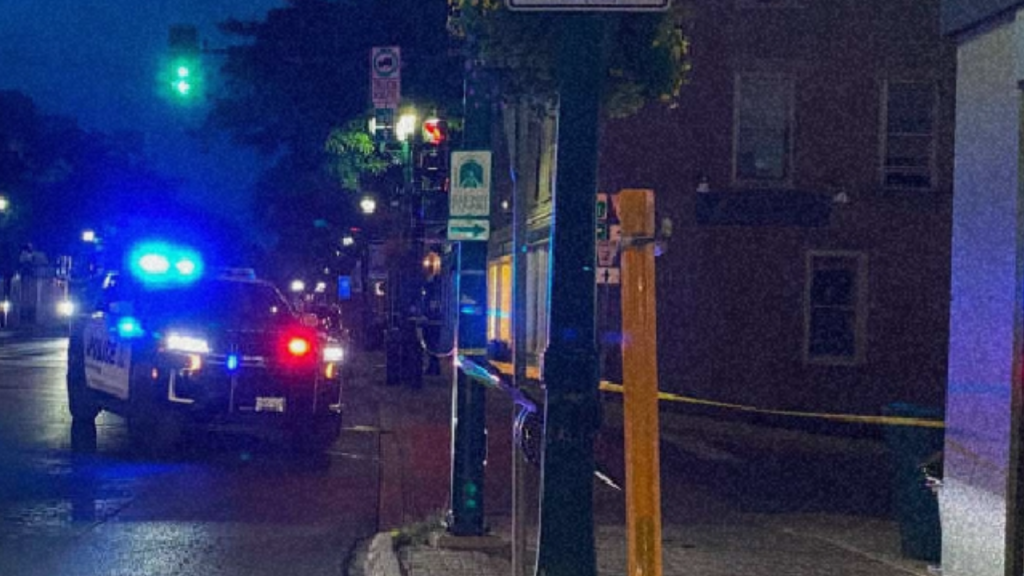
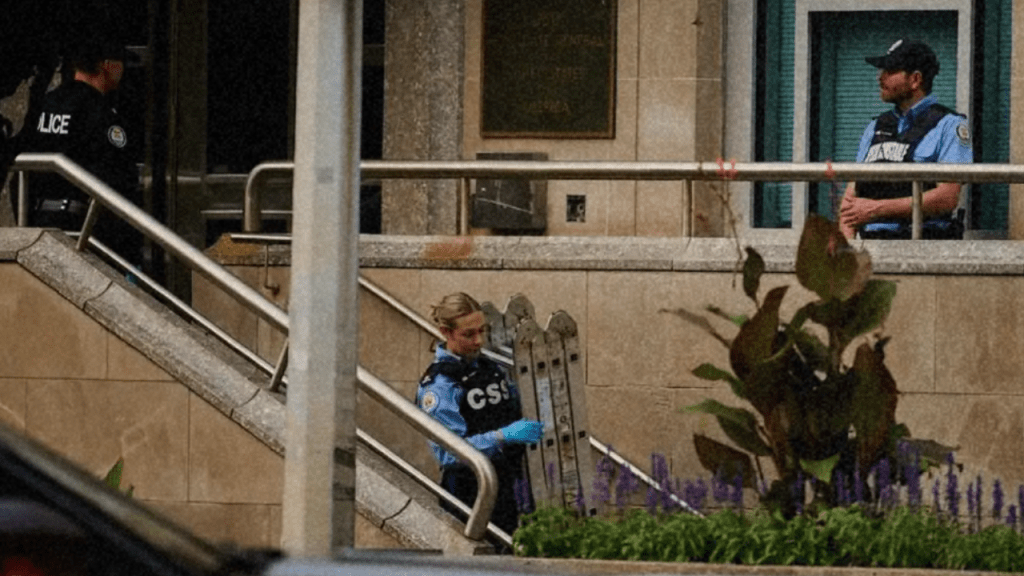
Toronto police were explicit about the scale of the response. At a May 21 briefing, police said Esther’s case was being treated as a Level 1 search, the highest level the service could activate. The designation opened access to specialized resources including marine, mounted and canine units, along with other investigative support, while officers searched 24 hours a day. The public infrastructure expanded alongside the police operation: a dedicated phone line collected tips, a QR code sent photographs and video directly into a police evidence portal, volunteers searched across Toronto and a reward fund reached $25,000.
TorontoToday reported that police said only five of nearly 3,100 missing-person reports in the previous year had reached Level 1. That rarity changes the meaning of the response. This was not simply what happens every time a child disappears in Toronto; this was the top of the system, where police resources, dedicated communications infrastructure, sustained media attention, organized community capacity and political amplification converged around one case. Esther deserved that urgency. The question is why the public is expected to treat such a concentration of care as ordinary when the police service itself says it is exceptionally rare.
Some children become headlines
Most missing children do not become citywide emergencies. They become links: a police release, a photograph, a family account asking people to share, a community page reposting the notice. The child is technically public, but the city does not become publicly organized around finding them. That difference cannot be reduced to police action alone. Newsrooms decide which disappearances become recurring stories. Politicians decide which cases deserve public statements. Community organizations have radically unequal access to money, volunteers, press contacts and institutional influence. Families arrive at the same moment of terror with very different capacities to force the outside world to care.
Being listed is not the same as being seen. A child whose face is repeated across television, national news and political social media becomes part of public consciousness, recruiting thousands of people who have no connection to the family into the search. A child whose disappearance remains inside a police release may still be the subject of serious investigative work, but the public search capacity is different, the political attention is different and the presumption that everybody should know the name is different. Visibility is a resource, and the institutions that distribute it do not operate on a level field.
Jewish exceptionalism is institutional
The phrase “Jewish exceptionalism” can be abused, so the distinction here matters. This is not a claim that Jewish people are collectively responsible for receiving attention, that Jewish families should refuse resources or that antisemitism is unreal. It is an argument about institutions and about the unequal political capacity of different forms of vulnerability. Canadian political life has built a system in which Jewish fear, particularly when framed through antisemitism, has an exceptional ability to become a state priority through political speeches, dedicated funding, advisory structures, police attention, institutional definitions and national media narratives in ways other forms of racialized fear routinely do not.
Spark Solidarity has documented the same hierarchy elsewhere. In June, Prime Minister Mark Carney’s Canadian Covenant built a federal anti-hate architecture organized explicitly around antisemitism. The government reaffirmed IHRA, created an advisory council with an antisemitism-first mandate and tied the response to new criminal-law powers, while Islamophobia was acknowledged and anti-Palestinian racism barely entered the structure. As Spark argued in its analysis of the Canadian Covenant, the distinction is between architecture and acknowledgement.
Esther’s disappearance did not cause that hierarchy. Her family did not create it, and Jewish communities did not invent concern for a missing child. Her case entered a political environment where Jewish fear already has institutional pathways available to it. That is the exceptionalism being discussed here. The problem is not that Jewish people care for their own, because every community should be able to mobilize when one of its children disappears. The problem is that Jewish communal fear can be translated unusually quickly into a general claim on the state, while other communities are still forced to prove that their fear deserves the same public weight.
Zionism built a politics around vulnerability
This is where the anti-Zionist argument belongs. Zionism does not merely defend Israel as a state; in Canadian political life, organized Zionist politics repeatedly works to collapse Jewish safety into the protection of institutions, narratives and policies connected to Israel. A threat against a Jewish person becomes evidence of a wider antisemitic emergency. A Jewish institution protested for its political activity becomes a symbol of threatened communal safety. A removed poster is absorbed into the same symbolic universe as Israeli hostage posters after October 7. The categories slide into one another until Jewish identity, Zionist politics, Israel and antisemitism become difficult to separate in public discourse, and that fusion gives organized Zionist institutions considerable leverage over how Jewish vulnerability is interpreted by media and government.
None of that means the people who removed Esther’s posters had good motives. Removing a missing-child poster can interfere with efforts to find someone and deserves condemnation on that basis alone. But the public story moved beyond that fact before police established a motive. The alleged poster removal was not merely treated as cruel; it became evidence in a larger political case about antisemitism. Poilievre did not rise in Parliament simply to say that tearing down a missing-child poster was wrong. He supplied both motive and political identity, declaring that an antisemite had done it because Esther was Jewish. That claim travelled farther than the later fact that police laid no criminal charges in relation to Esther’s disappearance. The emergency received amplification; the de-escalation did not receive anything close to the same political force.
The child became a political symbol
This is the danger of exceptionalized vulnerability. A missing child stops being only a missing child and becomes evidence for a larger political story: evidence that a community is under siege, that antisemitism is everywhere, that public order is collapsing, or that critics have failed to understand Jewish fear. The child begins to disappear into the political use made of her. The point is not that Jewish communities should be less frightened when a child disappears. The point is that the state, media and political class do not treat every community’s fear as equally capable of making demands on public institutions.
Muslim fear does not consistently reorganize federal anti-hate policy even after anti-Muslim mass killings. Indigenous families have spent generations forcing the country to recognize a crisis of missing and murdered women and girls that governments were structurally capable of ignoring. Black families routinely confront racial coding that turns victims into suspects, missing youth into runaways and public concern into private burden. Palestinian families in Canada can watch relatives killed, displaced or starved while their grief is treated as politically dangerous when it names Zionism as the structure producing the violence. This is the hierarchy: some communities’ fear becomes architecture, while other communities’ fear remains testimony that institutions can acknowledge without reorganizing themselves around it.
Toronto already knows the pattern
Toronto cannot dismiss this as an abstract accusation because the police service has already been through the Missing and Missed review, the independent examination of how Toronto police handled missing-person investigations and their relationships with marginalized communities. The review produced 151 recommendations involving investigative practice, communication, training, policy, culture and community relationships. In April 2026, Toronto police said 98 had been implemented.
The review exists because the problem was never simply one bad missing-person file. It was a crisis of institutional judgment about who is believed, who is presumed vulnerable, who is coded as a runaway, whose family is treated as a credible source of urgency and which disappearances demand escalation. Toronto already knows those decisions can be shaped by bias because its own reform process was built around that recognition. The question now is whether the lessons the service claims to have learned are being applied evenly when the next family asks the city to care.
The media has its own hierarchy
Police are only one part of the machine. Canadian media has its own documented hierarchy of missing-person visibility. In a 2010 study published in Feminist Media Studies, researcher Kristen Gilchrist compared press coverage of matched cases involving missing or murdered Indigenous and white women in Canada and found that the Indigenous women received substantially less coverage, with stories that were shorter, less prominent and less personal.
The study did not examine Esther, did not examine Toronto children and does not prove why any individual missing-youth story did or did not receive attention. It establishes something broader: Canadian newsworthiness has never been racially neutral. That matters because media attention is not decorative. It creates recognition, political pressure and search capacity. It recruits strangers into a family’s emergency and can turn private terror into a city’s shared responsibility. When access to that machinery is unequal, public concern becomes unequal too.
The correction never travels as far
The public story around Esther did not end when she was found. Police initially said they would examine whether there was any criminal element to her disappearance and later said the investigation was complete without criminal charges being laid. That did not erase the fear her family experienced, establish that every person involved in the search acted responsibly or entitle the public to the private details of a minor’s life. It did, however, close the criminal question that had helped shape public speculation around the case.
The political atmosphere built around the disappearance was not corrected with equal force. There was no equivalent parliamentary speech explaining that no criminal charges followed, no equivalent media cycle asking whether the rush to attach an antisemitic motive to poster removals had outrun the evidence, and no broad reckoning with how quickly a missing child had been absorbed into Canada’s existing political narrative of Jewish emergency. This is one way exceptionalism reproduces itself: the allegation organizes the public at maximum volume, while uncertainty and correction arrive later, smaller and quieter.
Equal concern is not identical tactics
Missing-person cases are different, and any serious comparison has to begin there. A child’s age, disability, medical needs, evidence of immediate danger, location, weather and whether a disappearance is unusual can all affect the appropriate response. Police may also possess information that cannot responsibly be made public. Equal concern does not mean sending the marine unit into every case or pretending every disappearance carries the same operational facts.
It does mean the threshold for becoming a public emergency cannot depend on which family has the strongest community infrastructure, which identity already carries political priority or which story fits the media’s preferred image of innocence. Toronto should be able to explain, in aggregate, who receives Level 1 escalation and why. Newsrooms should examine which missing children receive repeated coverage and which receive a single link. Political leaders should ask whether their public concern follows consistent principles or only the emergencies already legible to their political world. Anti-racism cannot stop at celebrating a successful search for one child while ignoring the hierarchy that makes the same machinery harder for others to access.
No one needs less urgency
The demand is not less energy for Jewish children. It is more energy for everyone else: more urgency for Black and Indigenous children, poor and disabled children, Muslim children, queer and trans youth, and children whose families do not have media connections, political allies, organized community infrastructure or the ability to raise reward money. Families should not have to become their own investigators, publicists, search coordinators and lobbyists before institutions decide that a missing child is a public emergency.
The same institutions that insist Jewish fear must never be minimized should be capable of understanding that nobody else’s fear should be minimized either. Equality does not require stripping Jewish communities of their ability to mobilize. It requires stripping exceptionalism of the power to decide whose vulnerability becomes a public command and whose remains a link waiting to be shared. Toronto knows how to mobilize for a missing child, and Esther’s case proved it. The city now has to explain why some children become everybody’s concern while others remain visible only to the people already looking for them.
Sources
- CityNews Toronto — Toronto police update on the search for Esther; May 21, 2026 reporting on the Level 1 search, dedicated tip line, evidence-upload QR code and specialized police resources.
- TorontoToday — Toronto police release new image of missing North York teen; May 24, 2026 reporting that only five of nearly 3,100 missing-person reports in the previous year had reached Level 1.
- CityNews Toronto — Search continues for missing North York teen, reward offered; May 25, 2026 reporting on the $25,000 community-funded reward and volunteer search mobilization.
- The Jerusalem Post — Posters for missing Toronto Jewish teenager torn down; May 27, 2026 coverage of the poster removals, community mobilization and the family spokesperson’s concern that antisemitism might be involved.
- Global News — Poilievre condemns removal of Esther posters in the House of Commons; May 28, 2026 video and transcript of his statement describing the alleged poster remover as an antisemite.
- CityNews Toronto — Toronto police not investigating disappearance criminally; May 28 and 29, 2026 reporting on Esther being found safe and police later saying the matter was not being investigated criminally.
- Global News — Police confirm no charges laid in investigation into missing Toronto girl; June 5, 2026 confirmation that the investigation was complete and no criminal charges had been laid.
- Toronto Police Service — Fifth anniversary of the Missing and Missed report; April 14, 2026 update stating that 98 of 151 recommendations had been implemented.
- Kristen Gilchrist, “Newsworthy Victims? Exploring Differences in Canadian Local Press Coverage of Missing/Murdered Aboriginal and White Women”, Feminist Media Studies, 2010; matched-case study documenting major disparities in the amount, prominence and tone of Canadian press coverage.
- Spark Solidarity — “Canada’s Anti-Hate Consensus Is a Shield for Zionism”; related analysis of the institutional exceptionalization of antisemitism within Canada’s anti-hate architecture.