
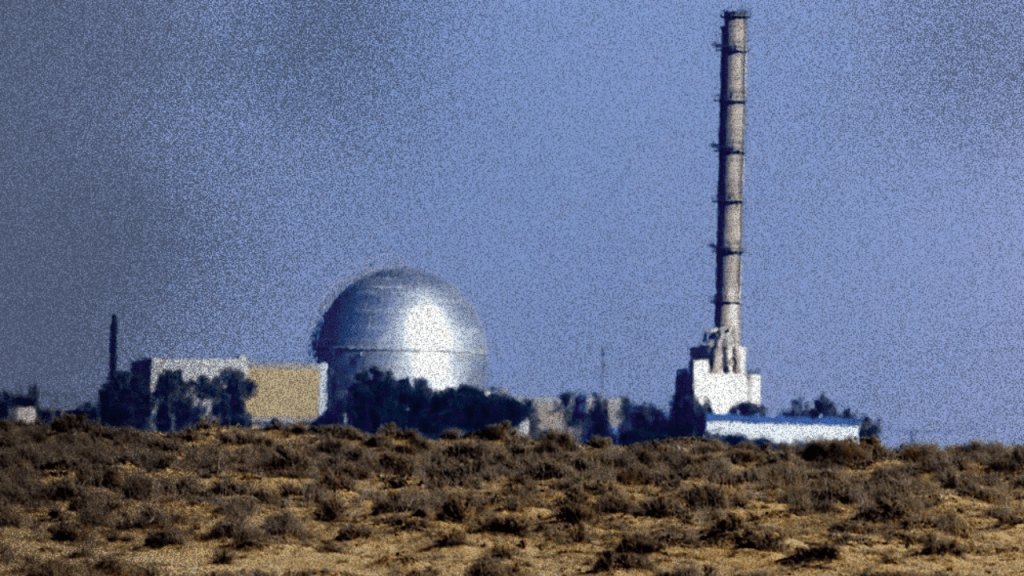
Israel Dimona was not struck on March 1. The panic that followed told us everything about the system that depends on it staying that way.
On March 1, 2026, as Iranian retaliatory strikes moved across the Gulf in real time, a rumor ignited in Persian-language X accounts with unusual velocity. The claim: Iranian hypersonic missiles had struck the Dimona nuclear facility in Israel’s Negev desert. Recycled explosion footage spread across timelines. Betting markets briefly priced in the possibility. Denials couldn’t keep pace with the initial wave.
Within hours, the footage was identified as a 2017 Ukrainian ammunition depot explosion in Balakliia, Kharkiv Oblast. Fact-checkers at Misbar debunked the video directly; MEAWW confirmed no nuclear plants had been hit.
While social media was filled with rumours, fact checkers stated plainly that no credible sources had confirmed any strike on Dimona, and that every major outlet covering the conflict — the New York Times, CNN, AP, and Reuters — reported zero damage to nuclear sites. The IRGC claimed a strike. Israel denied it. No satellite anomaly, no radiation monitor, and no independent confirmation supported the claim.
As of this writing, the Dimona rumor remains unverified. The facility appears undamaged.
That is not where the story ends. That is where it begins.
The Reaction Is the Story
The Dimona claim didn’t circulate in a vacuum. Joint U.S.-Israeli strikes on Iran had begun on February 28. Khamenei had been killed. Iranian retaliation was real and ongoing — missiles had hit bases in Bahrain, Qatar, the UAE, Kuwait, Dubai’s airport, and Saudi Arabia’s Ras Tanura refinery. In that context, a Dimona strike claim was not absurd on its face. The IRGC had publicly designated the facility as a primary target as early as June 2025. Iranian military exercises had for years included simulated strikes on a physical mockup of the reactor. The threat had been advertised for months before it was rumored.
What was striking was the scale of the reaction. Iranian strikes on Ras Tanura moved oil markets. Strikes on Gulf bases generated diplomatic alarm. None of them produced existential dread on the scale the unverified Dimona claim did — not even close. The rumor triggered something qualitatively different: a brief, global sense that a threshold was being crossed that could not be uncrossed.
This is the thing worth examining. Not whether the strike happened. But why the possibility of it produced a reaction that no confirmed strike in the same period could match.
The answer is not psychological. It is structural. Dimona is not just another military target. It is one of the load-bearing nodes of a nuclear order that has governed global power since 1945. What the rumor triggered wasn’t fear of one explosion. It was fear of what damage to that node would mean for the entire system organized around it.
What Dimona Actually Is
The Shimon Peres Negev Nuclear Research Center sits in the Negev desert approximately 13 kilometers southeast of the city of Dimona. Construction began in 1958 under a secret agreement with France linked to the Protocol of Sèvres. French customs officials were told the reactor components — including the reactor tank — were a desalination plant destined for Latin America. The heavy-water reactor became operational between 1962 and 1964.
Dimona sends no electricity to the Israeli grid. It is not a civilian power facility. By all credible expert assessment, it is the core of Israel’s undeclared nuclear weapons program — operating outside the Nuclear Non-Proliferation Treaty, outside IAEA inspection authority, and outside any democratic accountability to the Israeli public, let alone to the surrounding regional populations who live within its potential fallout radius.
The scale of that program became public in 1986, when technician Mordechai Vanunu fled to the United Kingdom and disclosed detailed operational information to the press. Vanunu described an underground reprocessing facility known as Machon 2 extending six floors below ground, where plutonium was separated from spent fuel rods at a rate sufficient to produce an estimated four to twelve nuclear warheads per year. Expert analysis of his disclosure concluded that Israel had already produced dozens of warheads by the time he came forward. Vanunu spent eighteen years in Israeli prison for telling the world what its own government would not.
The reactor has been running far longer than most of its generation. Haaretz reported in 2016 that ultrasound testing had revealed 1,537 structural defects in the aluminum core — findings presented at a scientific forum on the thirtieth anniversary of Chernobyl, prompting one of the facility’s founding scientists to call for the reactor to be shut down.
By 2019, facility managers were acknowledging radioactive leaks. Satellite images analyzed by the Associated Press in September 2025 showed major new construction at the site — thick concrete walls, multiple underground floors, no containment dome. “It’s probably a reactor,” said Jeffrey Lewis of the James Martin Center for Nonproliferation Studies. “It’s very hard to imagine it is anything else.” Edwin Lyman of the Union of Concerned Scientists put the governance problem plainly: Israel “doesn’t allow any international inspections or verification of what it’s doing, which forces the public to speculate.”
The absence of a containment dome is not a technical footnote. Modern civilian nuclear plants are legally required to have them precisely because they are what prevent a reactor incident from becoming a regional environmental catastrophe. Dimona has never had one. A strike damaging the reactor core or the spent fuel pools would not cause a nuclear detonation. But it could release significant radioactive contamination into an environment with no barrier to contain it — affecting populations in Jordan, Egypt, and the Palestinian territories who have no legal standing to challenge the facility’s existence and no say in the risks it creates for them.
Why a Strike Collapses Decision Time
The physical hazard is not the primary danger of a confirmed Dimona strike. The primary danger is what it signals, and how fast the response logic kicks in.
Dimona is the visible center of Israel’s second-strike deterrence. Its existence — and the calculated ambiguity surrounding it — is what allows Israeli security doctrine to function. A confirmed strike, even one that caused limited physical damage, would almost certainly be read as an attempt to neutralize that deterrence. Whether or not the attacker intended that reading is irrelevant. In nuclear deterrence logic, perception governs.
A perceived attempt to eliminate second-strike capability compresses the decision window from days to hours. Response planning shifts from proportional to existential. U.S. involvement becomes near-certain. The probability of crossing nuclear thresholds rises sharply — not because any actor chose escalation, but because the architecture of deterrence leaves no room for ambiguity at that level.
This is what cascading crisis means in practice: each decision made under compressed time forecloses options and narrows the space for restraint. The system moves toward catastrophe through momentum rather than intent.
The Dimona rumor triggered a version of this cascade without a confirmed strike. Markets moved. Information systems failed under load. The correction cycle couldn’t outrun the emotional response. That is the point. The panic was not irrational. It was a rational response to a system operating with almost no margin.
Hiroshima Built This Order
To understand why Dimona holds this position, it helps to return to 1945.
The atomic bombings of Hiroshima and Nagasaki were not simply acts of mass killing. They were the founding acts of a new form of imperial power. Before 1945, imperial control required territorial presence: colonies, garrisons, administrators, direct extraction. After 1945, the United States possessed something qualitatively different — the capacity to threaten annihilation at distance, without boots on every ground. Nuclear weapons enabled long-range coercion, permanent threat without permanent war, control through infrastructure rather than occupation.
This was the transition from classical imperialism to what might be called atomic diplomacy. Empire became abstract and managerial. Military bases replaced colonies. Deterrence replaced occupation. The threat of annihilation replaced the physical presence of armies. American hegemony after 1945 was not primarily built on productive capacity or territorial control. It was built on nuclear monopoly and the institutional apparatus constructed to manage and exploit it.
The monopoly didn’t last. But the order built around it did. The mechanism for preserving American dominance as other states acquired nuclear weapons was not elimination — it was selective tolerance. The Non-Proliferation Treaty created a legal hierarchy: recognized nuclear states at the top, non-nuclear states below, with controlled lateral transfers to trusted clients managing the margins. Some states — Pakistan, India, Israel — acquired weapons outside the treaty framework with U.S. awareness and varying degrees of U.S. tolerance, because their weapons served American strategic interests in their respective regions.
China’s position on this structure is worth naming. Beijing has consistently identified the NPT system as a two-tier arrangement that enshrines Western nuclear privilege while denying equivalent security guarantees to non-aligned states. Chinese foreign policy doctrine has long framed the asymmetric enforcement of nonproliferation norms — pressure on adversaries, tolerance of allies — as a defining feature of the American-led order rather than a deviation from it. That analysis is correct. It is the same conclusion reached by independent materialist examination of the same evidence.
Dimona as Delegated Node
Israel’s nuclear program was not built in defiance of the American-led order. It was built with French assistance, initially tolerated by Washington, and subsequently protected by a policy of strategic ambiguity that allowed the United States to enforce NPT compliance on adversaries while exempting an ally whose nuclear capability served American regional interests.
Declassified documents held at the Wilson Center show that by late 1960, the Eisenhower administration knew Israel was building a weapons-capable reactor — and chose to negotiate limited, pre-announced inspections rather than demand dismantlement. Those inspections were effectively theater: Israel received advance notice of visits, installed temporary false walls, and successfully concealed weapons production from inspectors who were American rather than IAEA and who arrived on a schedule Israel controlled.
This was not a failure of the system. It was the system functioning as designed. The nuclear order was never about universal disarmament. It was about managing proliferation in ways consistent with American primacy. Dimona exists as a delegated node — nuclear capacity extended to a trusted regional client, exempt from the rules imposed on others, protected by the same superpower that enforces those rules globally.
The contradiction became undeniable in the current conflict. The United States and Israel struck Iranian nuclear sites in 2025 over enrichment concerns — while satellite images showed major new construction at a facility with no IAEA access, no NPT obligation, and no democratic accountability to anyone. Iranian Foreign Minister Zarif made the structural point plainly in 2021, responding to the AP’s first satellite images of Dimona’s expansion: any concern about Iran’s nuclear program was “absolute nonsense” and “hypocrisy.”
He was right about the structure, even where his conclusions can be questioned on their own terms.
Secrecy as Governance
One of the enduring contradictions of the nuclear age is that as state power expanded after 1945, democratic accountability contracted. Nuclear weapons require secrecy, speed, and insulation from public deliberation. The populations who live with the risks they produce are rarely asked whether they consent to those risks.
Dimona concentrates this problem in a specific geography. Israeli citizens have no meaningful democratic oversight of the facility. Its operations exist outside public scrutiny, sustained by the same logic of national security and nuclear ambiguity that has defined Israeli policy since the 1960s.
The Palestinian communities of the Negev and the West Bank have even less standing. The populations of Jordan and Egypt have none. They absorb the radiological risk of a facility they cannot inspect, regulate, or legally challenge — and they would be among the first to absorb contamination if Dimona were struck in a war.
Secrecy is not incidental to this arrangement. It is load-bearing. If the full realities of nuclear programs — the environmental damage, the waste, the accident record, the proliferation dynamics they generate — were subject to ordinary public scrutiny, sustaining them politically would be substantially harder. The zone of exception that nuclear governance requires is not a temporary emergency measure. It is the permanent operating condition. The facility is the source of the danger, and the secrecy that sustains it is what makes the danger unaccountable.
The Fragility the Rumor Revealed
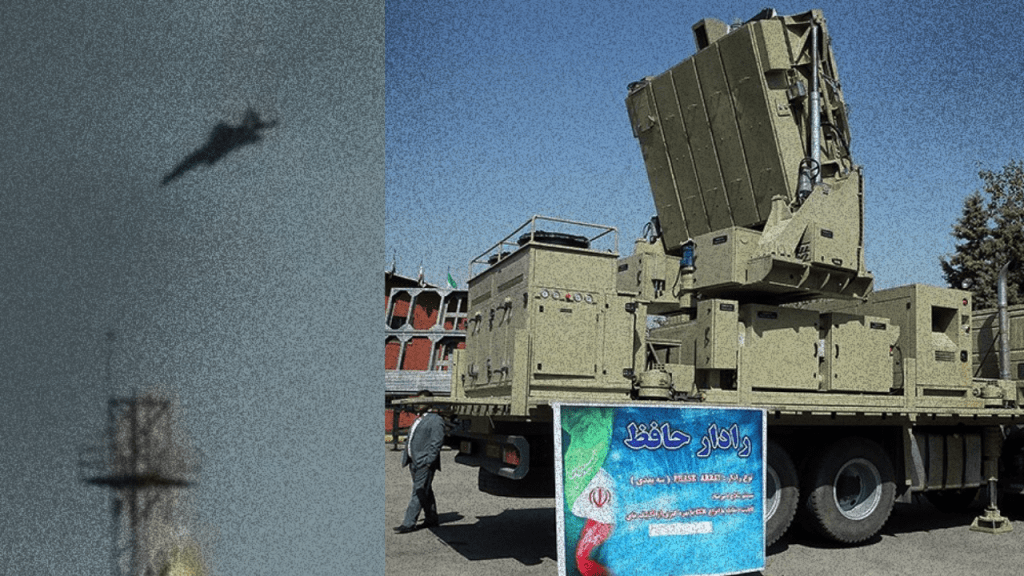
The technological monopoly that Hiroshima established is eroding. Hypersonic weapons shorten reaction times and complicate missile defense in ways that strain the deterrence architecture the nuclear order depends on. The IRGC has claimed operational Fattah-series hypersonic systems; independent confirmation of their operational status remains limited, but Iran’s overall missile arsenal remains the most extensive and varied in the Middle East. Precision-strike capability has proliferated to non-nuclear states in ways that increasingly challenge the assumption that nuclear infrastructure is untouchable. That assumption can no longer be guaranteed by technology alone. It requires a functioning deterrence architecture to hold.
That architecture is under strain. The Dimona rumor revealed what happens when it wavers, even briefly. Markets price existential risk. Information systems fail under load. The correction cycle cannot outrun the emotional response. The panic subsided in hours. The underlying fragility did not.
The fear that moved through global markets and social media on March 1 was not fear of a single explosion. It was fear of what the system looks like when its guarantees begin to fail — when a nuclear order constructed in 1945 to manage annihilation indefinitely confronts the limits of indefinite management.
That order was never stable. It was deferred. The deferral is running out.
For related coverage on the strategic and economic dimensions of the current conflict, see Oil Rose 2%. Then the War Came. That Was the Point. and Invisible War: IFF Jamming and What the Kuwait Incident Reveals.
Sources
- Misbar. “Video Does Not Show Iran Targeting Israel’s Dimona Nuclear Reactor.” Misbar, February 12, 2026. https://www.misbar.com/amp/en/factcheck/2026/02/12/video-does-not-show-iran-targeting-israel%E2%80%99s-dimona-nuclear-reactor
- MEAWW. “Fact Check: Did Iranian Missiles Destroy Israel’s Nuclear Power Plants?” MEAWW, March 1, 2026. https://news.meaww.com/fact-check-did-iranian-missiles-destroy-israels-nuclear-power-plants
- TASS. “Iran May Attack Israel’s Dimona Nuclear Facility — TV.” TASS, June 21, 2025. https://tass.com/world/1978439
- Trevithick, Joseph. “Iran Rained Down Ballistic Missiles On A Mockup Of Israel’s Nuclear Reactor.” The War Zone, December 2021. https://www.twz.com/43659/iran-rained-down-ballistic-missiles-on-a-mockup-of-israels-nuclear-reactor
- Wikipedia contributors. “Shimon Peres Negev Nuclear Research Center.” Wikipedia, last updated March 2026. https://en.wikipedia.org/wiki/Shimon_Peres_Negev_Nuclear_Research_Center
- Staff. “Shut Dimona Nuclear Reactor, Urges Founding Scientist.” Times of Israel, April 26, 2016. https://www.timesofisrael.com/shut-dimona-nuclear-reactor-founding-scientist-urges-israel/
- Gambrell, Jon. “Satellite Photos Show Intense Work at Dimona Nuclear Reactor Site.” Associated Press / Times of Israel, September 3, 2025. https://www.timesofisrael.com/satellite-photos-show-intense-work-at-dimona-nuclear-reactor-site-ap-reports/
- Gambrell, Jon. “A Soccer Field-Sized Dig, Stories Deep: Israel Expands Dimona Nuclear Facility.” Associated Press / Times of Israel, February 25, 2021. https://www.timesofisrael.com/soccer-field-sized-and-stories-deep-israel-expands-dimona-nuclear-facility/
- Wilson Center / National Security Archive. “The US Discovery of Israel’s Secret Nuclear Project.” Wilson Center, n.d. https://www.wilsoncenter.org/publication/the-us-discovery-israels-secret-nuclear-project
- Al Jazeera. “What Are Iran’s Weapons As It Fights the US and Israel?” Al Jazeera, March 1, 2026. https://www.aljazeera.com/news/2026/3/1/what-are-irans-weapons-as-it-fights-the-us-and-israel



 Spark Solidarity