
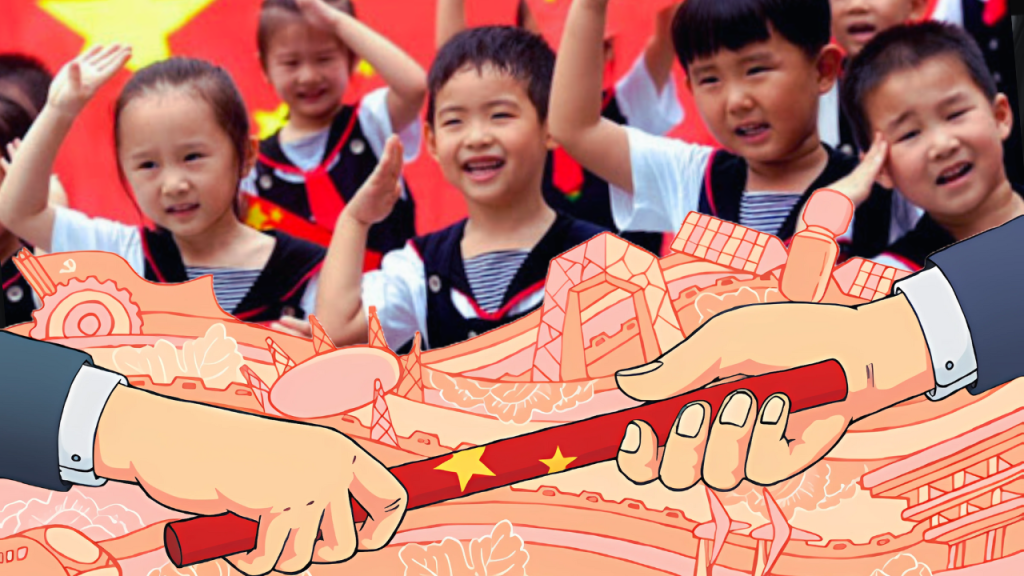
China’s plan for socialist modernization by 2050 is not a promise to someday become socialist after passing through an ideologically neutral period of development. It is the long-term program of an actually existing socialist state: contradictory, unfinished and operating under the pressures of a world economy still dominated by capital.
That distinction matters. China is routinely judged against a frictionless socialism that has never existed—one without inherited poverty, hostile capitalist powers, uneven development, commodity production, class struggle or the compromises required to survive. The socialist states that did exist are often turned into objects of nostalgia, safely admired because they no longer exercise power. The socialism being built in the present is subjected to a purity test no revolution could survive.
This is an idealist method. It compares China with a perfected theoretical endpoint while comparing capitalism with nothing beyond itself. Every inequality or market relation in China is presented as disproof of socialism. Capitalism, meanwhile, remains capitalism through colonialism, mass poverty, ecological destruction and permanent war. Its atrocities do not make it unreal. They reveal what it is.
Actually Existing Socialism must be evaluated historically and materially: by the institutions through which power is exercised, the class forces that command the state, the direction of development and the social purposes to which accumulated wealth is put. On those terms, China is not a capitalist state wearing communist symbols. It is the largest and most consequential project of socialist construction in the world.
In October 2017, Xi Jinping’s report to the 19th National Congress of the Communist Party of China set out one of the most consequential developmental commitments made by a modern state: China would become a fully modernized socialist country by the middle of the 21st century.
The first stage, from 2020 to 2035, aims to basically realize socialist modernization. The plan calls for global leadership in innovation, expanded middle-income groups, narrower urban-rural and regional inequalities, stronger public institutions and modernized national defence. The second stage, extending to the centenary of the People’s Republic in 2049, aims at common prosperity, advanced productive capacity and a substantially higher standard of life.
These are not promises detached from governing power. They are incorporated into the Communist Party of China’s planning structure, institutional responsibilities and political timetable. The 2021 centenary of the CPC marked the declared completion of the first centenary goal: building a moderately prosperous society and eliminating extreme poverty. The 2049 centenary of the People’s Republic is the horizon for the next.
The question is not whether China resembles an imagined final stage of communism today. The question is what social order possesses the capacity to make such commitments, organize production around them and hold an enormous governing apparatus responsible for carrying them out.
Colonial Ruin Was the Starting Point
The 2050 plan begins from a century of colonial devastation. Britain forced opium into China at gunpoint to correct a trade deficit. Foreign powers invaded, occupied territory and extracted indemnities from a state they had militarily defeated. Japanese imperial forces killed millions of Chinese people and stripped productive capacity across Manchuria and the coast.
When the People’s Republic was founded in 1949, more than 80 percent of the population was rural. Life expectancy was roughly 35 years. The country’s industrial base had been repeatedly looted, and the United States quickly imposed an embargo while protecting and arming the defeated Nationalist government in Taiwan.
From those conditions, the revolutionary state redistributed land, expanded literacy and public health, constructed heavy industry and created the planning institutions on which later development depended. Life expectancy rose dramatically. A country denied Marshall Plan financing, colonial tribute and privileged access to the world economy built the material foundation of national sovereignty.
The Great Leap Forward and Cultural Revolution brought severe disruption and enormous human costs. Those failures must be studied concretely. They do not erase the transformation of a colonized, overwhelmingly agrarian country into an independent state capable of feeding, educating and organizing hundreds of millions of people. Nor do they justify treating the Mao period as a tragic prehistory that China escaped only by becoming capitalist.
The institutions built after 1949 made the reform period possible. The educated population, industrial base, public ownership and sovereign state capacity inherited by the Deng leadership were not produced by markets. They were achievements of socialist revolution.
Mao Built, Deng Opened, Xi Reasserts Direction
China’s development since 1949 can be understood as three movements within one unfinished socialist transition.
The Mao period built the revolutionary state, redistributed land, established public ownership, expanded social provision and constructed an industrial base under conditions of isolation and siege.
The Deng period opened parts of the economy to markets, foreign capital and private enterprise in order to accelerate development of the productive forces. This introduced exploitation, regional inequality and a domestic capitalist class. It also occurred within a state that preserved Communist Party rule, public ownership of the commanding heights, control over land and strategic direction of credit and investment.
The Xi period has increasingly reasserted political control over the forces unleashed by reform. The state has disciplined major technology firms, prevented private financial platforms from escaping public regulation, removed profit-making from core areas of private tutoring, expanded rural investment and made common prosperity a central political objective.
These periods contain real conflicts and policy reversals. They should not be flattened into a seamless master plan in which every decision was secretly leading toward the present. But neither should market reform be treated as a clean capitalist restoration simply because it created markets and capitalists. The decisive struggle is whether capital commands the state or the socialist state retains the power to command, discipline and ultimately overcome capital.
In the capitalist states, private wealth governs investment and disciplines political possibility. Governments may regulate corporations, but they depend on private accumulation and protect the property relations that give capital its rule. In China, private capital is powerful, but it does not possess an equivalent right to govern. The state controls the major banks, strategic industries, land and national planning system. Private firms operate within political limits that can be redrawn when accumulation conflicts with social priorities.
That is not the abolition of class struggle. It is the institutional terrain on which class struggle continues.
What Socialism With Chinese Characteristics Means
“Socialism with Chinese characteristics” is often treated in Western discourse as a euphemism for capitalism. Materially, it names the form socialist construction has taken under China’s historical conditions.
The commanding heights of banking, energy, telecommunications, transport and strategic manufacturing remain publicly owned or state-directed. Major state banks function as instruments of development policy. Five-year plans organize investment, production, infrastructure and social goals beyond the time horizon of private profit. Officials are evaluated against targets produced through this planning system.
The poverty-alleviation campaign demonstrated what those institutions can do. A World Bank study found that China lifted close to 800 million people above the international extreme-poverty line over four decades, while Tricontinental’s detailed study of the final targeted campaign documented millions of cadres assigned to poor communities and the expansion of roads, communications networks, housing, health services and income supports into places where private investors had no incentive to go. The point was not to create a favourable market environment and wait. The state treated the material conditions of poor people as a planning responsibility.
China’s markets, billionaires and inequalities remain serious contradictions. They are not evidence that socialism is absent. They are contradictions within a socialist transition that used controlled market development to overcome underdevelopment and must now prevent the social forces created by that process from taking political command.
Markets are mechanisms, not a mode of production by themselves. Commodity exchange existed during Lenin’s New Economic Policy because revolutionary states do not inherit the abundance needed to abolish every market relation by decree. Domenico Losurdo applied that historical argument to China’s reform process, rejecting the assumption that the use of markets by itself proves capitalist restoration. The political question is who controls investment, who owns the strategic foundations of the economy, which class project commands the state and where development is directed.
China’s socialist character rests neither on official vocabulary nor on an assurance that every CPC decision is correct. It rests on the continuing political supremacy of a communist party, public control of the commanding heights, the subordination of major investment to national plans and a demonstrated capacity to impose social objectives on capital. This is why Wenhua Zongheng and Tricontinental describe Chinese socialism as experimental: its institutions and policies develop through the concrete problems of socialist construction rather than from a fixed universal template.
The transition is unfinished and could still be defeated. That danger is evidence of class struggle, not evidence that no socialist struggle exists.
The Purity Test Protects Capitalism
In Blackshirts and Reds, Michael Parenti identified a recurring tendency among Western leftists: revolutions attract admiration while they are powerless, but lose it when they win, govern and confront the compromises of survival. Defeated socialist projects become morally safe. Actually existing states must answer for scarcity, coercion, mistakes, bureaucracy and contradiction in real time.
This produces a politics of permanent disappointment. The Soviet Union can be mourned after its destruction. Mao-era China can be romanticized after its specific conditions have passed. Cuba can be praised while its economic constraints are discussed as though the blockade were background scenery. China, because it is powerful enough to alter the world system, becomes the object of endless suspicion.
Socialist history is not a collection of templates. China’s task is not to recreate the Soviet Union, return mechanically to 1976 or satisfy a model constructed by commentators who bear no responsibility for governing 1.4 billion people. Its task is to build socialism under 21st-century conditions: financialized global capitalism, technological chokepoints, ecological crisis and an imperial power determined to prevent China’s rise.
Supporting Actually Existing Socialism does not mean suspending criticism. It means criticizing from within the material struggle over socialism’s development rather than standing outside it with a checklist. Criticism should clarify contradictions, strengthen working-class power and defend the socialist direction of the state. It should not erase the existing balance of class power or treat restoration of capitalist political rule as a neutral alternative.
Writing From Inside the Imperial Core
This distinction is even more imperative for socialists writing from Canada, the United States and the other states of the imperial core. We do not assess China from neutral territory. We live inside the alliance organizing its military encirclement, technological containment and ideological demonization.
The United States has restricted China’s access to advanced semiconductors, pressured allies to exclude Chinese technology, expanded military deployments across the Indo-Pacific and intensified the confrontation over Taiwan. Canada participates in this order and reproduces its political categories. Chinese development is presented as aggression, Chinese sovereignty as expansionism and Chinese state capacity as a threat.
Under these conditions, criticism has a political location. A statement can contain a true observation and still perform an imperial function when it adopts the priorities, categories and conclusions of the states preparing confrontation. Human-rights language has repeatedly been used to convert selective concern into public consent for sanctions, isolation, covert action and war.
This is the same editorial discipline required when writing about Iran. Iran’s internal contradictions do not give Washington, Ottawa or their allies the right to impose collective punishment, organize regime change or decide the country’s political future. The immediate responsibility of writers inside the states applying that pressure is to oppose the imperial machinery operating in their names.
The principle applies with even greater force to China because China is not only a sovereign state resisting Western domination. It is the central project of Actually Existing Socialism and the most powerful material obstacle to continued Western monopoly over global finance, production, technology and development.
Criticism of China cannot therefore begin from the demand that it prove its moral eligibility for solidarity. Anti-imperialism is not a prize awarded after a targeted state satisfies Western ideological standards. Chinese people and socialist institutions will determine the course of China’s contradictions. Our primary obligation is to oppose the containment, sanctions, propaganda and military escalation organized by our own ruling classes.
This is not “campism.” It is the recognition that political actors occupy unequal positions in a world system. Canada and the United States are not disinterested critics offering advice to Chinese socialism. They are members and leaders of an imperial bloc attempting to limit China’s sovereign development and preserve their own structural power.
Critical support begins from that reality. It defends China against imperial aggression, recognizes its socialist character and analyzes its internal struggles without furnishing left-wing justifications for containment or regime change.
The Western Dialectic Runs Backwards
Western analysis sees private capital in China and assumes convergence toward capitalism. The more Chinese firms enter global markets, the more the state is expected to lose direction over development. Yet the Chinese system has repeatedly shown the opposite capacity: global accumulation can be captured, regulated and redirected through public institutions.
The halted Ant Group listing, restructuring of the platform economy and elimination of for-profit tutoring in core school subjects were not marginal exceptions. They showed that private accumulation remains politically conditional. A capitalist state may fine a corporation while preserving its right to organize social life. The Chinese state can close an entire field of accumulation when it concludes that the field conflicts with social priorities.
The distinction is visible at larger scale. Capitalist globalization moved production to China in search of disciplined labour and lower costs. China used that opening to acquire technology, expand industrial capacity, build infrastructure and become indispensable to the world economy. The state did not simply submit to the market. It used participation in the capitalist world system to enlarge the material base of socialist sovereignty.
The Western response confirms the stakes. Semiconductor controls, investment restrictions and exclusion campaigns are designed to stop China from converting industrial scale into technological independence. The objective is not merely commercial advantage. It is to prevent a socialist state from completing modernization outside Western command.
A Global War of Position
China’s international strategy also weakens the mechanisms through which the imperial core enforces dependency. As Spark Solidarity’s analysis of the Belt and Road Initiative explains, development finance outside the Bretton Woods institutions, expanded trade in national currencies and investment in Global South infrastructure give states options that did not previously exist.
China is not exporting a universal political template. It is building economic relationships and infrastructure that reduce the ability of Western powers to isolate countries through sanctions, financial exclusion and investment strikes. Ports, railways, energy systems and communications networks alter the material choices available to states historically confined by colonial trade patterns and International Monetary Fund conditionality.
These relationships are not free of conflict or self-interest. No serious account of Chinese foreign policy requires pretending otherwise. The relevant distinction, developed further in Spark Solidarity’s application of Lenin’s criteria for imperialism to China, is between mutually negotiated development relations and the imperial structure through which Western powers enforce unequal exchange, military dependency and political subordination.
China’s rise does not automatically liberate the Global South. It changes the balance of power within which liberation struggles occur. By making Western institutions less compulsory, it widens the space in which other states can pursue sovereign development.
The Contradictions Are Inside the Project
China remains unequal. Workers confront exploitation. Private wealth produces political pressure. Regional and urban-rural divisions persist. Public services have been marketized in damaging ways, and ecological development remains constrained by continued coal use and industrial expansion.
These contradictions demand political struggle. They do not place China outside socialism. Socialist transition is not the condition reached after class conflict disappears; it is the period in which political power is used to transform the social relations inherited from capitalism and underdevelopment.
The common-prosperity agenda reflects recognition that eliminating extreme poverty did not eliminate inequality. Rural revitalization, restrictions on accumulation in education and housing, expanded public infrastructure and pressure on major private firms are attempts to move beyond the imbalances of the reform period.
The outcome is not guaranteed. Capital can regain ground. Bureaucratic interests can obstruct working-class power. External pressure can distort priorities and strengthen security institutions. None of this makes political neutrality appropriate. An unfinished socialist project should be defended and contested as an unfinished socialist project.
The proper comparison is not between China and an imaginary society without contradiction. It is between Actually Existing Socialism and actually existing capitalism. China organizes long-term investment, public infrastructure and poverty elimination through political planning. The imperial core produces homelessness amid abundance, privatized health and education, ecological collapse and permanent war while insisting that no alternative is possible.
One system’s contradictions arise within an attempt to transform inherited social relations. The other system’s catastrophes are the results of property relations operating as designed.
What Success in 2049 Would Mean
If China reaches the centenary of the People’s Republic as a technologically sovereign, fully modernized socialist state moving toward common prosperity, it will establish something the imperial order has spent a century trying to prevent: proof that development at continental scale does not require political submission to Western capital.
That is why China’s modernization is treated as a threat. The danger to the imperial core is not simply that China could become wealthier or militarily stronger. It is that public ownership, planning and political control over capital could produce a durable alternative to the Washington Consensus.
The stakes are larger than a dispute over labels. Calling China socialist recognizes the class and geopolitical struggle already underway. Refusing the label in favour of an abstract future socialism removes the largest existing socialist project from the field at the moment solidarity matters most.
Socialists do not have to pretend China has resolved every contradiction. We have to decide whether we stand with a living socialist construction project against the capitalist-imperialist system trying to contain and defeat it.
For those of us living inside that imperial system, the responsibility is especially clear. We must oppose the aggression organized in our names, expose the ideological campaign that makes it appear necessary and defend China’s right to develop socialism without blockade, encirclement or war.
The socialism worth supporting is not an imaginary system protected from history. It is the socialism that survived colonial devastation, revolution, isolation, reform and class contradiction; the socialism that exists, struggles and develops in the present.
China’s 2050 plan is not a promise to begin that project later. It is the program through which Actually Existing Socialism intends to carry it forward.