
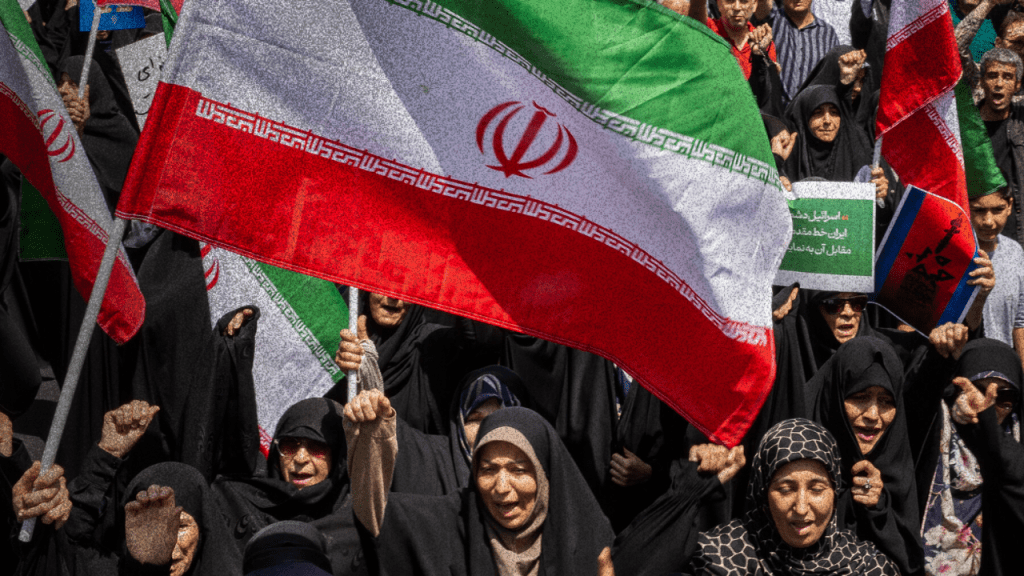
Iran, Palestine, and contradiction reveal how opposing imperial war, state repression, and liberation struggles requires holding multiple truths at once.
In moments of geopolitical escalation, politics in the imperial core collapses into a familiar binary. Either condemn Iran and affirm Western “human rights,” or oppose imperial war and quietly launder authoritarian regimes as anti-imperialist forces. Support Palestine, and you are asked to explain away Iran. Criticize Iran, and you are accused of enabling genocide. The frame itself is the trap.
This false choice is not accidental. It is produced by an imperial discourse that cannot tolerate complexity because complexity disrupts legitimacy. If Iran is purely evil, war becomes humanitarian. If Iran is purely resistance, repression becomes inconvenient noise. Both positions erase reality in service of narrative alignment.
What is missing is not information, but method. A way of analyzing political struggle that can hold multiple truths at once without moral collapse or strategic confusion. Mao Zedong’s On Contradiction (1937) offers precisely that method — not as ideology, but as a tool for clarity. Mao’s central insistence was simple and radical: contradictions are universal, but not all contradictions are equal. At any given moment, one contradiction becomes principal and shapes the terrain of struggle. Others do not disappear, but they are not decisive in the same way.
This matters now because the United States and Israel are in direct military confrontation with Iran. It matters because Iran materially supports Palestinian resistance while repressing its own population. It matters because human rights language is being mobilized once again to justify sanctions, assassination, and war. And it matters most for those of us living in the imperial core, whose governments are actively shaping this crisis while demanding moral obedience from the public.
The task is not to choose sides in a moral melodrama. The task is to understand the structure of the moment and act accordingly.
What Is Actually Happening Right Now
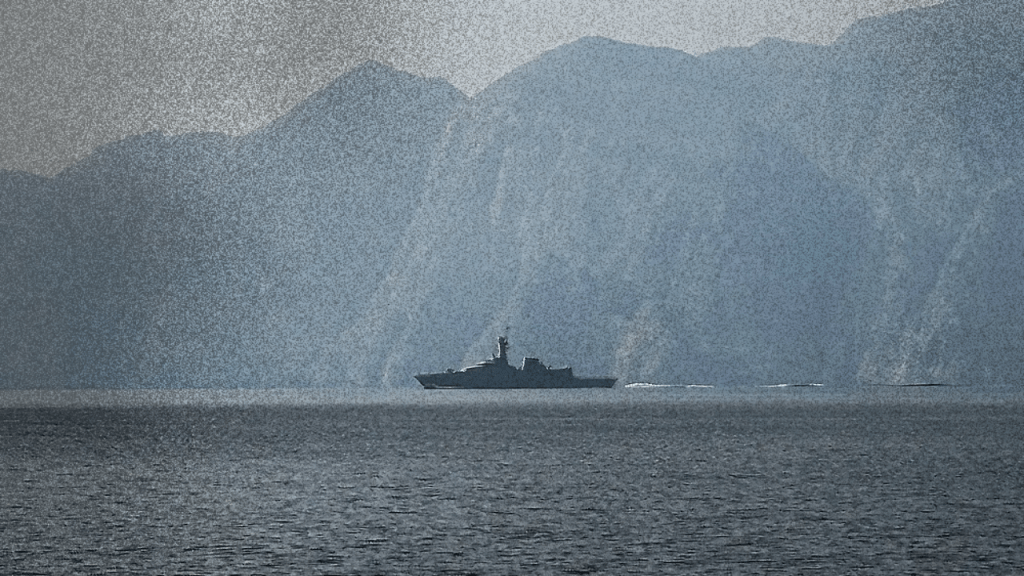
As of February 28, 2026, the United States and Israel have moved beyond proxy escalation into direct military confrontation with Iran. Trump announced “major combat operations in Iran” early this morning, following Israeli strikes that Israeli Defense Minister Katz described as “preemptive.”
Coordinated air and missile strikes have targeted military infrastructure and government-linked sites including in and around Tehran. Iran’s IRGC has already launched the first broad wave of retaliatory missile and drone attacks toward Israel. Talks — including a third round of nuclear negotiations that concluded in Geneva just two days ago — have effectively collapsed under the weight of escalation.
This is not a misunderstanding or a miscalculation. It is the result of long-running structural antagonisms: U.S. dominance in the Middle East, Israel’s regional military supremacy, and Iran’s refusal to submit fully to either. Sanctions, covert operations, cyberwarfare, assassinations, and economic strangulation have failed to break the Iranian state. Military confrontation is the next escalation in a continuum that stretches back decades.
Official U.S. rhetoric frames the strikes as defensive and preventive, citing Iran’s nuclear program, regional influence, and alleged threats to global stability. Israeli officials present the confrontation as existential. Iran frames the attacks as violations of sovereignty and international law. None of these framings are neutral. All are expressions of state interest.
What matters materially is this: an inter-state conflict between heavily armed powers is unfolding in a region already destabilized by decades of war. Civilian populations are at risk. Regional spillover is likely. And the imperial core is actively involved — not as a mediator, but as a belligerent.
This is the terrain on which all other political claims must be evaluated.
The structural analysis of how this confrontation was built — sanctions as opening phase, diplomacy as procedural cover, pre-emption as doctrine, and regime change as the openly declared war aim — is examined in the analysis of why the U.S.-Israel war on Iran was always coming.
Iran and the Palestinian Struggle: Strategic Alignment, Not Liberation
Iran’s relationship to the Palestinian struggle is real, material, and often misunderstood. Iran provides financial, military, and logistical support to Palestinian armed groups — the State Department estimates up to $100 million annually to Palestinian militant groups including Hamas — as well as to Hezbollah in Lebanon, which positions itself as part of the broader resistance to Israeli expansion. This support includes weapons transfers, training, intelligence sharing, and political backing.
This support matters. It has real effects on the balance of power. It has constrained Israeli military freedom of action and created deterrence along multiple fronts. It has provided Palestinian groups with resources they would otherwise lack under siege and occupation.
But Iran’s support does not emerge from a commitment to Palestinian self-determination as such. It emerges from a state strategy rooted in regional power competition, deterrence, and regime survival. Iran supports resistance movements where doing so advances its strategic position against Israel and the United States. It does not support popular liberation movements universally, nor does it defer to the political agency of those movements beyond the limits of alignment.
This distinction is crucial. Palestinian resistance is not reducible to Iranian patronage. Palestinians are not Iranian proxies. Their struggle predates the Islamic Republic and will outlast it. Their political goals, internal contradictions, and social bases are their own. To frame Palestinian resistance as an Iranian instrument is to erase Palestinian agency in the service of imperial narrative control.
At the same time, to treat Iran as a liberatory force because it opposes Israel is to commit the opposite error. Iran’s support for armed groups is instrumental, not emancipatory. It is not grounded in class struggle, internationalism, or universal liberation. It is grounded in state power.
Both truths must be held simultaneously, or analysis collapses into propaganda.
The Iranian State: Repression Is Real
The Islamic Republic of Iran is an authoritarian, anti-communist, theocratic state. Power is concentrated in unelected institutions — the Supreme Leader, the Guardian Council, and the Islamic Revolutionary Guard Corps. Political dissent is tightly controlled. Independent labor organizing is repressed. Feminist movements face violent suppression. Ethnic and religious minorities, including Kurds, Baluchis, and Baháʼís, are systematically marginalized.
These facts are not Western fabrications. They are articulated by Iranians themselves: workers, students, women, intellectuals, and dissidents who have risked imprisonment, torture, and death to oppose the regime. The Mahsa Amini uprising of 2022 — sparked by the death of a Kurdish woman in morality police custody, sustained for months across the country — was the most significant internal challenge to the Islamic Republic in decades. Mass protests in early 2026, referenced in Trump’s own justification for the strikes, reflect ongoing deep internal contradictions — though that deployment of protest history to justify war is itself an example of the weaponization this essay addresses.
Iran’s repression is not incidental. It is structural. The regime’s legitimacy rests on a revolutionary-nationalist narrative that no longer matches material reality for large segments of the population. Economic mismanagement, corruption, sanctions, and militarization have produced widespread precarity. The state responds not with democratization, but with force.
None of this disappears because Iran opposes U.S. hegemony. None of it becomes less real because Western governments exploit it. Refusing to acknowledge repression in Iran does not aid liberation. It insults those resisting it from within.
How Repression Is Weaponized by the Imperial Core
At the same time, Iran’s repression is not discussed in good faith by the governments most eager to condemn it. Human rights discourse is deployed selectively, strategically, and cynically by imperial powers to justify aggression against disobedient states.
The pattern is consistent. Iran’s treatment of women becomes a casus belli. Iranian executions become moral spectacles. Iranian prisons become symbols of absolute evil. Meanwhile, U.S. allies engage in mass repression with impunity. Saudi Arabia beheads dissidents. Egypt imprisons tens of thousands. Israel maintains an ongoing military occupation and has conducted mass killing in Gaza. Gulf monarchies criminalize dissent entirely. These abuses do not trigger sanctions or war. They are managed quietly as “complex regional realities.”
The difference is not the severity of repression. It is geopolitical alignment.
The documented pattern of that selectivity — how Western governments invoke democratic and human rights language specifically against disobedient states while maintaining close partnerships with aligned repressive regimes — is examined in the analysis of Canada’s condemnation of Venezuela and the democracy it doesn’t apply at home.
Human rights language, in this context, functions as a weapon. It delegitimizes sovereignty. It prepares the ideological ground for sanctions, covert action, and military intervention. It transforms war into rescue and domination into concern. Iranian women are invoked not to be liberated, but to be instrumentalized.
This does not mean repression in Iran should be ignored. It means it should not be subordinated to imperial strategy. When criticism of Iran is decoupled from concern for Iranians and reattached to regime change, it ceases to be emancipatory and becomes imperial.
Mao’s On Contradiction: A Tool for Clarity
Mao’s On Contradiction offers a way out of this impasse. Mao argued that contradiction exists in all processes, but that contradictions are not uniform. They differ in character, intensity, and political significance. Most importantly, Mao insisted that at any given moment, one contradiction becomes principal. It does not negate other contradictions, but it shapes the overall situation.
Applying this method to the current moment clarifies what liberal moralism and campist politics obscure.
There are multiple contradictions at play: the contradiction between Palestinian liberation and Israeli settler-colonialism; the contradiction between the Iranian regime and the Iranian people; the contradiction between U.S./Israeli imperial power and Iranian state sovereignty. All are real. All matter. But they do not operate on the same level at the same time.
Right now, the principal contradiction shaping the global situation is the confrontation between U.S./Israeli hegemony and Iranian resistance to that hegemony. This contradiction is driving military escalation, sanctions, diplomatic alignments, and media narratives. It is determining the immediate risks of war and regional destabilization.
Recognizing this does not endorse the Iranian state. It identifies the structural driver of the moment. If Iran were to collapse internally tomorrow, the principal contradiction would shift. If Palestinian liberation were achieved, the regional terrain would change entirely. Contradictions are dynamic, not fixed.
Mao’s framework allows us to analyze without moralizing and to oppose imperial war without romanticizing its opponents.
What This Means for Solidarity in the Imperial Core
For those living in the imperial core, this analysis carries concrete implications.
First, opposing U.S. and Israeli military aggression against Iran is necessary regardless of Iran’s internal politics. War, sanctions, and regime change do not liberate populations.
They entrench repression, destroy civil society, and produce mass suffering.
The 1953 CIA-backed coup that overthrew Iran’s democratically elected Prime Minister Mossadegh — acknowledged as undemocratic by the CIA itself — produced the very conditions that gave rise to the Islamic Republic. History is unambiguous on this point.
Second, supporting Palestinian liberation does not require endorsing Iran as a political model or strategic leader. Palestinian freedom is not a gift from Tehran.
It is a struggle rooted in Palestinian society, history, and resistance. Solidarity means centering Palestinian agency, not subsuming it into state rivalries.
Third, rejecting imperial narratives does not require silence about authoritarianism. It requires refusing to let critique be weaponized. Criticism of Iran that aligns seamlessly with U.S. war aims is not radical. It is functional.
Finally, solidarity demands rejecting the logic of “the enemy of my enemy is my friend.” This logic erases internal struggles, excuses repression, and collapses politics into camps. It is incompatible with material analysis and emancipatory politics.
The Popular Front for the Liberation of Palestine makes this concrete. The PFLP is a secular, Marxist-Leninist organization founded by a Palestinian Christian communist.
By any classical left analysis, the Islamic Republic — theocratic, anti-communist, violently repressive of labor and feminist organizing — should be an ideological adversary.
And for decades it was treated as one. But when the Soviet Union collapsed in the early 1990s and the PLO signed the Oslo Accords (which the PFLP rejected), the organization lost both its primary funder and its political home simultaneously.
Facing irrelevance, it developed operational ties with Iran-backed networks, and Iran has periodically funded and armed the PFLP’s military wing in the West Bank since.
A Marxist organization accepting weapons and money from a theocratic state because they share one enemy is not internationalism. It is exactly the instrumentalism this essay describes — and it produces exactly the analytical collapse it warns against.
The PFLP’s ideological framework did not change. Its material dependence did. That distinction matters, and it is only visible if you refuse to let shared opposition to empire substitute for analysis.
Holding Contradictions Without Collapse
The current crisis exposes the limits of moral politics. Liberalism demands condemnation without context. Campism demands loyalty without critique. Both approaches fail because they refuse contradiction.
Iran is authoritarian and repressive. Iran is also under sustained imperial attack. Iran supports Palestinian resistance strategically, not emancipatorily. Palestinian liberation remains a foundational struggle against settler colonialism. U.S. and Israeli power remains the primary driver of regional violence. All of these are true at the same time.
Mao’s On Contradiction does not resolve these tensions by choosing sides. It resolves them by clarifying structure. It allows us to oppose war without sanctifying states, to support liberation without surrendering analysis, and to hold complexity without paralysis.
The structural conditions that make holding that analytical clarity so difficult — how Cuba’s example exposes the limits of liberal democracy as a framework for understanding states outside Western alignment — is examined in the analysis of how Cuba exposes the limits of liberal democracy.
As escalation deepens, clarity matters more than ever. Not moral clarity as spectacle, but analytical clarity rooted in material reality. Anything less serves power, not liberation.
Sources
- NBC News liveblog — U.S. military begins major combat operations in Iran, Feb. 28, 2026: https://www.nbcnews.com/world/iran/live-blog/israel-iran-live-updates-rcna261099
- CBS News — Trump full statement on “major combat operations” in Iran, Feb. 28, 2026: https://www.cbsnews.com/news/trump-full-statement-on-us-iran-attack-major-combat-operations/
- CBS News liveblog — U.S. and Israel attack Iran, Feb. 28, 2026: https://www.cbsnews.com/live-updates/israel-us-attack-iran-trump-says-major-combat-operations/
- CNBC — Oil prices rise as US and Iran extend talks, Feb. 27, 2026: https://www.cnbc.com/amp/2026/02/27/oil-prices-rise-as-us-and-iran-extend-talks-into-next-week.html
- Congress.gov / Congressional Research Service — Iran-Supported Groups in the Middle East and U.S. Policy: https://www.congress.gov/crs-product/IF12587
- Al Jazeera — US and Israel attack Iran live, Feb. 28, 2026: https://www.aljazeera.com/news/liveblog/2026/2/28/live-israel-launches-attacks-on-iran-multiple-explosions-heard-in-tehran
- PBS NewsHour — CIA acknowledges 1953 coup to overthrow leader of Iran was undemocratic: https://www.pbs.org/newshour/world/in-first-cia-acknowledges-1953-coup-it-backed-to-overthrow-leader-of-iran-was-undemocratic
- European Council on Foreign Relations — Iran, Hamas, and Islamic Jihad: A marriage of convenience: https://ecfr.eu/article/iran-hamas-and-islamic-jihad-a-marriage-of-convenience/
- Mao Zedong — On Contradiction (1937): https://www.marxists.org/reference/archive/mao/selected-works/volume-1/mswv1_17.htm
 Spark Solidarity