
Canada condemns Venezuela — while gerrymandering, voter suppression, and a failed coup attempt define the democracy doing the condemning.
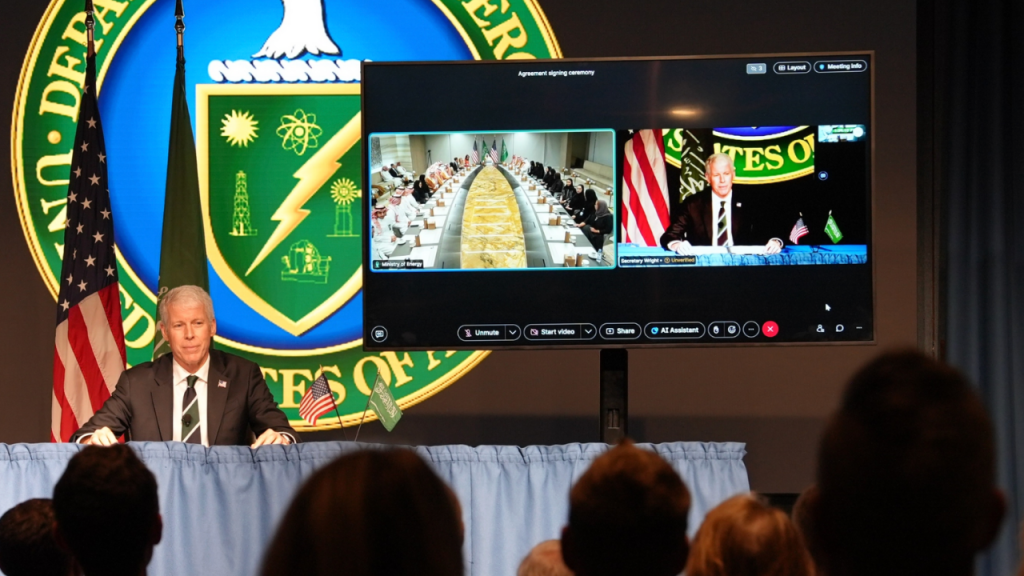
Canada’s condemnation of Venezuela following the 2024 Venezuelan election was swift, confident, and strategically timed. Joly’s official statement invoked human rights, democratic principles, and the need for transparency. The framing was familiar: a troubled country, a flawed process, and the Western bloc standing ready to adjudicate legitimacy.
What the statement didn’t address — and what rarely gets addressed in these moments — is the deeper question the Venezuela controversy exposes. Not whether Maduro won fairly or unfairly, but what it means when states whose own democratic systems are visibly deteriorating position themselves as the arbiters of democracy elsewhere. And what it means when that arbitration has a documented track record of serving resource and geopolitical interests rather than the populations it claims to defend.
The Credibility Problem
Before Canada or the United States can credibly invoke democratic principles abroad, it is worth examining what those principles look like at home. In the United States, the Electoral College has installed five presidents who lost the national popular vote. The U.S. Senate gives Wyoming and California equal representation despite a 70-to-1 population disparity.
Partisan gerrymandering — the practice of drawing electoral districts to guarantee outcomes regardless of voter preference — has become, in the words of Supreme Court Justice Elena Kagan, a high-tech art form in which mapmakers can “generate thousands of possibilities at the touch of a key and then choose the one giving their party maximum advantage.”
Brennan Center estimates that maps used in the 2024 election produced a net 16 fewer Democratic or Democratic-leaning districts than maps complying with basic anti-gerrymandering standards. In North Carolina alone, the reversal of a court-ordered fair map flipped three Democratic districts to Republican, handing House control to the GOP.
Brookings Institution research documents that since 2010, U.S. state legislatures have passed waves of laws designed to reduce ballot access, politicize election administration, and entrench partisan advantage.
Voting Rights Act gutted was gutted by the Supreme Court, dozens of states enacted voter suppression measures — requiring specific photo IDs, purging voter rolls, closing polling locations, eliminating early voting — that federal courts have described as targeting Black voters with “surgical precision.” In 2020, a sitting president who acknowledged privately that he had lost attempted to overturn results. The House Select Committee concluded he had engaged in a multi-part conspiracy to subvert the lawful outcome. This is the democracy doing the condemning.
Then there is Chile — held up for decades as Latin America’s democratic success story. That stability is built on Pinochet’s 1980 constitution, written under military dictatorship. In 2020, 78% of Chileans voted to replace it. What followed was two constitutional conventions, two referenda, and two rejections — left draft rejected, right draft rejected — leaving the country permanently governed by a dictatorship-era document the population has clearly stated it wants replaced but cannot agree on how to replace.
That institutional framework was installed with U.S. assistance. The 1973 CIA-backed coup that killed Allende and installed Pinochet is documented CIA history. It replaced a democratically elected socialist government with a military dictatorship that killed over 3,000 people and tortured thousands more. The economic model that constitution was designed to protect is precisely what the Chilean population has been trying to dismantle through democratic means ever since.
The Pattern Behind the Rhetoric
The Venezuela situation does not exist in isolation. It exists within a documented pattern of Western powers invoking democratic language to justify the removal of governments that threaten resource or strategic interests — regardless of the actual democratic credentials of those doing the removing. In 1953, the CIA and British intelligence overthrew Iran’s Mossadegh after he nationalized the Anglo-Iranian Oil Company. In 1954, CIA’s Árbenz coup was removed because his land reform program threatened United Fruit Company.
The pattern is not ancient history. The 2002 Venezuelan coup attempt against Chávez, which the Bush administration endorsed before it collapsed within 48 hours, followed the same template. The years of US sanctions on Venezuela, the recognition of self-declared “interim president” Juan Guaidó, and the attempts to seize Venezuelan gold reserves held in the Bank of England fit the same logic: democratic rhetoric deployed to pursue regime change against a government that controls significant oil reserves and has refused to subordinate its economic policy to Western institutional requirements.
The question is not whether Venezuela’s electoral process is beyond criticism. It has genuine institutional problems that deserve scrutiny. The question is who gets to apply that scrutiny and what institutional interests they represent. Canada’s Foreign Affairs Minister invoking democratic principles while sitting inside a Five Eyes intelligence alliance, a NORAD agreement, and a continental defense relationship with the state that has overthrown more democratically elected governments than any other power in modern history is not a neutral act. It is a position. And the position has a track record that the rhetoric consistently omits.
Sources
- Wikipedia — 2024 Venezuelan Presidential Election
- Global Affairs Canada — Statement by Minister Joly on Venezuela election results, August 2024
- Harvard Ash Center — The Electoral College and Our Broken Presidential Election System
- Brennan Center for Justice — Gerrymandering Explained
- Brookings Institution — Understanding Democratic Decline in the United States
- Brennan Center — Voter Suppression
- Brookings Institution — Democratic Decline: Strategic Manipulation of Elections
- Foreign Policy — Chile Rejects New Constitution, September 2022
- Bloomberg — Chile Rejects New Constitution, September 2022
- Americas Quarterly — Chile Rejects Second Constitutional Rewrite, December 2023
- History.com — U.S. Interventions: Overthrow of Foreign Governments
- PBS NewsHour — CIA Acknowledges 1953 Iran Coup Was Undemocratic