
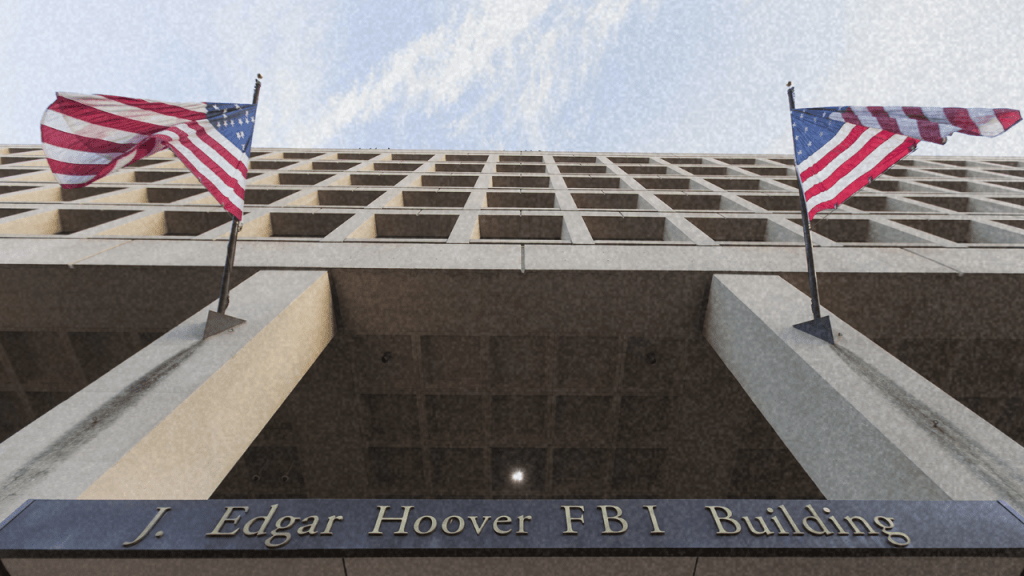
After September 11, the FBI built a vast informant network inside Muslim communities and called the plots it assembled victories against terrorism. By 2020, the target had changed, but the machinery had not: a paid informant infiltrated Denver’s racial-justice movement, pushed activists toward violence and manufactured the transaction that produced the operation’s only criminal charge.
In the summer of 2020, Mickey Windecker arrived at Denver racial-justice protests in military clothing, driving a silver hearse filled with guns. He claimed to have fought overseas. He offered combat training, talked about escalating violence and worked his way into a movement facing police repression after the murder of George Floyd.
Windecker was not the militant ally he presented himself as. He was a paid FBI informant. According to Trevor Aaronson’s investigation for Alphabet Boys, the Bureau paid him at least $20,000 to infiltrate and report on Denver activists.
Windecker attempted to draw protesters into a plot against Colorado Attorney General Phil Weiser. When that failed, he gave activist Zebbodios Hall $1,500 to acquire a gun for him. Hall knew the purchase was illegal and later pleaded guilty to transferring a firearm to a felon. He also said he feared Windecker, who had displayed weapons and images of dead fighters while pressing activists toward violence.
The FBI operation did not uncover a violent organization. Its informant supplied the pressure, the money and the criminal opportunity. Hall’s gun case was the only charge the infiltration produced. The state created the transaction and then prosecuted the person it induced to complete it.
The Same Machine Targeted Muslims After September 11
Windecker’s operation was not an aberration. It reproduced the counterterrorism model the FBI had spent two decades developing in Muslim communities.
Journalist Trevor Aaronson documented that model in The Terror Factory. After September 11, the FBI expanded to roughly 15,000 informants, about ten times the number reported during the COINTELPRO era. The Bureau spent approximately $3 billion a year on counterterrorism while relying on informants recruited with money, immigration pressure and relief from their own criminal exposure.
The government presented this network as necessary to identify hidden attackers before they could strike. In practice, agents and informants repeatedly searched for isolated, impoverished or mentally ill men who expressed anger but lacked an organization, weapons, money or operational capacity.
The informant then supplied what was missing. The government offered the plan, transportation, cash, contacts and an inert weapon. The target was recorded agreeing to the operation and performing the final scripted act. Agents arrested him beside the fake bomb they had built.
This was not the interception of an independent conspiracy. The FBI entered the plot as its indispensable organizer and then prosecuted the person it had equipped.
The Numbers Describe an Industry
Aaronson found more than 150 defendants caught in post-September 11 terrorism sting operations. Many had neither the means nor, in some cases, the original idea for the offence attributed to them.
The Columbia Human Rights Law Review later summarized his review of terrorism prosecutions from 2001 through 2013. At least 50 defendants faced charges for conduct spurred by an FBI agent provocateur who supplied the plan, means and opportunity.
The informants had direct incentives to produce targets. Aaronson documented payments reaching six figures. The Bureau used drug dealers, an accused murderer and a convicted child molester. Other informants were pressured through deportation threats or promises involving their families’ immigration status.
This system did not reward an informant for concluding that an angry person posed no operational threat. It rewarded the informant for turning that person into a case.
The FBI defended the stings by pointing to dangerous terrorists such as Faisal Shahzad and Najibullah Zazi. Aaronson’s answer was decisive: neither was caught through the kind of manufactured sting being defended. The Bureau used genuine plots to legitimize operations against people who could not have acted without government assistance.
A Fake Bomb Produced a Real Sentence
The 2010 prosecution of Mohamed Osman Mohamud shows the choreography. Mohamud was a Somali American teenager in Oregon when undercover agents approached him. The operation escalated from monitored speech into a supposed plan to bomb Portland’s Christmas-tree lighting ceremony.
The FBI supplied a van containing a fake bomb. Mohamud drove it to the target area and attempted to detonate it using a phone provided as part of the operation. Agents arrested him immediately.
The public received the spectacle of a mass-casualty attack narrowly prevented. The government received another counterterrorism victory. Missing from that performance was the central fact: there was no functioning bomb, no independent terrorist organization and no operational plot outside the one constructed with undercover agents.
Mohamud made choices and participated. That does not erase the state’s role. The question is not whether a target eventually agreed. It is whether the alleged threat existed in actionable form before the FBI created the means, opportunity and script.
Entrapment Became Nearly Impossible to Prove
The legal system offered little protection against this model. In 2013, Aaronson reported that 11 post-September 11 terrorism defendants had formally argued entrapment at trial. None succeeded.
Federal entrapment law focuses on predisposition. Prosecutors do not need to deny that the government induced the offence. They need to persuade a jury that the accused was already willing to commit something similar.
In terrorism cases, that inquiry absorbs political speech, religious expression, internet activity and generalized rage. A person can lack weapons, money, contacts and a workable plan, yet still be described as predisposed because an informant recorded him endorsing violence after months of pressure.
The government creates the capability, then treats the target’s rhetoric as proof that capability was unnecessary. The prosecution uses the state-manufactured act to demonstrate the intention required to excuse manufacturing it.
Severe terrorism sentencing provisions increase the coercion. Defendants facing decades in prison have powerful reasons to plead guilty rather than ask a jury conditioned by the War on Terror to distinguish fantasy, inducement and operational capacity.
Manufactured Plots Served the Institution
Every staged plot generated the same political product. Officials announced that catastrophe had been prevented. News coverage displayed the fake bomb or inert missile. The prosecution became evidence that the counterterrorism budget, informant network and surveillance authorities were indispensable.
The FBI did not need every target to be capable of independent violence. Institutional success was measured through arrests and prosecutions. A plot created by an informant produced the same headline as a plot discovered in progress, sometimes a better one because agents controlled every stage.
This is how a security bureaucracy reproduces itself. It defines a hidden threat, receives exceptional powers to find it, creates cases through those powers and presents the resulting cases as proof that the threat required the powers.
The target population pays twice. Muslim communities were subjected to surveillance and pressured into informing. Then the cases produced by that intrusion were used to portray those same communities as reservoirs of hidden violence.
The Target Changed From Muslims to Black Organizers
The counterterrorism infrastructure did not disappear when the political focus shifted. It widened.
Attorney General Michael Mukasey’s 2008 guidelines allowed the FBI to conduct “assessments” without a factual predicate suggesting criminal activity. Agents gained authority to map communities, search databases, recruit informants and conduct interviews before opening a formal investigation.
In 2017, the FBI invented the category “Black Identity Extremists,” linking anger over police violence to a supposed threat against law enforcement. The label treated opposition to racist policing as a potential stage in radicalization.
The Bureau later abandoned the phrase, but not the infrastructure or assumptions behind it. The Columbia Human Rights Law Review warned in 2020 that surveillance and entrapment machinery built against Arab and Muslim communities was being adapted to target Black Lives Matter, immigrants’ rights organizers and the broader left.
Windecker’s Denver operation showed that warning becoming practice. The informant entered a movement already facing tear gas, arrests and aerial surveillance. He promoted violent escalation, distributed suspicion and helped fracture relationships among organizers.
The operation’s political damage exceeded its single prosecution. Infiltration makes every new participant suspect. Provocation makes organizers fear that militant speech is a trap. “Snitch-jacketing” turns activists against one another. A movement can be disrupted without outlawing it.
COINTELPRO Never Needed to Return
Calling this “COINTELPRO 2.0” captures the continuity but can obscure how little needed to be revived. The FBI never lost its informants, files, joint task forces, surveillance capacity or institutional hostility toward movements challenging racial and imperial power.
The historical line from COINTELPRO to contemporary policing is not a story of identical programs under different names. It is the preservation of a state function: identify dissident communities, infiltrate their organizations, magnify their most vulnerable elements and turn manufactured danger into public legitimacy.
After September 11, Muslims were the central laboratory. In 2020, Black organizers became another target. The ideology changed, the legal vocabulary changed and the informants changed. The method remained recognizable.
Organizers do not need generalized paranoia. They need structural literacy. The provocateur does not always arrive demanding violence. He may bring resources, offer protection, intensify personal conflicts and make himself indispensable before introducing the offence.
The FBI’s terror factory was never only about terrorism. It was a system for manufacturing threats the state could prosecute, publicize and use. Windecker did not represent the corruption of that system. He represented its transfer to the next political target.
Sources
- Democracy Now!, February 7, 2023 — Trevor Aaronson, Zebbodios Hall and former FBI agent Mike German on Windecker’s infiltration of Denver racial-justice organizing.
- Denverite, February 10, 2023 — Hall’s gun prosecution, Windecker’s pressure and the FBI records underlying Alphabet Boys.
- RFE/RL, February 26, 2013 — Aaronson on the 15,000-informant network, sting choreography, informant incentives and failed entrapment defences.
- Trevor Aaronson, The Terror Factory, 2013 — investigation of FBI-manufactured terrorism plots and the Bureau’s counterterrorism budget.
- Columbia Human Rights Law Review, December 8, 2020 — legal anatomy of federal terrorism stings, agent provocateurs, predisposition doctrine and the expansion toward social movements.
- Brennan Center for Justice, June 26, 2020 — FBI surveillance of Black activists and the “Black Identity Extremist” framework.
- Human Rights Watch, July 21, 2014 — investigation of human-rights abuses in federal terrorism prosecutions.

 Spark Solidarity