
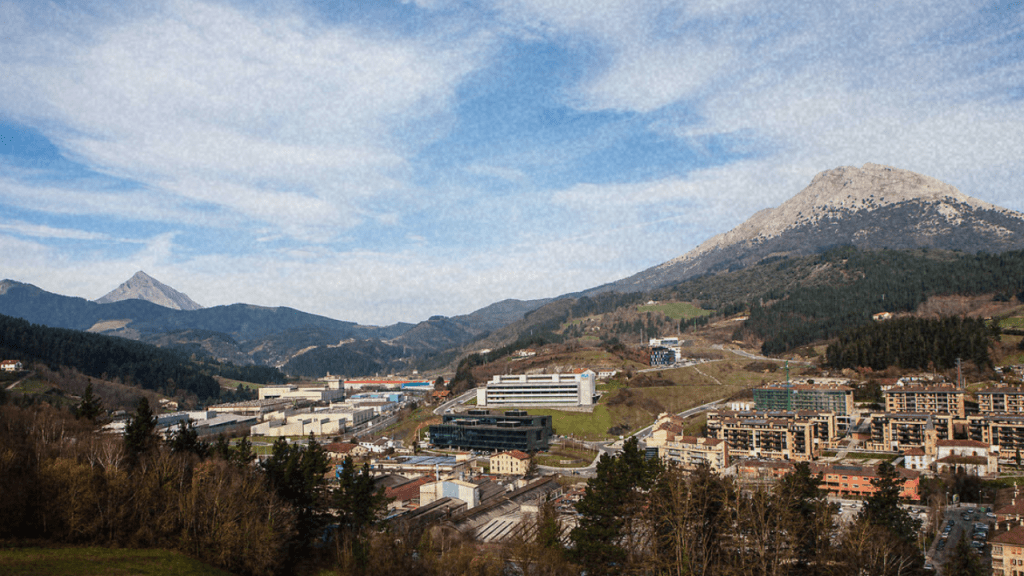
Mondragón and Kerala preserved collective capacity through institutions built to reproduce it. Quebec retained cooperative forms without making them govern the economy.
Mondragón reported its 2025 results on July 22 with more than 71,400 workers, €11.3 billion in sales and 81 self-governing cooperatives. The federation remains the largest employer in the Basque Country almost seventy years after its first industrial cooperative opened.
Its survival is often reduced to a lesson about worker ownership. Workers own cooperatives, therefore cooperatives endure. The history is less comforting. Mondragón survived because ownership was joined to a bank, a university, research centres, social protection, shared investment funds and rules for transferring resources among cooperatives.
Kerala built a different structure. Its achievements in health, literacy and food security did not come from a federation of worker-owned firms. They came from land reform, mass political organization, public provisioning and powers transferred to local governments. Bolivia under Evo Morales followed another route, using control over hydrocarbon revenue to expand social spending and recognize Indigenous claims while remaining dependent on extractive exports.
Quebec contains pieces of all three histories: cooperative finance, public institutions, social-economy organizations and a territorial memory organized around the rang and parish. Those pieces never became a system capable of directing investment and production according to collective need.
The Rang Was Not a Cooperative
The rang is easy to romanticize because its physical traces remain visible. Long, narrow farms extended from rivers and roads, placing households near one another while giving them access to transport and cultivable land. Parish institutions connected worship, schooling, mutual aid, credit and local authority.
This arrangement supported dense rural relations, but it was not worker ownership. The rang developed through the seigneurial regime, a colonial property system in which the Crown granted land to seigneurs who imposed obligations on tenant farmers. Its communal geography existed inside hierarchy, church authority and the dispossession of Indigenous land.
Quebec’s later cooperative institutions grew from real needs within that society. Farmers needed purchasing and marketing power. Workers and small producers needed credit outside commercial banks. Families needed insurance and mutual aid. The first Caisse populaire opened in Lévis in 1900 as a savings and credit cooperative.
The caisse did more than place a local branch near its members. It pooled savings that commercial finance neglected and returned lending decisions to a community institution. Agricultural cooperatives, mutual societies and parish networks performed related functions. Together they created forms of collective capacity without abolishing private property or class power.
Capitalism did not simply erase this infrastructure. It absorbed, consolidated and reorganized much of it. Cooperative institutions grew into large enterprises. Rural communities were transformed by urbanization, industrial concentration and the decline of parish authority. The social form survived in places while its original relationship to local reproduction weakened.
Mondragón Built Institutions Around Ownership
Mondragón began in the 1950s in a Basque region marked by dictatorship, political repression and industrial poverty. Its early cooperatives did not remain isolated workshops. They built institutions that solved problems a single worker-owned firm could not solve alone.
Cooperative finance supplied capital. Technical schools trained workers and managers. Research centres supported industrial development. A social-welfare system provided protection outside Spain’s ordinary arrangements. Federated funds allowed stronger cooperatives to support new ventures and firms under pressure.
This architecture changed what failure meant. A conventional corporation can close a plant, dismiss workers and transfer capital elsewhere while remaining successful for its owners. A cooperative federation has mechanisms for retraining, reassignment and shared support because employment and institutional continuity are part of its purpose.
Mondragón has never escaped the market. Its cooperatives sell commodities, compete internationally and respond to profitability. Some foreign subsidiaries employ workers who are not members. Wage ratios are compressed compared with conventional corporations, but hierarchy remains. The collapse of appliance maker Fagor in 2013 demonstrated that federation does not make every enterprise invulnerable.
The response to Fagor also showed what federation changes. Other cooperatives absorbed many displaced members, and shared institutions carried costs that a stand-alone firm would have externalized onto workers and the state. Solidarity did not prevent failure. It altered who was required to bear it.
Mondragón’s endurance therefore cannot be copied by registering more cooperatives. A cooperative without patient finance, technical capacity, political protection and links to other cooperatives remains exposed to the same lenders, suppliers and markets as any small business.
Kerala Made Provisioning a Public Function
Kerala’s model operates at the scale of a state rather than a corporation. Communist governments, labour movements, peasant organizing and social reform produced land redistribution, strong public education, primary health infrastructure and an extensive food-distribution system.
The results are often described as a paradox: health, literacy and demographic indicators far ahead of what Kerala’s income level would predict. That language can obscure the mechanism. Social outcomes improved because political movements forced resources into systems that reproduced life outside immediate profitability.
Kerala’s public distribution system provides subsidized food through ration shops and other public outlets. Its 2026 development report describes additional state subsidies and the sale of essential commodities below open-market prices. The system treats food security as an administrative responsibility rather than a reward delivered after sufficient market growth.
Decentralized planning added another layer. Powers and resources moved toward local governments, allowing elected bodies to identify needs and shape spending. Local control did not eliminate bureaucracy, patronage or uneven capacity. It created recurring institutions through which mass demands could enter planning.
Kerala also faces unemployment, fiscal pressure, dependence on remittances and continuing inequality. Public services can deteriorate when staffing and funding fail to match demand. Its model is not a completed alternative to capitalism. It shows that durable improvements require organizations able to defend provisioning across electoral cycles.
Bolivia Redistributed an Extractive Surplus
Bolivia under Morales brought Indigenous movements into state power, expanded land titling and increased public control over hydrocarbon revenue. The resulting income financed transfers, infrastructure and social programs while poverty and inequality declined.
The change was material. A larger share of resource wealth moved through the state, and the 2009 Constitution recognized Bolivia as a plurinational country. Indigenous political authority could no longer be treated as folklore outside the constitutional order.
The model remained tied to gas, mining and commodity prices. Resource revenue made redistribution possible while preserving dependence on extraction. Conflicts over roads, protected territory and hydrocarbon development exposed the distance between constitutional recognition and control over land.
Bolivia therefore adds a warning to the comparison. Public capture of resource rent can fund collective development, but a favourable commodity cycle is not a permanent institution. When reserves decline and export markets weaken, social commitments confront the productive structure that was never fully transformed.
Mondragón developed productive institutions but remained disciplined by markets. Kerala built provisioning capacity but faces fiscal constraint. Bolivia expanded redistribution without escaping extractive dependence. None supplies a complete model because each secures a different part of collective life.
Quebec Did Not Lose Everything
Quebec’s cooperative economy did not disappear with the parish world. The provincial government counted roughly 2,900 active cooperatives and mutuals in 2025, with memberships spread across finance, insurance, agriculture, food, housing, forestry, health and education.
Quebec also has nearly 1,300 housing cooperatives containing about 30,000 homes. Alongside nonprofit housing, these organizations hold a significant stock of property outside conventional landlord ownership. The social economy remains a material sector, not a historical memory.
Scale alone does not determine political character. Desjardins can remain legally cooperative while operating as a major financial institution inside the same credit markets as commercial banks. A large cooperative can reproduce managerial power, consolidation and market discipline even when its members formally retain voting rights.
The Caisse de dépôt provides another example. Publicly created capital can support development, but its mandate and investment practices determine whether it builds collective capacity or behaves like an institutional investor seeking returns across global markets.
Quebec possesses legal forms, accumulated savings, pension capital, public utilities, universities and cooperative experience. What it lacks is a binding system that directs those resources toward democratic control of production, housing, food, energy and care.
Collective Capacity Must Reproduce Itself
The surviving examples share no single ownership formula. Their common feature is institutional reproduction. They train people, finance projects, transfer resources, protect essential goods and create rules that continue after a founding generation leaves.
Worker ownership without financing can be strangled by creditors. Public services without organized constituencies can be cut. Resource redistribution without a transformed productive base can collapse with export revenue. Local traditions without legal and material power can become heritage while capital governs everyday life.
Quebec’s bijural system, cooperative statutes and public financial institutions create possibilities. They do not determine how those possibilities are used. The same institution can finance social housing or speculation, regional production or corporate consolidation, worker control or managerial expansion.
Mondragón’s lesson is federation. Kerala’s is organized public provision. Bolivia’s is the power and danger of resource sovereignty. Quebec’s own history shows that collective forms can survive in law and branding while losing authority over investment and social reproduction.
The rang cannot be restored, nor should a colonial and clerical order be mistaken for emancipation. The useful inheritance lies elsewhere: institutions can organize land, credit and mutual obligation according to rules other than immediate private return.
Keeping that capacity alive requires more than cultural memory. It requires organizations with money, law, knowledge and political power—and structures that prevent those resources from quietly returning to the control of capital.
Sources
- About Us — MONDRAGON Corporation
- 2025 Results — MONDRAGON Corporation
- Annual Report 2023 — MONDRAGON Corporation
- Kerala Development Report 2026 — Kerala State Planning Board
- Economic Review 2025 — Kerala State Planning Board
- Portrait du mouvement coopératif au Québec — Gouvernement du Québec
- Our History — Desjardins
- Stratégie québécoise en habitation — Gouvernement du Québec
- Long Lots (Rangs canadiens) — Canadian Encyclopedia
- Bolivia Country Report 2026 — Bertelsmann Transformation Index