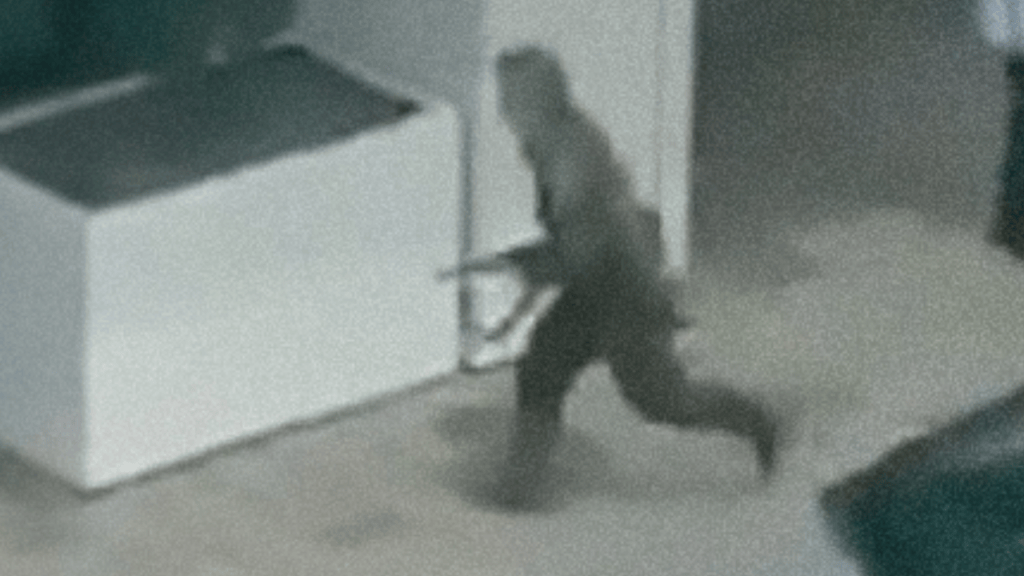
Seth Hatfield shooting became a political narrative before investigators established who killed Michel Mizrahi or why Hatfield chose the site.
A shooting that left SPVM officer Mohamed Lamine Benredouane, civilian Michel Moshe Mizrahi and gunman Seth Scott Hatfield dead in Montreal’s Côte-des-Neiges neighbourhood became a political symbol almost as quickly as it became a crime scene.
Within hours of the June 22 shooting, competing explanations were circulating. Hatfield was described as an incel misogynist, an anti-police extremist, a communist, an antisemite and a possible attacker of Pornhub’s parent company, Aylo. Public officials emphasized the courage of responding officers. Online commentators argued over whether Mizrahi had been killed by police gunfire.
Some interpretations have considerably more evidence behind them than others. Hatfield left behind a sprawling text filled with violent misogyny and resentment toward women. It also contained anti-capitalist, anti-elite and other politically contradictory material. Investigators have examined whether police or Aylo were intended targets.
But the investigation has not publicly resolved several facts necessary to turn those fragments into a complete account. Hatfield’s motive for choosing the location remains unsettled. The relationship between his manifesto and the people actually struck by gunfire remains unsettled. Most importantly, Quebec’s police watchdog has not publicly established whose shot killed Mizrahi.
The shooting became a narrative battle almost immediately
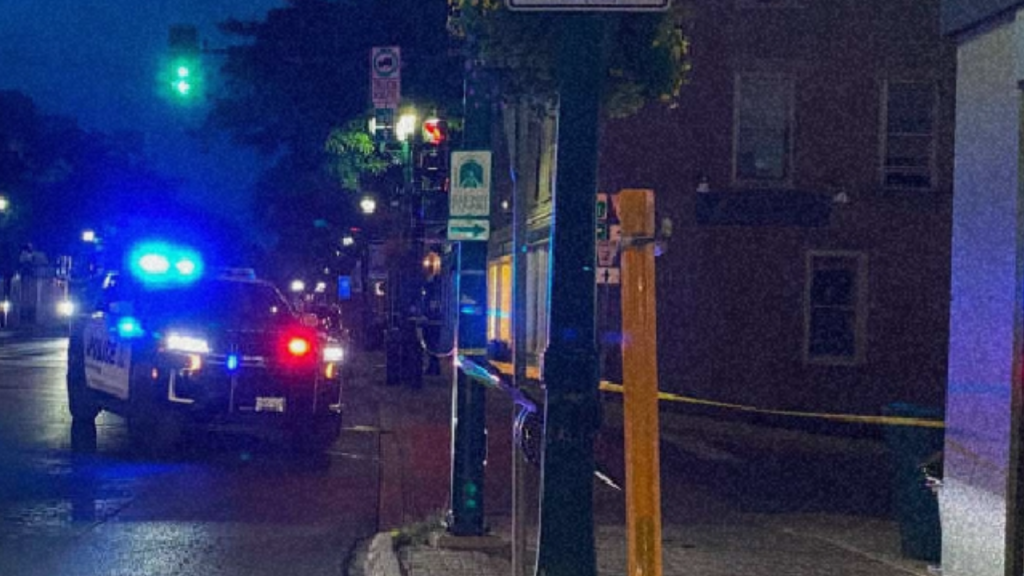
SPVM officers were called to Côte-des-Neiges at approximately 11:35 a.m. after a citizen reported what appeared to be the muzzle of a firearm protruding from a window at the Hilton Garden Inn Montreal Midtown.
Police Chief Fady Dagher later said officers arriving at street level were fired upon. Benredouane, 34, was killed and another officer was seriously wounded. Hatfield was killed during the confrontation with police. Mizrahi, 68, also died during the incident.
Even the SPVM initially resisted some of the political conclusions beginning to form around the attack. Dagher said it was too early to characterize the shooting as an ambush and would not say police had been the intended target. Quebec Public Security Minister Ian Lafrenière said authorities had not classified the incident as terrorism.
The restraint did not last in the wider political conversation. Information about Hatfield’s manifesto began circulating while videos from the shooting spread online. Police forces elsewhere in Canada were warned that material circulating after the shooting might encourage violence against officers. The neighbourhood’s large Jewish population and Mizrahi’s identity became part of another interpretation. Reports that Hatfield had fired toward a building housing Aylo generated another.
Political interpretations were therefore developing before investigators had reconstructed the event itself.
Hatfield’s manifesto does not fit one clean ideological label
The misogyny in the 104-page manifesto attributed to Hatfield is not ambiguous.
Global News describes a document preoccupied with what Hatfield called “hypergamy,” male sexual rejection and the supposed deprivation of intimacy experienced by less desirable men. Women are repeatedly blamed or degraded. Feminism is treated as part of the social system Hatfield believed had produced male loneliness and humiliation.
Experts who reviewed the document connected that worldview to incel and male-supremacist ideology. The label captures an important part of the text, but it does not exhaust it.
Hatfield also attacked capitalism, neoliberalism, wealthy elites and what he called the bourgeois class. His list of potential targets reportedly ranged across bankers, billionaires, politicians, corporate executives, pornography companies and other institutions or people he blamed for social decay. He praised aspects of nominally communist societies while simultaneously expressing positions that do not fit conventional left politics.
Former national-security analyst Stephanie Carvin described the worldview as ideologically incoherent, mixing material usually associated with different parts of the political spectrum while retaining a consistent hostility toward women.
That description is more useful than forcing Hatfield into a single partisan category. His writing combines misogynistic grievance, sexual alienation, economic resentment, conspiratorial thinking and fantasies of retaliatory violence. Calling that mixture simply communist obscures the misogyny. Calling it only incel can obscure the economic and political language through which Hatfield tried to organize that misogyny into a wider theory of society.
The document should be described for what it contains rather than reduced to whichever fragment is most politically useful to the person describing it.
Aylo is an investigated hypothesis, not an established motive
Hatfield’s choice of location makes the pornography-industry question legitimate to investigate.
Aylo, the Montreal company that operates Pornhub, has offices in the building opposite the Hilton. Reporting after the shooting described damaged windows at that building. Hatfield’s manifesto reportedly identified pornography companies and people promoting pornography among possible targets.
The Canadian Press subsequently reported that authorities were examining whether police officers, Pornhub or both may have been intended targets. Separate Quebec reporting described investigators as taking the Aylo hypothesis seriously.
That moves the connection beyond social-media coincidence without making it a solved motive. Investigators have not publicly established that Hatfield travelled from Alberta specifically to attack Aylo, that the company was his sole intended target or that every shot fired before the police confrontation was directed toward its offices.
Aylo itself declined to speculate, saying the investigation remained ongoing.
The company’s proximity, reported damage to the building, Hatfield’s hostility toward the pornography industry and investigative interest in Aylo therefore make it a credible motive hypothesis. The available evidence does not make it the confirmed explanation.
Jewish identity and geography are not a motive finding
The same evidentiary standard applies to antisemitism.
Michel Moshe Mizrahi was a longstanding member of Montreal’s Jewish community. The area surrounding the shooting contains synagogues, Jewish schools, community organizations and kosher businesses. Hatfield’s manifesto has also been reported to identify “influential Zionists” and organizations associated with Zionism among potential targets.
Those facts do not establish that Mizrahi was selected because he was Jewish or that Hatfield chose Côte-des-Neiges in order to attack a Jewish institution.
A manifesto can contain antisemitic material without every person harmed by its author having been selected through an antisemitic motive. Establishing motive requires connecting the ideology to the target and the act.
Early discussion frequently moved in the opposite direction: the neighbourhood was heavily Jewish and the dead civilian was Jewish, so the shooting itself was interpreted through antisemitism. Further evidence may eventually support such a motive, but geography and victim identity cannot supply the missing causal link on their own.
A prior Spark Solidarity analysis of unresolved attacks on Jewish institutions documented a similar evidentiary problem: political conclusions were attached to shootings before perpetrators or motives had been established. The standard should remain the same here. Antisemitic content belongs in the record; proximity does not become proof.
Who killed Michel Mizrahi remains unresolved
The civilian death is where the gap between public certainty and the official record becomes most consequential.
Video from the shooting circulated almost immediately, and commentators began alleging that Mizrahi had been struck by police gunfire while trying to escape the violence. Some contemporaneous reporting also described footage as appearing to show an officer firing as Mizrahi moved through the scene.
Authorities did not confirm that conclusion. On the day of the shooting, Lafrenière acknowledged reports that police had shot the civilian but said officials could not confirm that information and pointed to the Bureau des enquêtes indépendantes investigation.
More than two weeks after the shooting, that evidentiary boundary remains. On July 6, the BEI said its investigation remained ongoing and issued a new appeal for witnesses and video evidence. Its case record identifies a civilian death during an SPVM intervention involving a firearm used by a police officer. It has not publicly issued a finding identifying whose shot killed Mizrahi.
Neither version can therefore be written as settled fact. “Police killed Mizrahi” exceeds the public BEI finding. So does any categorical claim that Hatfield killed him.
Whether a civilian was killed by the attacker or by police responding to the attacker changes the accountability record of the event. Political narratives about the police response nevertheless began solidifying before that question was answered.
Previous Montreal cases investigated by the BEI show why the timing matters. Official conclusions can arrive long after an incident has already acquired a settled public story. The Hatfield case makes the problem especially visible because the unresolved civilian death sits beside an officer’s undisputed killing.
An officer’s death does not close the reconstruction
Mohamed Lamine Benredouane was killed while responding to an armed man. Another officer was seriously injured. Those facts require no qualification.
Public officials understandably focused on Benredouane’s death and the danger officers faced. Mayor Soraya Martinez Ferrada praised the courage, professionalism and composure of the responding SPVM officers. Benredouane was mourned as an officer killed in the line of duty and as the first Montreal police officer to die on duty in more than two decades.
Recognition of that death cannot substitute for reconstructing everything else that occurred during the police response.
The fact that Hatfield fired at officers does not identify the shot that killed Mizrahi. The fact that an officer died does not establish that every shot fired by responding police was justified or unjustified. The fact that Hatfield was killed by police does not independently establish the tactical sequence that preceded his death.
Those questions require ballistics, video, witness accounts, officer testimony and a complete chronology. Public praise for the officers does not answer the forensic questions about Mizrahi’s death or reconstruct the sequence of police gunfire.
The narrative formed before the facts were finished
Hatfield left behind violent, misogynistic writing with clear incel themes. The same document contained anti-capitalist, anti-elite, anti-pornography and other ideological material. Aylo’s location makes the pornography-industry hypothesis credible enough to investigate. Hatfield’s references to Zionists make antisemitism part of the evidentiary record without proving that Mizrahi or the neighbourhood’s Jewish institutions were selected as targets.
Benredouane was killed by an armed attacker. That fact does not determine who killed Mizrahi, and the BEI investigation remains open.
The case already demonstrates how rapidly spectacular violence becomes politically usable. A shooter with a contradictory manifesto becomes evidence for competing ideological camps. A dead police officer becomes a symbol of institutional sacrifice. A Jewish civilian becomes evidence in arguments over antisemitic violence. A building across from the shooter becomes the basis of a motive theory. Circulating video becomes the basis of claims that remain ahead of the independent investigation.
Some of those interpretations may ultimately prove correct. In this case, political interpretations hardened while the forensic record remained incomplete.
The evidence supports a narrower sequence. Hatfield’s manifesto can be analyzed without reducing it to a partisan label. Police can be scrutinized without denying Benredouane’s killing. Antisemitic content can be documented without inventing an antisemitic target. Aylo can remain a credible motive hypothesis without becoming the confirmed explanation.
Mizrahi’s death must remain an unresolved accountability question until the evidence establishes whose gun killed him. Any broader political interpretation of the Côte-des-Neiges shooting should begin from the facts investigators can establish, not from conclusions formed while those facts remain incomplete.
Sources
Bureau des enquêtes indépendantes, case BEI-260622-001, June 22, 2026 — current case record, listed as an ongoing investigation.
Bureau des enquêtes indépendantes, “Le BEI annonce le déclenchement d’une enquête indépendante à Montréal le 22 juin 2026,” June 22, 2026.
Bureau des enquêtes indépendantes, “Intervention policière à Montréal le 22 juin 2026 — Témoins recherchés,” July 6, 2026.
CityNews Montreal, “Montreal shooting that killed 3, including police officer and civilian, was not terrorist attack,” June 22–23, 2026 — initial chronology, official comments and unresolved civilian-shooting attribution.
Global News, “Montreal shooter’s ‘anti-women’ manifesto reflects growing warnings: experts,” June 23, updated June 24, 2026 — manifesto content, misogyny, incel themes, anti-capitalist rhetoric and ideological contradictions.
The Canadian Press, “Police looking into suspect’s motivations after Montreal shooting: official,” June 24, 2026 — investigation into whether police, Pornhub/Aylo or both were intended targets.
Journal de Montréal, “Fusillade à Montréal: le tireur, venu de l’Ouest canadien, aurait voulu s’attaquer à Pornhub,” June 23, 2026 — investigative reporting on the Aylo hypothesis.
CityNews Montreal, “Civilian killed in Montreal shooting remembered as generous father with contagious smile,” June 23, 2026 — Mizrahi’s identity and community background.
Spark Solidarity, “Montreal Once Again Confronts Police Violence,” April 7, 2025 — related SPVM/BEI accountability context.
Spark Solidarity, “Ford Used Synagogue Shootings to Try to Ban Al-Quds Day,” March 17, 2026 — related analysis of political conclusions forming around unresolved shootings before motive was established.