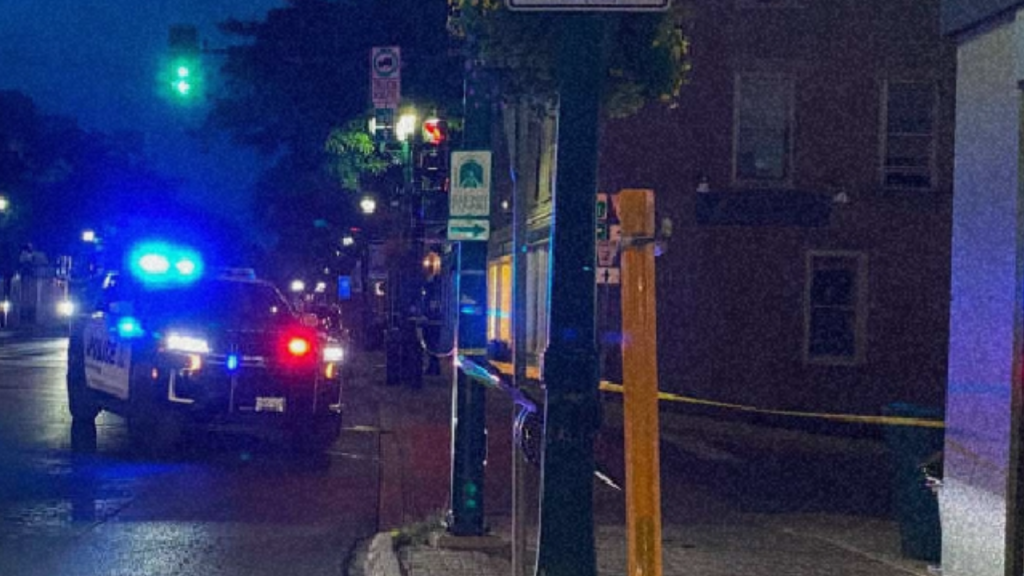
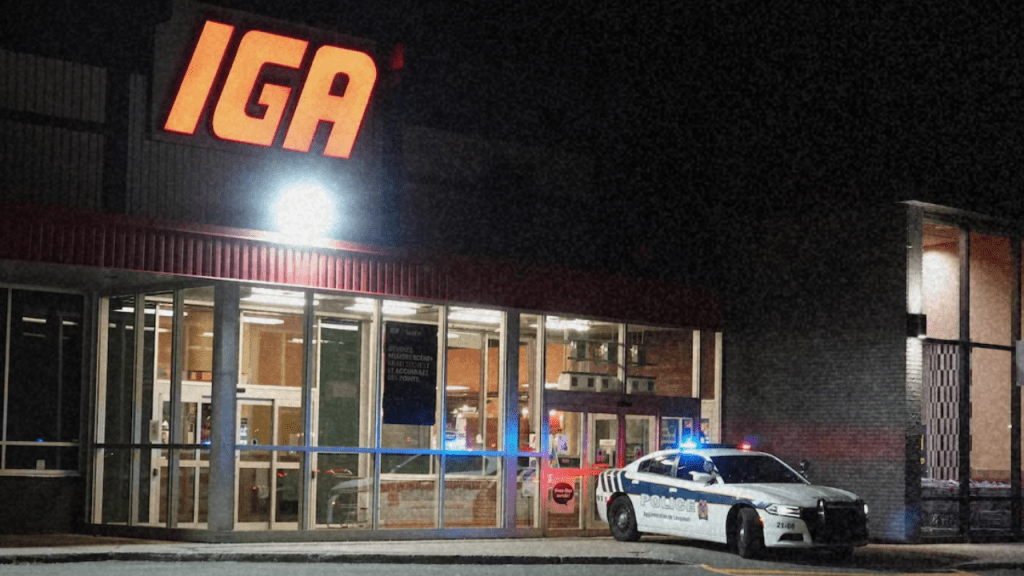
A 42-year-old man died on June 16 after a private security guard intervened over suspected shoplifting at an IGA in Longueuil. The encounter began inside a grocery store and ended with police arresting a 20-year-old loss-prevention employee in connection with a suspected manslaughter.
The death did not occur during a police operation. It happened inside the ordinary enforcement system that retailers install on private property: plainclothes guards, surveillance, detention and physical restraint used to protect merchandise.
A suspected theft became a fatal encounter
The intervention began around 6:45 p.m. at the Centre Jacques-Cartier IGA on chemin Chambly. According to TVA Nouvelles, the guard worked in plain clothes as a loss-prevention employee and believed the man had stolen from the store.
The guard reportedly asked to inspect the man’s bag. The man allegedly refused, and a physical confrontation followed. Nothing available by the June 17 source cutoff established that a theft had actually occurred, what item was suspected of being taken, or whether the man possessed unpaid merchandise.
CityNews Montreal reported that emergency responders found the 42-year-old unconscious and transported him to hospital, where he was pronounced dead. Longueuil police arrested the 20-year-old guard, questioned him and released him under conditions while the investigation continued.
Early reports used conflicting language about the guard’s legal status. Some said he had been charged with manslaughter. Others said he had been arrested in connection with a suspected manslaughter but had not yet been formally charged. The distinction matters. By June 17, the investigation was active and the available reporting did not provide a consistent public account of a filed charge.
The restraint remains under investigation
La Presse reported that the guard practised mixed martial arts and kickboxing and that the man was asphyxiated after being placed in a restraint. Those details were part of the newspaper’s account, not a final judicial finding.
The guard’s combat-sports experience is relevant because it may bear on the force he knew how to apply and the risks associated with restraining a person’s upper body or neck. It does not prove that private security companies systematically recruit fighters, and it does not turn an individual training background into an explanation for an entire industry.
The larger issue exists without that unsupported leap. A retailer placed an employee in a surveillance and enforcement role. A suspicion that merchandise had been taken escalated into physical force. A man died before any theft had been publicly established and before a court could determine anything about the encounter.
Retailers buy a layer of coercion
Private guards are not police officers and do not acquire general police powers by obtaining a security licence. They remain subject to criminal and civil law. But inside stores, malls and warehouses, they perform a practical enforcement function for property owners.
They watch customers, identify people as suspicious, demand explanations, initiate detentions and sometimes use force. The employer defines the loss-prevention objective. The encounter unfolds away from the public visibility attached to a police stop, even when the consequences are just as serious.
This arrangement creates a privatized enforcement layer inside everyday commercial life. The power is narrower than state policing, but its purpose is direct: protect inventory, preserve the owner’s control of the premises and transfer the risks of intervention to low-paid workers and targeted customers.
The public often sees only the final moment, after an ambulance arrives or police announce an investigation. The earlier decisions remain inside a corporate chain: how guards are trained, what conduct counts as suspicious, whether they are rewarded for recoveries, when they are told to disengage and what force the employer expects them to use.
Suspicion is not proof
Retail loss-prevention systems operate before guilt has been established. A guard acts on an observation or suspicion, and the person confronted must respond immediately. There is no neutral hearing between the accusation and the detention. The store’s commercial interest shapes the encounter from the beginning.
That imbalance becomes more dangerous when suspected shoplifting is treated as an urgent physical threat. Merchandise can be recovered, documented and insured. A death cannot be reversed. No grocery item carries a value that justifies a fatal restraint.
The point does not depend on romanticizing shoplifting or deciding in advance what happened inside the IGA. It begins with the facts that remain uncontested: the intervention concerned suspected theft, the suspicion escalated into force, and the person confronted did not leave alive.
Oversight after death is not prevention
Quebec regulates private security through licensing and training requirements. Regulation establishes minimum qualifications, but it does not reproduce the public reporting, independent review and institutional scrutiny that are supposed to follow police uses of force.
Even police oversight is routinely slow, opaque and inadequate. Privatizing the first point of coercive contact adds another employer, another set of internal policies and another layer separating the public from the decisions that produced the encounter.
A serious investigation must therefore examine more than whether one guard committed a criminal offence. It must establish the store’s loss-prevention rules, the guard’s instructions and training, the restraint that was used, the medical cause of death, the evidence behind the initial suspicion and whether disengagement was possible.
If accountability stops with the youngest person in the chain, the commercial system that authorized the intervention remains untouched. The guard’s conduct requires scrutiny. So do the corporate policies that put him in a position to convert an allegation over merchandise into physical custody.
A death inside an ordinary institution
The Longueuil death is disturbing precisely because the setting was so ordinary. It was not a prison, a border checkpoint or a protest line. It was a grocery store, one of the places where people must enter to obtain the basic goods of daily life.
Private security makes coercion part of that ordinary landscape while presenting it as routine risk management. Cameras, plainclothes surveillance and detention become background features of shopping until an intervention ends in irreversible harm.
A public accounting must begin with the man who died and the unresolved facts of his death. It must also confront the system around the encounter: retailers purchase enforcement power to defend property, but the public bears the consequences when suspicion, force and corporate policy converge.