Havana Syndrome became a political weapon before its cause was proven, giving Washington another pretext to punish Cuba and revive Cold War enemies.
In June 2026, the Office of the Director of National Intelligence withdrew two assessments that had judged foreign involvement in so-called Havana Syndrome to be very unlikely. The reversal did not establish that Russia, Cuba or any other state had attacked American personnel. It established something narrower: one faction of the U.S. security apparatus had repudiated the conclusions reached by another.
That institutional conflict is not a side issue. It is the centre of the story. For nearly a decade, an unresolved collection of symptoms has been presented to the public through the language of covert warfare. Claims hardened into headlines, headlines became diplomatic pressure, and diplomatic pressure helped reverse the limited opening between Washington and Havana. Scientific uncertainty never prevented political action. It made the story easier to manipulate.
The affected workers should not have had their illnesses dismissed. Reports have included vertigo, headaches, hearing problems, nausea and cognitive difficulties. But recognizing suffering is not the same as proving its cause. Washington repeatedly blurred those questions, turning legitimate demands for care into support for an unproven foreign-attack narrative.
The Official Story Never Held Still
The scientific and intelligence record has never produced one stable conclusion. A 2020 National Academies committee described directed, pulsed radiofrequency energy as the most plausible mechanism for the distinctive cases it examined. The committee did not identify a weapon, an attacker or a state responsible. Its finding was a hypothesis about mechanism, not proof of an international attack campaign.
Other official inquiries moved in the opposite direction. The U.S. intelligence community’s 2023 assessment judged it very unlikely that a foreign adversary was responsible for the reported incidents as a whole. Its January 2025 update said five of seven participating agencies retained that judgment. Two agencies allowed, with low confidence, that a foreign actor might possess or might have used a novel device in a small number of cases. None connected a named actor to a specific event.
Medical evidence complicated the attack narrative further. In 2024, National Institutes of Health researchers reported severe and persistent symptoms among affected personnel but found no significant MRI-detectable brain injury or biological abnormalities when comparing participants with matched controls. That result did not prove the symptoms were imaginary or psychogenic. It showed that confident claims of a demonstrated neurological weapon exceeded the published evidence.
A Device Is Not Proof of an Attack
The political terrain shifted again in 2026. CBS reported that U.S. investigators had acquired a portable device containing components of Russian origin that emitted pulsed radiofrequency energy. Reuters later reported that American agencies had examined a separate Norwegian incident involving a microwave device and neurological symptoms. These reports showed that energy-producing devices exist and can affect biology. They did not publicly establish that either device caused the incidents attributed to Havana Syndrome.
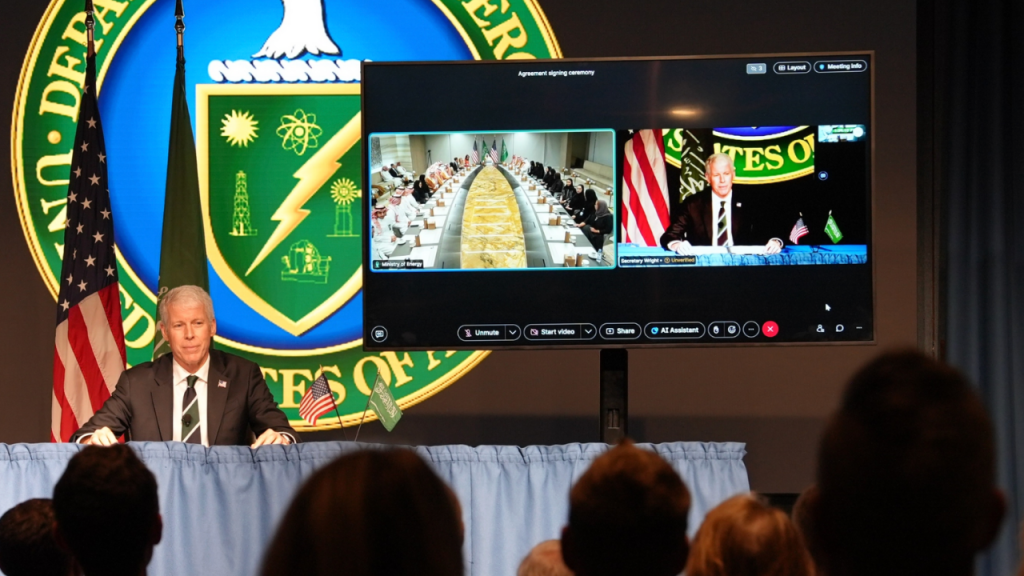
By March, U.S. intelligence chiefs endorsed withdrawing the 2025 assessment. In June, Director of National Intelligence Tulsi Gabbard formally recalled both the 2023 and 2025 assessments, alleging faulty analytic tradecraft and problems with the medical evidence used. Republican congressional leaders celebrated the decision as vindication of their own investigation.
But withdrawing an assessment is not the same as solving the case. No public evidence accompanying the recall demonstrated who operated a device, where it was used or which reported illnesses it caused. The security state replaced one official conclusion with a reopened contest over attribution. Media coverage predictably converted that procedural reversal into a suggestion that the foreign-attack theory had finally been proved.
Cuba Paid for an Unproven Charge
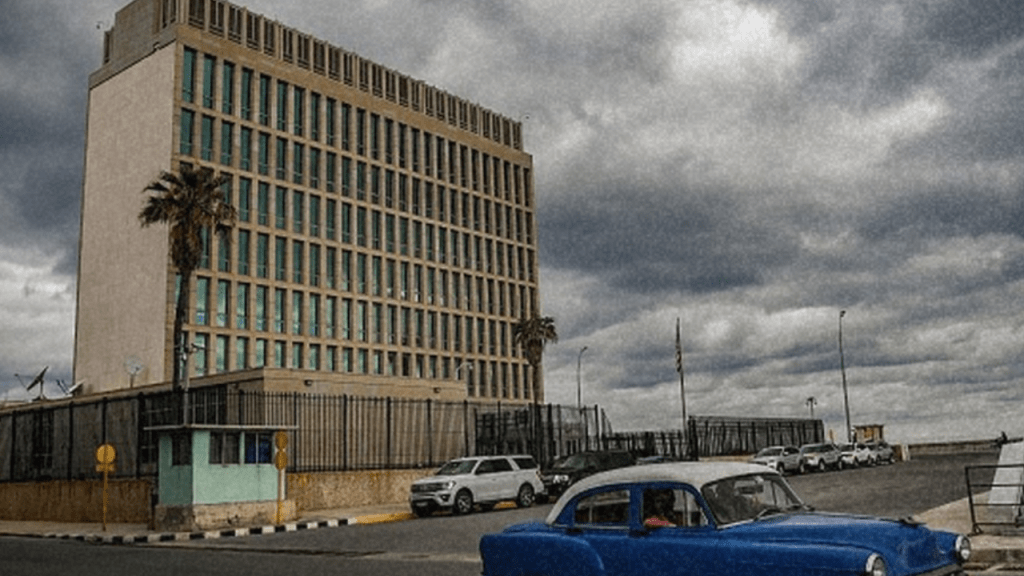
Cuba was never a neutral location in this story. The first widely reported cases emerged among U.S. personnel in Havana in 2016, near the end of Barack Obama’s limited diplomatic thaw. Donald Trump’s administration used the incidents to withdraw embassy staff, expel Cuban diplomats and harden a renewed campaign of isolation. Consular services collapsed, family reunification became more difficult and the machinery of hostility resumed.
The Cuban Academy of Sciences convened an expert group and issued a technical report in September 2021. It concluded that the broad narrative of a mysterious syndrome caused by attacks was not scientifically acceptable and found no coherent evidence for a campaign involving directed energy. Cuban scientists did not deny that individuals reported symptoms. They rejected the leap from symptoms to a technologically precise attack attributed to Cuba or tolerated on Cuban territory.
Washington imposed the political sentence before establishing the crime. Cuba’s economy, already strangled by the U.S. blockade, faced another layer of diplomatic punishment. The people who bore that cost had no role in the intelligence dispute. As in every sanctions regime, ordinary people paid for allegations produced inside institutions they could neither inspect nor challenge.
Uncertainty Became Imperial Evidence
Havana Syndrome illustrates how imperial narratives are manufactured. Officials begin with a real event or unresolved injury. Anonymous intelligence claims assign a hostile actor. Major outlets repeat the claim through the language of possibility while headlines deliver the emotional certainty. Congressional hawks demand retaliation. By the time the evidence weakens, the diplomatic consequences have already been imposed.
The framework is durable because every development can be made to support it. A lack of evidence becomes proof of a sophisticated covert operation. Conflicting assessments become evidence of an internal cover-up. A device with Russian components becomes evidence of Russian attacks, even without a demonstrated chain connecting the device to a victim. Scientific caution is recast as institutional betrayal.
This does not mean a directed-energy incident is impossible. It means possibility cannot honestly carry the political weight Washington has placed upon it. The existence of competing hypotheses requires investigation, medical support and public evidence. It does not authorize the United States to punish Cuba, blame Russia or revive Cold War mythology on command.
Care for Workers, Evidence for Claims
A serious response would guarantee treatment and compensation for affected personnel without forcing them to endorse one theory of causation. It would publish the evidence that can be released, protect independent scientific scrutiny and distinguish what investigators know from what intelligence officials suspect. Above all, it would refuse to make foreign populations pay for conclusions that remain unproved.
The U.S. government did the opposite. It converted uncertainty into leverage and illness into geopolitical theatre. The assessments changed, the suspected mechanisms changed and the list of alleged enemies expanded. The political function remained constant: Havana Syndrome supplied another story in which the United States appeared only as a victim, while its power to isolate, sanction and accuse disappeared from view.
Sources
- Chairman Crawford Statement on the Recall — House Intelligence Committee — June 11, 2026. Congressional statement confirming the recall of the 2023 and 2025 assessments.
- U.S. Intel Chiefs Endorse Withdrawal — Reuters — March 19, 2026. Reporting on intelligence leaders’ support for withdrawing the 2025 assessment.
- Device That May Be Tied to Havana Syndrome — CBS News — January 13, 2026. Reporting on the acquired radiofrequency device and the limits of the evidence connecting it to reported incidents.
- Updated Assessment of Anomalous Health Incidents — ODNI — January 10, 2025. Declassified intelligence assessment detailing the agencies’ differing judgments.
- NIH Studies Find Severe Symptoms — National Institutes of Health — March 18, 2024. Summary of clinical and imaging findings.
- Assessment of Health Complaints in Havana — Cuban Academy of Sciences — September 2021. Technical report by the Cuban expert group.
- Assessment of Illness in U.S. Government Employees — National Academies — 2020. Review identifying directed, pulsed radiofrequency energy as a plausible mechanism for a subset of cases.