Emmanuel Moss named a major American job opportunity, the deterioration of Quebec healthcare and rising antisemitism as reasons for leaving Montreal. Zionist advocacy and media outlets kept the one explanation that could be turned against Palestine solidarity and discarded the material conditions that indicted governments, hospital management and austerity.
Dr. Emmanuel Moss’s departure from Montreal is a real loss. He led cardiac surgery at the Jewish General Hospital, trained residents and helped build a highly specialized robotic surgery program. Quebec is losing expertise that cannot be replaced through an ordinary hiring process.
But the international story was never organized around the public system losing that capacity. Before Moss publicly explained his decision, the Montreal Gazette attributed its central interpretation to anonymous people close to him. Their belief that antisemitism was decisive became a headline-level claim that Moss was leaving because of antisemitism.
The gap between those claims was politically useful. It allowed unnamed sources to speak through Moss and transformed a complicated professional decision into evidence against Montreal’s anti-Zionist public. The story was disciplined before its subject had spoken.
Once the frame existed, Zionist advocacy organizations and aligned publications amplified it as fact. They did not wait for Moss because the political function of the story did not depend on his account. It depended on making his departure prove that opposition to Israel had made Jewish life impossible.
Moss Named Three Reasons. The Pipeline Kept One.
Moss eventually wrote that his reasons were “more complicated than any single headline can capture.” He identified a unique professional opportunity in the United States. He condemned the trajectory of Quebec healthcare. He also identified rising antisemitism in Montreal as real and serious.
That account did not vindicate the headlines. It exposed what they had removed. Moss was not describing a simple flight from persecution. He was describing a career opportunity made easier to accept by the breakdown of the system in which he worked and by an atmosphere he experienced as increasingly hostile.
The media pipeline had already selected the cause it wanted. Professional opportunity could not be blamed on protesters. Healthcare collapse raised questions about staffing, public investment and state failure. Antisemitism could be attached to Palestine solidarity, campus activism, Muslims, immigrants and the left.
So one factor swallowed the others. This was not merely imprecise reporting. It was ideological production: select the explanation that serves Zionist politics, repeat it until attribution disappears and then use the resulting narrative to demand discipline from everyone accused of creating an unsafe climate.
Quebec’s Healthcare Collapse Was Pushed Aside
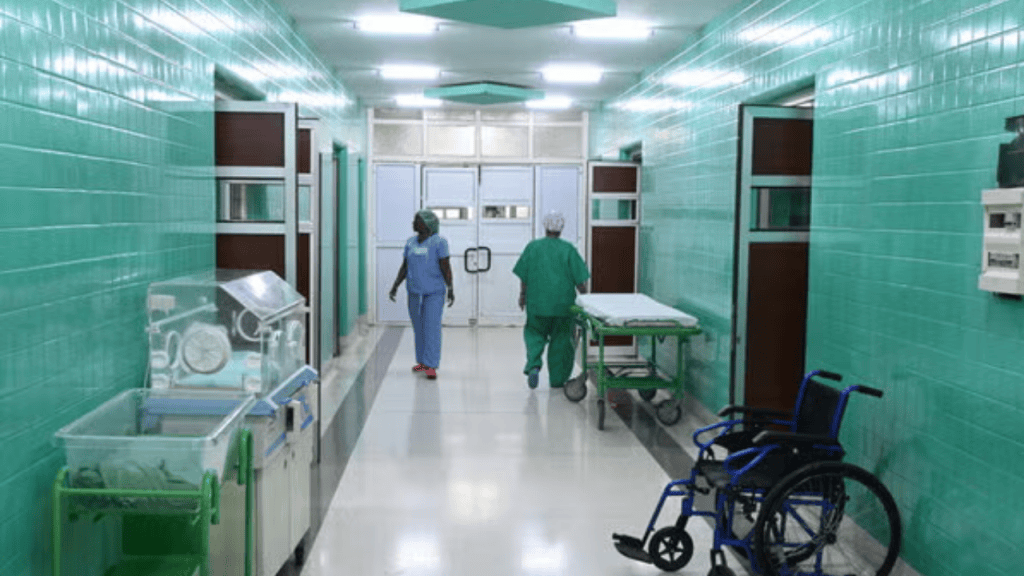
Cardiac surgery is collective labour. Surgeons operate inside teams of anesthesiologists, nurses, perfusionists, technicians and other specialized workers. When those teams are understaffed, surgical capacity collapses regardless of how accomplished the surgeon may be.
Quebec’s cardiologists and cardiovascular surgeons have warned about this crisis for years. CBC reported in October 2025 that only 70 of 92 provincial perfusionist positions were filled. More than 1,300 people were waiting for cardiac surgery, with nearly two-thirds beyond medically acceptable wait times.
The medical associations connected staffing shortages to dangerous delays and patient deaths. Quebec’s Health Ministry disputed assigning a specific number of deaths to the perfusionist shortage alone. That dispute does not erase the shortage, the backlog or the loss of surgical capacity. It only requires reporting the causal limits honestly.
This was the material story. Quebec was losing a rare cardiac surgeon while lacking the workers needed to operate its cardiac programs at full capacity. A government presiding over that failure benefited when the public conversation moved from austerity and institutional breakdown to the conduct of protesters.
The antisemitism-first narrative changed the accused. The healthcare account indicted the state and management of public medicine. The Zionist account indicted anti-Zionists.
The Claim Became More Certain as Its Evidence Weakened
The Combat Antisemitism Movement reported that Moss was leaving “amid rising antisemitism.” It admitted he had declined public comment, then centred anonymous claims that antisemitism was probably the final straw.
Ynet’s headline declared that Moss was leaving Canada “over antisemitism.” The Jewish Chronicle said he had quit Canada over antisemitism. Algemeiner used the same frame. Commentary absorbed the case into a civilizational story about cities losing their Jews.
The evidence did not become stronger as the story travelled. The language became more certain. Anonymous interpretation became direct attribution. Direct attribution became established fact. Established fact became proof of a wider political thesis.
This is narrative laundering. Each outlet inherits the previous outlet’s framing while stripping away another qualification. By the time the event reaches commentary, the original sourcing problem has vanished. The public is left with a symbol: a Jewish surgeon fled Montreal, anti-Zionism forced him out and repression is therefore protection.
No secret coordination is required. These institutions share an ideological purpose. They interpret political events through a framework that identifies Israel with Jewish safety, treats Zionism as the legitimate expression of Jewish identity and casts opposition to Israel as a danger to Jews everywhere.
Antisemitism Was Granted Political Supremacy
The exceptionalism in this coverage was not concern about antisemitism. Every form of racist violence requires opposition. The exceptionalism was the treatment of an antisemitism allegation as an explanation that overruled every competing fact and placed the politics attached to it beyond interrogation.
In this framework, once antisemitism is invoked, questions about sourcing become offensive. Material causes become excuses. The difference between Jewish people and the Israeli state becomes suspicious. Opposition to Zionism becomes evidence of hatred rather than a political position to be assessed on its own terms.
No other allegation should receive that power. Racism must be confronted through evidence, political clarity and solidarity, not turned into a blank cheque for nationalism, censorship or state repression. Anti-Jewish attacks do not make Israel’s conduct defensible. They do not convert Palestinian liberation into bigotry. They do not authorize Zionist institutions to define every opponent as a threat.
Attacks on synagogues, Jewish schools and Jewish people because they are Jewish are antisemitic. Holding Jewish communities responsible for Israel is antisemitic. Opposition to Israeli apartheid, the destruction of Gaza, settler colonialism and Zionism is not.
Zionist politics collapses those categories because the collapse protects the state. Jewish identity, Jewish safety, Israel and Zionism are fused into one object. Criticism of the state can then be recoded as hostility toward a people, and state violence disappears behind the vulnerability of the group in whose name it claims to act.
A Reckless Effigy Did Not Prove the Larger Case
Coverage of Moss’s departure invoked protest imagery involving mock hangings of political effigies, including one reportedly depicting Israeli minister Itamar Ben-Gvir and wearing a kippah. The tactic was reckless. Hanging imagery carries an obvious history of racial terror and made political manipulation predictable.
But recklessness does not erase the identity of the political target. Ben-Gvir is not an abstract Jewish civilian. He is a far-right state minister whose career is built on Jewish supremacy, anti-Palestinian incitement and the coercive power of the Israeli state.
Zionist amplification removed Ben-Gvir and retained the kippah. A protest image aimed at a named Israeli fascist was converted into an image of Jews as Jews under threat. The political official disappeared so that Jewish vulnerability could become the entire meaning.
Condemning the tactic does not require accepting that conversion. Protesters should reject imagery that reproduces histories of racial terror. Media should still report who was represented, why that person was targeted and how advocacy organizations changed the image’s meaning.
The Political Product Was Repression
The simplified Moss story produced a policy lesson. If a leading Jewish surgeon was driven out by an antisemitic climate, then the institutions accused of producing that climate had to be controlled. Palestine encampments, anti-war demonstrations, campus organizations and criticism of Israel could all be presented as components of a public-security threat.
That narrative supports surveillance, protest restrictions, institutional punishment and expanded hate-law enforcement. It turns Jewish safety into the moral language through which the state regulates Palestine solidarity.
The move also protects governments from scrutiny. Quebec’s failure to staff cardiac care becomes secondary. The loss of public expertise becomes a morality play. Workers, patients and the infrastructure of care disappear behind a political accusation aimed at the left.
Moss’s own explanation obstructed that project, so it was subordinated. He named three reasons. The media system kept the one that could discipline political opposition and discarded the reasons that exposed institutional failure.
That was not respect for Moss’s experience. It was the appropriation of his departure for a political campaign already looking for evidence.
Sources
- Aaron Derfel, June 2026 — Montreal Gazette health reporter’s presentation of Moss’s letter and stated reasons for leaving.
- Combat Antisemitism Movement, June 2, 2026 — early amplification of the antisemitism-centred account while acknowledging Moss had declined public comment.
- Algemeiner, June 2, 2026 — international framing of the departure around antisemitism and healthcare inefficiency.
- Ynet, June 2026 — headline presenting antisemitism as the reason for Moss’s departure.
- The Jewish Chronicle, June 3, 2026 — coverage saying Moss quit Canada over antisemitism while also mentioning healthcare problems.
- Commentary, June 2, 2026 — incorporation of Moss’s move into a wider narrative of Jewish flight.
- CBC News, October 2025 — Quebec perfusionist vacancies, cardiac-surgery delays, wait-list figures and the Health Ministry’s response.
- Jewish General Hospital — institutional background on Moss and robotic cardiac surgery.