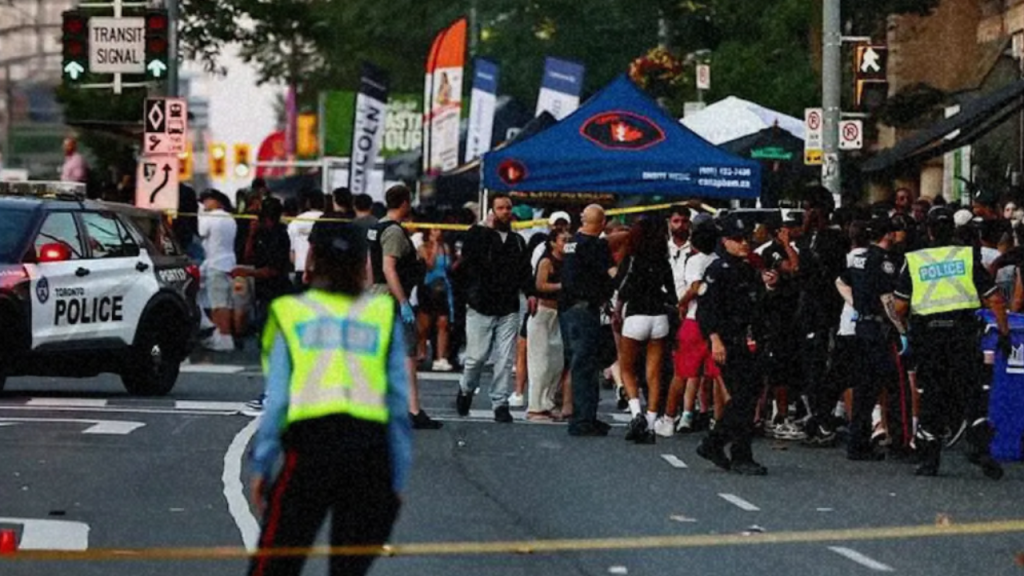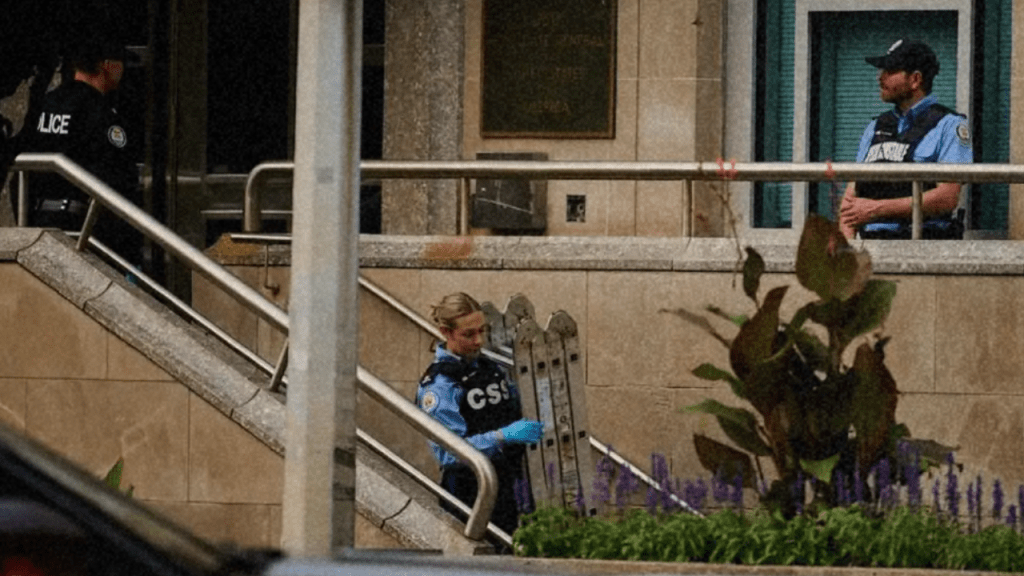
The charges against Const. Parsa Hazeri are horrific on their own. They also sit inside a wider crisis of police power, public trust, and a city that keeps treating police expansion as public safety.
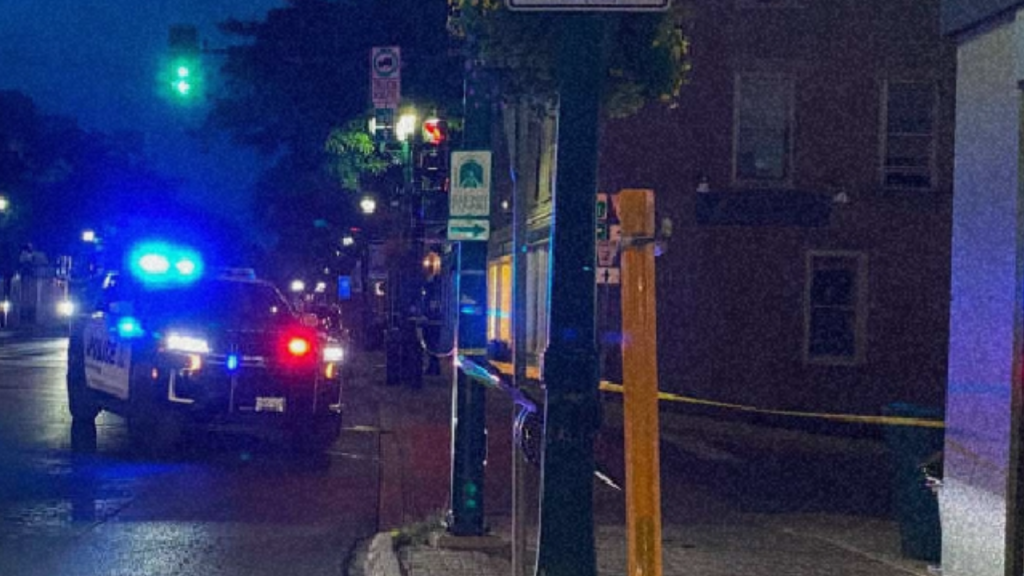
A Toronto police officer now faces multiple criminal charges involving an alleged sexual assault against a female youth. Const. Parsa Hazeri, 27, was charged by Ontario’s Special Investigations Unit after the SIU director found reasonable grounds to believe a Toronto Police Service officer had committed criminal offences against a female youth in Toronto between September and December 2025. The charges include sexual assault, sexual interference, invitation to sexual touching, transmitting sexually explicit material to a person under 16, communicating with a person under 16 for the purpose of facilitating an offence, breach of trust, and careless handling of a firearm. Hazeri was arrested at SIU headquarters, held for a bail hearing, released on conditions, and ordered not to communicate directly or indirectly with the affected person. The SIU said he was required to appear in court on July 17, 2026. The allegations have not been proven in court.
That last sentence matters legally. But it should not become a shield against political clarity. This is not a vague misconduct complaint. It is not a disciplinary dispute over paperwork, procedure, or workplace behaviour. It is a criminal case involving allegations of sexual violence against a young person, child-related sexual offences, breach of trust, and a firearm charge. The facts will be tested in court, but the charge list already tells the public why the case has landed with such force.
The SIU’s involvement also matters. This is not merely a Toronto police internal investigation. The SIU is an independent civilian agency that investigates police conduct involving death, serious injury, sexual assault allegations, and firearm discharge at a person. Its director is required to consider whether a criminal offence was committed and, where grounds exist, cause charges to be laid.
So the immediate story is straightforward. A Toronto police officer has been charged with extremely serious offences involving a female youth. The institutional story is harder to contain. It asks why a city that spends billions on policing keeps finding itself confronted with allegations of sexual violence, breach of trust, corruption, drug offences, firearm offences, and off-duty misconduct involving police officers themselves.
The breach of trust is the hinge
The breach of trust charge is the hinge between the individual case and the institutional crisis.
It is possible to treat the Hazeri case as one accused officer, one complainant, one criminal proceeding, and one future court date. That is how institutions usually prefer these stories to be handled. Isolate the officer. Narrow the timeline. Defer to the courts. Promise not to comment further. Wait for the news cycle to move on.
But breach of trust pushes the story back toward the institution. The public does not give police officers ordinary civilian authority. Officers are armed, trained, protected, credentialed, believed, deferred to, and placed inside systems where their word can shape someone’s freedom, safety, credibility, and access to justice. That public authority does not disappear when an officer leaves the station.
The Toronto Police Association reportedly said the allegations stemmed from off-duty conduct. That may matter procedurally. It may affect internal discipline rules, pay suspension rules, and what Toronto police can do before a conviction. But “off-duty” only describes when something allegedly happened. It does not describe the absence of power.
Police officers carry the social force of the badge even when they are not on a shift. Their credibility follows them. Their training follows them. Their institutional protection follows them. Their access to weapons, networks, and authority follows them. That is why allegations involving sexual harm by police cannot be treated like allegations involving a private individual with no public power.
The SIU did not only charge Hazeri with sexual assault-related offences. It also charged him with breach of trust and careless handling of a firearm. Those charges still have to be proven, but their presence matters because they connect the alleged harm to the authority and responsibilities attached to policing itself.
When police institutions try to frame misconduct as off-duty, isolated, or personal, the public should hear the move clearly. It is an attempt to separate the officer from the institution before the institution has answered the obvious question: did the power of policing make the alleged harm more possible, more hidden, more credible, or harder to report?
This is not happening in a vacuum
Hazeri’s charges arrived after months of scandal around the Toronto Police Service.
In February, seven current Toronto police officers and one retired officer were arrested and charged in Project South, a major organized crime and corruption investigation. According to police officials cited by the Associated Press, officers were accused of unlawfully collecting personal and private information and distributing it to organized crime figures, sometimes for bribes. Officials alleged that organized crime figures then carried out shootings and other violent crimes. Toronto Police Chief Myron Demkiw called it a “painful and unsettling moment” and said that when organized crime penetrates the Toronto Police Service, the harm goes far beyond immediate wrongdoing.
Project South is not just another embarrassing headline. It goes directly to the core powers police possess. Police have access to information ordinary people do not. They can search databases, identify addresses, track personal details, and move through systems built on public trust. When those powers are allegedly sold, leaked, or shared with organized crime, the danger is not abstract. It can become a shooting. It can become an extortion attempt. It can become a murder plot.
That is the nightmare version of police corruption: not merely officers breaking rules, but officers turning the machinery of the state into a tool for criminal networks.
Then came the Spain case. In May, three Toronto police officers were arrested in Barcelona after a sex worker was allegedly hurt and sexually assaulted while they were vacationing. The officers remained suspended with pay under the Community Safety and Policing Act at the time, and Toronto police said they would explore the legal thresholds around suspension without pay. The chair of the Toronto Police Service Board said public confidence required visible leadership and stronger culture and standards inside the service. Mayor Olivia Chow said public trust in policing was fundamental and that the chief had work to do to earn back that trust.
That case exposed the same institutional escape route: off-duty, outside jurisdiction, suspended with pay, wait for process. But again, the public-trust issue remains. These are not allegations against random tourists with no relationship to the city’s public safety apparatus. They involve officers employed by the institution Toronto funds, defends, expands, and places at the centre of safety policy.
Now Hazeri has been charged in a case involving a female youth. One scandal can be dismissed as an exception. Two can be treated as coincidence. But sexual assault allegations, child-related sexual offence charges, organized crime-linked corruption allegations, breach of trust charges, drug trafficking allegations, firearm offences, and paid suspension controversies are not isolated when they keep arriving from the same institution.
The pattern is the story.
The budget contradiction
Toronto’s answer to insecurity remains police expansion.
The city’s 2026 budget notes list the Toronto Police Service operating budget at $1.7043 billion in gross expenditures and $1.4329 billion in net expenditures. That works out to about $4.67 million per day gross, or about $3.93 million per day net. So when people say Toronto spends roughly $4 million a day on police, that is not rhetorical exaggeration. It is basically the city’s own budget divided by 365.
The same budget increases the net operating budget by $93.8 million, or 7 percent, over the 2025 net budget. It also includes $20.5 million for 143 net new uniform officers under the multi-year hiring plan, plus additional hires connected to separations and delayed hiring.
This is the contradiction at the centre of Toronto politics. Every year, policing is sold as the serious, practical, adult answer to fear. More officers. More patrols. More enforcement. More visibility. More money. More trust placed in the same institution.
But more police funding does not prevent police sexual assault allegations. It does not prevent alleged sexual offences against a youth. It does not prevent officers from allegedly leaking confidential information to organized crime. It does not prevent bribery allegations. It does not prevent off-duty sexual assault allegations abroad. It does not prevent breach of trust.
The police budget keeps being defended as a public-safety budget. But the repeated scandals force a more basic question: safety for whom, from whom, and at what cost?
If a young person is allegedly harmed by a police officer, a larger police budget does not answer that harm. If private information is allegedly pulled from police systems and handed to criminal networks, a larger police budget does not answer that harm. If officers accused of serious misconduct can remain suspended with pay because legal thresholds are narrow, a larger police budget does not answer that harm either.
This does not mean every social problem has an easy non-police substitute. It means Toronto’s governing class keeps treating police expansion as the default form of safety even as police themselves repeatedly become the subject of serious safety concerns.
That is not a staffing problem. It is a political choice.
“Off-duty” is doing too much work
The phrase “off-duty” now does enormous public-relations work for police institutions.
It draws a line between the service and the officer. It suggests the accused person was acting outside the machinery of policing. It reassures the public that the institution itself remains intact, even if one of its members allegedly did something terrible.
But off-duty misconduct by police still belongs inside the public conversation about police power. The reason is simple: police officers are not just employees. They are state agents. Their authority is not confined to a desk, a cruiser, or a scheduled shift. They are given extraordinary powers because the public is told they can be trusted with them.
When that trust breaks, the institution cannot simply point to the clock.
The Spain case showed how “off-duty” can collide with accountability. The officers were vacationing, the alleged incident happened outside Canada, and the force confirmed they would be paid while suspended. Project South showed another side of the same problem: the alleged misuse of police access and authority can become dangerous precisely because officers are trusted with tools unavailable to the public. Hazeri’s case now raises the most disturbing version of the question: what does public trust mean when an officer is accused of sexual offences involving a youth?
The answer cannot be limited to “the courts will decide.” Courts decide criminal guilt. They do not automatically decide whether hiring systems failed, whether warning signs were missed, whether internal culture protected officers, whether supervision was adequate, whether discipline is too slow, whether suspension laws are too weak, or whether Toronto’s public-safety model is built around an institution it cannot adequately control.
A criminal trial may answer what Hazeri did or did not do. It will not, by itself, answer what Toronto keeps refusing to confront.
Safety is being misdefined
The strongest argument for defunding police is not that harm is unreal. It is that harm is real, and policing has been falsely sold as the only serious response to it.
Young people are not made safe by slogans about law and order. They are made safe by housing, food, trusted adults, public recreation, survivor-centred services, trauma support, mental health care, crisis response, stable schools, community spaces, and material conditions that reduce vulnerability before harm occurs.
Toronto already has examples of what non-police safety can look like. The Toronto Community Crisis Service provides free, confidential, city-wide, in-person mental health support through mobile crisis worker teams. The city describes it as a non-police-led, community-based, client-focused, trauma-informed response to mental health crisis calls and wellness checks. It also provides referrals, resources, information, and post-crisis follow-up.
The city’s own reporting on crisis response shows that community-based models can take real pressure off policing. From March 2022 to July 2025, the Toronto Community Crisis Service received more than 29,000 calls for service and dispatched mobile crisis teams more than 23,000 times. In 2024, 78 percent of calls transferred to TCCS by 911 were handled with no police involvement.
That does not solve every form of harm. But it proves the political premise: not every crisis requires police, and not every safety investment needs to flow through the police budget.
This is where the budget contradiction becomes impossible to ignore. Toronto can find $1.4329 billion net for police in 2026. It can fund 143 net new uniform officers. It can continue a multi-year hiring plan. But every dollar allocated to police expansion is also a dollar not used to scale the supports that actually prevent harm before it becomes a 911 call.
The question is not whether sexual violence should be taken seriously. It must be. The question is whether the institution receiving the largest share of public-safety legitimacy is actually capable of creating the conditions that prevent violence, especially when some of the most disturbing recent allegations involve police themselves.
Accountability is not enough
There will be demands for accountability in the Hazeri case. There should be.
There should be accountability for the alleged victim. There should be accountability through the courts. There should be scrutiny of Toronto police leadership. There should be questions for the Toronto Police Services Board. There should be pressure on the province over suspension rules, discipline, oversight, and the legal gaps that allow officers accused of serious misconduct to remain paid in some circumstances.
But accountability after harm is not the same as safety before harm.
Toronto has to stop treating each police scandal as a contained episode. A sexual assault allegation here. A corruption file there. A paid suspension controversy somewhere else. An off-duty incident abroad. A breach of trust charge. A firearm charge. A drug allegation. A database misuse allegation. Each one is processed separately, and the institution survives by making the public forget the accumulation.
That accumulation is now the point.
Hazeri’s case will move through court. The allegations remain unproven, and the criminal process matters. But the political question does not have to wait for a verdict. If Toronto spends roughly $4 million a day in net public money on police, continues adding officers, and still faces scandal after scandal involving the people entrusted with public safety, then the crisis is not a lack of policing.
The crisis is the belief that police are the only serious definition of safety.
A city that truly cared about young people would not respond to every fear by strengthening the institution now repeatedly implicated in serious harm. It would put housing, crisis response, youth programming, survivor support, food security, mental health care, and community infrastructure at the centre of safety.
That is what “fund communities” means. It is not a soft alternative to public safety. It is the part of public safety Toronto keeps underfunding while writing larger cheques to police.
The Hazeri charges are horrific on their own. But they also force a larger reckoning. Toronto cannot keep calling police expansion safety while asking the public to absorb one police scandal after another. At some point, the city has to admit that the institution presented as the solution is also part of the danger.
Sources
- Ontario Special Investigations Unit — charges against Const. Parsa Hazeri, alleged offence dates, release conditions and July 17 court date
- CityNews Toronto — Hazeri charges, TPS response, suspension without pay and termination proceedings
- Toronto Police Service — Chief Myron Demkiw’s February 5 remarks on Project South and the seven serving and one retired TPS members charged
- Inspectorate of Policing — province-wide police integrity and anti-corruption inspection launched after Project South
- CityNews Toronto / The Canadian Press — Barcelona allegations involving three off-duty Toronto police officers
- The Canadian Press via CityNews — paid suspensions and Ontario’s review of suspension-without-pay rules after the Spain case
- City of Toronto — final 2026 Toronto Police Service operating budget, World Cup costs and staffing complement
- Toronto Police Service — 2026 budget request increase of $93.8 million, or seven percent
- City of Toronto — Toronto Community Crisis Service call, dispatch and police-diversion figures
- Spark Solidarity — “Toronto Police Scandal Is Structural, Not Three Bad Apples”