
Canada cancelled Francesca Albanese’s meeting after CIJA objected. U.S. sanctions later escalated the campaign to silence her Palestine mandate.
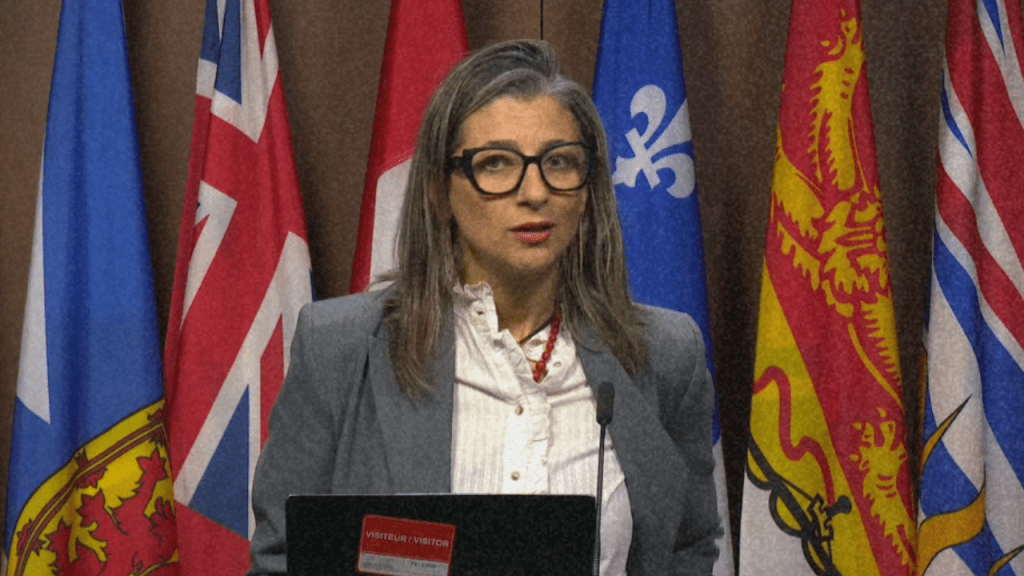
When Francesca Albanese visited Canada in November 2024, the United Nations Special Rapporteur on the occupied Palestinian territories arrived with a mandate to document violations of international law. She spoke on Parliament Hill, met members of Parliament and challenged Canada’s political and financial support for Israel. A scheduled meeting with government ministers was then cancelled with little explanation.
The cancellation was not an administrative accident. Before Albanese arrived, the Centre for Israel and Jewish Affairs had publicly demanded that no Canadian government official meet her. CIJA also called on Foreign Affairs Minister Mélanie Joly and Canada’s UN ambassador Bob Rae to condemn her, urged Ottawa to seek her removal from the United Nations and even demanded that Canada waive her diplomatic immunity.
The government did not publicly adopt every demand. It did, however, deny Albanese the ministerial engagement that had been scheduled. Canada’s Geneva mission also used its official account to label her antisemitic. Ottawa treated a UN human-rights investigator as a political contaminant while Israel’s destruction of Gaza and expansion of violence across the occupied territories continued with Canadian diplomatic cover.
CIJA Targeted Institutional Legitimacy
CIJA describes itself as the advocacy agent of the Jewish Federations of Canada-UIA. Its October 2024 intervention did not merely criticize Albanese’s legal analysis. It demanded that the Canadian state prevent official contact, remove diplomatic protection and press the UN to eliminate her mandate. The objective was institutional exclusion.
That strategy reveals how pro-Israel lobbying shapes the limits of Canadian debate. A critic does not need to refute a report if governments can be persuaded to discredit its author. The state’s refusal to meet the investigator then becomes evidence that she is beyond legitimate discussion. Political pressure creates the stigma, and the stigma is cited to justify further political pressure.
Albanese’s mandate is not a personal platform granted by sympathetic activists. The UN Human Rights Council appointed her in 2022 to investigate and report on human-rights conditions in territory occupied by Israel since 1967. Canadian law professor Michael Lynk held the same mandate from 2016 to 2022 and faced similar campaigns of denunciation. Ottawa knew what the office was and what its independence required.
Canada Rejected the Substance
During her Canadian visit, Albanese submitted evidence to the House of Commons foreign affairs committee. She argued that Canada’s treatment of Palestine as an endlessly deferred negotiation ignored the unequal relationship between an occupying power and an occupied people. She cited the International Court of Justice’s July 2024 advisory opinion that Israel’s continued presence in the occupied Palestinian territory is unlawful.
Her submission also confronted Canada’s material role. Canadian charities had been accused of directing tax-subsidized donations toward organizations supporting Israeli settlements and military activity. Canadian weapons transfers, diplomatic protection and opposition to meaningful sanctions placed Ottawa inside the system sustaining Palestinian dispossession. Meeting Albanese would have forced ministers to answer that record.
The cancellation avoided that confrontation. It allowed the government to substitute accusations about Albanese for an answer to her evidence. This is the recurring function of antisemitism allegations in Canada’s Palestine policy: real antisemitism becomes the pretext for collapsing criticism of Israeli state violence into hatred of Jewish people, shielding a military occupation from political accountability.
The United Church Broke the Silence
The United Church of Canada publicly challenged Ottawa’s decision. Its November 15 statement confirmed that the ministerial meeting had been unexpectedly cancelled and warned Canada against undermining the UN’s human-rights mechanisms. The church called on the government to reconsider and to respect the independence of special rapporteurs.
That intervention exposed the lie that CIJA’s demands represented a unified Canadian moral consensus. Canadian civil-society organizations, Palestinian groups, Jewish anti-occupation organizations and members of Parliament continued to engage Albanese. Eleven MPs from the Canada-Palestine Parliamentary Friendship Group met her during the visit. The federal cabinet’s refusal was a political choice, not an unavoidable response to public concern.
Ottawa chose the pressure of an established lobby over the obligation to hear an international investigator. It did so while presenting Canada as a defender of multilateral institutions and international law. The contradiction disappears only if those principles are understood as instruments Canada applies to official enemies but suspends for Western allies.
Washington Escalated the Campaign
Canada’s cancelled meeting was an early episode in a wider campaign. In April 2025, the Human Rights Council renewed Albanese’s mandate for another three years despite pressure for her removal. In June, she issued a report tracing how corporations profited from and sustained Israel’s occupation and assault on Gaza. The report called for legal accountability extending beyond government officials to the companies enabling dispossession and destruction.
The Trump administration answered in July 2025 by placing Albanese under U.S. sanctions. Secretary of State Marco Rubio accused her of political and economic warfare against the United States and Israel, objecting to her efforts to encourage International Criminal Court scrutiny of officials and companies. The sanctions restricted financial transactions with her and threatened the ordinary infrastructure of her professional and personal life.
The escalation clarified what Canada’s quieter exclusion had already demonstrated. The target was not only Albanese’s speech. It was her capacity to function: to enter official rooms, communicate through institutions, publish findings, receive payment and press legal bodies to act. Canada used cancelled access. Washington used financial coercion. Both punished the exercise of an independent UN mandate.
A Court Exposed the Punishment
In May 2026, a U.S. federal judge temporarily blocked the sanctions. Judge Richard Leon found that Albanese’s legal challenge was likely to succeed because the government had punished her for non-binding speech protected by the First Amendment. The ruling forced Washington to remove her temporarily from its sanctions list.
The State Department immediately insisted that the removal did not represent a policy change. It appealed and said Albanese would be relisted if a higher court reversed or paused the injunction. Even after a judge identified the likely constitutional violation, Washington defended its claimed power to financially isolate a UN expert for advocating accountability.
The legal ruling did not erase what had happened in Canada. It illuminated it. Ottawa’s cancellation and Washington’s sanctions occupied different positions on the same continuum: first deny legitimacy, then deny access, then use state power to make independent scrutiny personally costly.
Canada Chose the Lobby Over the Mandate
Canadian officials could have met Albanese, challenged her conclusions and answered her evidence publicly. Instead, they permitted an advocacy campaign defending Israel to determine which UN investigator deserved official recognition. That choice protected the government from questions about its own complicity while reinforcing the campaign to isolate the person asking them.
Canada’s foreign-policy establishment often claims to support a rules-based international order. Albanese’s treatment demonstrates the condition attached to that promise. International law is welcome when it disciplines designated enemies. When it reaches Israel, Canadian institutions treat the investigator as the problem and the documented violence as background noise.
The cancelled meeting was therefore more than a scheduling decision. It was a demonstration of power. CIJA demanded institutional exclusion, and Canada supplied it. Washington later escalated the same logic into sanctions. The message to every independent investigator was unmistakable: scrutiny of Israel may carry professional, diplomatic and financial punishment, while the governments enabling the violence remain inside the room.
Sources
- Removal From Sanctions List Is Not a Policy Change — Reuters — May 21, 2026. State Department response to the injunction and confirmation of its appeal.
- Judge Blocks U.S. Sanctions Against Albanese — The Guardian — May 13, 2026. Reporting on the injunction and its free-speech basis.
- Torture Has Become State Doctrine — OHCHR — March 23, 2026. Albanese’s continuing work under the UN mandate.
- From Economy of Occupation to Economy of Genocide — OHCHR — June 30, 2025. Albanese’s report on corporate involvement in Israel’s occupation.
- Submission to the Foreign Affairs Committee — House of Commons — November 22, 2024. Albanese’s written submission on Canada’s Palestine policy.
- Canada Must Not Undermine the UN’s Work — United Church of Canada — November 15, 2024. Confirmation and condemnation of the cancelled ministerial meeting.
- CIJA Calls on Canada to Condemn Albanese — CIJA — October 28, 2024. CIJA’s demands that officials refuse meetings and seek Albanese’s removal.
- Francesca Albanese — OHCHR — Official biography and mandate information.

 Spark Solidarity