
Camp Canada was struck while Ottawa denied joining the Iran war. Embedded officers, allied bases and secrecy made that denial possible.
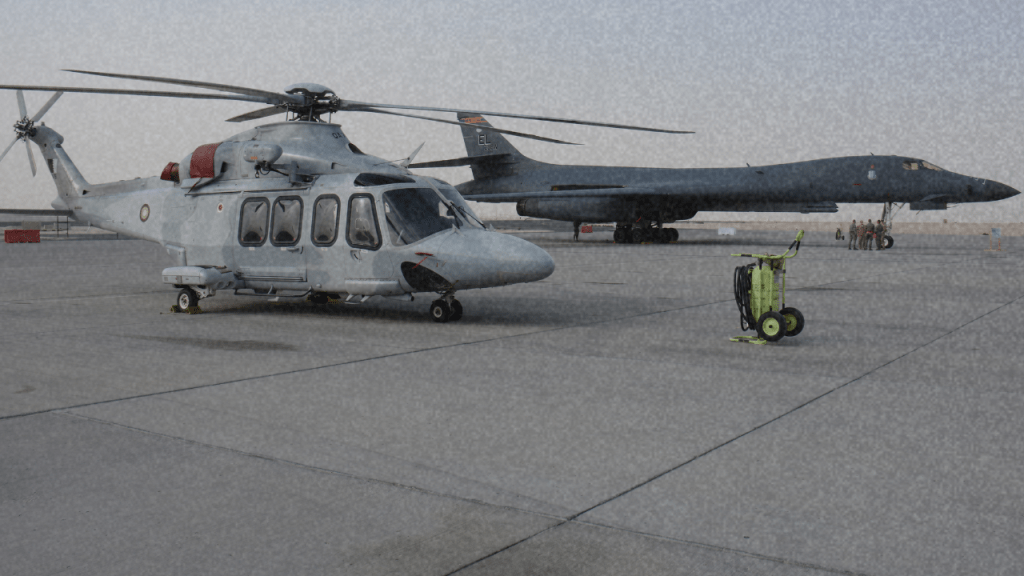
Iranian missiles struck Ali Al Salem Air Base in Kuwait during the opening days of the US-Israeli war on Iran. Inside that American installation was Camp Canada, a Canadian Armed Forces operational support hub. Canadian personnel sheltered in bunkers. They were not injured, but satellite imagery showed damage near the facilities used by Canada.
Ottawa did not tell the public that the base had been hit. The strike emerged through independent reporting and open-source satellite analysis before the Department of National Defence confirmed it. Canadians learned that their troops had come under Iranian fire only after journalists reconstructed an event the government already knew had occurred.
The omission exposed the problem with Canada’s official position. Ministers insisted that Canada had not joined the offensive. Yet Canadian personnel were stationed throughout the regional military infrastructure supporting the United States, and a facility carrying Canada’s name was important enough to be struck during Iran’s retaliation.
Ottawa Disclosed as Little as Possible
Defence Minister David McGuinty initially acknowledged only that “some” Canadian military personnel were in the Middle East and said they were out of harm’s way. His department refused to provide a country-by-country breakdown, citing operational security. Days into a widening regional war, the government would not tell Canadians how many troops were exposed or where they were serving.
Canadian Joint Operations Command later disclosed that approximately 200 Armed Forces members were deployed across six operations in the Middle East. Canada maintained the Kuwait support hub, personnel at Al Udeid Air Base in Qatar and links to US Naval Forces Central Command in Bahrain. These were not diplomatic observation posts. They were nodes inside the military system conducting and sustaining the war.
The government’s disclosures followed pressure rather than policy. First came categorical language about non-participation. Then came acknowledgements of personnel in the region. Then DND said Canadians assigned to American commands had been moved to “other duties” outside the Iran campaign but did not explain what those duties were, when the changes occurred or who ordered them.
Exchange Officers Create Built-In Deniability
Military exchange programs are designed to integrate allied officers into each other’s command structures. Canadian personnel assigned to American headquarters do not simply watch from a visitors’ gallery. They occupy staff positions, share information, participate in planning and perform the work associated with the units receiving them.
Canadian officers had served with the Combined Aerospace Operations Centre at Al Udeid, the regional hub coordinating air operations. Retired Major-General Denis Thompson said that unless Ottawa explicitly prohibited their involvement, it was highly likely exchange officers participated in planning or targeting activity. The assessment reflected how the posting functions, not proof that a named Canadian selected a specific target.
DND denied that Canadian personnel helped prepare or execute the assault. Its “other duties” explanation did not resolve the central questions. If Canadians were reassigned before the campaign, Ottawa could disclose when and under what authority. If they were reassigned after planning began, the timing becomes politically decisive. Refusing the timeline converts an unverifiable assurance into the official record.
Participation Is More Than Pulling a Trigger
Canada’s denial relied on an artificially narrow definition of war participation. A Canadian aircraft did not have to drop a bomb for Canadian institutions to enable the campaign. Intelligence analysis, target development, airspace coordination, communications, logistics, base support and defensive operations all make offensive war possible.
Former foreign affairs minister Lloyd Axworthy argued that Canada could not embed officers in American war-fighting headquarters, connect intelligence to targeting processes and then disclaim responsibility when missiles flew. His point described the material relationship between allies. Integration is valuable because it allows states to fight as a common system. That same integration cannot become invisible when accountability begins.
Camp Canada performed regional logistical work even if no one stationed there approved a target. Al Udeid coordinated air power even if Canadian officers were moved away from Iran-specific files. Gulf defence protected bases and supply routes used by the offensive. Ottawa separated each function linguistically while the military architecture joined them operationally.
Carney’s Position Shifted With the Pressure
Prime Minister Mark Carney initially supported American action to prevent Iran from obtaining a nuclear weapon while criticizing the failure of allied consultation. He then declined to categorically rule out Canadian military involvement. Canada would stand by allies when it “made sense,” he said, even as he described parts of the campaign as likely inconsistent with international law.
The official position hardened only after public opposition grew. Defence officials said Canada would not join the offensive. Carney later promised Canada would “never participate” in it. Foreign Affairs Minister Anita Anand said Ottawa had not been consulted and would not take part in offensive action, while leaving open support for Gulf states and other allied commitments.
This sequence allowed the government to support the war’s stated objective, criticize selected methods, deny offensive participation and preserve defensive cooperation simultaneously. Each statement could be defended in isolation. Together they avoided a direct account of what Canadian personnel and facilities were already doing.
Secrecy Was Part of the Military Structure
The Camp Canada episode was not simply a communications failure. Secrecy protected the political usefulness of allied integration. Exchange postings let Canadian officers serve inside American commands without a separate Canadian deployment announcement. American bases can contain Canadian facilities without appearing as independent Canadian missions. Technical job descriptions conceal the political purpose of the larger operation.
Operational-security claims complete the structure. Ottawa can refuse locations, numbers, duties and timelines while continuing to issue categorical conclusions about non-involvement. The public is asked to trust an answer whose supporting facts have been withheld. When contrary evidence appears, officials can narrow the definition of participation rather than correct the original claim.
The state does not need to fabricate every statement for the overall account to mislead. It can divide one integrated war machine into administrative fragments and describe each fragment as something other than war. Logistics becomes support. Air defence becomes protection. Exchange work becomes another country’s command. The political responsibility disappears between categories.
Withdrawal Is the Test of the Denial
If Canadian personnel are genuinely outside the Iran campaign, Ottawa should be able to provide a dated order defining prohibited work, disclose how compliance is enforced and identify the facilities from which Canadians were withdrawn. It should release a complete account of the Camp Canada strike and explain why the event was not announced.
The clearest demand goes further: remove Canadian personnel from commands and bases enabling the offensive. Withdrawal would end the ambiguity that officials currently present as reassurance. If the government refuses because these postings are essential to alliance obligations, it confirms that the infrastructure is politically consequential.
Canada’s involvement cannot be measured only by whether a Canadian pilot crossed Iranian airspace. Camp Canada was inside the retaliatory battlefield. Canadian officers were embedded in the command system directing regional air power. Ottawa concealed the strike and withheld the timeline needed to test its reassignment story. The government’s denial was not an account of Canada’s place in the war. It was the administrative language that place was designed to survive.
Sources
- Ottawa Says It’s Not Involved in the Iran War — The Walrus — May 6, 2026. Investigation into embedded Canadian personnel, Camp Canada and Ottawa’s denials.
- Canadian Troops Stationed in the Middle East — The Canadian Press — March 5, 2026. Deployment totals, locations and expert assessments of exchange-officer involvement.
- Undisclosed Strike on Canadian-Used Kuwait Base — CBC News — March 2026. Reporting on the concealed strike and government transparency questions.
- Carney Refuses to Rule Out Canadian Participation — Time — March 4, 2026. Carney’s evolving position on allied commitments and the war’s legality.
- Canada Will Not Join Offensive Action — Associated Press — March 2026. Anita Anand’s account of Canada’s position and continuing allied obligations.



 Spark Solidarity