Israel white phosphorus attacks in Lebanon form a documented pattern of airbursts over homes, burned land and repeated danger to civilians.
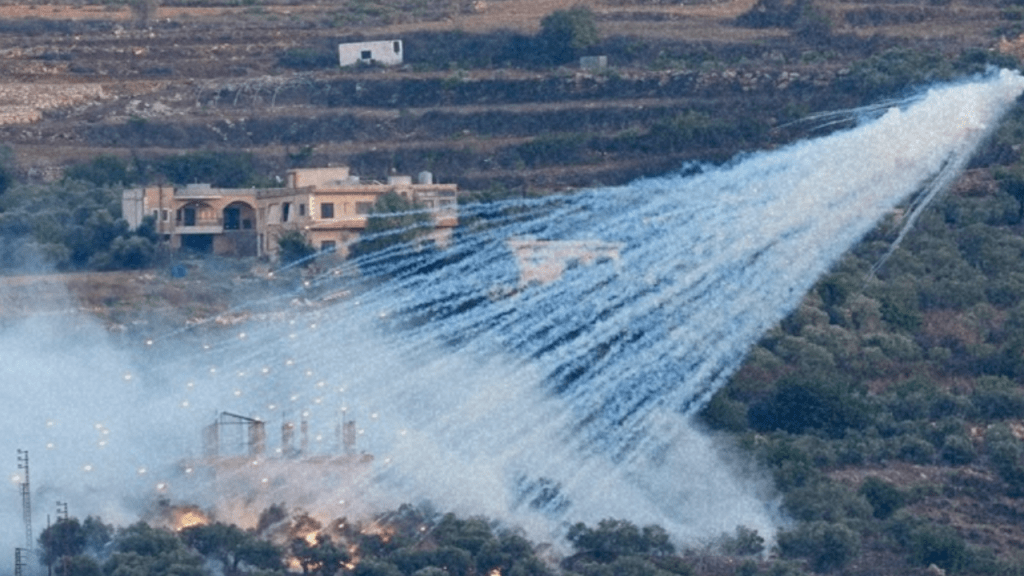
On March 3, 2026, Israeli artillery fired white phosphorus over homes in Yohmor, a town in southern Lebanon. Human Rights Watch verified and geolocated eight images showing airburst munitions above a residential area. Civil defence workers responded to fires in at least two homes and one vehicle. The organization concluded that the deployment was unlawfully indiscriminate.
The Israeli military told Reuters that it could not confirm white phosphorus use from the images presented and repeated its position that its munitions comply with international law. Human Rights Watch did not confirm civilian deaths or injuries from this specific incident. Those limits belong in the record. They do not erase what the imagery established: artillery dispersed burning white phosphorus over homes.
Yohmor was not an isolated allegation. It extended a documented pattern across southern Lebanon from October 2023 into 2026. The method, munition and geography recurred. So did Israel’s defence that phosphorus could be used for concealment, even when the chosen method scattered incendiary material across populated land.
The Pattern Covers Southern Lebanon
In June 2024, Human Rights Watch reported verified Israeli white phosphorus use in at least 17 Lebanese municipalities. Researchers examined more than 100 photographs and videos, identified the munition in 47 of them and geolocated the evidence. Five municipalities experienced airbursts over populated residential areas.
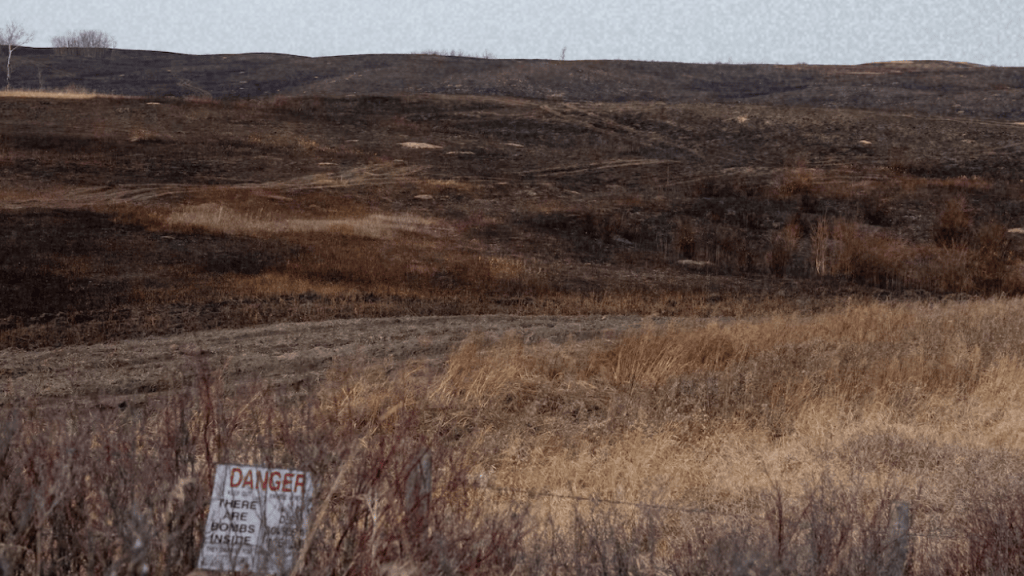
Later research placed the scale even higher. Researcher Ahmad Beydoun documented roughly 250 alleged uses between October 2023 and November 2024, with nearly 40 percent involving residential zones. Reporting in March 2026 described more than 2,000 hectares of forests and farmland burned, with phosphorus residue threatening soil, crops and the livelihoods tied to them.
The count matters because Israeli attacks on southern Lebanon have repeatedly combined immediate civilian danger with long-term pressure on the land. Incendiary contamination, destroyed agriculture, damaged homes and evacuation orders make return harder even after active bombardment slows. The border zone is not emptied by one weapon. White phosphorus operates inside a larger campaign of displacement and territorial control.
Peacekeepers Were Pulled Into the Smoke
The pattern also reached the United Nations Interim Force in Lebanon. On October 13, 2024, two Israeli Merkava tanks broke through the gate of a UNIFIL position at Ramyah and remained inside for about 45 minutes. After they left, rounds exploded approximately 100 metres from the base. Smoke entered the compound, and 15 peacekeepers required treatment for skin irritation and gastrointestinal symptoms.
A confidential report reviewed by the Financial Times identified the smoke as suspected white phosphorus. Photographs showed the breached gate, damaged walls and lingering white smoke. Israel said the tank entered while evacuating injured soldiers and that a smokescreen protected the operation. It denied placing UN personnel in danger.
The incident followed direct Israeli fire on other UNIFIL positions. On October 10, an Israeli tank struck an observation tower at the mission’s Naqoura headquarters and injured two peacekeepers. Italy’s defence minister, Guido Crosetto, said the attacks were neither mistakes nor accidents and could constitute war crimes. UNIFIL remained in place despite Israeli demands that it withdraw.
What the Munition Does
White phosphorus ignites when exposed to oxygen and continues burning until deprived of it. It produces dense smoke that militaries use to obscure troop movement, mark targets or illuminate terrain. Contact can cause deep burns, respiratory damage, organ failure and death. Fragments embedded in flesh may reignite when exposed during treatment.
The M825-series 155mm projectile documented in Lebanon bursts in the air and disperses 116 felt wedges impregnated with white phosphorus. The burning wedges can spread approximately 125 metres from the burst point. The weapon’s wide footprint is why airburst deployment above populated areas cannot be reduced to the claimed purpose of producing smoke.
A smokescreen may be a lawful military objective. The means chosen to create it still must distinguish between military targets and civilians and take feasible precautions against civilian harm. Airbursting dozens of burning wedges over homes produces effects that cannot be confined to a military object. The illegality arises from the indiscriminate method, not from the chemical’s name alone.
Israel Exploits a Legal Loophole
White phosphorus is not prohibited in every military use. It falls under the rules governing incendiary weapons when used for its incendiary effects. Protocol III of the Convention on Certain Conventional Weapons restricts air-delivered incendiary attacks in concentrations of civilians, but its definition contains loopholes for multipurpose munitions with smoke or signalling functions. Israel is not party to Protocol III.
That treaty position does not eliminate the laws of war. Customary international humanitarian law prohibits indiscriminate attacks and requires distinction, proportionality and precautions. A military cannot release a weapon with wide-area incendiary effects over a populated neighbourhood and answer every objection by calling the result concealment.
Israel’s argument turns the munition’s dual purpose into a shield. Because white phosphorus can make smoke, officials present its use as technically lawful. The analysis then stops before reaching location, delivery method and foreseeable effects. Human Rights Watch’s geolocation work restores those facts: the repeated airbursts occurred above populated Lebanese communities.
Israel Had Already Promised Restraint
This record did not begin after October 2023. Israel used white phosphorus extensively in Gaza during Operation Cast Lead in 2008 and 2009, including attacks affecting civilian areas and UN facilities. After litigation and international condemnation, the Israeli military told Human Rights Watch in 2013 that it would stop using white phosphorus in populated areas, apart from narrow exceptions it refused to disclose.
The promise did not create transparent rules, external enforcement or accountability for earlier attacks. It preserved secret exceptions inside a military system investigating itself. A decade later, the same munition appeared over Lebanese towns, while Israeli officials again relied on operational necessity and general assurances of legal compliance.
The Lebanon evidence is stronger than some claims concerning Gaza after October 2023. Rights researchers verified videos showing white phosphorus in Gaza and Lebanon, while Israel categorically denied using the weapon in Gaza. Some Gaza incidents could not be independently confirmed to the same degree. Keeping the records distinct strengthens the case against Israel because it prevents weaker claims from obscuring the extensively geolocated Lebanon pattern.
Impunity Supplies the Next Attack
Israel does not sustain this campaign alone. The United States and other Western governments arm the Israeli military, protect it diplomatically and resist sanctions even after repeated evidence of unlawful attacks. Calls for internal review substitute for consequences. Each documented incident is treated as a fresh controversy rather than another entry in an established record.
That fragmentation is politically useful. Officials debate whether one shell caused one injury while avoiding the accumulated pattern across years and municipalities. The question becomes whether critics can prove every casualty to Israel’s preferred standard, not why a military receiving Western weapons repeatedly airbursts incendiary material over populated land.
Yohmor should not be treated as a mystery detached from what came before. It followed verified deployment in at least 17 municipalities, agricultural destruction, civilian displacement and suspected phosphorus smoke that injured UN peacekeepers. The evidence describes repetition, not accident.
The political conclusion is equally clear. A state that can breach a UN base, burn Lebanese land and return to the same weapon over homes without material penalty has been taught that documentation is survivable. Impunity is not the absence of a response. It is the Western policy that permits the next attack.
Sources
- Israel Used White Phosphorus to Scorch South Lebanon — The Guardian — March 25, 2026. Investigation into the scale, residential concentration and environmental effects of the documented use.
- Lebanon: Israel Unlawfully Using White Phosphorus — Human Rights Watch — March 9, 2026. Verification and geolocation of the Yohmor airbursts.
- Human Rights Watch Says Israel Used White Phosphorus — Reuters — March 10, 2026. Israeli response and evidentiary caveats concerning Yohmor.
- Israel Launched a Dozen Attacks on UN Troops — Financial Times — October 2024. Confidential-report findings on the Ramyah base breach and suspected white phosphorus.
- Israeli Tanks Forcibly Entered UNIFIL Base — The Guardian — October 13, 2024. Account of the Ramyah incident and treatment of 15 peacekeepers.
- UN Inquiry Needed on Israeli Attacks on Peacekeepers — Human Rights Watch — October 11, 2024. Record of direct Israeli attacks on UNIFIL positions.
- Israel’s White Phosphorus Use Risks Civilian Harm — Human Rights Watch — June 5, 2024. Geolocated evidence from 17 Lebanese municipalities.
- Incendiary Weapons — Human Rights Watch — Legal and technical background on white phosphorus and Protocol III.