
Golders Green ambulance fire: four vehicles destroyed, an instant coordinated response, and an Iran attribution with no verified proof. The incentives tell a different story.
What Actually Happened in Golders Green
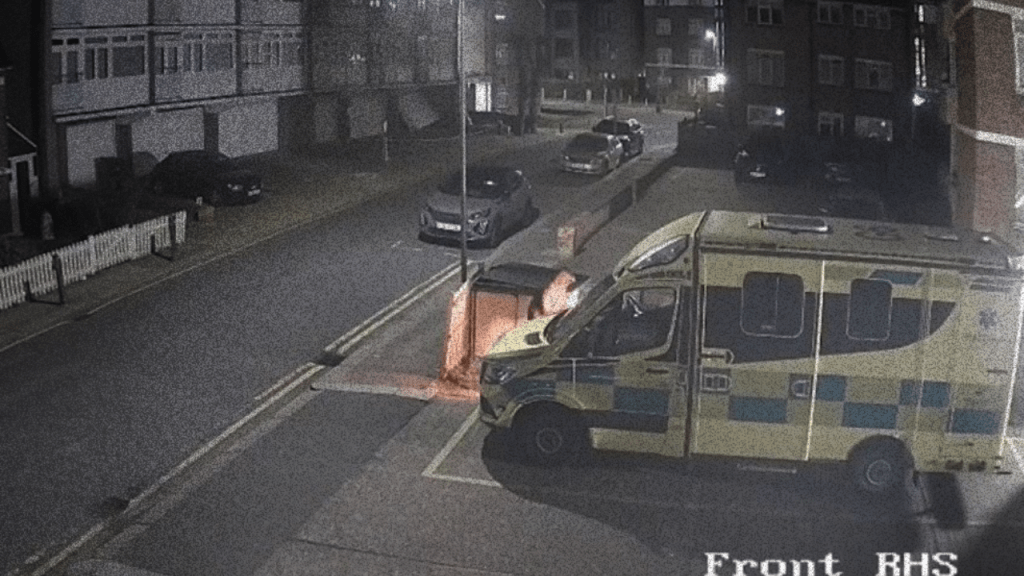
At around 1:45 a.m. on March 23, four ambulances belonging to Hatzola Northwest were set on fire in the car park of Machzike Hadath Synagogue on Highfield Road in Golders Green, north London.
Hatzola is a volunteer emergency medical service operating within the Jewish community, responding to emergencies for Jewish and non-Jewish residents.
Six fire engines and 40 firefighters responded. Multiple oxygen cylinders exploded, shattering windows in an adjacent apartment block and forcing the evacuation of 34 nearby residents. No injuries were reported. The fires were out by 3:06 a.m.
CCTV footage shows three hooded individuals approaching the ambulances, pouring accelerant, igniting the vehicles, and fleeing. Four ambulances were destroyed. Three suspects are being sought. No arrests have been made. That is the full extent of what is confirmed.
The Official Story Arrived Before the Investigation Did
Within hours, the political and media response was fully formed. Prime Minister Keir Starmer called it “a deeply shocking antisemitic arson attack” and met with Jewish community leaders at Downing Street. The Metropolitan Police classified it as an antisemitic hate crime.
Health Secretary Wes Streeting announced government funding for replacement ambulances.
London Mayor Sadiq Khan condemned it and ordered increased police patrols. The Chief Rabbi issued a statement. The Archbishop of Canterbury issued a statement. Israel’s president issued a statement.
Over £500,000 was raised in public fundraising. Counter-terrorism officers were assigned to lead the investigation — though the incident has not been classified as a terrorist incident.
All of this happened on the same morning as the attack, before a single arrest, before any verified identification of suspects, and before any confirmed link to any organization.
The response was not investigative. It was political. The conclusion — antisemitic attack, possible Iranian-linked terrorism — preceded the evidence for it.
A Group With a Two-Day-Old Channel Claims a Three-Week Portfolio
Also within hours, a group calling itself Harakat Ashab al-Yamin al-Islamia posted a video on Telegram claiming responsibility. The group’s Telegram channel was created two days before the Golders Green attack — on Saturday March 21.
Before that it had no verifiable history, no counter-terrorism database entry, no operational track record. Its claim has not been authenticated by police.
Detective Chief Superintendent Luke Williams stated explicitly: “Establishing the authenticity and accuracy of this claim will be a priority for the investigation team, but it is not something we can confirm at this point.”
The same group — or accounts associated with it — has claimed responsibility for a series of incidents targeting European Jewish sites in the weeks since the Iran war began on February 28.
The claimed incidents include an explosion at a synagogue in Liège, Belgium on March 9; an attack on a Jewish site in Athens on March 11; an arson at a synagogue in Rotterdam and an explosive device at a Jewish school in Amsterdam on March 13; and an explosion at a building in Amsterdam on March 15.
None of these claims have been independently verified as the work of this group. None have resulted in confirmed attribution by European law enforcement agencies. What exists is a series of incidents across multiple countries and a series of Telegram posts claiming credit for them — distributed through channels linked to Hezbollah and IRGC-adjacent networks, beginning three weeks into an active war in which Iran is the designated enemy.
A Telegram channel created 48 hours before a high-profile attack, retroactively accumulating a portfolio of unclaimed incidents across five countries, with distribution through established Iranian proxy networks — this is not an established terrorist organization demonstrating operational capacity. It is the anatomy of a narrative construction.
The group exists in official statements and news coverage as the explanation for what happened. It exists in verified fact as a two-day-old channel that claimed something.
The Incentives for a False Flag Are Obvious
The attack occurred in week four of an active U.S.-Israeli military campaign against Iran in which domestic consent is being manufactured in real time.
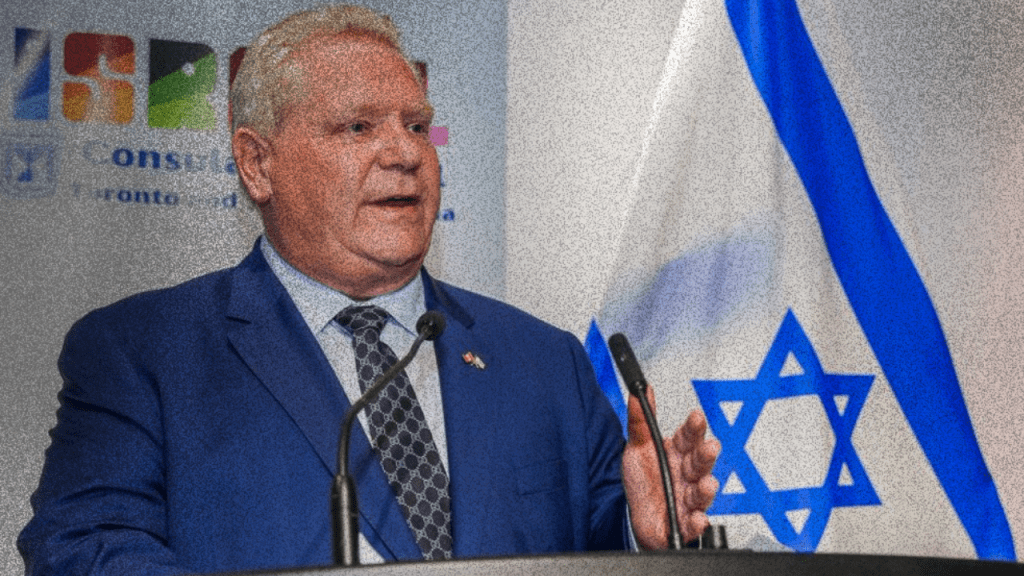
The sleeper cell narrative, the synagogue shootings in Toronto and Montreal, the various similar attacks across Europe, and now Golders Green: a consistent pattern of high-visibility incidents involving Jewish community targets arriving precisely when the political need to associate Iran with a domestic threat is highest.
Each one generates the same cycle — immediate political condemnation, instant attribution, no arrests, investigation ongoing.
Who benefits from four Jewish ambulances burning in London on March 23, 2026? Not Iran — which is fighting for survival under aerial bombardment and has no strategic interest in generating further Western public hostility toward itself at this moment.
Not Palestinians, who have no connection to this attack and gain nothing from it.
The beneficiaries of this incident, as it has been framed, are the governments currently prosecuting a war against Iran and requiring continuous public justification for it.
That is not proof of a false flag. It is the first question any honest analyst asks: who benefits, and who has the operational capacity and political motive to manufacture it.
The Reaction Pattern Itself Is the Story
The Golders Green response followed a script that has become recognizable. Instant high-level political condemnation before facts are established.
A claiming organization that materialized days before the event. Counter-terrorism involvement framed as precautionary while simultaneously lending terrorism-adjacent legitimacy to the narrative. Fundraising campaigns operational within hours.
Coordinated statements from religious leaders, heads of state, and foreign governments arriving in a window so compressed it suggests preparation rather than reaction.
Organic responses to crimes involve confusion, conflicting information, delayed official statements, and gradual consolidation of narrative as facts emerge.
What happened in Golders Green followed the inverse pattern: consolidated narrative first, facts to follow. That inversion is consistent with a managed information event — one where the interpretive frame is established before the public has the information to interrogate it.
It is also consistent with how states and allied networks have historically operationalized false flag incidents to build domestic support for military action.
None of this confirms the attack was staged. What it confirms is that the official account should be treated with the same scrutiny applied to any state-convenient narrative produced during an active war. The attack is real.
The attribution is a claim. The reaction is a political performance that arrived too fast and too coordinated to be purely spontaneous. Those are three separate things. Collapsing them into a single verified story — as most coverage has done — is not journalism. It is amplification.
Sources
- Metropolitan Police — Statement on antisemitic arson attack in Golders Green, March 23, 2026
- CNN — Jewish volunteer ambulances set on fire outside London synagogue, March 23, 2026
- ITV News — PM condemns ‘horrific antisemitic attack’ as four ambulances set on fire, March 23, 2026
- LBC — Terror group linked to Golders Green arson attack, March 23, 2026
- The National — Police investigate Iran link to arson attack on Jewish ambulances, March 23, 2026
- Al Jazeera — UK police investigate Jewish charity ambulance arson as hate crime, March 23, 2026


 Spark Solidarity