
Desjardins remains a cooperative by law. A century of mergers and financial expansion has made meaningful member control harder to exercise.
Desjardins ended 2025 with $510.2 billion in assets and $3.8 billion in surplus earnings. Its operations now include personal and commercial banking, securities, asset management, insurance, trust services, venture capital and access to American markets.
The institution still calls itself a movement. Its local caisses remain cooperatives, members elect directors and each eligible member receives one vote rather than influence proportional to invested capital. Surplus can return through member dividends and community funds instead of being distributed to outside shareholders.
Those features separate Desjardins from RBC or TD. They do not answer how much control an ordinary member exercises over a financial group with hundreds of billions of dollars in assets, specialized subsidiaries and a central federation responsible for strategy, risk and capital.
Desjardins did not abandon cooperation in a single decision. Local institutions were consolidated to survive competition and finance larger operations. Professional managers gained authority because modern finance demanded specialized administration. Each change could be defended as necessary. Together they moved power away from the community scale on which the caisse had been built.
Credit Began as a Collective Problem
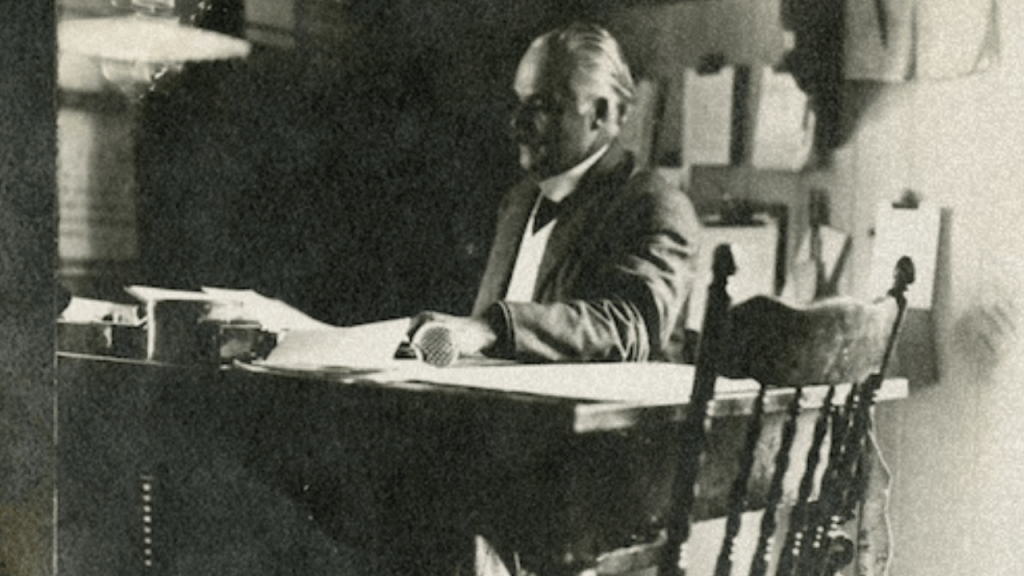
Alphonse and Dorimène Desjardins founded the Caisse populaire de Lévis on December 6, 1900. About 100 people signed its founding social pact and adopted rules for a savings and credit cooperative. It began operations the following month.
The caisse addressed a material problem. Workers, farmers and small producers needed savings and loans, but commercial banks were not structured around their needs. Credit could be unavailable, distant or offered on punitive terms. Individually, borrowers had little power. Collectively, members could pool savings and lend them back into their community.
The model did not abolish interest, money or private enterprise. It changed the ownership and direction of a financial intermediary. Depositors were members rather than raw material for outside shareholders, and local knowledge could influence who received credit.
Its Quebec setting also mattered. Banking power was concentrated in institutions associated with anglophone capital, while many francophone communities lacked institutions able to accumulate and direct their own savings. The caisse became part of a wider network of agricultural cooperatives, mutual societies, parishes and associations through which francophone Quebec built economic capacity.
The original caisse was never outside the social hierarchy of its time. Parish elites and clergy helped organize the movement. Women’s work was essential while formal authority remained heavily male. Local control could reproduce local conservatism as easily as solidarity.
Even with those limits, the caisse established a principle that commercial banking rejects: credit can be governed as shared infrastructure rather than as a commodity controlled by investors.
Success Changed the Scale of Control
A local caisse could understand its members, but it could not independently supply every service, absorb every loss or manage every financial risk. The movement created regional unions, provincial coordination, insurance, centralized liquidity and technical support.
Federation brought real advantages. Caisses could share systems and expertise. Common reserves reduced the danger that one local failure would destroy member savings. A security fund established in 1980 created another collective layer to protect the network’s solvency.
Growth also produced a recurring conflict. The services that helped local caisses survive increased their dependence on institutions above them. Expertise moved toward professional offices. Decisions about technology, products, regulation and capital became less intelligible to members whose democratic power was exercised mainly through local meetings.
This was not simply a takeover by hostile managers. Members and elected directors approved many reforms because fragmented institutions faced rising costs, new regulation and competition from national banks. Consolidation promised efficiency and access to services members increasingly expected.
Democratic approval, however, does not make every outcome equally democratic. Members can vote for a merger that leaves them with less practical influence afterward. A cooperative can use one-member-one-vote while the range of decisions available to those members steadily narrows.
The Merger Became the Governing Method
By the late twentieth century, mergers were reshaping the local network. Neighbouring caisses combined, local identities were gathered into larger territories and administrative functions were centralized. The number of autonomous caisses fell as the scale of each remaining institution grew.
Desjardins describes the decisive restructuring as a response to operating costs and the need for unity. In 2001, the movement replaced its three-tier structure of local caisses, regional federations and a confederation with a two-tier structure joining local caisses to a single Fédération des caisses Desjardins du Québec.
The regional federations had provided an intermediate level between a neighbourhood institution and the provincial centre. Their removal simplified the structure, but it also concentrated coordination, treasury, development, risk and capital functions in one federation.
The modern Fédération describes itself as responsible for orientation, framework, coordination, treasury and development across the group. It acts on Canadian and international financial markets and provides technical, financial and administrative services to member caisses.
Local directors therefore operate inside a framework whose most consequential financial functions are centralized. They can represent members and allocate certain community resources, but they do not independently set the group’s overall market strategy, risk system or capital policy.
The word “local” also changed meaning. A caisse serving a large amalgamated territory may remain legally rooted in a community while replacing several decision-making centres with one board. Digital access can improve as physical service points disappear, but the relationship becomes more remote for members who relied on a nearby counter and familiar staff.
A Cooperative Financial Conglomerate
Desjardins expanded because households and businesses wanted more than savings accounts and small loans. Insurance, mortgages, investment products, business finance and wealth management became part of the group. Acquisitions and subsidiaries extended its reach beyond Quebec.
The result is not merely a large credit union. Desjardins operates a network of specialized financial entities linked through the federation. It raises liquidity, issues securities, manages investment funds and competes for clients who may use its services without participating meaningfully in cooperative life.
Scale protects the organization from pressures that would destroy a small caisse. It also subjects the organization to the standards of large finance: capital ratios, credit ratings, market returns, regulatory compliance, technological investment and growth targets.
Management becomes responsible for translating those demands into strategy. Members remain legal owners, but technical complexity gives executives and specialists an informational advantage. A member can vote for a director without having a practical mechanism to evaluate derivatives exposure, insurance pricing, asset-allocation policy or the labour consequences of automation.
This is how market logic enters without a formal conversion into a shareholder bank. No external investor needs to seize the cooperative. The institution can remain member-owned while its daily priorities are organized around the requirements of competing successfully in financial markets.
What Remains Cooperative
Calling Desjardins identical to a commercial bank would erase real differences. RBC’s voting power follows share ownership, and its profits ultimately belong to investors. A caisse member does not acquire additional votes by becoming wealthy, and the network cannot be purchased through an ordinary stock-market takeover.
Desjardins also distributes money through member dividends, sponsorships, development funds and community programs. Its structure keeps an institutional base in Quebec that would not necessarily survive if control belonged to dispersed shareholders.
The cooperative form therefore still matters. It preserves legal tools that could support a different financial mandate. Members can elect directors, submit proposals and contest institutional priorities. Assets accumulated through generations of cooperation have not been formally privatized.
The problem lies in the distance between ownership and power. Millions of nominal owners do not automatically form an organized governing body. If participation is low, information is concentrated and strategic choices arrive as completed managerial packages, member ownership can become passive legitimacy for decisions made elsewhere.
Community spending presents the same tension. Returning a fraction of surplus to local organizations can produce real benefits. It does not give communities control over the lending, investment and consolidation decisions that generated the surplus.
Capitalism Did Not Need to Defeat the Caisse
The transformation of Desjardins is sometimes told as a fall from moral purity. That story makes the problem appear cultural: executives forgot the founders, members became consumers and cooperation lost its soul.
The pressure was structural before it was moral. A financial cooperative operating inside capitalism must obtain liquidity, price risk, comply with regulation, invest in technology and compete against institutions seeking market share. Refusing every expansion could leave it unable to serve members. Accepting each competitive demand can make it resemble the institutions it was created to replace.
Managers do not need to conspire for managerial power to grow. Centralization presents itself as expertise, safety and efficiency. Members are encouraged to judge the institution through rates, mobile applications and product range rather than their authority over capital.
The cooperative survives, but cooperation is relocated. It becomes a value, brand and distribution rule layered over operations governed by financial competition. The form remains available while the political practice required to animate it weakens.
The Assets Could Still Be Governed Differently
Desjardins is not evidence that cooperative finance must fail. Its continued existence proves that capital can be accumulated without conventional shareholder ownership. The question is who sets the purpose of that capital and through which institutions members can exercise control.
A democratic reorientation would require more than appeals to founding values. Members would need accessible information about lending and investment, stronger authority over strategic priorities, meaningful control before mergers, and institutions capable of organizing participation across territories larger than the original parish.
Workers inside the group would also need power. Member democracy that stops at the customer relationship leaves employees subject to managerial hierarchy. Community control without workplace control reproduces a separation between those who formally own the institution and those who operate it.
Quebec already possesses the accumulated product of more than a century of cooperative savings. That is a material advantage, but accumulated assets do not carry a permanent political direction. They follow the rules, mandates and power relations built around them.
Desjardins became more bank than caisse without ceasing to be a cooperative. That contradiction is precisely why its history matters. The legal shell preserved a possibility that institutional scale made increasingly difficult to use.
Sources
- Our History — Desjardins
- How Cooperatives Work — Desjardins
- Caisse Network and Group Structure — Desjardins
- 2025 Desjardins Group Annual Report — Desjardins
- 2025 Annual Report — Fédération des caisses Desjardins du Québec
- 2025 Annual Report — Desjardins Ontario Credit Union
- Financial Co-operatives in Quebec — Indian Institute of Management Ahmedabad
- Study Argues Desjardins Has Lost Its Co-op Mission — Co-operative News
- Mouvement Desjardins — Canadian Encyclopedia






 Spark Solidarity