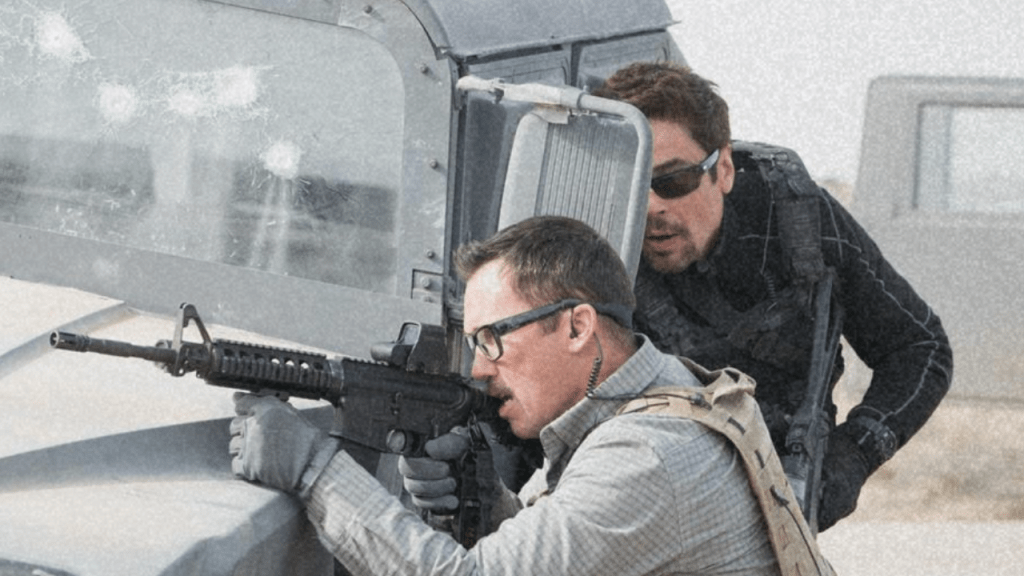
Sicario 2 shows what happens when the explanation for a crisis becomes politically decisive before the evidence has finished arriving.
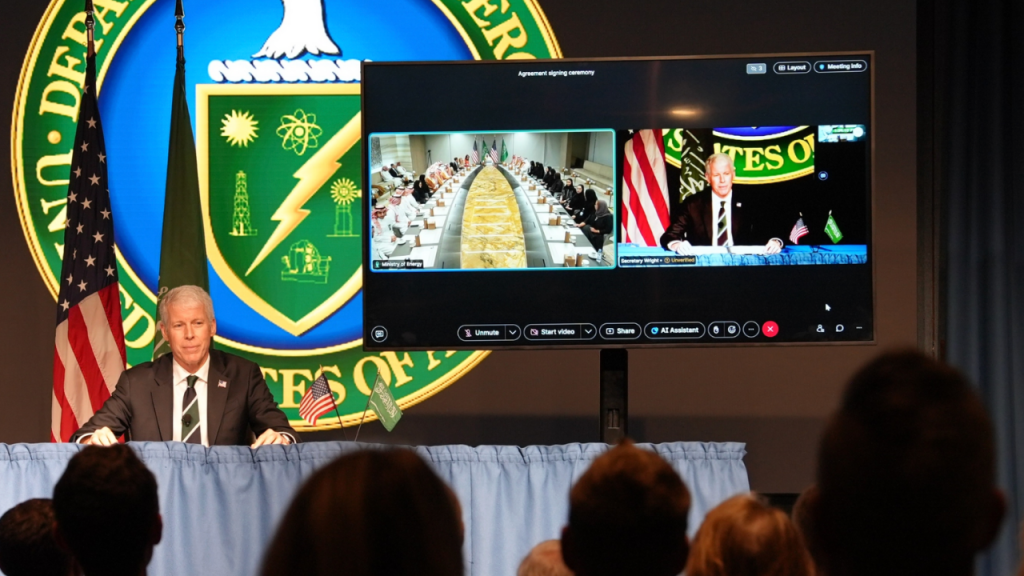
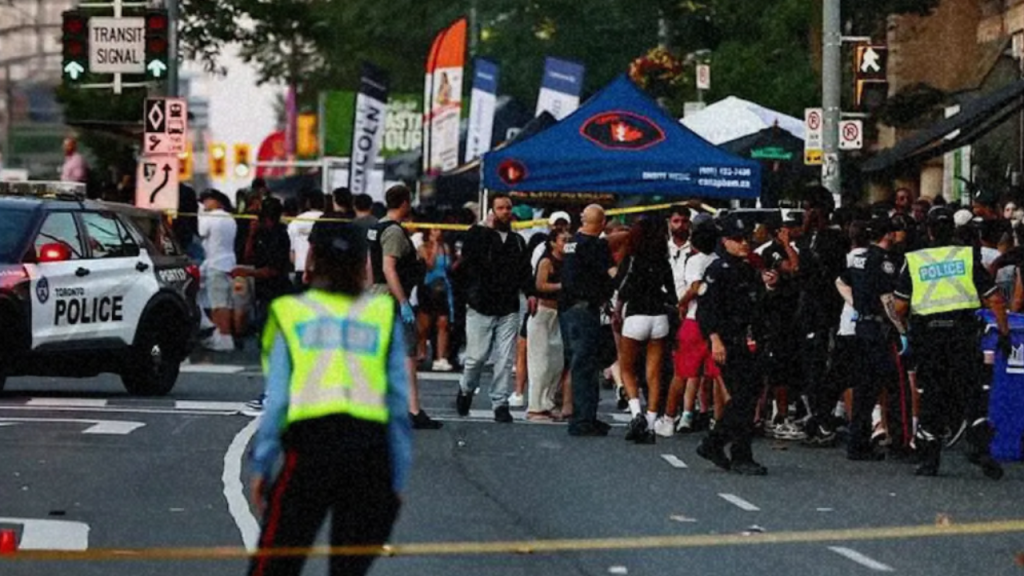
On February 28, the United States and Israel opened a major war against Iran. By the next day, the White House had already supplied the public meaning of the attack. Operation Epic Fury was presented as a necessary campaign against an imminent nuclear threat, Iran’s missile capacity and the wider network of forces Washington describes as terrorist proxies.
The machinery moved faster than the argument could be tested. On March 2, Reuters reported that Trump administration officials had told congressional staff there was no intelligence suggesting Iran had planned to attack U.S. forces first. That did not stop the war, because the war had already begun. One strand of the justification could weaken while the larger military operation continued producing its own facts.
Iran described the assault as aggression and framed its subsequent strikes as retaliation. Washington described the same sequence as necessary force against a threat that had become intolerable. Between those competing narratives sat a familiar political structure: an emergency is defined, an explanation hardens quickly, and state violence begins before the public has any meaningful ability to separate evidence from authorization.
That is why Sicario: Day of the Soldado suddenly feels less like a border thriller from 2018 and more like a diagram. The film’s most revealing move is not the bombing that starts the plot. It is what happens after officials decide what the bombing means.
The War Arrived With Its Explanation
Governments rarely present war as one political option among others. They present it as the consequence of a situation that has already made restraint impossible. The public is asked to begin not with the history that produced the conflict, but with the incident or threat that supposedly forced the state to act.
The opening days of the Iran war followed that structure. The White House did not describe Operation Epic Fury as a discretionary campaign. It described the attack as a necessary exercise of American power against an imminent nuclear threat, ballistic missiles and allied forces that could endanger U.S. interests.
That framing compressed several political questions into one emergency. Was Iran preparing to attack U.S. forces? Was the nuclear threat immediate? What diplomatic alternatives remained? What legal authority permitted a war of this scale? Once the attack had begun, those questions no longer had equal power. Military action had become the starting fact.
The March 2 reporting about the closed congressional briefings mattered because it exposed the gap between the speed of public justification and the slower arrival of evidence. Administration officials had publicly invoked the possibility of an Iranian first strike. Congressional staff were then reportedly told there was no intelligence showing Iran had planned to attack U.S. forces first.
The war did not wait for that contradiction to be resolved. It was already underway.
Sicario 2 Shows the Sequence in Miniature
Sicario: Day of the Soldado begins with a suicide bombing in Kansas City. U.S. officials quickly connect the attack to terrorists supposedly smuggled through Mexico by drug cartels. The attribution does almost all the political work the film needs.
Once the bombing is placed inside a border-terrorism narrative, cartels are no longer treated only as criminal organizations. They become national-security enemies. Matt Graver is authorized to destabilize cartel networks through kidnapping, deception and covert violence because the category of threat has already changed.
The film does not ask the audience to study the history of the drug war, U.S. intervention in Mexico, border militarization or the political economy that made cartel power possible. Those histories are displaced by urgency. The bombing creates the atmosphere in which escalation appears less like a choice than a response.
This is the political function of an authorizing incident. It can narrow the range of acceptable questions before the facts are settled. Instead of asking whether the state should expand its power, the public is asked how much power the emergency now requires.
The Explanation Can Fail After the Violence Begins
The film later reveals that at least two of the Kansas City bombers were domestic. They had not been smuggled across the border by the cartels. The premise that launched the covert operation was wrong.
Nothing returns to the moment before the mistake. By then, the U.S. operation has abducted a cartel leader’s daughter, manufactured conflict between rival organizations, crossed borders, killed people and created a crisis with the Mexican state. The original explanation collapses inside a political reality the explanation already helped create.
That is the part of Sicario 2 worth carrying into the present. Evidence and state action move on different clocks. Governments can act immediately on a claim. Investigations, briefings, corrections and contradictions arrive later.
By the time the first story weakens, the violence it authorized may have become irreversible. People are dead. Military assets are deployed. Retaliation has begun. New enemies have been created. The consequences of the response become the justification for continuing the response.
This does not mean every incorrect claim is knowingly fabricated. It means an explanation can become politically decisive before anyone has proved that it is true.
The Incident Does Not Have to Be Manufactured
States have staged incidents and proposed doing so. Nazi operatives carried out the 1939 Gleiwitz operation and blamed Poland as part of the propaganda surrounding Germany’s invasion. In 1962, U.S. military leaders approved Operation Northwoods proposals that contemplated manufactured or manipulated incidents to create support for military action against Cuba.
Those histories establish something important, but limited. States understand the political value of an event that can authorize escalation. They do not prove that every crisis is staged, and the argument does not depend on pretending they do.
A crisis can be manufactured. It can be misattributed. It can be real and genuinely unexpected. The structural question is what institutions are already prepared to do with it once it happens.
Military plans can exist before the attack. Surveillance systems can exist before the emergency. Legal authorities can be drafted before the public demand for them appears. Political narratives can spend years teaching people which enemy to recognize. The incident then supplies the moment when those existing capacities can be presented as necessity.
That is a more useful way to understand the politics of crisis than reducing every war to a hunt for a secret plot behind the opening event. The state does not need to create every incident to benefit from one.
9/11 Expanded the Machinery Far Beyond the Attack
The post-9/11 security state remains the clearest modern American example. The September 11 attacks were real. Within days, Congress passed the 2001 Authorization for Use of Military Force, creating a legal framework broad enough to support military operations far beyond the immediate battlefield that followed the attacks.
The political consequences extended through war, detention, torture, surveillance, border hardening, intelligence expansion and extraordinary executive power. None of that requires the claim that the attacks themselves were staged. It requires only recognition that a genuine mass-casualty event can be used to reorganize what the public is prepared to accept from the state.
The crucial question is therefore not simply what happened on the day of the incident. It is what institutions were already waiting, what powers became usable afterward, and how long those powers survived the emergency that first justified them.
This is also why the Iran war cannot be understood only through the question of whether one particular threat claim was accurate. The larger machinery of confrontation already existed: sanctions, military deployments, alliance structures, intelligence claims, nuclear ultimatums and decades of political preparation for war. The February 28 attack activated that machinery at scale.
Once activated, the machinery develops interests of its own. Retaliation becomes a reason for further escalation. Regional deployments become a reason they cannot be abandoned. The costs created by war become arguments for finishing the war.
Propaganda Organizes the Order of Events
Zero Dark Thirty works through a related structure. It opens with audio from people trapped during the September 11 attacks, then moves into scenes of coercive interrogation. Trauma comes first. State violence comes second. The order invites the audience to experience torture as an answer before asking whether it was useful, lawful or politically necessary.
Senators Dianne Feinstein, Carl Levin and John McCain publicly challenged the film’s implication that coercive interrogation helped produce the intelligence that led to Osama bin Laden. Their criticism identified the problem at the level of cause and effect. The film did not merely show torture. It placed torture inside a sequence that made brutality appear productive.
This is how propaganda can work without inventing every event. It organizes perception. First comes the wound. Then comes the official explanation. Then comes the exceptional measure. Political history enters after the viewer has already been taught which violence counts as action and which violence counts as response.
The same ordering matters in wartime news. The attack is immediate. The justification is immediate. The contradiction appears later, when the bombing has already begun and the public debate has shifted from whether war should start to how the war should end.
The State’s Advantage Is Speed
The deepest connection between Sicario 2 and the opening days of the Iran war is not that the events are identical. They are not. It is that both reveal the political advantage created when state action moves faster than public verification.
Governments can launch operations in hours. Militaries can strike in minutes. Officials can define an enemy before investigators, legislators or the public have access to the full record. By the time contradictory evidence appears, the response may already have created a new set of dangers that seem to require more response.
This is how an incident becomes the point even when no one secretly manufactured it. The crisis supplies the opening. The explanation turns the opening into permission. The machinery creates facts faster than the explanation can be challenged.
On March 2, the reported absence of intelligence showing that Iran planned to attack U.S. forces first did not return the region to February 27. The war had already begun. Iran was already retaliating. U.S. and Israeli forces were already striking targets. The political consequences of the first explanation had moved beyond the explanation itself.
Sicario 2 understood that mechanism better than it seemed to understand its own politics. The first story does not have to remain true forever. It only has to remain true long enough for the state to act.
Sources
- Pentagon tells Congress no sign that Iran was going to attack U.S. first, Reuters via The Japan Times, March 2, 2026.
- Peace Through Strength: President Trump Launches Operation Epic Fury to Crush Iranian Regime, End Nuclear Threat, The White House, March 1, 2026.
- Iran sees no limits in defending itself after Leader’s assassination: FM, PressTV, March 1, 2026.
- Sicario: Day of the Soldado, Sony Pictures, 2018.
- Gleiwitz incident, Encyclopaedia Britannica.
- Operation Northwoods, National Security Archive.
- Authorization for Use of Military Force, Congress.gov, Public Law 107-40, September 18, 2001.
- Three Senators and Zero Dark Thirty, The New Yorker, December 2012.