Canada says its military can screen extremists abroad while struggling to identify white supremacists trained inside its own ranks.
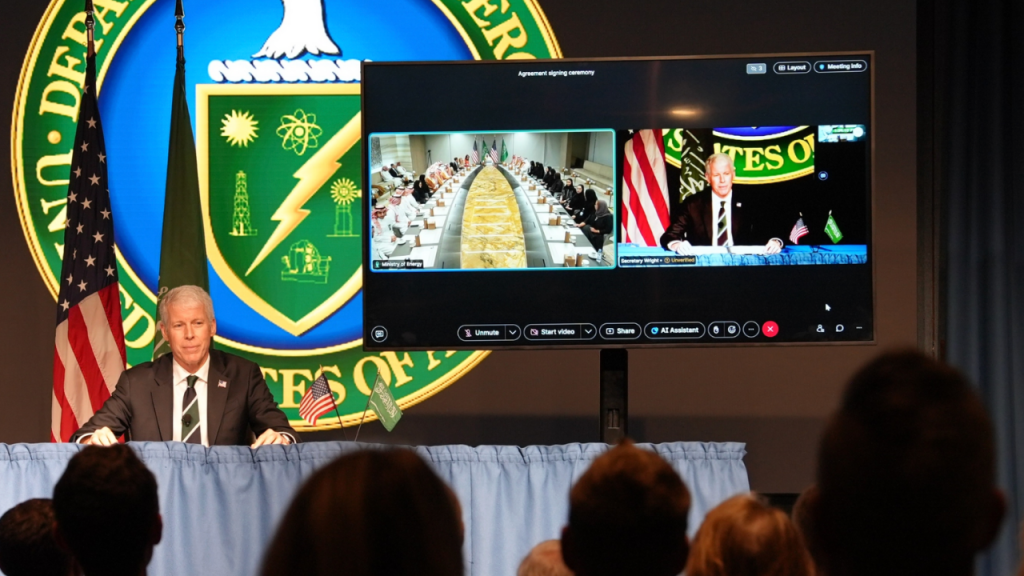
On March 3, 2026, National Defence repeated that it was taking “deliberate and coordinated action” to eliminate extremism and hateful conduct from the Canadian Armed Forces. The language described an institution moving with purpose.
The military’s own reviews describe something else: fragmented investigations, limited counter-intelligence authority and extremists who learned how to conceal their activity. Records from Canada’s Ukraine training mission reveal a parallel failure. Officials promised not to train far-right formations while relying on a screening system that repeatedly failed to identify the people moving through it.
These records do not establish a direct pipeline connecting Canadian accelerationists to Ukraine’s Azov movement. They show the same institutional weakness operating in two settings. The military treated extremism as an exception to be removed while preserving the structures that made detection inconvenient.
The Military’s Review Body Called It an Active Threat
The National Security and Intelligence Review Agency examined how the Canadian Forces National Counter-Intelligence Unit handled right-wing extremism. Its 2020 annual report, released in 2021, did not describe white supremacy as a reputational problem.
NSIRA found that white supremacy and ideologically motivated violent extremism posed an active counter-intelligence threat to National Defence and the Canadian Armed Forces. It also found that the counter-intelligence unit’s authority to identify that threat proactively was limited.
The report explained why military institutions attract organized fascists. White-supremacist groups seek people with military experience, while some encourage supporters to enlist so they can acquire specialized training, tactics and access to equipment.
This is not infiltration as metaphor. Military service can convert political commitment into usable operational capacity.
The System Could Count Cases Without Controlling Them
A 2021 military briefing identified 143 cases of racist or hateful conduct reported since the fall of 2020. Seventy were considered serious enough for police investigation. The figure reflected only conduct that had been reported and entered the system.
The Minister of National Defence’s Advisory Panel on Systemic Racism and Discrimination found that existing efforts were siloed and inefficient. Different bodies collected information under different mandates. Extremists adapted their language and conduct to avoid rules written around visible symbols and explicit declarations.
The panel called for stronger screening, data collection, education and accountability. It also located the problem inside the institution’s hierarchy. Military command concentrates authority, controls careers and teaches conformity. When leadership treats racism as misconduct by isolated members, the organization can remove individuals without examining what units tolerate, reward or fail to report.
National Defence responded with new directives, investigative capacity and tracking systems. Four years later, its March 2026 briefing still listed eliminating hateful conduct as continuing work rather than a completed institutional repair.
Patrik Mathews Took Military Training Into The Base
Patrik Mathews served as a combat engineer in the Canadian Army Reserve in Manitoba. Journalists identified him in 2019 as a member of The Base, a neo-Nazi accelerationist organization seeking social collapse and a white ethno-state.
Mathews disappeared after the reporting and illegally crossed into the United States. Other members sheltered him. He attended paramilitary training, handled firearms and recorded racist and antisemitic statements about killing people to advance the movement.
A United States federal judge sentenced Mathews and Brian Lemley to nine years in prison in October 2021. The court found that their offences were committed to promote terrorism.
Mathews illustrates the threat NSIRA described. He did not infiltrate the military after publicly announcing a neo-Nazi identity. He acquired legitimate military training and carried that capacity into an organization preparing for political violence.
The Convoy Exposed a Wider Personnel Problem
The 2022 convoy occupation did not become a neo-Nazi military operation. It did provide another view of personnel moving between security institutions and far-right political networks.
At least seven serving Canadian Forces members were investigated for publicly supporting the protests. Three members of Canadian Special Operations Forces Command faced investigation, including two serving members of Joint Task Force 2. Former military and police personnel also held organizing, logistics and security roles inside the convoy.
At Coutts, Alberta, police seized weapons and body armour bearing patches associated with Diagolon, the network built around former soldier Jeremy MacKenzie. Four men were charged with conspiracy to murder RCMP officers. The presence of Diagolon material did not make every convoy participant part of that network, but it showed that accelerationist politics had reached an armed faction inside the broader mobilization.
The military investigated individual members after their support became public. Its own review bodies had already warned that waiting for visible conduct was inadequate.
Canada Promised Azov Would Be Excluded
Canada launched Operation UNIFIER in 2015 to train Ukrainian security forces. The government publicly stated that Canadian soldiers would not train or support the Azov Regiment, which emerged from Ukraine’s far right and incorporated neo-Nazi symbols and personnel.
Ukraine is not a Nazi state. It has a competitive political system in which the electoral far right has remained weak. Russia’s invasion was an imperial war, and Vladimir Putin’s claim to be “denazifying” Ukraine was propaganda used to justify conquest.
None of that dissolves the documented far-right networks inside particular Ukrainian formations. Supporting Ukraine against invasion did not relieve Canada of responsibility for determining who received Canadian training.
Canadian Officials Met the Unit They Said They Would Avoid
In 2018, Canadian military officers and diplomats met representatives of Azov. The unit briefed the delegation and later published photographs of the encounter. Canadian personnel did not provide training during the meeting.
Access-to-information records obtained by the Ottawa Citizen showed that Joint Task Force Ukraine had produced a briefing roughly one year earlier acknowledging Azov’s links to Nazi ideology. After the meeting, Canadian officials worried about the photographs becoming public and being used for propaganda.
The episode revealed a gap between formal policy and operational behaviour. Canada could prohibit support for Azov while its personnel still treated engagement with the formation as part of managing relations with Ukrainian security institutions.
The danger was not only what Canadian trainers taught. Photographs with NATO personnel offered political legitimacy to a formation seeking recognition and cooperation.
The Training System Relied on Ukraine to Vet Trainees
A 2021 George Washington University report documented members of Centuria, a far-right organization active at Ukraine’s principal military academy, boasting about access to Western military training. Centuria promoted white nationalism, praised Waffen-SS figures and described a strategy of gaining influence inside Ukraine’s armed forces.
Subsequent Canadian reporting identified photographs and social-media posts indicating that people associated with Centuria and Azov had participated in training environments connected to Operation UNIFIER. National Defence maintained that it had never knowingly trained Azov or affiliated organizations.
The qualification carried the problem. Canada did not control recruitment into Ukrainian units and relied substantially on Ukraine to vet participants. Canadian instructors were told to remove trainees when they suspected racist views or far-right affiliations, but they were operating after selection had already occurred.
National Defence later questioned elements of the Centuria reporting and cited Ukrainian claims that photographs had been manipulated. When pressed by The Maple, the military could not identify which images were allegedly altered. Internal Canadian records had earlier described the report as credible enough to require a communications response and enhanced extremism briefings for deployed personnel.
Two Files, One Method of Avoidance
Domestic counter-intelligence and foreign military training are not one continuous operation. The legal authorities, personnel and political purposes differ. There is no evidence that Canadian white supremacists were sent through Operation UNIFIER to connect with Azov.
The institutional method is shared. At home, the military waited for hateful conduct to become visible, divided responsibility among separate bodies and treated extremists as isolated personnel failures. In Ukraine, it announced an exclusion policy while outsourcing much of the screening and responding to documented gaps as threats to the mission’s reputation.
Both approaches allowed the military to preserve its primary functions. Recruitment and retention continued at home. NATO training continued abroad. Extremism was defined as something contrary to military values but not as a condition requiring either institution to slow its operations until screening could be trusted.
By March 2026, National Defence was still promising coordinated action. Coordination begins with admitting that a policy of removing extremists after detection cannot succeed when detection remains the part the institution does not control.
Sources
- “National Security and Intelligence Review Agency Annual Report 2020” — NSIRA
- “Minister of National Defence Advisory Panel on Systemic Racism and Discrimination” — National Defence
- “Two Members of The Base Sentenced to Nine Years” — United States Department of Justice
- “Three Canadian special forces members under investigation” — Reuters
- “Far-Right Group Made Its Home in Ukraine’s Major Western Military Training Hub” — Institute for European, Russian and Eurasian Studies
- “Canadian Military Makes Unsubstantiated Claim About Report Exposing Training” — The Maple
- “NATO Directorate Warned Azov Remained ‘Fanatics’” — The Maple
- “Senior Associate Deputy Minister Transition Materials” — National Defence, March 3, 2026