
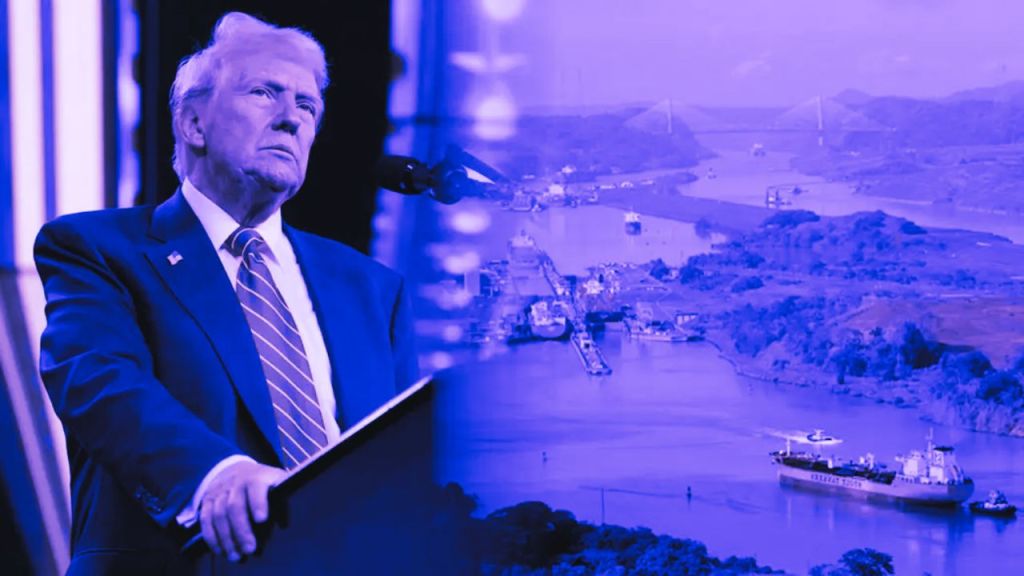
China never controlled the Panama Canal. What happened in 2025 was not about Chinese ports — it was the US reasserting what Panama fought to end.
The United States lost the Panama Canal twice. Once in 1977, when the Torrijos-Carter Treaties established a timeline for Panamanian sovereignty. Again in 1999, when the transfer completed and Panama began operating the waterway. The second loss has never been fully accepted. The current crisis is not about Chinese ports or canal fees. It is about a state that has not reconciled itself to the legal and political outcome of Panama’s independence movement — and has found in China’s economic presence a rationale for reasserting what it surrendered.
That reassertion is now moving through institutional channels. In February 2025, Secretary of State Marco Rubio visited Panama City and told President José Raúl Mulino that China’s presence in the canal zone was “unacceptable” and that absent “immediate changes,” the US would take “measures necessary.” Within days, Panama announced it would not renew its membership in China’s Belt and Road Initiative — the first Latin American country to exit the program it had joined first, and the first to be coerced out of it. By March, a BlackRock-led consortium had reached an in-principle agreement to purchase Hutchison Ports’ two Panama terminal operations for $22.8 billion, transferring the concessions from Hong Kong to American capital. Trump announced to Congress that same evening: “My administration will be reclaiming the Panama Canal.”
Panama’s president responded directly: “President Trump is lying. The canal is Panamanian and will continue to be Panamanian.”
That exchange is the structural argument. The US claims reclamation of something Panama owns. Panama rejects the premise. The question is not whether Chinese port management constitutes “control” of the canal — it does not, and has not. The canal has operated under Panamanian jurisdiction since 1999. The question is what function the claim of Chinese control serves: it provides the legal and ideological scaffolding for a US reassertion of Monroe Doctrine authority over Panamanian economic and political sovereignty.
What China Actually Had
Hutchison Ports, a subsidiary of the Hong Kong conglomerate CK Hutchison, held concessions to operate the ports of Balboa and Cristóbal at either end of the canal — a contract signed in 1997 and extended in 2021. Port operations and canal operations are distinct. The Panama Canal Authority, a Panamanian state body, controls the locks, the waterway, and the toll structure. CK Hutchison had never managed a lock, set a toll, or exercised any operational authority over the canal itself.
CK Hutchison is not a Chinese state company. It is the flagship holding of Hong Kong billionaire Li Ka-shing, a commercial conglomerate with port operations across 23 countries. When the BlackRock deal was announced, CK Hutchison’s shares rose more than 20% in Hong Kong — the reaction of a company that received a premium valuation on assets it was pressured to divest. Beijing’s response was not celebration but condemnation: China’s market regulator announced antitrust review of the deal and Chinese state media criticized it as a capitulation to US coercion.
The canal infrastructure narrative has further complications. Chinese firm ZPMC supplied ship-to-shore cranes used across multiple Panama terminals — including ones now under US management. Chinese state construction firms remain contracted for the fourth bridge over the canal. Huawei and ZTE donated 300 security cameras to the cancelled Colón Container Terminal project. None of this constitutes operational control of the canal, but it illustrates what “Chinese presence” actually means at this scale: commercial and infrastructure relationships that developed through normal procurement and investment processes, now being re-examined through a security lens that applies only to China.
The tolls Trump complained about are set by the Panama Canal Authority based on vessel size, water levels, and demand. There is no evidence that China played any role in toll increases. Rubio nevertheless claimed that US vessels should transit without charge — a position Panama rejected publicly and Rubio was forced to walk back.
The Structural Function of the Framing
The Chinese control narrative does specific political work. It reframes a demand for extraterritorial US authority — over tolls, over concession contracts, over Panama’s trade relationships — as a defensive response to a security threat. Without that framing, the US position is nakedly what Panama’s population recognizes it as: a reversion to the conditions the canal sovereignty struggle was fought to end.
The 1977 Torrijos-Carter Treaties were not a gift. They were the outcome of decades of Panamanian struggle against US occupation of the Canal Zone — a zone the US held under a 1903 treaty that gave it rights “in perpetuity” over Panamanian territory, signed fifteen days after US-backed Panamanian independence from Colombia. The January 1964 uprising, when Panamanian students attempted to raise their flag in the Zone and were met with US military force that killed at least 21 people, is the central reference point in Panamanian collective memory. SUNTRACS, the country’s largest construction union, framed Trump’s 2025 demands in exactly those terms: “Trump tries to erase with a single whim what was conquered with the lives of patriots.”
The framing also launders what is happening in the present. By April 2025, Mulino had signed a memorandum of understanding with Defense Secretary Pete Hegseth formalizing the return of US troops to Panamanian soil and granting the US military the right to restore three former bases — Fort Sherman, Howard Air Base, and Rodman Harbor. Panamanian labor and social movements have described the memorandum as a violation of the 1977 neutrality treaty and the greatest rollback of sovereignty since the canal handover. Mass strikes over the memorandum, a copper mine reopening, and social security privatization brought hundreds of thousands into the streets through mid-2025. Over three hundred protesters face judicial charges.
None of this appears in coverage that treats the Panama Canal story as one of Trump’s hyperbole about Chinese ports.
What the BlackRock Deal Is
The transfer of Hutchison’s concessions to a BlackRock-led consortium is a substitution of one form of foreign capital for another — with the explicit endorsement and orchestration of a foreign government. The US State Department and BlackRock CEO Larry Fink coordinated directly: Fink called Trump to pitch the deal before going forward. The deal was announced in principle on March 4, 2025. Trump claimed credit in a congressional address the same night. Panama’s president said Trump was lying.
The deal is also unresolved. Beijing applied pressure for Chinese state shipping giant Cosco to receive a majority stake in the consortium. As of early 2026, BlackRock and MSC were considering walking away if Cosco’s demands held. The outcome hinges, according to people familiar with the talks, on whether US-China relations improve in 2026. A transaction framed as removing Chinese influence from Panama has become a negotiation between US and Chinese capital over who controls what.
Panama — whose government must approve any change to the port concessions — has been structurally sidelined in a transaction about its own infrastructure.
The Consistent Mechanism
Rubio’s first international trip as Secretary of State went to Panama, El Salvador, Guatemala, Costa Rica, and the Dominican Republic — and he used it to tell each government what relationships with China were acceptable. The Monroe Doctrine, formalized in 1823, asserted that the Western Hemisphere was a US sphere of influence in which European powers had no right to interfere. What is being reasserted now is that doctrine updated for a multipolar world: Latin American states may not make economic decisions — investment relationships, infrastructure contracts, development partnerships — that Washington has not approved.
The canal is the most legible site for this reassertion because it has maximum symbolic weight in US political culture. But Jacobin’s reporting on Panamanian social movements documents a government that has also agreed to close the Darién Gap for US migration enforcement, accepted US military basing rights, and suppressed popular resistance to those concessions through prosecution and force. The canal framing — Chinese threat, US protection — provides the rationale. The substance is the reassertion of client-state relationships that Panama’s sovereignty struggle had partially dismantled.
The Panamanian people have not accepted this. The SUNTRACS construction union, which shut down Panama City streets during Rubio’s visit, has not accepted this. The hundreds of thousands in the streets through mid-2025 have not accepted this. The canal is Panamanian. The demand to treat it otherwise is not driven by concern for Chinese port management — it is driven by the same logic that ran the Canal Zone for eighty-five years before the Torrijos-Carter Treaties forced its end.
For more on China’s role in the emerging multipolar order, read China’s 2050 roadmap and what it means for global power.
Sources
- Al Jazeera — “China blasts US as Panama quits Belt and Road Initiative” (February 7, 2025): https://www.aljazeera.com/news/2025/2/7/china-blasts-us-as-panama-quits-belt-and-road-initiative
- CBS News — “BlackRock reaches deal to buy Panama Canal ports” (March 4, 2025): https://www.cbsnews.com/news/blackrock-panama-canal-deal-ck-hutchison-trump/
- Bloomberg — “CK Hutchison sells Panama ports to BlackRock amid Trump pressure” (March 4, 2025): https://www.bloomberg.com/news/articles/2025-03-04/ck-hutchison-sells-panama-ports-to-blackrock-amid-trump-pressure
- CNBC — “CK Hutchison won’t sign deal to sell Panama ports to BlackRock-led group” (March 29, 2025): https://www.cnbc.com/2025/03/29/ck-hutchison-wont-sign-deal-to-sell-panama-ports-to-blackrock-led-group.html
- The Conversation — “US pressure has forced Panama to quit China’s Belt and Road Initiative” (February 7, 2025): https://theconversation.com/us-pressure-has-forced-panama-to-quit-chinas-belt-and-road-initiative-it-could-set-the-pattern-for-further-superpower-clashes-249093
- MercoPress — “Panama drops the Chinese Belt and Road Initiative but also rejects free transit of US vessels” (February 7, 2025): https://en.mercopress.com/2025/02/07/panama-drops-the-chinese-belt-and-road-initiative-but-also-rejects-free-transit-of-us-vessels-through-the-canal
- People’s Dispatch — “Panamanian movements vow to resist Trump’s threats to their sovereignty” (January 20, 2025): https://peoplesdispatch.org/2025/01/20/panamanian-movements-vow-to-resist-trumps-threats-to-their-sovereignty/
- People’s Dispatch — “Back to the colony: Panama is losing its sovereignty with the return of US troops” (September 17, 2025): https://peoplesdispatch.org/2025/09/17/back-to-the-colony-panama-is-losing-its-sovereignty-with-the-return-of-us-troops/
- Jacobin — “In Panama, Authorities Are Cracking Down on Mass Strikes” (June 22, 2025): https://jacobin.com/2025/06/panama-mass-strikes-privatization-labor/
- Jacobin — “The Panamanian Right’s Dirty Alliance” (July 29, 2025): https://jacobin.com/2025/07/panama-mulino-us-canada-protests
- Democracy Now! — “Panama Accepts Anti-Migrant Collaboration After Trump Threatens to Retake Canal” (February 4, 2025): https://www.democracynow.org/2025/2/4/trump_panama
- Seafood Source — “BlackRock to purchase Panama Canal ports in $22 billion deal” (March 2025): https://www.seafoodsource.com/news/supply-trade/blackrock-to-purchase-panama-canal-ports-in-usd-22-billion-deal
- Newsroom Panama — “Panama Canal Ports Deal at Risk after China’s Cosco Demands Majority Stake” (December 25, 2025): https://newsroompanama.com/2025/12/25/panama-canal-ports-deal-at-risk-after-chinas-cosco-demands-majority-stake/
 Spark Solidarity