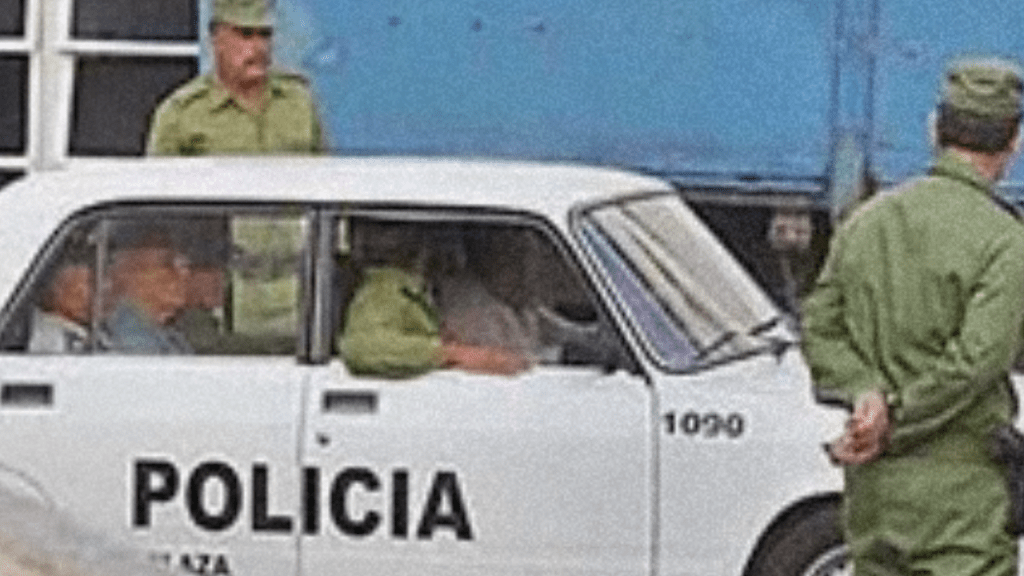
The United States spent decades invading, sabotaging and economically strangling Cuba. That history explains why Havana learned to see organized opposition as an imperial beachhead. It does not justify the 2003 imprisonment of 75 dissidents for writing, reporting and organizing outside the state.
Between March 18 and 20, 2003, Cuban state security arrested 75 dissidents in coordinated raids. Twenty-nine were independent journalists. Others were librarians, economists, human-rights advocates and political organizers operating outside institutions controlled by the Communist Party.
The trials were rapid and closed. The defendants received sentences reaching 28 years under state-security laws. Amnesty International designated all 75 prisoners of conscience, concluding that they had been imprisoned for peacefully exercising fundamental freedoms.
The crackdown became known as the Black Spring. It began as the United States launched its invasion of Iraq, when global attention was fixed elsewhere. The timing did not conceal the repression. It exposed a government willing to exploit an imperial war abroad while conducting a political purge at home.
This should be stated without euphemism. The Cuban state imprisoned people for nonviolent political activity. Opposition to Washington does not transform journalists into combatants or independent libraries into military installations.
Washington Had Spent Decades Making Infiltration Real
Cuba’s security doctrine did not emerge from fantasy. The United States repeatedly attempted to destroy the revolutionary government after it broke the island from American economic domination.
In April 1961, the CIA trained, armed and transported a Cuban exile force for the Bay of Pigs invasion. The operation failed, but Washington did not accept defeat. President John F. Kennedy authorized Operation Mongoose later that year, placing sabotage, infiltration and regime change at the centre of American policy.
Declassified records published by the National Security Archive document plans for espionage, harbour attacks, industrial sabotage, psychological warfare and operations against Cuba’s agricultural economy. Officials discussed using biological or chemical agents against crops. The CIA also explored assassination plots against Fidel Castro, including schemes developed through organized-crime contacts.
The spectacular stories about poisoned cigars often obscure the more consequential record. Washington built armed exile networks, attacked economic infrastructure, conducted covert operations and maintained an explicit objective of overthrowing the Cuban government.
Havana therefore possessed evidence, not merely ideology, for believing that the United States would use Cuban dissidents, exile organizations, diplomats and aid programs to penetrate the island. American intervention made suspicion rational.
The Blockade Made Siege a Permanent Condition
Covert action was reinforced by economic warfare. Washington imposed the core of its embargo in the early 1960s and expanded its extraterritorial reach through later legislation, including the 1996 Helms-Burton Act.
The policy restricts trade, finance and investment while penalizing foreign companies for dealings involving property nationalized after the revolution. It raises the cost of importing food, medicine, fuel, machinery and replacement parts. American officials call this an embargo. Cubans call it a blockade because its effects extend beyond bilateral trade.
On October 29, 2025, the United Nations General Assembly condemned the policy for the 33rd time. The vote was 165 in favour of ending it, seven against and 12 abstentions.
The blockade is not an excuse supplied by Havana to explain every administrative failure. It is a material system of coercion designed to deprive the Cuban economy of resources and make socialist government synonymous with scarcity. Internal mismanagement and bureaucratic rigidity operate inside conditions Washington intentionally worsens.
A state subjected to invasion, sabotage and six decades of economic strangulation will build security institutions around survival. American policy did not merely oppose Cuba from outside. It helped shape the authoritarian architecture that developed within it.
Explanation Is Not Exoneration
Material analysis asks what produced a political system. It does not declare every response produced by those conditions legitimate.
The United States created powerful reasons for Cuba to fear infiltration. Havana chose to answer that threat by criminalizing autonomous political organization. Those are connected facts, not competing stories from which the left must select one.
Liberal accounts usually sever repression from its imperial context. The Cuban government becomes authoritarian because socialism inevitably hates freedom. The blockade becomes a diplomatic disagreement, CIA operations become Cold War history and dissidents appear in a political vacuum.
Uncritical solidarity produces the opposite falsification. Every dissident becomes a mercenary. Every independent institution becomes a front. Every sentence becomes unfortunate but necessary because Washington has funded subversion before.
Both approaches erase Cuban agency. The liberal account denies that American power structured the island’s choices. The apologetic account denies that Cuban officials made choices at all.
James Cason Deliberately Provoked the Conflict
The immediate context of the Black Spring included an aggressive campaign by James Cason, then head of the U.S. Interests Section in Havana. Cason met openly with dissidents, hosted political gatherings and distributed materials and assistance to opposition projects.
The Bush administration wanted confrontation. Cason’s conduct blurred diplomacy, opposition support and regime-change policy in a country with a documented history of American covert operations. Havana cited American funding and contact with U.S. diplomats as proof that the detainees were not independent activists but paid agents.
That accusation cannot be dismissed automatically. Money creates relationships, and Washington has repeatedly used civil-society funding to advance geopolitical objectives. A socialist government has the right to expose covert financing and prosecute espionage supported by evidence.
But contact is not command. Funding an independent publication does not prove that every article was written under American direction. Attending a diplomatic meeting does not establish participation in a coup. Receiving equipment does not convert peaceful organizing into armed subversion.
The state still carried the burden of proving specific criminal conduct. Summary proceedings and decades-long sentences replaced that burden with collective suspicion. Washington’s intervention was real. Havana used its reality to erase distinctions between dissidence, dependency and espionage.
A Librarian Is Not a Landing Force
The Black Spring cases reveal what siege politics does to political categories. Once autonomous organization is defined as a potential channel for imperial power, the journalist, librarian, economist and human-rights monitor become security threats before committing any violent act.
This logic grants the state ownership of legitimate politics. Citizens may participate through approved institutions. Independent activity is treated as foreign penetration because foreign penetration has previously used independent activity as cover.
The result is circular. American policy creates incentives to fund dissidents. State repression eliminates domestic political space. Dissidents become more dependent on external support because internal support structures are prohibited. The resulting dependence is then cited as proof that repression was necessary.
Washington and Havana reinforce the conditions each claims to oppose. American interference compromises independent opposition. Cuban repression pushes independent opposition toward American resources. Both states then use the relationship to justify escalation.
Release Often Meant Exile
In 2010, negotiations involving the Cuban Catholic Church and the Spanish government produced an agreement to release the remaining Black Spring prisoners. Most were sent to Spain with their families. Imprisonment ended through removal from the political terrain they had attempted to contest.
José Daniel Ferrer refused exile at the time and remained in Cuba. He later founded the Patriotic Union of Cuba and endured repeated arrests and imprisonment.
Ferrer was released in January 2025 as part of a Vatican-mediated arrangement, then rearrested in April after authorities revoked his conditional release. On October 13, the Cuban government released him from prison and sent him with his family to the United States after a formal American request that he accepted.
His arrival in Miami closed one prison term by reproducing the older pattern. The dissident is freed once he leaves. Exile reduces international pressure while removing an experienced organizer from the island.
Washington immediately incorporates such cases into its regime-change narrative. Havana points to that incorporation as proof the dissident was always an imperial instrument. Neither reaction answers the basic question of why peaceful political opposition should require prison or departure.
The Embargo and the Prison Serve Different Powers
The American blockade punishes an entire population in the name of political change. It restricts material life to create pressure against the government. Its cruelty is collective and its strategic purpose is imperial.
Cuban political imprisonment protects the state from organized challenge. It narrows public life, suppresses independent institutions and makes loyalty a condition of lawful participation. Its coercion is domestic and its purpose is bureaucratic survival.
These are not morally or materially identical. The United States is the dominant power and has subjected Cuba to aggression that the island cannot reproduce against it. Power, scale and historical responsibility matter.
But asymmetry does not make the subordinate state incapable of injustice. Anti-imperialism that recognizes only abuses committed by the larger power becomes loyalty to governments rather than solidarity with people.
Solidarity Must Oppose Both Forms of Coercion
A serious socialist position begins by demanding an unconditional end to the American blockade, covert action and regime-change financing. Cubans cannot freely determine their future while the world’s dominant power attempts to make daily life unlivable.
The same position demands freedom for people imprisoned for peaceful expression, journalism and political organization. The revolution cannot defend popular sovereignty by denying political agency to the population in whose name it governs.
Washington built the siege. It taught the Cuban state that opposition could become invasion and that civil society could become an intelligence channel. Havana then turned that lesson into a governing doctrine capable of treating a librarian as a landing force.
The left does not honour the Cuban people by hiding either side of that history. Solidarity means opposing the empire that starves the island and the state that imprisons peaceful dissidents. Anything less replaces materialism with allegiance.
Sources
- Amnesty International, March 18, 2013 — Black Spring arrests, prisoners-of-conscience designation and the 2010 release agreement.
- Committee to Protect Journalists, March 18, 2008 — the 75 arrests, 29 imprisoned journalists and summary proceedings.
- National Security Archive, October 3, 2019 — declassified Operation Mongoose planning, sabotage and regime-change operations.
- National Security Archive document collection — U.S. discussions of biological or chemical sabotage against Cuban agriculture.
- U.S. State Department, Foreign Relations of the United States — official Operation Mongoose planning record.
- Associated Press, October 13, 2025 — José Daniel Ferrer’s release from prison and departure into U.S. exile.
- United Nations, October 29, 2025 — General Assembly vote condemning the American embargo for the 33rd time.
- Amnesty International, October 23, 2024 — continuing restrictions on civic space and contemporary prisoners of conscience.