
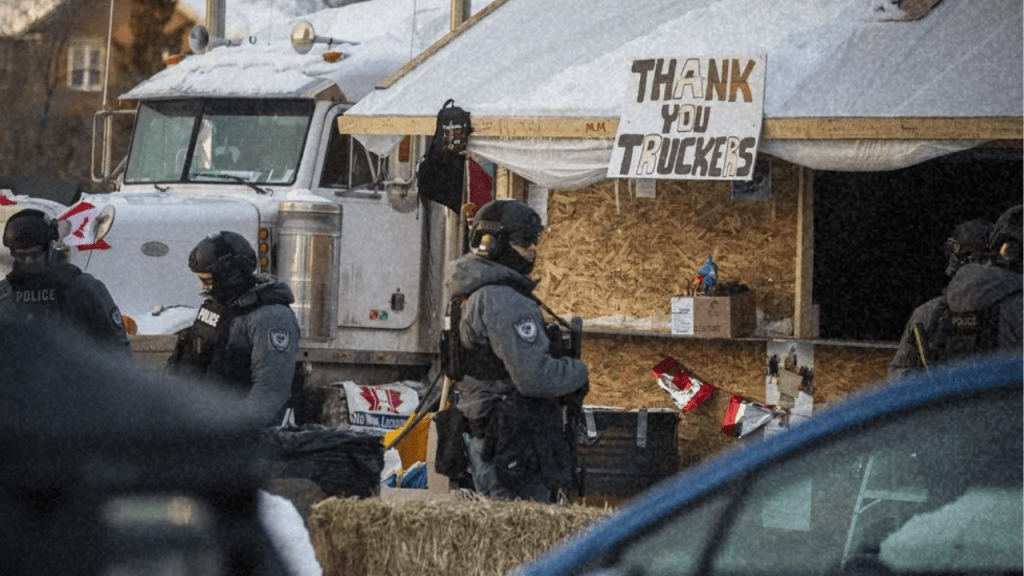
Police knew the convoy intended to stay. At 200 Coventry Road, that intention became the supply system sustaining Ottawa’s occupation.
On October 7, 2025, Tamara Lich and Chris Barber received 18-month conditional sentences for their roles in the 2022 convoy occupation. Both had been convicted of mischief. Barber was also convicted of counselling others to disobey the court order against horn use.
The convictions established that prominent organizers encouraged people to remain after the occupation’s effects on residents and businesses were clear. They did not explain how hundreds of vehicles were allowed to entrench themselves in Ottawa or how the operation kept them supplied for three weeks.
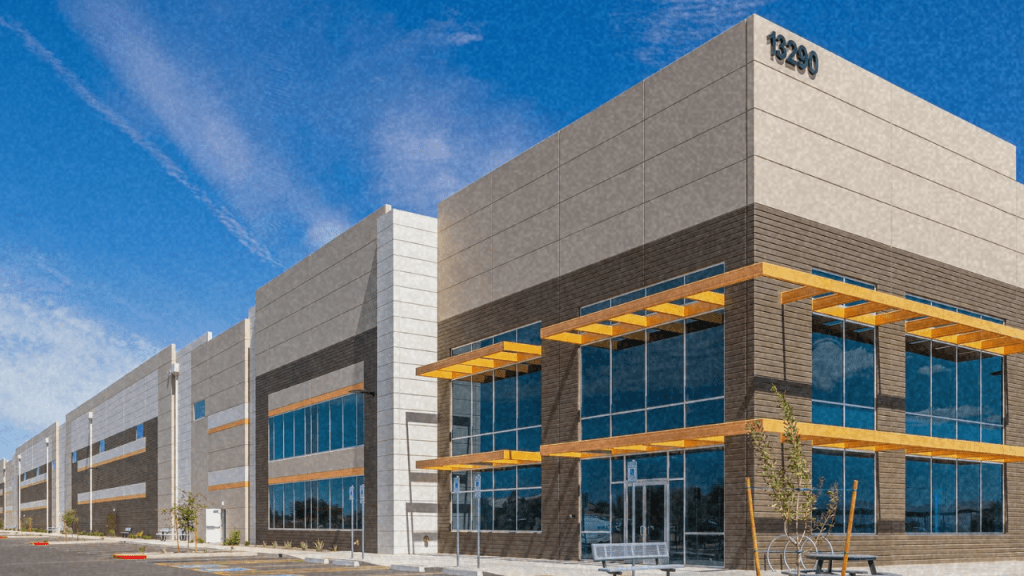
Part of that answer sat five kilometres east of Parliament Hill, in a baseball-stadium parking lot at 200 Coventry Road.
The Occupation Had a Rear Base
The downtown trucks made the convoy visible. Coventry Road helped make it sustainable. Protesters used the RCGT Park parking lot as a staging area, supply depot and refuelling site. Food, fuel and firewood moved through the camp. Vehicles and people could circulate outside the congested streets surrounding Parliament.
Journalists who entered the site described registration, controlled access and personnel screening visitors. The camp contained communications equipment and organized stores of supplies. Criminologist Michael Kempa told CBC that its sophistication suggested military, police or survivalist training among participants.
The geography made the site conspicuous. A Department of National Defence building stood across Coventry Road at 285. A federal complex associated with the RCMP and Public Services and Procurement Canada stood at 295. Police officers were housed at a nearby hotel.
Those addresses do not prove that any federal agency coordinated with the camp. They establish something narrower: the convoy’s logistics centre was neither remote nor concealed. It operated in a government and policing corridor while authorities monitored it and debated how to respond.
Police Knew the Convoy Might Remain
Ottawa police began planning before the trucks arrived. Chief Peter Sloly received Ontario Provincial Police intelligence reports beginning January 13, 2022. A January 26 federal-local security update warned that the convoy could continue for a prolonged period. A January 28 OPP report said available information indicated protesters planned to remain until at least February 4.
Other messages reaching senior officers described the event as high-risk because of its size and potential traffic disruption. Police knew organizers had raised substantial funds. They also knew the stated political objective—ending pandemic restrictions—could not be granted by Ottawa’s municipal government.
The Public Order Emergency Commission found that Ottawa police expected most participants to leave after the first weekend. Their operational plan allowed trucks into the downtown core and relied heavily on relationships with organizers. Once vehicles occupied the streets, police lacked an effective plan to remove them.
The failure was not an absence of information. Police possessed warnings of prolonged disruption but did not convert them into a plan proportionate to the risk.
Liaison Became an Assumption About Control
Three days before the convoy arrived, Ottawa Police Constable Isabelle Cyr-Pidcock exchanged messages with a protest organizer identified as Chris. She requested the convoy’s itinerary and was told a firm plan would follow. The exchange was friendly, with the organizer expressing happiness that police and organizers could work together.
Police liaison teams routinely communicate with demonstration organizers. The texts entered the court record do not show that Cyr-Pidcock endorsed an occupation or secretly agreed to surrender streets. They show that police had direct access to organizers before arrival and believed communication could help manage the event.
That assumption failed because the convoy did not operate through a single chain of command. Different organizers controlled different groups, and some participants rejected compromises made by others. The inquiry found that police were overly optimistic about organizer cohesion and their ability to secure compliance.
Liaison provided information and channels for de-escalation. It also encouraged police to treat negotiated cooperation as a substitute for physical control over where heavy vehicles could park.
Organizers Had Discussed Occupation Before Arrival
Emails later obtained from an account used by organizer Chris Garrah contained a planning document circulated before the convoy reached Ottawa. It outlined several approaches to occupying the capital. One option proposed sending initial trucks toward Parliament and distributing the rest among farms, commercial lots and public parking areas.
Another option acknowledged that participants would occupy any available roadways, highways, public property and National Capital Commission parking lots. The document treated settlement and distribution as the first logistical task.
The record does not establish that Ottawa police received this specific attachment. Garrah denied knowledge of it when PressProgress asked. The document cannot prove police knowingly approved the plan.
It does show that at least some people inside the organizing network were considering a sustained occupation while police publicly planned around a short demonstration. Coventry Road became the material form of the logistics described in those discussions.
Security Experience Moved Into the Convoy
Several prominent convoy participants had backgrounds inside Canada’s military, police or intelligence institutions. Former Canadian Forces officer Tom Marazzo became an organizer and spokesperson. Daniel Bulford, a former RCMP officer who had served on the prime minister’s protective detail, headed convoy security.
Former military intelligence officer and security consultant Tom Quiggin produced situation reports for the convoy. His background included work connected to the military, Privy Council Office and RCMP. The reports gave the movement the appearance of its own intelligence function, though Quiggin held no state role during the occupation.
Three members of Canadian Special Operations Forces Command were investigated for alleged support of the protests. Separate reporting identified at least seven active Canadian Forces members under investigation across the military.
This overlap does not turn the convoy into a state operation. It demonstrates that skills acquired inside coercive institutions can migrate into political movements. Logistics, security discipline and intelligence language were available to organizers because some participants had already been trained in those fields.
Coventry Road Became the Occupation’s Fuel System
By early February, police understood that Coventry Road was sustaining the downtown trucks. An OPP situational report identified it as a refuelling staging area. On February 6, police seized approximately 3,200 litres of fuel from the lot.
The seizure did not end the supply operation. Protesters continued moving fuel in smaller containers and adjusted their methods. Police faced people carrying fuel through public streets while operational leadership remained divided over enforcement priorities and available resources.
Coventry Road survived until the final enforcement operation. Police cleared the downtown core on February 18 and 19. They cleared the staging area on February 20.
A base that authorities had known about, visited and partially raided remained functional until the occupation itself was dismantled.
Permission Did Not Require a Secret Agreement
The Coventry Road story is strongest without a theory of deliberate state sponsorship. Police permitted the occupation in the ordinary institutional sense: they allowed heavy vehicles into positions they could not readily clear, relied on organizers who could not command the crowd and failed to act on intelligence indicating a prolonged stay.
Once the convoy established its logistics, every enforcement decision became more expensive. Fuel kept vehicles in place. The rear base reduced pressure on the downtown footprint. Personnel with security experience helped organizers screen the site and maintain internal systems.
Authorities could see the infrastructure because they were already interacting with it. What they lacked was not awareness of Coventry Road but an integrated command prepared to sever the occupation’s supply line before it became entrenched.
Sources
- “Report of the Public Inquiry into the 2022 Public Order Emergency, Volume 1” — Public Order Emergency Commission
- “Report of the Public Inquiry into the 2022 Public Order Emergency, Volume 2” — Public Order Emergency Commission
- “Timeline of Certain Key Events” — Public Order Emergency Commission
- “Witness Statement of Former Chief Peter Sloly” — Public Order Emergency Commission
- “Witness Statement of Chad Eros” — Public Order Emergency Commission
- “Convoy Leaders’ Emails Reveal Planning Document” — PressProgress
- “How the convoy almost beat the Canadian state” — The Line
- “Three Canadian special forces members under investigation” — Reuters
- “Convoy leaders Lich and Barber receive conditional sentences” — The Canadian Press, October 7, 2025

 Spark Solidarity