
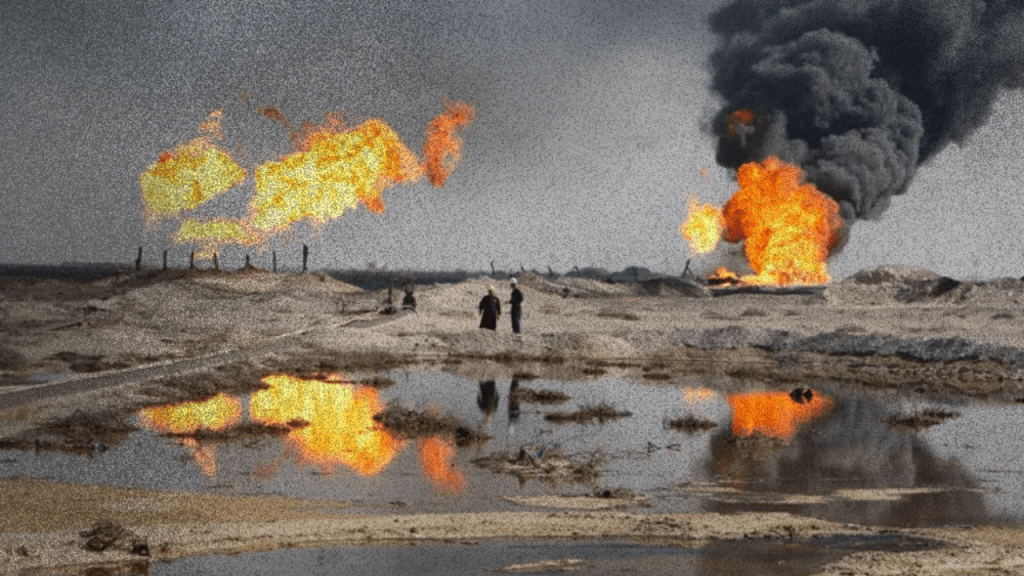
The Iraq War wasn't a mistake. It was a strategy to preserve oil's centrality — and American monetary power — at the exact moment both were under threat.
Every September 11, the same story gets retold until it hardens into common sense: George W. Bush was incompetent, the Iraq War was a tragic mistake, and while oil may have played some role, it was never really what the war was about. Many from post-9/11 generations absorb this because they were too young to remember anything else. Millennials repeat it because distance and media ritual have blurred cause into accident. Boomers, meanwhile, cling to it because their worldview depends on believing the catastrophe was an error rather than the logical outcome of the system they defended.
This explanation is comforting because it reframes catastrophe as accident, suggesting that history briefly veered off course while American institutions otherwise functioned as intended. By replacing intent with incompetence and strategy with chaos, the repetition turns history into something bearable rather than something structural — offering emotional closure without confronting how power actually operated.
Oil did matter. But not in the way the phrase “war for oil” is usually understood. The invasion of Iraq was not about seizing barrels or looting wells. As energy historian Daniel Yergin has explained across decades of writing and interviews, modern power does not require ownership of oil. It requires control over the system that determines how oil is priced, traded, secured, and made indispensable. That system is geopolitical, financial, and military all at once.
The Problem That Predated the Attack
By the late 1990s, that system was under quiet pressure. Energy efficiency was improving. Renewable technologies were advancing, particularly in Europe and East Asia. Climate politics were beginning to translate into policy, as seen in the Kyoto Protocol negotiations. Even internal U.S. Department of Energy reports during the Clinton administration acknowledged uncertainty about long-term oil demand growth. None of this meant oil was about to disappear. It meant oil’s unquestioned centrality could no longer be taken for granted.
For the United States, this posed a structural problem. As economist Michael Hudson has argued in lectures and writing since the early 2000s, American global power rests on the dollar’s role as the world’s reserve currency — a role anchored since the 1970s to oil being priced and traded in dollars. Following the collapse of the Bretton Woods system, the United States negotiated arrangements with Saudi Arabia and other major producers to price oil exclusively in U.S. dollars. This petrodollar system ensured that global demand for energy translated into global demand for dollars. Oil revenues were recycled through U.S. banks, Treasury bonds, and U.S.-dominated financial institutions. Countries needed dollars to buy oil. The United States, uniquely, could create dollars to buy oil. This asymmetry allowed Washington to run chronic trade deficits while maintaining global leverage. Oil was not just fueling the world economy. It was underwriting American monetary power.
If oil lost its dominance, the architecture of American hegemony would weaken with it. This was not a conspiracy. It was openly discussed in policy circles, think tanks, and financial media throughout the 1990s. The attacks of September 11, 2001 did not create this problem. They created the conditions to act on it.
Planning Before the Crisis
By the time George W. Bush took office in January 2001, energy policy was already being treated as a matter of national strategy rather than domestic administration. This was made explicit in March of that year, when Vice President Dick Cheney was appointed to chair the National Energy Policy Development Group — commonly known as the Energy Task Force — and granted an unusual level of executive secrecy from the outset.
When watchdog groups including Judicial Watch and the Sierra Club sought records under the Freedom of Information Act, the White House refused, triggering years of litigation that reached the Supreme Court. What eventually emerged through partial disclosures was not proof of an impending attack, but proof of priority. Documents released by the Commerce Department under court order in 2003, and archived by the National Security Archive at George Washington University, included maps of Iraqi oil fields, pipelines, refineries, and terminals, as well as charts of Iraqi oil and gas projects and a document titled “Foreign Suitors for Iraqi Oilfield Contracts.” These documents were dated March 2001 — six months before September 11, as Democracy Now reported at the time of their release.
The significance was not Iraq specifically, but the fact that energy geopolitics was being treated as an urgent strategic problem requiring confidentiality and executive insulation, months before the attacks that would be used to justify military action. The task force’s composition reinforced this: executives from major oil and energy firms were consulted extensively, while environmental groups and renewable advocates were largely excluded. The result was a policy framework that emphasized expanded fossil fuel production, global access, and military-backed supply security — years before war became a public conversation.
None of this requires claiming that officials knew the attacks were coming. What it demonstrates is readiness. The institutional machinery for aggressive energy policy was assembled in advance. When crisis arrived, the infrastructure for action already existed.
9/11 as Enabler, Not Origin
The attacks of September 11 are often treated as the beginning of the story, as though American policy lurched onto a new path only after the planes hit the towers. In reality, 9/11 functioned less as an origin point than as an enabler. It did not create new strategic priorities. It removed the political, legal, and psychological barriers that had previously limited how aggressively existing priorities could be pursued.
This dynamic was visible almost immediately. Within days of the attacks, Congress passed the Authorization for Use of Military Force, granting the president open-ended authority to wage war against loosely defined enemies — passing the House 420 to 1 and the Senate 98 to 0, with minimal debate. The USA PATRIOT Act, drafted largely before legislators had time to read it, expanded surveillance authorities, lowered standards for data collection, and weakened judicial oversight. Civil liberties organizations including the ACLU warned that powers justified as temporary emergency measures would likely become permanent. They were correct. Most of those authorities remain in place more than two decades later.
Philosopher Giorgio Agamben, in his 2005 work State of Exception, argued that modern states use moments of crisis to suspend normal legal constraints while presenting those suspensions as temporary necessities. Emergency measures are framed as reluctant responses to unprecedented danger, even as they permanently expand executive authority. War is rendered normal, shielded from sustained opposition by the language of necessity. This is precisely the structure of what followed September 11.
War followed the same logic of manufactured urgency. Afghanistan was presented as unavoidable. Iraq was framed as preventive. In both cases, as Knight Ridder reporters Jonathan Landay and Warren Strobel documented in real time — virtually alone among national news organizations at the time — intelligence assessments were sidelined in favor of narratives that fit the moment. The bureau’s October 2002 reporting, later recognized with a Senate Press Gallery award, found that senior officials with access to top-secret intelligence detected “no alarming increase in the threat that Iraqi dictator Saddam Hussein poses,” and that analysts were under intense pressure to produce reports supporting the White House’s predetermined case. The absence of clear evidence was treated not as a reason for caution, but as proof of hidden danger.
This context explains why narratives of incompetence are politically convenient. If 9/11 happened because leaders were foolish or overwhelmed, then the resulting wars can be understood as tragic but understandable errors. But incompetence does not explain outcomes. It does not produce coherent legal frameworks, decades-long occupations, global basing expansions, and multi-trillion-dollar appropriations. Systems capable of mobilizing that scale of action are not improvising. They are operating under loosened constraints.
Iraq and the Logic of Oil Value Control
The most common rebuttal to the claim that the Iraq War was about oil is deceptively simple: the United States did not seize Iraqi oil fields, American companies did not ship Iraqi oil home, therefore the war could not have been about oil. This argument appears frequently in mainstream retrospectives, where the absence of direct extraction is treated as definitive proof.
This misunderstands how modern economic power functions. As political economist Timothy Mitchell explains in Carbon Democracy, control over oil does not require ownership. It requires influence over the conditions that determine oil’s value. Oil’s importance rests not on scarcity alone, but on managed instability. Prices rise when uncertainty is introduced into the system. War is one of the most effective mechanisms for manufacturing that uncertainty.
Iraq occupied a critical position in the global energy landscape long before 2003. According to data published by the U.S. Energy Information Administration, Iraq possessed some of the largest proven reserves in the world and sat at the geographic center of the Persian Gulf energy system, bordering Saudi Arabia, Kuwait, Iran, and Turkey, and adjacent to key shipping routes and pipelines — including the Strait of Hormuz, whose closure has been threatened repeatedly and whose disruption is now ongoing. Control over Iraq did not mean pumping its oil. It meant shaping the security environment of the entire region.
After the invasion, Iraqi oil production fluctuated wildly due to sabotage, infrastructure damage, and political instability — output fell from around 2.5 million barrels per day before the war to below one million at the height of the occupation. This instability did not depress prices. It helped sustain them. According to the Wikipedia chronology of the world oil market, from the mid-1980s to September 2003 the inflation-adjusted price of crude oil was generally under $25 a barrel. From 2003 onward, prices climbed steadily — reaching $60 by August 2005, $99 by late 2007, and peaking at $147.02 per barrel on July 11, 2008. Research economist Mamdouh Salameh estimated that the Iraq War accounted for approximately 63 percent of that price surge, with the disruption to Iraqi production removing critical supply from global markets.
This price environment benefited producers with spare capacity, particularly Saudi Arabia, whose oil revenues were recycled through Western financial systems and arms purchases. The United States did not need to extract Iraqi oil directly because its allies profited from the price environment the war helped create.
The argument that the United States “failed” because Iraqi oil production did not soar misses the point entirely. Success was not measured in barrels. It was measured in relevance. By turning Iraq into a site of sustained instability, the war reinforced the idea that oil remained a dangerous, strategic commodity requiring military oversight. In a world where oil had become cheap, abundant, and politically boring, energy transition would have accelerated. War ensured that oil stayed central, risky, and indispensable.
Saudi Arabia, Israel, and Managed Order
The preservation of U.S. energy dominance after 9/11 did not rest on Iraq alone. It depended on a managed regional order anchored by two partners serving different but complementary functions: Saudi Arabia and Israel.
Saudi Arabia’s role was economic and disciplinary. As the International Energy Agency has noted in repeated market outlooks, no other producer can stabilize prices at scale — Saudi Arabia remains the only producer with significant spare capacity, allowing it to raise or lower output in response to political and market conditions. In exchange for performing this pricing discipline function, Saudi Arabia has received extensive U.S. security guarantees, arms sales, and diplomatic cover. After 9/11, despite the fact that 15 of the 19 hijackers were Saudi nationals, this arrangement deepened rather than frayed. Oil continued to be priced in dollars. Arms purchases expanded dramatically, as tracked by the Stockholm International Peace Research Institute. The relationship endured because its function was structural, not sentimental.
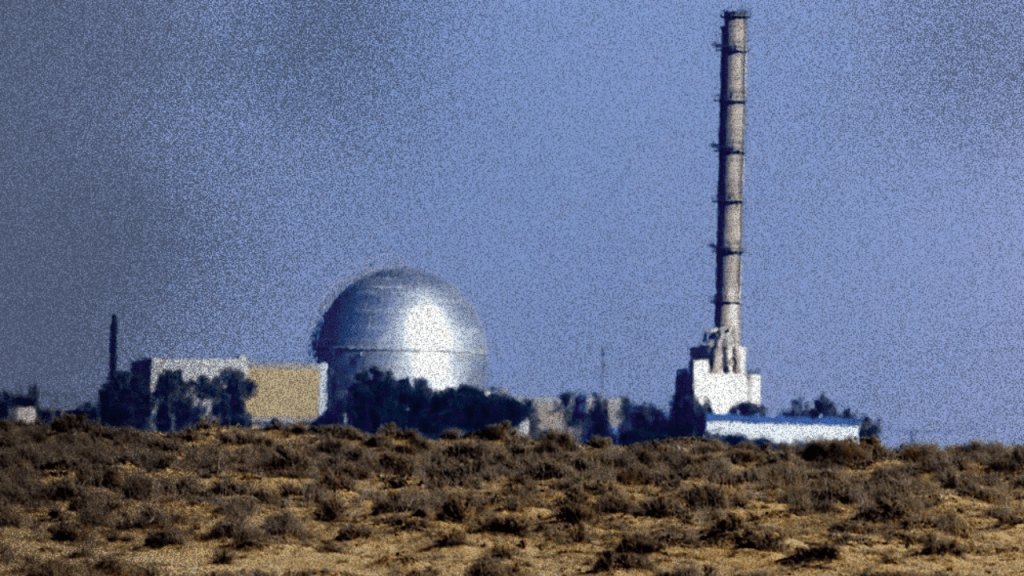
Israel’s role was different — not an energy producer, but a security and intelligence partner. As former CIA analyst Paul Pillar has written, Israel functions as a forward operating partner, providing surveillance capabilities, military interoperability, and deterrence capacity that supports broader U.S. objectives in the region. Its intelligence services were deeply integrated into U.S. counterterrorism efforts in the post-9/11 period. Its military posture served as a constant deterrence signal, reinforcing U.S. backing without requiring permanent American troop surges in every theater.
The convergence of these roles produced a triangular system: Saudi Arabia managed energy pricing, Israel managed security enforcement, the United States sat at the apex underwriting both while extracting strategic leverage. This arrangement allowed Washington to influence global energy markets, regional politics, and financial flows without direct colonial administration. Normalization initiatives like the Abraham Accords reflected this logic — less about peace in the abstract than about integrating Israel into a regional security and economic framework aligned with Gulf energy interests.
The Myth of Bush’s Incompetence
One of the most durable narratives to emerge from the post-9/11 era is that George W. Bush was simply not very bright, and that his lack of competence explains both the attacks and the wars that followed. This narrative appears regularly in liberal retrospectives, where failures are personalized and institutional continuity is ignored.
It serves a purpose. As sociologist C. Wright Mills argued in The Power Elite, focusing on individual flaws is one of the most effective ways to obscure structural power. If disasters can be explained by stupidity, then systems remain fundamentally sound. They merely suffered an unfortunate staffing issue.
But incompetence is a weak explanation for continuity. As historian Andrew Bacevich has documented in The New American Militarism, the wars of the early 2000s followed patterns that predated the Bush presidency and outlived it. Military budgets expanded under Clinton, exploded under Bush, stabilized under Obama, and continued under Trump. Surveillance authorities introduced after 9/11 were not dismantled by subsequent administrations. Energy dominance rhetoric persisted across party lines well into the 2010s. Institutions that repeatedly reproduce the same outcomes under different leaders are not being driven by incompetence. They are being driven by incentives.
The incompetence narrative also performs a kind of moral laundering. If Bush was foolish rather than functional, then the think tanks that advocated war, the corporations that profited from it, and the agencies that expanded their power are quietly absolved. This framing allows elites to condemn the past without interrogating the present.
From Iraq to Trump: Strategy Without the War
By the mid-2010s, the limits of large-scale military intervention were obvious. Iraq and Afghanistan had proven costly, destabilizing, and politically toxic. Public support for major ground wars had collapsed even as defense spending and overseas commitments remained high. The strategy that emerged was not abandonment, but refinement.
The Trump administration made this shift explicit. Rather than the language of liberal intervention or democracy promotion, Trump spoke openly in transactional terms — “energy dominance,” fossil fuel expansion, and oil exports as instruments of foreign policy. Tariffs functioned as coercive signals rather than protectionist ends in themselves, reshaping supply chains and reinforcing U.S. bargaining power without requiring military escalation. Sanctions replaced invasions. Targeted strikes replaced occupations. Economic isolation replaced regime change.
What ties these developments together is decline management. As historian Adam Tooze has argued in his writing on post-2008 geopolitics, American power in the twenty-first century is less about expansion than preservation. Energy nationalism, tariff leverage, and regional enforcement all serve this purpose — they slow erosion without demanding total control.
Trump did not complete a project begun by Bush in a personal sense. He operated within the same structural constraints, with different methods and a different rhetorical register. The language changed. The objective remained consistent: keep energy central, keep rivals dependent, keep the dollar dominant. When war became too expensive, power learned to travel lighter.
Delaying the Inevitable
Taken together, the events of the early twenty-first century form a coherent pattern. The attacks of September 11 did not invent American energy strategy. The Iraq War did not fail because oil was misunderstood. The decades that followed did not drift aimlessly from crisis to crisis. What occurred was a sustained effort to delay a structural reckoning.
Oil was not defended because it was scarce. It was defended because it was central. As energy historian Vaclav Smil has emphasized across multiple works, modern industrial systems are shaped by their dominant energy sources. For the United States, oil underwrote not only production and transport, but monetary power, military reach, and geopolitical leverage. Energy transition threatened that system more than it threatened competitors precisely because a world less dependent on oil would be a world less dependent on the dollar, less tolerant of U.S. military presence in energy regions, and less receptive to coercive stabilization.
The result was postponement. The wars bought time. They did not solve the underlying problem. Energy transition slowed, but did not stop. Multipolar competition intensified. The moral and financial costs accumulated. Those costs are now visible: renewable deployment is accelerating globally, Saudi Arabia is hedging toward China, and the managed order that held for two decades is fraying at every seam.
Why this framing matters now is direct. If Iraq was a mistake, then history can be corrected by better leadership. If it was a strategy, the question becomes harder: what happens when the tools used to delay decline no longer work? The answer is visible in the present moment — in oil prices that move on diplomatic standoffs before a single barrel is disrupted, in three F-15s downed over Kuwait by the friction of coalition warfare at scale, and in the Strait of Hormuz — the chokepoint that this system has always depended on keeping nominally open — now effectively closed. Understanding 9/11 and Iraq as mechanisms of delay does not absolve responsibility. It clarifies it. Systems that rely on manufactured instability to preserve relevance eventually confront limits. The cost of delay is not measured only in lives lost, but in futures foreclosed. That bill is still coming due.
Sources
- Judicial Watch Staff. “Cheney Energy Task Force Documents Feature Map of Iraqi Oilfields.” Judicial Watch, July 17, 2003. https://www.judicialwatch.org/cheney-energy-task-force-documents-feature-map-of-iraqi-oilfields/
- National Security Archive. “‘Iraqi Oilfields and Exploration Blocks,’ and ‘Foreign Suitors for Iraqi Oilfield Contracts as of 5 March 2001.’” George Washington University National Security Archive, n.d. https://nsarchive.gwu.edu/document/18216-national-security-archive-doc-08-iraqi-oilfields
- Democracy Now! Staff. “Cheney Mapped Out Iraqi Oil Infrastructure in 2001.” Democracy Now!, July 22, 2003. https://www.democracynow.org/2003/7/22/headlines/cheney_mapped_out_iraqi_oil_infrastructure_in_2001
- Walcott, John. “Why the Press Failed on Iraq.” Foreign Affairs, February 27, 2024. https://www.foreignaffairs.com/iraq/journalism-press-failed-iraq-walcott
- FAIR Staff. “Iraq and the Media: A Critical Timeline.” Fairness & Accuracy In Reporting, updated 2025. https://fair.org/take-action/media-advisories/iraq-and-the-media/
- Wikipedia contributors. “World Oil Market Chronology from 2003.” Wikipedia, last updated March 2026. https://en.wikipedia.org/wiki/World_oil_market_chronology_from_2003
- Considine, Jennifer. “The Oil Price Rise Factor in the Iraq War: A Macroeconomic Assessment.” Energy Politics, April 2025 [summarizing Salameh 2008]. https://drjennifericonsidine.substack.com/p/the-oil-price-rise-factor-in-the
- U.S. Energy Information Administration. “Iraq Country Overview.” EIA, updated periodically. https://www.eia.gov/international/overview/country/IRQ
- International Energy Agency. World Energy Outlook series. Paris: IEA, published annually. https://www.iea.org/
- Agamben, Giorgio. State of Exception. Chicago: University of Chicago Press, 2005.
- Mitchell, Timothy. Carbon Democracy: Political Power in the Age of Oil. London: Verso, 2011.
- Mills, C. Wright. The Power Elite. New York: Oxford University Press, 1956.
- Bacevich, Andrew. The New American Militarism: How Americans Are Seduced by War. New York: Oxford University Press, 2005.
- Middle East Eye Staff. “Knight Ridder: How a Small Team of US Journalists Got It Right on Iraq.” Middle East Eye, March 17, 2023. https://www.middleeasteye.net/news/knight-ridder-small-team-US-journalists-Iraq-war


 Spark Solidarity