
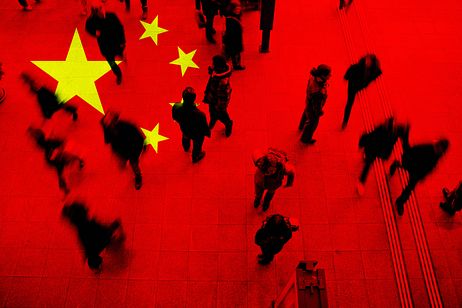
ICE detention kills people. Saudi Arabia tortures activists. Egypt holds 60,000 political prisoners. None triggered a genocide declaration. Xinjiang did.
The United States holds more people in immigration detention than any other country on earth. The system currently processes tens of thousands of people daily across roughly 130 facilities, a network that has grown more than fivefold since the mid-1990s. The conditions documented inside these facilities — by the government’s own inspectors — have been described as “barbaric” and “negligent”: people returned to general population after surgery without bandages, pregnant women denied care while bleeding. An ACLU/Physicians for Human Rights joint report examining 52 deaths in ICE custody between 2017 and 2021 found that 95% were preventable with adequate medical care. Over 200 people have died in ICE custody since 2004. 2025 was the deadliest year since that same period.
No US administration has declared this a humanitarian crisis. No sanctions regime has been erected. No diplomatic coalition has formed to press the United States on the rights of the people held in its detention network.
In 2021, the United States government declared that China’s detention program in Xinjiang constituted a genocide. The declaration came from the Trump administration as part of an escalating program of trade confrontation, technology restrictions, and military posturing across the Pacific. The same administration had expanded the ICE detention system to a record 55,000 average daily detainees — the largest immigration detention population in American history.
This is not an accident or a contradiction. It is how the human rights framework functions.
The Alliance Standard
Saudi Arabia holds an estimated 2,600 political prisoners, a number that human rights organizations describe as a conservative floor. The country’s Mabahith security apparatus holds detainees incommunicado, often for months, before families learn their whereabouts. Women’s rights activists arrested in 2018 have described torture including electric shocks, waterboarding, and sexual harassment by interrogators — accounts corroborated by leaked messages from prison guards obtained by Human Rights Watch. One detainee, a fitness instructor imprisoned for posting photos without an abaya on social media, received an 11-year sentence. A retired teacher was sentenced to death for posting on YouTube. The UN Committee against Torture has documented that confessions obtained through torture are routinely admitted in Saudi courts and that coercive interrogation has produced no meaningful accountability.
The US response has been consistent arms sales, diplomatic protection at the UN, and a $110 billion weapons deal signed in 2017 — one of the largest in history.
Egypt, governed by a military coup leader recognized by Washington and receiving approximately $1.3 billion in annual US military aid, has held an estimated 60,000 political prisoners according to Human Rights Watch — subjected to what HRW has called an “assembly line of torture” that may constitute crimes against humanity. No sanctions. No genocide declaration. No diplomatic coalition.
The logic is transparent once named: human rights pressure is applied to states targeted for geopolitical confrontation, and suspended for those integrated into the US-led order as clients, partners, or hosts for military bases. This is not a flaw in the liberal human rights framework. It is the framework operating as designed.
What the Record in Xinjiang Shows
The detention program in Xinjiang is documented. The China Cables, published in November 2019 by the International Consortium of Investigative Journalists with fourteen international media partners including Al Jazeera, consist of leaked Chinese government documents: the operating manual for the detention system, intelligence bulletins, internal court records. They describe mass detention of Uyghurs and other Muslim minorities for behaviour including prayer, travel, and use of certain apps. Protocols specify blindfolds, shackles, and shoot-to-kill procedures for escape attempts. The New York Times Xinjiang Papers, 400+ pages of leaked internal documents published the same month, include speeches from regional security chief Chen Quanguo ordering officials to “round up everyone who should be rounded up.” In 2022 the UN OHCHR — under pressure from China to suppress the report — concluded that “serious human rights violations have been committed” and that the detention program “may constitute international crimes, in particular crimes against humanity.”
The question is not whether the program exists. The question is: why does this program qualify for genocide declarations, trade sanctions, and diplomatic mobilization when Egypt’s 60,000 political prisoners do not? When Saudi Arabia’s systematic torture of women’s rights activists does not? When the United States’ own documented history of preventable deaths in detention does not?
The answer is not that the Xinjiang program is categorically worse. It is that China is a designated strategic competitor.
Asymmetric Standards in Concrete Terms
The same US government that declared a genocide in Xinjiang in 2021 was, in the same period, providing $3.8 billion in annual military aid to Israel, whose treatment of Palestinian detainees has been documented by Amnesty International and B’Tselem as systematic torture — including stress positions, sleep deprivation, and beatings during interrogation — with no legal accountability for officers. It was selling advanced weapons to the UAE, a partner in the Yemen bombing campaign that the UN OHCHR has described as responsible for widespread civilian casualties, destruction of civilian infrastructure, and potential war crimes. And it was running a domestic immigration detention system in which inspectors found conditions described as “barbaric” across multiple facilities, in which 95% of reported deaths were found preventable, and in which the number of people detained daily exceeded the populations of mid-size American cities.
The standard applied to China was not applied to any of these. The Foreign Agents Registration Act requires organizations operating in the US on behalf of foreign governments to register — a transparency requirement framed as national security. When China passed counter-espionage legislation criminalizing cooperation with organizations funded by foreign governments to conduct political activity inside China, it was described in Western media as evidence of authoritarianism. When the National Endowment for Democracy funds civil society organizations operating inside countries the US has targeted for destabilization — as documented in relation to Hong Kong, Venezuela, Ukraine, and Nicaragua — it is described as democracy promotion.
The label applied to the same category of activity differs entirely depending on who is applying it and against whom.
What a Left Analysis Does With This
The structural argument here is not that the Xinjiang program is a fabrication. The China Cables are leaked Chinese government documents. The UN assessment was reached independently of Western government sources, and was suppressed by Chinese government lobbying before its release. The evidentiary record is what it is.
The structural argument is that the US government’s mobilization of that record — genocide declarations, sanctions packages, diplomatic coalitions, $1.6 billion congressional propaganda funds — serves the objective of containing Chinese regional power, not protecting Uyghur rights. A government that runs a mass detention system with documented preventable deaths, arms governments that systematically torture political prisoners, and supplies weapons used in civilian bombing campaigns does not become a human rights protector when it designates a competitor’s detention program as genocide. It becomes a government using selective moral accounting as a strategic instrument.
A left analysis applies consistent evidentiary standards across state actors regardless of which bloc they belong to. It names abuses in targeted states when they are documented. It also names the mechanism by which those abuses are selectively amplified while equivalent or worse abuses in client states are not merely ignored but actively enabled. The Jacobin analysis of Xinjiang is useful precisely because it applies that consistency — documenting the repression while situating it within the US strategic competition framework rather than allowing the strategic framework to disappear behind the humanitarian rhetoric.
The Xinjiang program receives more scrutiny than ICE detention, more than Egypt’s 60,000 political prisoners, more than Saudi Arabia’s torture of women’s rights activists. That asymmetry is not an incidental feature of how Western human rights attention is distributed. It is the argument. The fact that the abuses are real makes the selective mobilization of them more effective as a strategic tool — not less worth naming.
For more on how the NED and exile networks function as instruments of this same machinery, see Exile Networks 2026. On the broader pattern of selective human rights mobilization against China specifically, see NATO Expansion and Ukraine: Who Actually Benefits.
Sources
- Vera Institute of Justice. “The Truth About Immigration Detention in the United States.” June 11, 2025. vera.org
- ACLU / Physicians for Human Rights. “Deadly Failures: Preventable Deaths in U.S. Immigration Detention.” June 2024. phr.org
- Arab Center Washington DC. “Political Prisoners in the Middle East: The Quiet Crisis.” 2019. arabcenterdc.org
- Human Rights Watch. “Saudi Arabia: New Details of Alleged Torture Leaked.” July 11, 2021. hrw.org
- Human Rights Watch. “UN Committee Against Torture: Review of Saudi Arabia.” April 2016. hrw.org
- International Consortium of Investigative Journalists. “Exposed: China’s Operating Manuals for Mass Internment and Arrest by Algorithm.” November 24, 2019. icij.org
- Al Jazeera. “Secret Papers Reveal Workings of China’s Xinjiang Detention Camps.” November 25, 2019. aljazeera.com
- Ramzy, Austin, and Chris Buckley. “Leaked Files Expose How China Organized Mass Detention of Muslims.” New York Times, November 16, 2019. nytimes.com
- UN News. “China Responsible for ‘Serious Human Rights Violations’ in Xinjiang Province.” August 31, 2022. news.un.org
- Clover, Charles. “China’s Uyghur Repression.” Jacobin, May 2018. jacobin.com
- OHCHR. “UN Experts Condemn Atrocities in Yemen.” September 2022. ohchr.org

 Spark Solidarity