

Canada’s foreign interference inquiry documented real threats — then ignored the US funding that shapes Canadian civil society. The asymmetry is the story.
Foreign interference in Canadian elections is real. The Hogue Commission — Canada’s Public Inquiry into Foreign Interference in Federal Electoral Processes and Democratic Institutions, concluded in January 2025 — documented that Chinese state actors deployed disinformation campaigns through WeChat, covertly supported preferred candidates, and ran targeted operations against politicians deemed critical of Beijing in both the 2019 and 2021 federal elections. These findings are not in dispute here.
What is in dispute is the framework applied to those findings — specifically, its selective construction. A framework that applies sustained institutional scrutiny to interference from designated adversaries while treating structurally equivalent interference from Western-aligned sources as nonexistent is not a neutral evidentiary standard. It is a political instrument. The Hogue Commission, whatever the integrity of Justice Hogue’s individual findings, operated within that instrument rather than examining it.
The Interference That Wasn’t Investigated
The Canada Files documented in 2022 that at least two Canadian civil society organizations openly receive funding from the National Endowment for Democracy: the Uyghur Rights Advocacy Project and the Centre for Law and Democracy. The NED is a US Congress-funded body established in 1983 under the Reagan administration with the explicit mandate of doing, in the open, what the CIA had previously done covertly: shaping civil society, political organizations, and media in countries deemed strategically relevant to US interests. Its stated current priorities include programs targeting China specifically. The Uyghur Rights Advocacy Project — a Canadian organization whose NED funding is publicly disclosed — appeared as a party before the Hogue Commission inquiry itself.
This is not a theoretical parallel. It is a direct structural comparison: a US government-funded organization with an explicit anti-China mandate participated in a Canadian government inquiry into foreign interference in Canadian democracy, and this participation generated no institutional scrutiny, no questions about foreign funding shaping Canadian political processes, and no coverage in the same major media outlets that ran months of alarming headlines about Chinese influence.
The inquiry examined one direction of foreign interference with exhaustive institutional resources. The other direction was not examined at all. That asymmetry is not incidental. It reflects the operating logic of Canada’s Five Eyes membership — an intelligence-sharing arrangement whose anti-China posture is coordinated with US strategic interests, and within whose frame the question of US influence on Canadian civil society does not register as a foreign interference problem.
What the Framework Actually Did
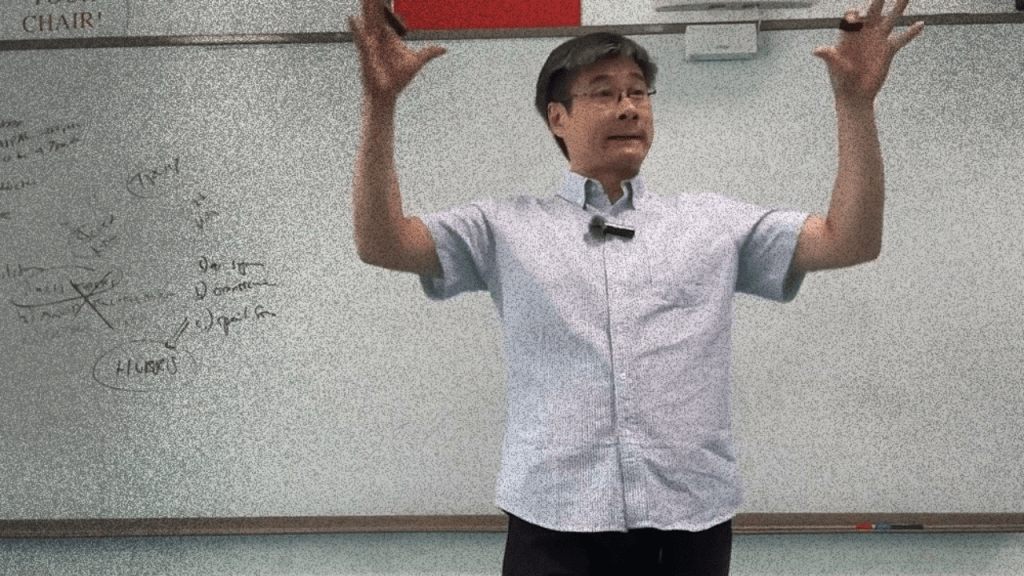
The community-level consequences of this selective framework are documented and concrete. Canadian journalist Yves Engler interviewed William Dere, a longtime Chinese Canadian activist from Montreal involved in drafting a community letter — signed by dozens of academics, community organizations, and activists — raising concerns about the inquiry’s impact on their community. CTV Montreal covered the letter; the rest of Canada’s major media did not.
The Canada Files subsequently documented what happened to organizations caught inside the inquiry’s frame. Service à la famille chinoise du Grand Montréal — a Montreal community centre running French-language classes for new immigrants, legal advice, senior programs, and support for women fleeing intimate partner violence — faced unsubstantiated accusations of being a Chinese “police station.” Its government funding was cut. Its bank refused to renew its mortgage. Board directors pledged personal assets as collateral to keep it operating. The organization filed a defamation suit against the RCMP in March 2024; the RCMP has twice requested delays. The community services remain curtailed.
No equivalent disruption was visited on organizations receiving funding from the NED or Open Society Foundations. The asymmetry is structural, not incidental.
A Law Built for Selective Enforcement
Bill C-70, Canada’s foreign interference law, creates a category of “foreign agent” that — as Senator Yuen Pau Woo and a university professor who testified at the inquiry both noted — could encompass attending a foreign embassy event, meeting foreign officials, or maintaining organizational ties to one’s country of origin. The maximum penalty is life imprisonment. Applied evenly, this law would encompass Canadian NGO executives who attend US embassy functions, academics who partner with American foundation-funded institutes, and journalists who take grants from NED-adjacent organizations. It will not be applied evenly. It was not designed to be.
William Dere names the historical pattern directly: the logic driving the 1885 Royal Commission on Chinese immigration — which produced the Chinese Exclusion Act — treated a racialized community’s political participation, organizing, and ties to their country of origin as presumptively suspect. The current framework reproduces that logic under the language of national security. Justice Hogue herself acknowledged this risk, writing explicitly in the commission’s report that measures must not “stigmatize some of our fellow citizens, particularly those from the diasporas.” That warning appeared in the same report whose framing enabled exactly that outcome.
The Geopolitical Frame
The broader military context reinforces the structural argument. Canada’s China policy is not independently formulated. In early 2024, Taiwan’s Defence Minister confirmed the presence of US Army Green Berets stationed in Kinmen and Penghu — Taiwanese-controlled islands ten kilometres from the Chinese mainland — authorized under the 2023 US National Defense Authorization Act. Canadian warships have sailed through the Taiwan Strait. These deployments are coordinated through Five Eyes and broader US alliance structures. They represent active military escalation toward China, conducted without serious democratic deliberation in Canada about whether this posture serves Canadian interests.
The foreign interference inquiry operates in this context. It is not a standalone domestic governance exercise. It is part of a broader normalization of adversarial posture toward China — one whose institutional expression inside Canada involves sustained scrutiny of Chinese Canadian community organizations and zero scrutiny of the US government funding that shapes Canadian civil society and political discourse.
An inquiry that applied its evidentiary standard consistently — examining all foreign influence on Canadian democratic processes regardless of which state it originates with — would be a genuine contribution to Canadian sovereignty. The one conducted was not that inquiry. It was an instrument of the framework it claimed to investigate.
For more on how Western intelligence structures shape the terms of political debate in Canada, read Weaponized Diaspora and the Witnesses Empire Needs.
Sources
- The Canada Files — “Exclusive: How the NED, Open Society Foundations and NATO collectively fund institutions driving development of Canadian political thought.” https://www.thecanadafiles.com/articles/exclusive-how-the-ned-open-society-foundations-and-nato-collectively-fund-institutions-driving-development-of-canadian-political-thought
- Foreign Interference Commission (official) — Commission mandate, phases, and findings. https://foreigninterferencecommission.ca/
- Yves Engler — Interview with William Dere; Five Eyes context. https://yvesengler.com/
- CTV Montreal — “Montreal Chinese community fears being excluded and stigmatized by federal inquiry.” https://montreal.ctvnews.ca/montreal-chinese-community-fears-being-excluded-and-stigmatized-by-federal-inquiry-1.6827426
- The Canada Files — “Public Inquiry into foreign interference marginalizes the Chinese Canadian community.” https://www.thecanadafiles.com/articles/public-inquiry-into-foreign-interference-marginalizes-the-chinese-canadian-community
- Senator Yuen Pau Woo — “Powerful testimony from a Chinese Canadian university professor at the Foreign Interference Inquiry on 2 October 2024.” https://senatoryuenpauwoo.ca/en/domestic-outreach/public-inquiry-on-foreign-interference-2024/powerful-testimony-from-a-chinese-canadian-university-professor-at-the-foreign-interference-inquiry-on-2-october-2024/
- Antiwar.com — “Taiwan Confirms Presence of US Special Forces on Islands Near China’s Coast.” March 14, 2024. https://news.antiwar.com/2024/03/14/taiwan-confirms-presence-of-us-special-forces-on-islands-near-chinas-coast/
- Hogue Commission — Initial Report, May 2024. Interference findings; Justice Hogue’s diaspora stigmatization warning. https://foreigninterferencecommission.ca/fileadmin/user_upload/Foreign_Interference_Commission_-_Initial_Report__May_2024_-_Digital.pdf
- Parliament of Canada — Bill C-70, An Act respecting countering foreign interference (LEGISinfo). https://www.parl.ca/legisinfo/en/bill/44-1/c-70

 Spark Solidarity